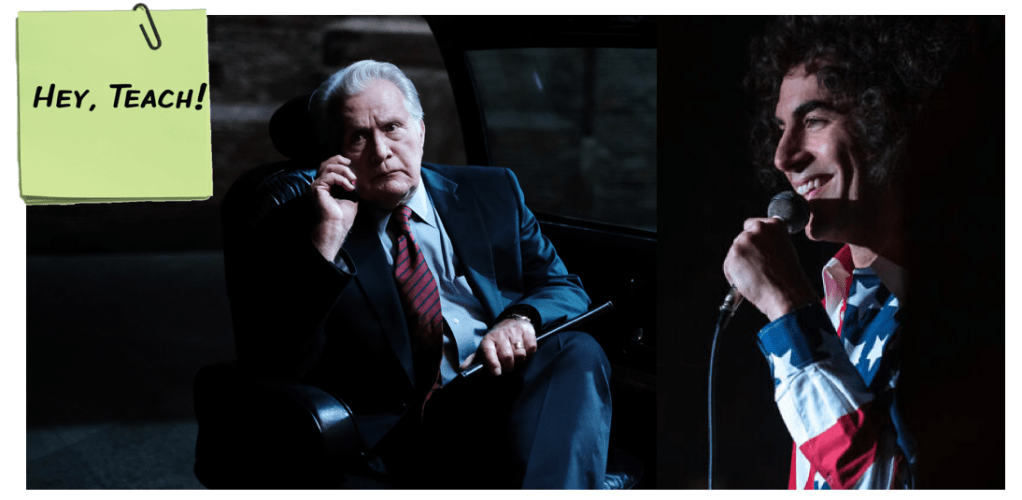
The many fans of writer extraordinaire Aaron Sorkin’s TV fantasy of the presidency, The West Wing, were able to luxuriate in nostalgia this week.

In support of Michelle Obama’s When We All Vote, a non-partisan (Note: Ahem) organization that seeks to encourage voting in groups that too often sit out elections (e.g. young people, communities of color), HBO Max presented a staged reading, with the original cast, of Sorkin’s favorite WW episode — season 3’s Hartfield’s Landing.
This is where senior White House staff obsess about what the first reported presidential primary vote will be in a fictional 48-person New Hampshire town. After all, the results will dominate the news all day and, if it goes well for the POTUS, it will set a positive tone for all the hoped for favorable press their boss will receive.
And, as we all now know, there is nothing more urgent than setting an upbeat tone in order to win the White House. Right?
Well, history turns on a dime and what seemed urgent in 2002 and then became just plain silly in light of 2016 could easily, once again, become necessary in 2020. Right?

Sure! As I explained to my students this week online via Zoom, because there’s been a deadly pandemic going on for the last eight months and we couldn’t possibly all be in the same room or breathe the same air, history swings like a pendulum – from left to right and back again.
To which one of them blurted out:
So, when IS it going to swing back?

I, of course, immediately blurted back that they had to go out to the streets and, while safely socially distanced, swing it back the way they wanted. Until I realized this was not only likely impossible but sounded like a Grade C imitation of the response Sorkin himself would give.
Nor do I even believe it in the darker days of 2020. Which, I confess, is most all of them.
Still, when you live in a purported democracy that’s about all you have, isn’t it? It’s really just in how inspiring a way you can express it.

Well, Mr. Sorkin’s once again done an excellent job on that score as both writer and director in his latest film, The Trial of the Chicago 7. (Note…. the segue).
Dropping on Netflix just one day after the gauzy West Wing redux, his new Netflix offering (Note: Because, well, our pandemic politics has shuttered most movie theatres and shoved this planned major theatrical release from Paramount right into your home stream) is anything but delicate.
Instead, it’s a theatrically cynical look back into history when the U.S. government was intent on using politics and every piece of the legal system, whether illegally or not, to punish and jail those who dare to take their protests onto the streets.

Side Note: It seems particularly fitting it dropped after a week of Senate hearings aimed at putting arch Conservative (and self-possessed handmaid) Judge Amy Coney Barrett on the US Supreme Court. When asked this week by a Republican senator to name the five freedoms the Bill or Rights guarantees for all Americans, Ms. Barrett could only think of four – freedom of speech, freedom of religion, freedom of the press and freedom of assembly.
The one freedom that stumped her?
The right to petition the government for redress of grievances, OR, freedom to protest.

Fittingly enough, the clairvoyant Mr. Sorkin’s new legal drama takes us back in time to the late sixties, when this very issue was very, very VERY publicly spotlighted. This was a time when the federal government, newly controlled by the uber conservative and freedom of protest loathing Richard Nixon, decided to charge a group of young and somewhat renowned and popular anti- Vietnam War protestors for conspiracy and crossing state lines with the intent to incite riots at the site of the 1968 Democratic Convention in Chicago.

Take the antics of this cross-section of long and short-haired, hippie and preppy, respectful and comically stoned and disrespectful young people – and mix it with a real-life first amendment-hating and often blatantly racist judge tasked with carrying out those charges by newly installed and diabolically fascist federally empowered Nixon flunkies and, well, you can see where hilarity and mass national conflicts could ensue.
And where the comparable present-day hyperbole might begin.
It’s not a particularly pretty story to look back on, even with the much hoped for and very pithily delivered Sorkin bon mots. But even if you don’t love Sacha Baron Cohen’s Borat movies or his borderline irredeemable prankster antics, you couldn’t experience anyone better portraying the late Yippie leader Abbie Hoffman, who famously feasted on yanking the chain of the establishment and even of his co-defendant Tom Hayden, the more straight-laced founder of Students for a Democratic Society so well evoked by Eddie Redmayne.

Ditto for so many others, including Frank Langella’s racist persecutor/Judge Hoffman, whose shared last name with Abbie is an ongoing joke, as well as a brief but memorable appearance by Michael Keaton as Ramsey Clarke, the much more liberal former attorney general from the previous Johnson administration.
It is the shifting of the pendulum of justice between left and right, liberal and conservative, and everything in between that gives the story of this Trial of the Chicago 7 its present day resonance. At least for those of us hoping that this Election Day is about to once again cause a major shift back to what we used to think of as American sanity.

Yet at the same time it’s also this very issue that makes this movie inescapably scary. As one watches the absolute conviction a single judge, backed by a new presidential administration, has towards enforcing racist and regressive views, and notes how willing both are to twist or even ignore the very laws it’s charged with enforcing in order to permanently silence those who oppose them, one can’t help but wonder — how many times CAN the pendulum shift back and forth before it all together cracks apart?
Sorkin’s courtroom antics and filmmaking dexterity do a great job of zeroing in on the core issues at stake and give us a happy ending from five decades ago that ensures American democracy will continue.
But this week’s US Supreme Court hearing, the one that will very likely (and somewhat dubiously) enshrine perhaps the most conservative judge in American history onto OUR Supreme Court, combined with the challenge for the umpteenth time of once again shifting the American presidency away from, well, fascism (Note: Fascism being the kind word), is a very steep, real life, hill to climb.

Especially in the middle of a global pandemic.
Where our ability, and even right to vote as we can, is being challenged at every turn.
Sorkin has written and imagined the way forward for us by going back in time. But we now have to figure how to carry it out.
Another pat answer from me that borders on the cliché.
Still, life’s never been quite as efficient, or satisfying, as any one Sorkin movie or TV series, much as we all (Note: Well, the majority of us), would like to continue to pretend it to be.
Bob Marley – “Get Up Stand Up”



 notes from a chair