Quadrant over Quality

In the last three weeks, I’ve seen three new movies which have already grossed over TWO BILLION DOLLARS worldwide – Obsession, Disclosure Day and Spiderman: Brand New Day.

The truth is – I didn’t love any one of them.

Womp Womp Power Chainsaw Man GIF - Womp womp Power chainsaw ...

It’s not that they were awful, it’s just that, well, meh.

I feel like I sound old.  And why not?  I guess I’m now on the old-er side.

But this doesn’t mean I don’t love those kinds of movies. 

Meaning ones that can make lots of money quickly and appeal to broad swaths of what movie marketers term the four-quadrant audience. 

Analyze GIFs | Tenor
Time to start math-ing!

This phrase has been floating around for decades and I’ve mentioned it before.  But for those unfamiliar, it means:

Quadrant 1: Males under 25

Quadrant 2: Females under 25

Quadrant 3: Males over 25

Quadrant 4: Females over 25

A four headed monster

It can signal family-friendly, but not necessarily.  There are dramas, sci-fi blockbusters, superhero, heartwarming comedies and horror films all included.

Not to be defensive (Note: Though what can you expect when you’re really far away from the minimum requirement in even the third quadrant), but I did tremendously like and almost loved The Odyssey, which has already grossed over ONE BILLION DOLLARS worldwide on its own in the last month.

What Is The 'Odysseus Screaming' Meme? The Breakout Reaction Meme Of Matt  Damon Yelling In 'The Odyssey' Movie Explained
Really I’m there for Samantha Morton

And then there was Project Hail Mary, an early hit this year I thoroughly enjoyed A LOT that is up to almost SEVEN HUNDRED MILLION DOLLARS internationally at the box-office.

Both of these have my admiration because they tried something a little bit different, developed their characters, have very few plot holes, offer a few earned clever twists and deliver an ending that feels real and earned.

Hail Mary GIFs | Tenor
Plus I mean… who can argue with Rocky?!

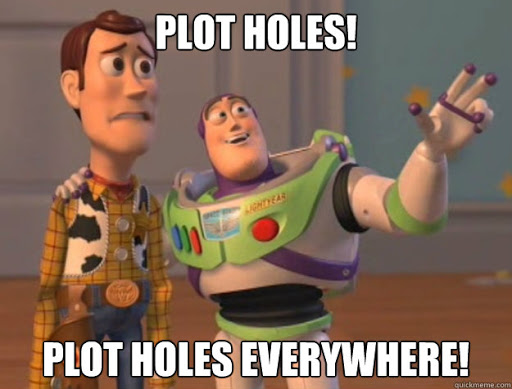
This is not the case for many films in the four quadrant system these days.  Often they have plot holes the size of 30 foot bagels (Note: Just where were all of the other victims of those One Wish Willow toys in that Obsession town?).  Or too many messy and unanswered pertinent questions (Note: Didn’t those Disclosure Day aliens have a planet that missed them?).  And far too many Easter Egg drops from previous films, and so many Irving The Explainer plot backstory moments, that the diffused present day action can’t sustain enough momentum for us to believe or care much about anything happening in the present day (Note: New Spiderman makes one long for a new origin story of something or someone else that’s super… simple).

And yet, who can argue with TWO BILLION DOLLARS?

Money angel''
what plot holes?

That’s what the fans and the studios of these films could and would likely say.

The other day I flipped on to Turner Classic Movies and they were showing Annie Hall and I, like everyone since, was once again charmed by the wit, talent and originality of the forever missed Diane Keaton.

It’d been years since I’d seen this very simple yet unique love story that Hollywood and the country took to heart and I quickly remembered why it was a film I did love and continue to love.

Diane Keaton Became a Fashion Icon With Annie Hall in 1977
Oh how we miss you Annie

It came out in 1977, a time when I was very much a member of that most desired QUADRANT 1 marketing demographic. 

This was a time when major studios made and offered movies in lots of genres.  Films that succeeded at the box-office that didn’t have plot holes the size of a giant baked good.  Or were not overstuffed with homages and unanswered questions.  And actually took the time, as some films that capture the zeitgeist do, to develop their characters and thoroughly earn their place in the hearts of millions.

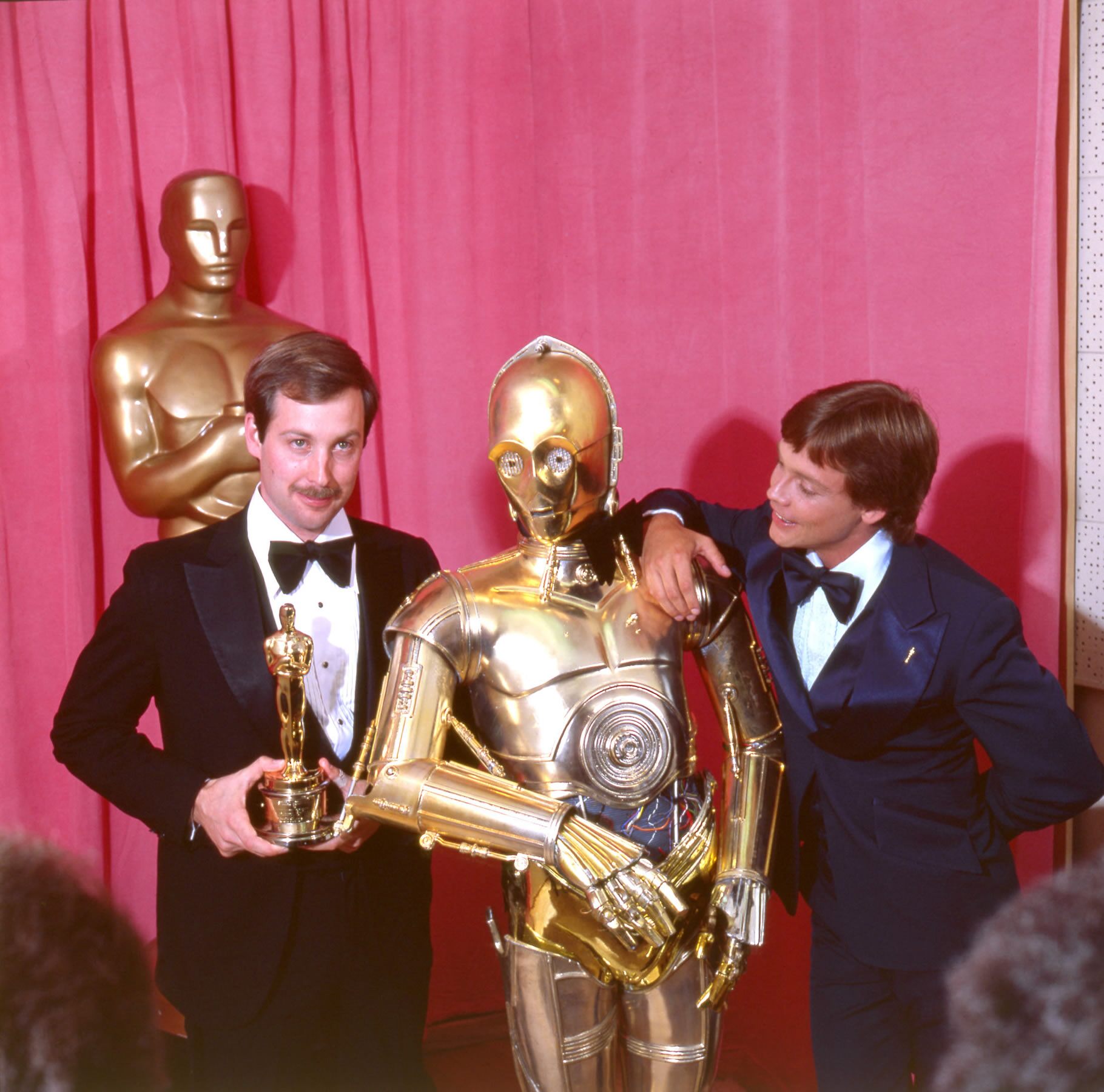
Aside from multiple Oscar winning Annie Hall (including best picture), here are some other Oscar contenders that came out in 1977.
The 50th Academy Awards | 1978
Ya ready?

Other best picture nominees (there were the proper mere five back then) were: The Goodbye Girl (a Neil Simon character rom-com), Julia (a serious politically-based drama), STAR WARS (a character-based sci-fi blockbuster), and The Turning Point (a show business based relationship movie set in the world of ballet).

Contenders in other categories include other films that moviegoers talk about to this day and that, in their time and by contemporary dollars, would be considered blockbusters.

Try this duo:  Close Encounters of the Third Kind and Saturday Night Fever.

Saturday Night Fever GIFs - Find & Share on GIPHY
Here for this

It was also the year of Oh, God!, Pumping Iron, Slapshot, Eraserhead and New York, New York.

Sure, the #2 film at the box-office that year was the paper thin, low rent Smokey and the Bandit and #6 was the semi-coherent, movie-star bloated A Bridge Too Far.  But there were lots of other offerings, SO many as a matter of fact, to even things out.

This is not a critique of the taste of the contemporary mass audience.  People love movies and want to get out of the house to see something new.  But they can only pick and choose from what the studios sell and the movie theatres offer them.  

It just seems that if 1977 could give us Annie Hall, Julia and Saturday Night Fever – as well as Star Wars, Close Encounters of the Third Kind and for god sakes, Smokey and the Bandit – that 50 years later it’s not too much to demand that studios, distributors and their billionaire patrons take the time to do a little bit better.

Some eCards New Years on Strikingly
This is probably the best the studios can do

And that we all demand a hell of a lot more.

The Bee Gees – “Staying Alive” (from the Saturday Night Fever soundtrack)

I’m Going to Dreamland

** Minor Spoilers of Netflix’s Hollywood ahead **

I don’t know about anyone else but for the last few months I’ve been living in dreamland.

This is a good place to be for about 50% of the time, given the realities of a worldwide pandemic.  Which doesn’t change the fact that for the other half of the time it’s been, let’s face it, kind of nightmarish.

Yeeps

Of course, nightmares are also dreams, just ones that bring out strong feelings of fear, terror, distress or anxiety.  At least, that’s the dictionary definition.

Though most of us don’t think of dreams or dreamlands quite that way.

We Americans especially like our dreams.  We like them so much we even once upon a time coined the aspirational phrase, The American Dream and had ourselves believing it for more than several generations.

In 1950, anthropologist Hortense Powdermaker took this idea one step further by famously naming Hollywood The Dream Factory.  In that seminal book, she masterfully dissected the push and pull between art and commerce in a culture and industry that has never done particularly well at balancing both.

Still, we soldier on and attempt to make sense of things, don’t we?  In much the same way we try to understand how a wonderful dream could just as easily become an unendurable, soul-crushing nightmare.

Certainly anyone who has lived in Hollywood for any length of time could wax poetic on both (Note: Depressingly so, for at least 50% of the time).  As a Hollywood resident myself for close to four decades, well, don’t get me started and don’t even ask where I would start….

It was with this understanding that I approached Netflix’s new Ryan Murphy miniseries Hollywood.   That is because, well, there is no other way to approach it.

Let Miss Patti take you for a ride

Hollywood is a perfectly flawed, dreamy, nightmarish and confoundingly implausible representation of the American, well, dream, told through the lens of moviemaking in the 1940s.

It’s fabulously beautiful in both sets and human beings, the latter of whom seem almost inhuman, especially the men.  But that’s the point, isn’t it?  When you can’t get beauty in real life Hollywood can always, to some degree, provide it.

How is this allowed?

It is also fabulously absurd in a fairly satisfying way as it attempts to bridge the gap of facts and fantasy by using the lives of both real life Hollywood people and make believe characters we might have enjoyed them encountering in order to address the sins and Pyrrhic victories of our collective pasts.

I, for one, don’t mind seeing a shy, soon-to be-famous Rock Hudson falling in love with a talented and very hot Black male screenwriter.  Not to mention, it’s pretty thrilling to experience the smart mouthy woman married to an obnoxious, know-it-all studio chief get the chance to choose what movies she thinks should get made when her husband becomes unceremoniously, um, indisposed.   Most especially, who wouldn’t enjoy seeing Eleanor Roosevelt making a convincing case for the first Black female star of a mainstream Hollywood movie to a mini-board room of power brokers and somehow managing to change history?

Too much, too silly, too ridiculous, too many plot holes?  I don’t think so.  And yes, of course, there are and it is.

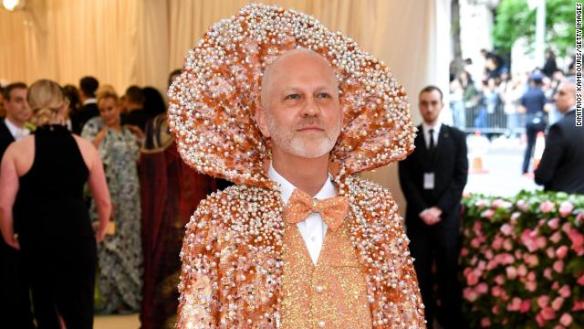
Like most Ryan Murphy shows this is the point, the conceit, the infuriating flaw and the watchable/unwatchable challenge we’re up against.  We dealt with it to good and bad effect in every season of FX’s American Horror Story, raged at it all during the first season of his continuing Netflix series The Politician, admired the tight balancing act in the Emmy award-winning The Assassination of Gianni Versace and marveled at the sheer strangeness of it in his first bona fide big hit TV show, Nip/Tuck.

Not to mention his most delicious camp delicacy #mamacita4Ever

The one thing you can say about Mr. Murphy’s work is that it’s seldom drab and dull.  As a fellow gay man of a certain age, I’ve personally dubbed him The Great Pasticher.  Take any one of his series and you’ll find multiple homages to scenes from famous movies and TV shows, history, current events and pop culture in general all twisted in whatever fashion HE deems fit in order to tell a story.

It’s a love it or hate it approach to art but it’s almost never boring.  I’d rather deal with a zillion plot holes than be bored to tears and on this score, nothing he does, even the trashiest of the campiest, ever totally disappoints.

Boring is not in his vocabulary

One of the primary conceits of Hollywood is the centerpiece location of the Golden Tip service station (Note:  Oh yes, he did come up with that name), where men, women and presumably anyone in between can hire one of many hunky hot male attendants for sexual favors and get their every tank imaginable filled to dizzying effects.

All you have to do is drive up to the gas pump, look into the attendant’s eyes and utter the magic phrase:

I WANT TO GO TO DREAMLAND.

Take me away

And then, yeah, it’s just that damn easy.  In fact, far, far simpler than finding the balance in real life and, well, who wouldn’t like that???

Of course, this fictional filling hole is not made up out of thin air but rather a roman à clef version of a gas station in the real 1940s Hollywood famously run by the late Scotty Bowers. 

If you’re a gay guy of, once again, a certain age like myself and Mr. Murphy and haven’t heard of Scotty at this point, well, that’s impossible.  But for the rest of you, check out his 2012 memoir, Full Service, about the business in question and you’ll see Hollywood (the miniseries, at least) strays only far enough away from the facts to make its overall point.  You might also want to check out the 2017 documentary of his life, Scotty and the Secret History of Hollywood and ask yourself if, at the end of the day, you don’t find everything he says and has claimed, well, mostly true

This is the consistent aspirational nature of much of Mr. Murphy’s work.  That would be a what if fantasy correcting the past for any of us who have been or ever felt marginalized. (Note: This of course, is pretty much everybody as far as real-life Hollywood is concerned).

It’s not always an accurate or totally buyable portrayal but, somehow, if you squint, he often makes it seem possible and, strangely, beautiful.  It’s a different kind of dream factory, to be sure, but one that gives us a brief respite from the Nightmare (Note: Pick One) we’re currently living through quite nicely.

Netflix Hollywood Trailer Music