
Let’s talk about legends and the people who inhabit them. The common dictionary definition:
Legend: An extremely famous or notorious person, especially in a particular field.
Of course, that’s only part of the story.
Renee Zellweger gives an astonishing performance as the legendary Judy Garland in the self-titled new film, Judy. It’s not so much that Ms. Zellweger exactly recreates her singing voice or her entire autobiography during the last few years of her life. It’s that somehow, and in so many ways, she captures the essence of Judy’s legend.

Make room on your shelf, Renee!
Or at least what we believe was, or could have been, her essence.
It’s there in her tremulous voice, her humor, her raw vulnerability, her fight, the nuances of her mannerisms and her underfed yet somehow still powerful physicality.
Not only is a tour de force of determination in her every and many close-up(s), it’s a channeling of duality. She shows us the core of what we publicly saw of Judy in her many stage, screen and TV appearances AND she gives us a peak into the charming and yet not always admirable part of her humanity that we never knew and might not have ever imagined.
None of us are ever one thing all the time. We are a mix of light and dark, good and bad, strong and vulnerable and, trite as it may sound, love and hate.
This is amplified ten times over with those we’ve crowned as our legends.
No doubt Donald J. Trump will go down as an extremely different type of legend in our history, but a legend nevertheless. Most American presidents in history occupy legendary status during their era and for many the legend manages to sustain through generations and even centuries. (Note: See above definition).
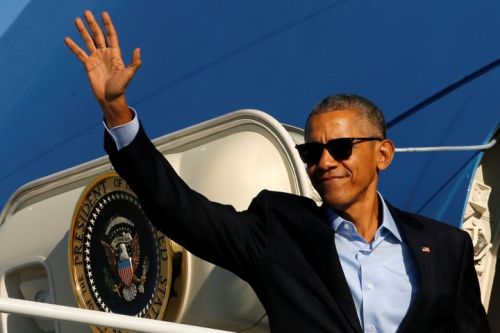
Sigh… I really need to stop looking at pictures like this #coolobama #sighagain
The breadth of career, the various distinctive looks, the marriages, the overly insistent publicity, the rise and fall and rise again – these are among the many things Trump and Judy share. It may be a sobering thought but it doesn’t make it any less true.
What is also true is that ultimately those are artificial markers we, as society, have constructed for ourselves in order to understand how one human rises into the public consciousness and manages to stay there for years, decades and very often even beyond that.
Roughly as long as the shelf life of a Twinkie #thatsalongtime
Trump and Judy might both be modern day legends but in so many other, more important ways, they couldn’t be more different.
Trump from the beginning used his role as a renowned entertainer to divide people. The phrase that cemented his stardom in the mass media zeitgeist was, YOU’RE FIRED! He ran for the presidency on a platform of Make America Great Again but never before in American history has the country been this divided. While Trump certainly did unite a significant subset of the country he polarized us a whole and continues to do so as he and his presidency amble towards impeachment.

Haven’t we been crawling there all along? #itstime
A deeper dive into specifics allows us to see this is not where it ends. Trump’s talent is self-promotion, grievance and sheer rage/anger. It can be amusing in cynical, seemingly too politically correct times but it doesn’t cause true pleasure like the lilt of a spectacular musical note. Nor does it allow us to relax and let down our guard when we watch a scene in a film or on TV where a performer is bold enough to expose publicly the kind of vulnerabilities we keep secret for fear of risking our own personal shame.
With Trump weakness is BAD, not a given. It is an aspect of our ourselves so impossible to admit that it must be put through his own personal, branded wood chipper and spew out as aggressive disdain and a call for destruction of whomever we deem as the other.
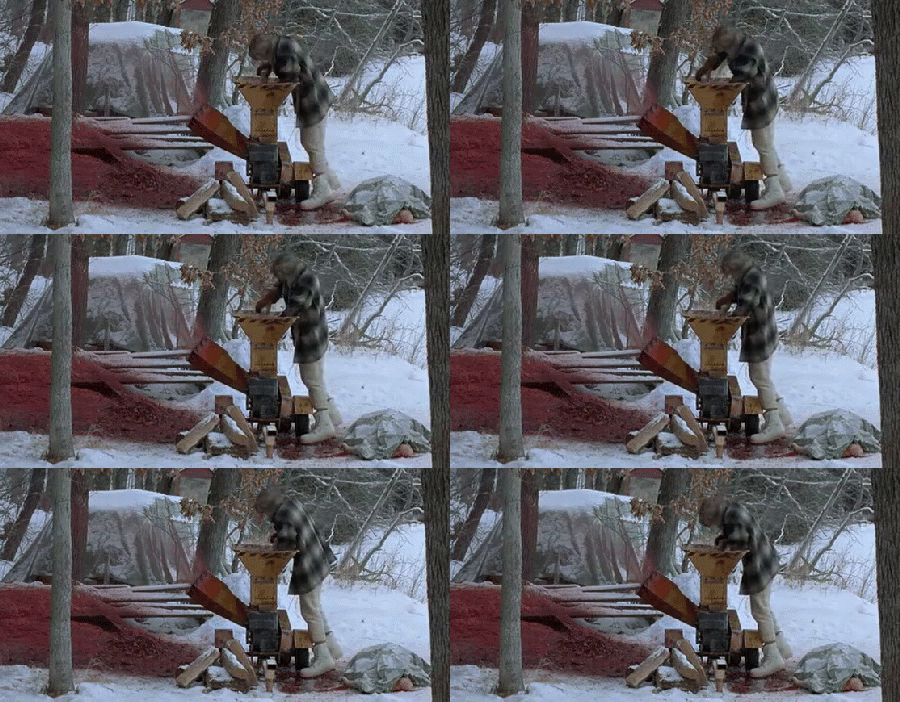
What my brain will do to 2016 – 2020
Rather than cleanse ourselves through a good cry or the spontaneous live energy of a song delivered by a legendary vocalist, we cloak ourselves in an adrenalin rush of negative performance art that blocks out everything else. We are assured that no matter what our problems are it’s the outside world that is responsible for them.
The system that’s failed the collective us has made us believe that what we deem as our many rights have only been made wrong by weak leaders in today’s age.
The Trump worldview harkens back to his late eighties mantra that it’s you against the world and that greed and gold and gilt for you and your family are what’s good.

Gee thanks, Gordy #UGH
If you don’t have those it’s the fault of the Mexicans, the drug lords, the non-white invaders, the too privileged leaders who are a disgrace for selling out the real Americans, those people whose bodies they used and willingly stepped on and over to get them where they are today.
What made Trump legendary from the beginning was his lack of shame and ability to vomit out his authentic self no matter what the elite thought of his antics. He was a crude, trash-talking, show-off with seemingly endless cash, with an amusing glint in his eye and an ability to crack an off-color double entendre or blatantly dirty jokes in public the way we and our families all did in private behind closed doors.

Trying to think about Trump as a legend #imtrying
Whatever we say about Trump he evokes for many what publicly passes as an authentic self. Many would argue Judy did the same, from her Wizard of Oz days on through the territory covered in this latest film of her life.
Certainly, the public persona of any legend is not truly authentic. No persona, light or dark, good or bad, can ever be all things any human being is in any given moment or in total.

Except Julie Andrews… she is EVERYTHING
What is most important when we speak of our legends is considering not who they are or were but what they truly do for us and why. In whose company do we want to live in through our eternities? Which of these legends, despite their humanness, gave us something positive to consider, and which others of them brought us down as a collective whole?
Renee Zellweger – “Over the Rainbow” (From Judy Soundtrack)
 notes from a chair