Twenty First Century Films

popcorn

Movies aren’t what they used to be.

This is the GOLDEN AGE OF TELEVISION!

Movies suck.

What did you binge watch lately?

There is NOTHING to see at the movie theatre!

Can I borrow your Netflix password?

Movies, in general, have taken a critical bashing as of late and it’s not entirely unwarranted. Let’s face it, the Suits are drunk with sequels and superheroes and don’t really give a hoot what makes sense or doesn’t if it can deliver millions of bodies in potential theme park rides, sequels, spin-offs and merchandise.

Oh how the mighty have fallen #TeamJen #Argowho?

Oh how the mighty have fallen #TeamJen #Argowho?

Films have taken on the business school lingo of a precious asset – a property that exists not solely for its financial value at the theatrical box-office or, heaven forbid, its creative content. Rather, they are seen in most of the top towers and executive suites as a commodity to be leveraged into many, many smaller and larger off-springs –much like a Triple Crown winning horse that is put out for gelding after it serves the greater good.

That’s fine. For them. But it’s not the entire story of 21st century film.

Quite randomly last week I came upon a new list put out by the BBC. NO, DON’T STOP READING! This list actually applies to you – the moviegoer. Or more broadly, the movie fan. Instead of surveying critics and audiences to compile a list of the 100 greatest movies of all-time, or some such subset that would spotlight drama, comedy, action or presumably, even porn or snuff films in the future, they tried something novel. (Note: No, not an actual novel, as in reading – we all know no one does THAT anymore).
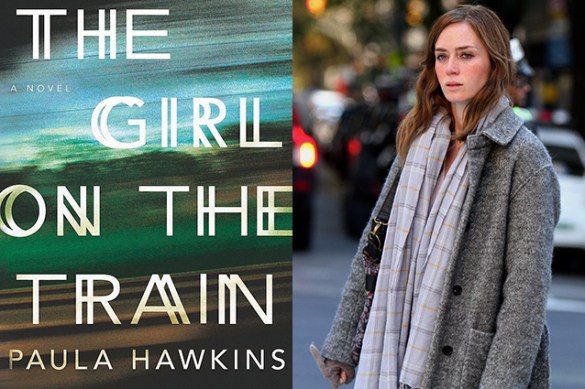
Why read when you can see Emily Blunt in the movie version? #duh

Why read when you can see Emily Blunt in the movie version? #duh

Yes, the Brits had the tenacity to compile a list that I, Mr. Movie Fan, had never seen before. That would be the top 100 films of the 21st CENTURY.

Huh? What is that – a list of 10, or maybe 20 movies, most of which none of us have ever seen before? Or want to see? No, surprisingly not at all.

Okay, technically the list is of 102 films and it does stem from 2000-2016 which means the first year it charts is technically not a part of the 21st century – which began in 2001 (Note: Apparently 2000 was an irresistible film year one couldn’t turn away from). But who really cares? The point is, this is a very narrow period where 177 film critics from every country in the world (Note: Antarctica was the exception, which brings up the whole question of climate change and access we don’t want to get into) actually agreed there were 100 plus movies, many of them AMERICAN, that are actually worth watching, remembering and…wait for it…HONORING.

Believe it Olivia.

Believe it Olivia.

In case you are wondering – no, there is not a sequel in the bunch.

In case you are further wondering – yes, there is exactly ONE superhero film in the bunch and you probably have already rightly guessed which one is indeed The ONE. (HINT: Uh no, it’s not The Matrix. Plus, Neo is not really a superhero and anyway, he first appeared in 1999. As for the 2003 sequels – well, let’s not go there).

Which is the pill that helps me take a nap?

Which is the pill that helps me take a nap?

What this list reminds us of is that – WAIT, there are lots of movies I’ve enjoyed in the last 15 (okay 16) years. Sure there are too many clunkers, or cynically made assets. But maybe, just maybe it’s worth forgetting the Netflix password every once in a while and instead go out to an actual theatre before the art form, as we know it, dies altogether. Or worse yet – becomes solely a corporatized asset.

Please be good. Please be good. Please be good. #clingingtohope #heygirl #lalaland

Please be good. Please be good. Please be good. #clingingtohope #heygirl #lalaland

A complete list will be shared below but how about just the top six right here?

  1. Mulholland Drive (2001, David Lynch)
  2. In The Mood for Love (2000, Wong-Kar-wai)
  3. There Will Be Blood (2007, Paul Thomas-Anderson)
  4. Spirited Away (2001, Hayao Miyazaki)
  5. Boyhood (2014, Richard Linklater)
  6. Eternal Sunshine of the Spotless Mind (2004, Michel Gondry and written by CHARLIE freaking KAUFMAN, OKAY?)

All of them original, beautifully made and meaningful. Are they my top six or your top six? Perhaps not. But they are inarguably as good as many of the classic movies from decades before.
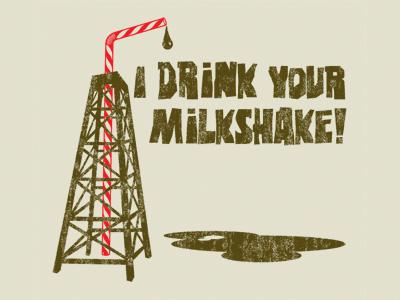
Added bonus: This phrase being added to our world.

Added bonus: This phrase being added to our world.

Certainly, any LIST inherently has its head-scratchers and personal duds and this one is clearly among them. Notice I stopped at six because #7 is Terrence Malick’s The Tree of Life, which you couldn’t pay me enough money to endure five minutes of ever again. Perhaps this confirms the long held belief that I am a philistine, but that is not the point. We all have our personal Trees. And in fact, I’d pay to watch other glorious Malick films such as Badlands and Days of Heaven over and over if you didn’t bring up the subject of #7 ever again.

That dinosaur sequence though. #neverforget

That dinosaur sequence though. #neverforget

As for some others The Coen Brothers’ No Country For Old Men and Inside Llewyn Davis ranked #10 and #11 respectively. David Fincher’s Zodiac was #12 and Alfonso Cuaron’s brilliant Children of Men was #13.

 You want less, well, pretentious? (Your word, not mine). Pan’s Labyrinth was #17, Mad Max: Fury Road was #19, The Social Network was #27, and Wall-E was #29.

Favorites of mine like CHARLIE freakin’ KAUFMAN’s Synecdoche was #20, while Sofia Coppola’s Lost in Translation was #22, Paul Thomas Anderson’s The Master was #24, Christopher Nolan’s Memento was #25 and Pedro Almodovar’s Talk To Her came in at #28.

Let’s also give separate credit to The Dark Knight at #33 because, well, think of the odds against the whole thing working the way it did when there was merely a blank page and no real concept but a history of…ASSET. 

See Ben, this is how it’s done.

See Ben, this is how it’s done.

As I continued down the list I came across any number of films (40, in all) I hadn’t seen, some I really didn’t care for (Okay, I admit it – I’m too old for Wes Anderson) but others I had forgotten had come out in the not so distant past. Of the latter how about: Crouching Tiger Hidden Dragon, City of God, Brokeback Mountain, Melancholia, Moulin Rouge, Inglorious Bastards, The Great Beauty, The Hurt Locker, Her, Amelie, The Pianist, Ratatouille, Finding Nemo, Spotlight (Note: I have a very short memory) and Requiem for A Dream.

What pleased me most about this list is that it coincided with the first week of the fall screenwriting class I teach.  The list of top 100 films on everyone’s mind are usually the 1, 2, 3 classic movie punch of Citizen Kane, The Godfather and Casablanca. Certainly, these are all great, timeless movies – as are many of the others on that usual classics list.   But for young people – as well as for some of the rest of us – consistently remembering these as the best of what the big screen has to offer can’t help but feel a little depressing at some point. Because it evokes a golden age that is long gone and, very likely, will never return.
Le sigh.

Le sigh.

This is why the BBC did Americans and moviegoers worldwide – not to mention the future of film – a great service by compiling this new grouping of films. Perhaps it doesn’t evoke a new golden age (though maybe it does) but it does prove the movies are alive and well and can be for some time to come. Though only if we get out our pods and mosey on down via our people mover of choice to check some of them out. Judging by the newly motivated faces on some of my students perusing the list, this will continue to happen in the near future. But at the very least, we could give them a little help.

PC University

Screen Shot 2015-08-16 at 1.07.57 PM

There’s been quite a lot of swill in the air lately about political correctness. Mostly on how our society has devolved to the point where you can’t say anything anymore and how the nation’s college campuses have greatly contributed to this trend with affirmative action-based helicopter parenting under a doctrinaire, left wing manifesto of bland, overly sensitive inoffensiveness.

Bull crap.   Or horseshit if one prefers the non-p.c. version of bull crap.   And this is particularly the case when it has to do with college campuses and, more broadly, the millennial generation.

Interestingly enough, a lot of this criticism has been coming from any number of aging baby boomers that are no doubt pissed off at a slightly more benevolent world (well, in some sectors) that they no longer understand and thus feel excluded from.  Or perhaps now that many have college-age children, or need them in their audience to stay relevant, they simply mourn the days when they (or others) could utter a racial epithet, gay joke or sexist remark without having their reputations twittered to death all over the world. Though they could simply resent the fact that their kids don’t have to endure the hard knocks that they believe made them into the strong, successful adults they are today. It could be just that.

Is this how boomers see millennials?

Is this how boomers see millennials?

I feel like I can say this because I am a baby boomer. I am also a college professor who gets along quite well with my students – even when we vehemently disagree – which we often do in everything from movies to politics to Beyoncé (Note: Don’t hate me, she’s talented but I just don’t get what the big deal is).

Still, I find a great kinship with them because in some small ways – even if only generally – they seem to be living their lives by the sort of mythical moral code that was set forth in the 1960s in Broadway shows like Hair and albums like the Beatles’ Sgt. Pepper’s Lonely Heart’s Club Band. That would be a world where it was not cool to disrespect people of other races, sexual preferences and religions “just because” you want to make a point and are too lazy or annoyed to do otherwise. For these views, some of my students have granted me honorary millennial status. Though I’m sure in the minds of many of my fellow boomers I am simply the cause of their limited thinking – exhibit A for why our educational system is a disaster and, in turn, our American Empire will continue to decline. How can you lead when you’re so willing to go the extra mile for peace of any kind? And how can you wind up being #1 when you make a conscience choice to use equal amounts of intellectualism, heart and reality to make the most important decisions in life?

How? The same way Barack Obama was elected president of the U.S. twice. And why he would probably win a third time. The. World. Has. Changed. Have a seat or deal with the alternative. The latter is the option almost everyone I know 55 or over is desperately trying to keep at bay these days – irrelevancy, death or, perish the thought, The Republican Apprentice. (Note: Yeah, you know who I mean. Don’t make me say it).

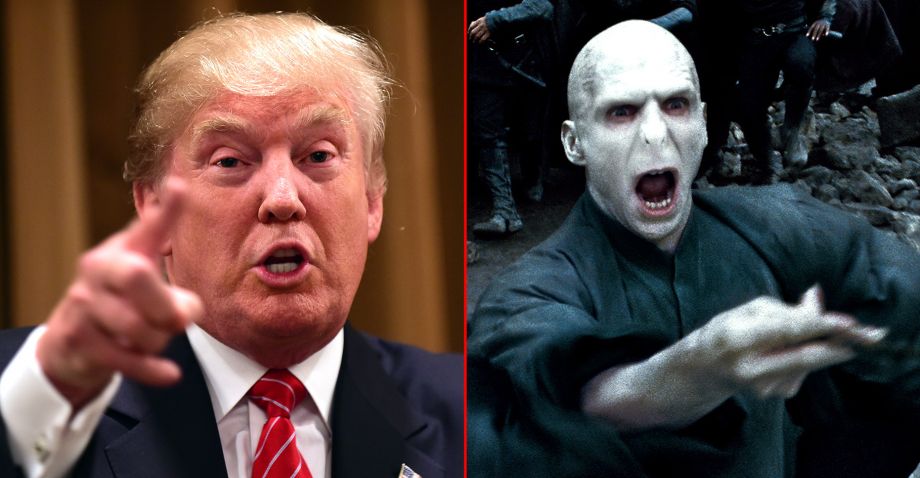
He who should not be named

He who should not be named

Here are two articles that surfaced this week in The Atlantic that brought this on, were forwarded all over the web and much discussed on TV and the media platform of your choice.

The Coddling of the American Mind – In the name of emotional well being, college students are increasingly demanding protection from words and ideas they don’t like.

&

That’s Not Funny – Today’s college students can’t seem to take a joke

As refutation to these I would offer up a third piece in Vanity Fair this month entitled,

Tinder and the Dawn of the Dating Apocalypse 

It will reassure anyone who believes recent college grads have a too-politically correct view of the world or that sensitivity TRUMPS boorishness.

The four writers of these pieces – three of whom are boomers, the other of whom is merely 41 years old – were on various news and entertainment outlets promoting their work, including HBO’s Real Time with Bill Maher.

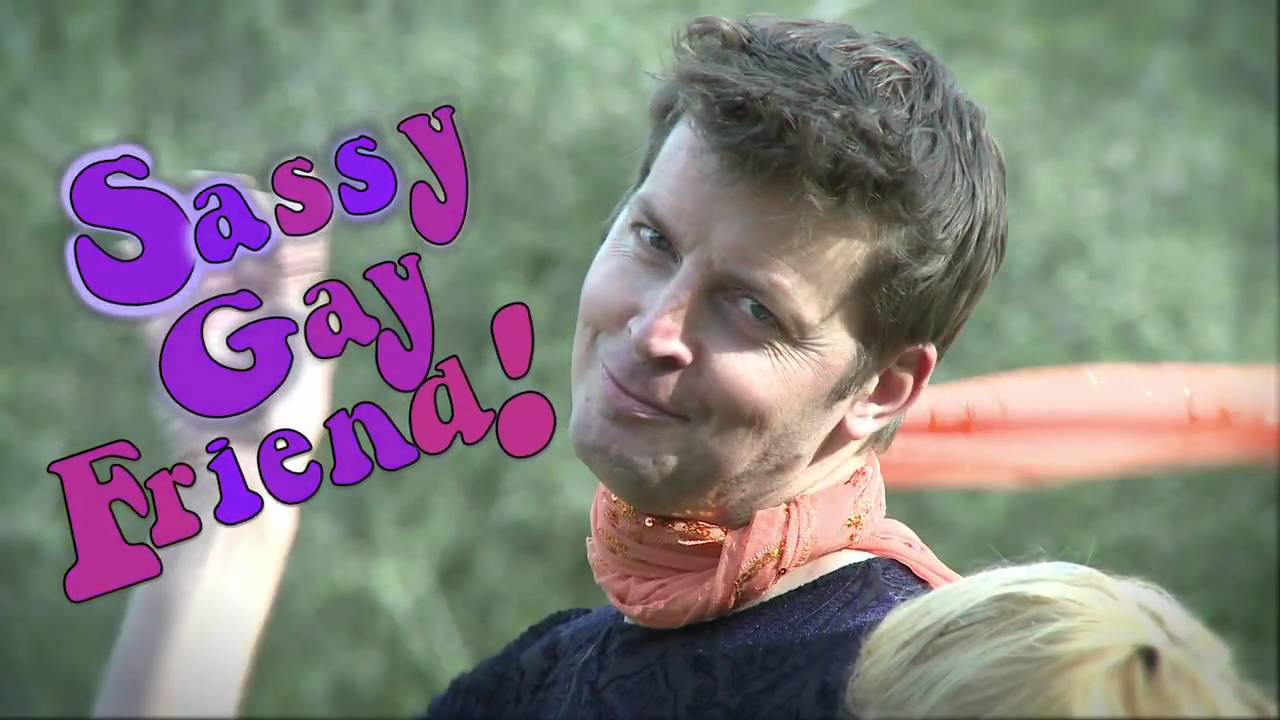
The fifty-something Caitlin Flanagan (That’s Not Funny) essentially covered the National Association for Campus Activities annual convention in Minnesota where 350 colleges came to book numerous acts, including comedians, for appearances at their schools that year. Essentially, she seemed in shock that two white students from a college in Iowa didn’t want to hire one of the convention’s most popular performers – Kevin Yee, a gay comic with a Broadway background who closed with a song about a gay man and his “sassy black friend.” Yes, he got hired by other schools but – Imagine, they thought the kids at their small Midwestern school wouldn’t get what he did??? How PC of them!!!

Look at your life, look at your choices

The writer and Mr. Maher essentially backed up that and numerous other groundbreaking revelations with quotes from comedians like Jerry Seinfeld and Chris Rock, both of whom recently noted they won’t play college campuses anymore because the environment is too-PC.

Question: What Jerry Seinfeld joke could possibly step over the line of political correctness?

Answer: Well, it was actually a line where he says people are scrolling through cell phones these days like they’re a gay French king. Right. Okay. Judge for yourself.

tumblr_nporseHjLl1ru5h8co1_500

Full confession: I didn’t think it was funny because it was perpetuating a straight guy stereotype and had no context within the rest of the joke. Yet when an edgy comic like Lisa Lampanelli rides the gay guys in her audience by calling them “faggots” and insults the sexual appetites of her GBF (Note: Uh, gay best friend?) I’m on the floor because in that same moment she lets us know where heart really is.

More troubling is the idea in Coddling, which bemoans the fact that certain words and phrases that either are or can be perceived as sexist, racist, or homophobic are listed as microagressions and discouraged in college classrooms. That is unless they are put into context. The authors vehemently write this way of thinking contributes to students being in a constant stage of outrage, even towards well-meaning speakers trying to engage in genuine discussion. They further argue shielding students from this is bad for the workplace and…bad for American democracy, which is already paralyzed by worsening partisanship.

Huh?

Here’s the thing. No one is saying you can’t use most words or phrases in a campus-based discussion – only that in an open learning environment what you say is positioned in a context. What makes colleges special is that they are a safe space where you can discuss tricky issues in a way that is too often NOT done in the real world. Does this mean college is NOT the real world, and sensitive matters demand guidelines upfront, especially for 18-22 year olds? If we’re at all to cover new ground and empower them as they get older to create new and perhaps even more innovative ways to move society forward in any sort of productive manner — Yes.

Gear up

Gear up

Of course, there’s another reason for this – words change. When I was in elementary school African-Americans weren’t even called Black people, they were Negroes. Actually, THE Negroes. That’s also the term Martin Luther King used in his I Had A Dream Speech. Not to mention queer was an insult to gays – who at best were referred to clinically as The homosexual. Yet queer has been adopted by many under 30 in the LGBT movement as their current word of choice. Not by me, of course, because, well, I AM a BOOMER.
My autobiography

My autobiography

Oh – and lest any of us forget – the time period I’m referring to was also a time where crude sexist men could diminish a woman’s thoughts or questions by saying or even implying she was having her period. What’s that – you still can? Oh.

The final refutation to all of this should, of course, rightfully come from the millennials themselves. This is what you will get when you read about the group of Wall Street, marketing and other types of college grads as they wax poetic about scrolling through pages and pages of nubile, sexy or otherwise available young prospects on the dating app Tinder even as they are sitting in a bar with other real live prospective sexual conquests right there before them. One guy in the story bragged he slept with 5 women in 8 days – Tinderellas, he called them – noting with those numbers you could rack up 100 girls you’ve slept with in a year! Another guy said he scored 30-40 per year via Hinge, another app, by selling himself as a boyfriend kind of guy even though he wasn’t and had no intention of changing. (Note: In fairness, Mr. 100 did chastise him by saying, ‘dude, not cool.’).

Don't go looking for the Goslings

Don’t go looking for the Goslings

This is not so much the end of the world but a mere continuation of the one they inherited. When I was a younger gay man I couldn’t understand the idea that when you picked up someone at a bar you called them a trick – as if you were a prostitute turning over customers. To me, it devalued the sexual act and myself as an individual. Of course, that was my feeling and hardly anyone else’s. I remember being called a nun, part of the skirt and sweater set and by one boyfriend, hopelessly middle class.

Yes, I’ve written about him before and he called me that a lot. I suppose there are worse things. In fact, I know there are. But you can’t say them to someone on any number of college campuses. Thank God. God, that is, as you know Him. Or Her. Or even if you don’t.