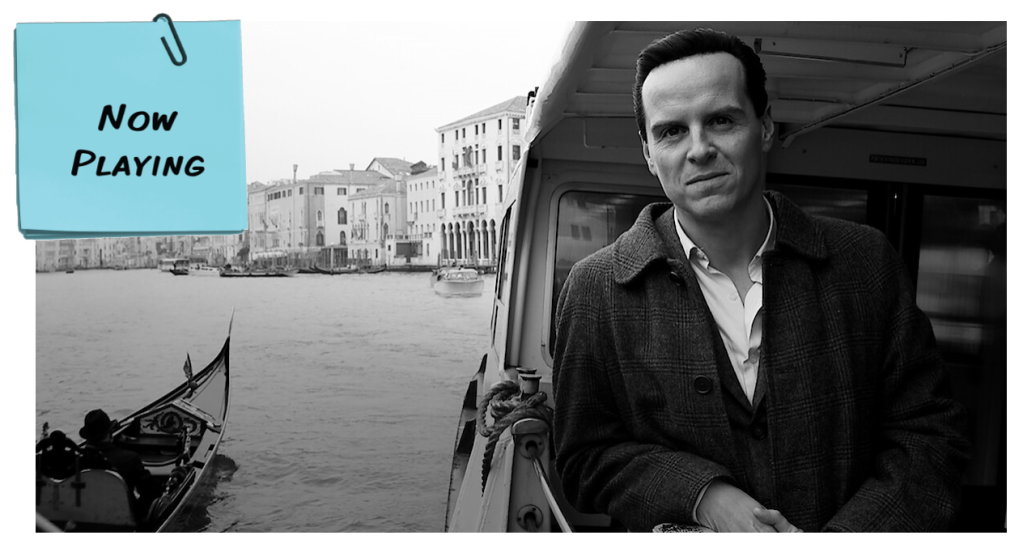
There are any number of shots and scenes in writer-director Steven Zaillian’s stunningly well-executed Ripley (now on Netflix) where Andrew Scott’s title character seems to be metaphorically salivating at the sight of even the most ordinary playthings of the rich he finds himself in the company of.
A thick, gleaming fountain pen or a thin paisley robe are no different than the expensive Italian villa with picture perfect views of the crystal blue sea. They are all precious objects to possess and consume (though not necessarily in that order) and, more importantly, they all seem to have equal weight in his mind.
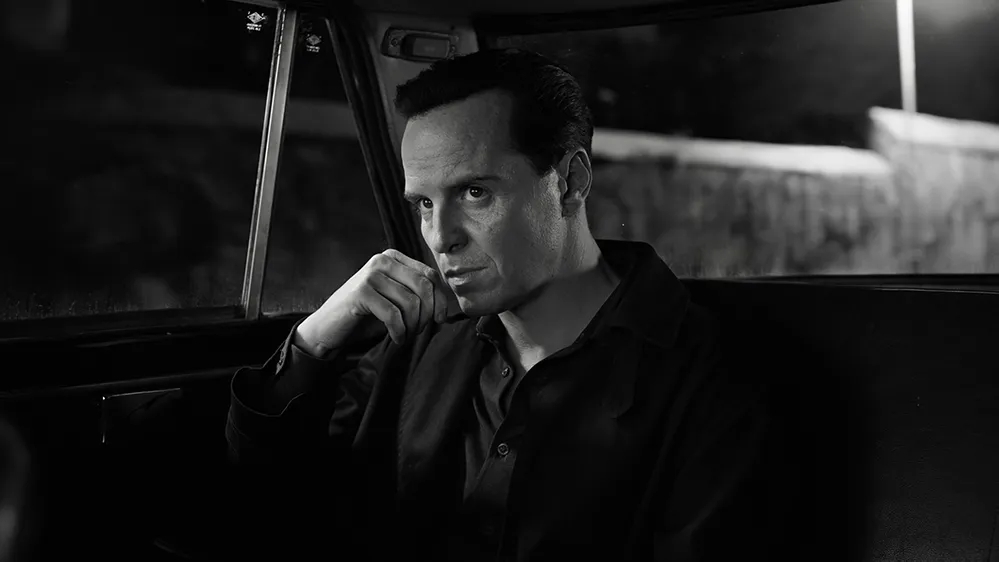
In Zaillian’s stark yet quite stylish black and white adaptation of the renowned 1955 novel by Patricia Highsmith, Scott’s subdued yet somehow quite intensely determined gaze tells us all we need to know about where this will lead.
It would never be enough for Tom Ripley (Note: Well, he calls himself that) to possess just one or most of the above, nor would he be satisfied if he possessed all of them.
The truth it seems to be rendering is that there will always be more trappings, more objects and more ways to live the perceived high life. But the secret, stubborn stench of one’s own inferior, ordinary self can never be rubbed out by mere things. Much in the same way those things can never understand what it’s like to be truly alive, or feel good about their lush, humanly perceived beauty.
Or feel anything.
This is why, after viewing the first two episodes, all I could think about was just how relevant this Ripley is for understanding the psyches of a certain type in our current billionaire class in these anything but United States – the either Trump supporting Trump agnostic.
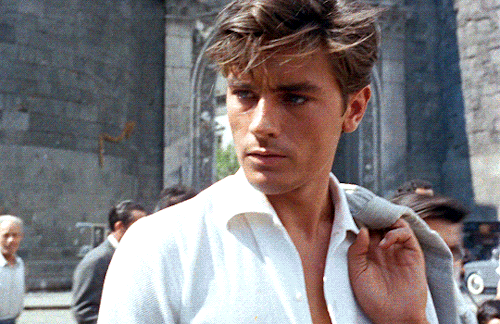
Let’s be clear, this eight-part Ripley mini-series is far from the first time Highsmith’s novel has been deemed relevant enough to be splashily transferred to the screen. Most notably, it was the source material for the twisty 1960 French film Purple Noon, which made an international movie star out of the then impossibly gorgeous (Note: Sorry, NO other way to say it) Alain Delon, while simultaneously reflecting (Note: Or perhaps presaging) the brewing, far less-materialistic social mores of the 1960s.
Decades later it was then remade by writer-director Anthony Minghella as The Talented Mr. Ripley (1999), starring Matt Damon, Jude Law and Gwyneth Paltrow, where it became a commercial and artistic hit and received five Oscar nominations. At the time we thought we were condemning the forever defunct acquisitive values of the let ‘em eat cake Reagan years (Note: Or at least I did) but little did we (or I) know just how much more there would be to condemn a mere 25 years later.

It has also been the subject of a radio play, stage adaptation, an episode of an anthology TV series and a young adult novel over the last seven decades for various other reasons and in various other moments.
In the future – well, it could be perfect material for a balls out contemporary opera, a post-modern ballet or even some combination of both. That is if the Netflix version is determined to be a sufficient enough branding hit.
Depending on where we are headed after that, at some point it might be cloned into a new type of anti-hero superhero event film. Think an upscale fusion of Joker AND Robin Hood, though let’s not give out any more free ideas).
The point is you can do a lot with a sociopathic protagonist who refuses to accept who he really is, or thinks a lot of stuff or better people or more admiration or endless victories will fill him up. Someone who would lie, cheat, manipulate and commit a lot worse than that, at will, against anyone or anything that stood in his way, in order to achieve it. (Note:Perhaps, one day, those crimes might even be against whole nations – or at least provide a template for such a character).
This week the Pulitzer Prize-winning economist Paul Krugman wrote a very thoughtful and quite scary column in The New York Times about why some billionaires will inevitably back the twice-impeached, many times indicted former president (AKA you know who) for POTUS again.
Krugman correctly reasons that it’s not as if these guys (and a few gals) haven’t made buckets of money in the record high stock market recovery under Pres. Biden, especially compared to how much they lost when the US economy crashed during Trump’s reign and mishandling of those pandemic years.
Nor are they unaware of his admiration for the Jan. 6 insurrection and those who perpetrated it, as well as his desire to be an authoritarian dictator on day one of his next administration.
He’s literally proclaimed it to them, and to us.
Not to mention his intention to use the Justice Department to jail his political opponents, and law enforcement to round up millions of undocumented immigrants to put in “detention camps,” or euphemisms far worse.
Nevertheless Krugman believes, unlike myself, those billionaires would still be unhappy with this type of world – if only because the economy tends to do poorly in times of social and political chaos.
So then, if none of these IS the reason, then why, why, WHY their recent surge of anti-hero, anti-democracy, Trump…love?
The first answer is obvious, if not odious. The very rich are guaranteed to pay way less taxes, and their corporations and business will be far less regulated, once Trump regains the Oval Office.
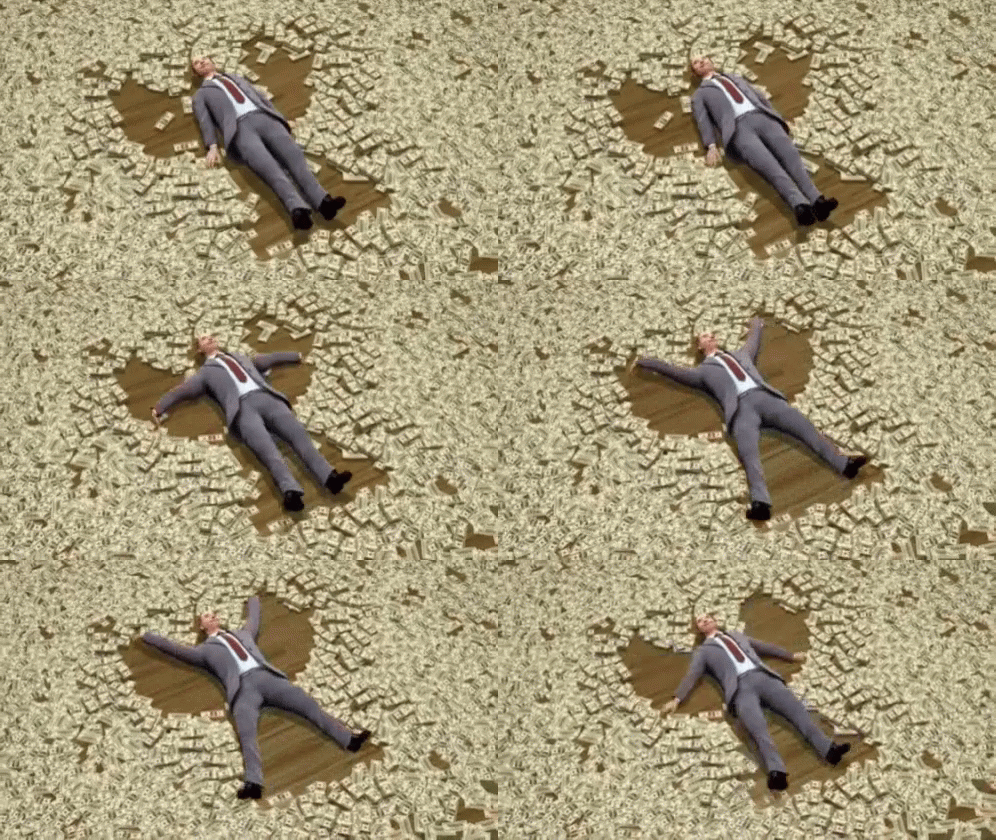
But even Krugman himself questions how that will matter. Since they all have so much money it will barely be a hit to, much less make a dent in, their overall income.
Plus, all the prestige they gain from being as rich, or richer, than the next billionaire (Note: Essential bragging rights among much of that class) will essentially remain intact since they will all be pretty much taking the same hits, and thus be in the same pecking order, across the board.
Thus what we are left with is his second answer, and theory.
The one that is far more troubling, and much more akin, to the Tom Ripley belief system about money.
And that is –
Somehow their wealth, their things, their elevated place in society, will protect them from everything bad in the world.

Like a small army of multiple Ripleys, they have talked themselves into believing that money, power and position give them absolute and total immunity (Note: Sound familiar?) from it all.
Even from their own bad decisions. Which, like Ripley, are actions fueled by the one fatal flaw nothing they possess can ever give them – the courage to face their own, deepest insecurities.
Neuroses so potent that they actually believe they will not meet the same fate as any number of dead, imprisoned or permanently contained Russian oligarchs under the authoritarian thumb of Vladimir Putin. Or that of so many wealthy Jews in Europe during the dictatorship of Adolf Hitler.

Or have to deal with the fallout from their own unbridled excesses the way Pharma Bro Martin Shkreli or Bitcoin-meister Sam Bankmann-Fried recently had to do in an ostensibly free society. Or Roy Cohn or Joseph McCarthy were forced to face several eras before when they were overcome by their own hubris. Or Phil Spector or Robert Durst fell prey to once their true selves were found out.
This is to say nothing of the fate of Ripley (Note: Though that depends on which of his “endings” you choose) and the sheer havoc he wreaked on almost everyone, good or bad, that he came across in his quest for, well, glory.
But he and they were at least fortunate enough to be fictional characters in a pushed reality version of our world.
Currently, the top 1% of earners in our country control 70% of its wealth. Among them are our current crop of contemporary US billionaires, 735 of whom hold more wealth than the bottom 50% of ALL American households (Note: For reference, consider there are now about 335 million people in the US).
Meaning that any group action taken by a substantial enough number of these actual flesh and blood, rarefied human beings have the potential to bring down not only them, but almost all 335 mill. of the rest of us.
Let’s hope that either the majority of them choose wisely in the coming months or that at the very least a majority of us are motivated enough to counteract their bad decisions at the ballot box.
Or both.
And that the $50 million the Trump campaign claims to have raised on Saturday from just ONE billionaire fundraiser in Palm Beach is a mere anomaly, or about as real as all the modern-day billionaire Ripleys combined.
Roy Orbison – “The Great Pretender”





 notes from a chair