Seventies Stories

We tell a lot of stories and we tell ourselves A LOT of stories.  Some of them are true but most of them are not entirely true.

Scratch that. 

None of them are entirely true because there is no absolute truth other than we will all die one day.

HAPPY JANUARY!

Resolutions be damned!

It’s better not to obsess about absolute truth or death because, really, what will that get us?  Instead, I’ve found over the years the better strategy is to accept that there are simply basic truths.

Like when you watch a group of many, many hundreds of weaponized people violently storm the Capitol building in Washington, D.C.  on, say, January 6, 2021, shouting they want to hang a US Vice President before he can, in an hour or two, ratify the results of a presidential election they didn’t like, this is, by definition, an insurrection.

That is because insurrection is defined as a violent uprising against an authority or government. 

You tell em, Lizzy!

It is also true because they built a gallows for the hanging, seriously injured and/or caused the death of many police officers AND destroyed many tens of thousands of dollars worth of government property in doing so.

On the other hand, there is no way to categorically proclaim Power of the Dog, a film I found beautiful to look at but vague and strangely homophobic in its vagueness, is the best movie of the year.

Now you might truthfully state it is the best REVIEWED film of the year and, by extension, a front-runner in the Oscar race for best picture and director.  But you can’t prove it is overall THE best by any rational standard.
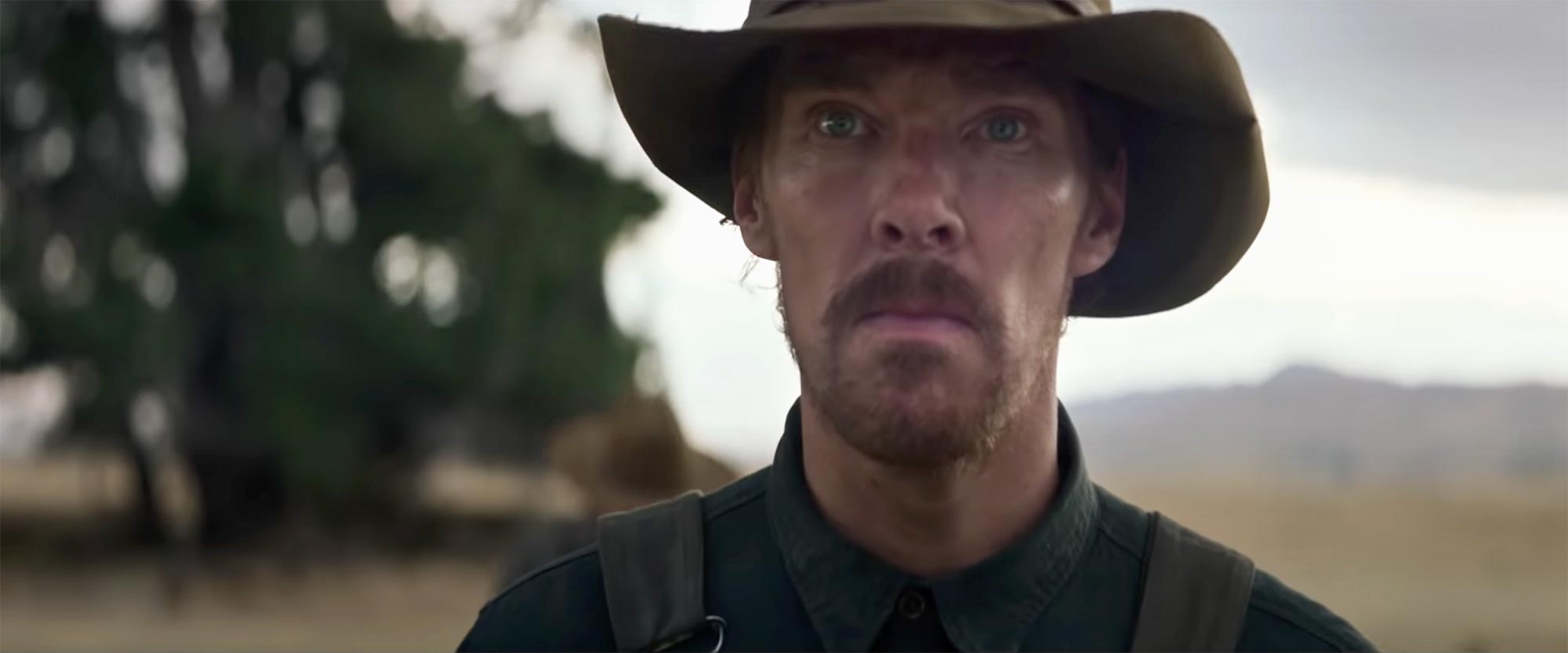
Unless there is an Oscar for highest cheekbones, nothing is a sure bet!

No opinion of greatness is an absolute truth.  Just as no memory or memory piece is an absolute evocation of what literally happened.

The best we storytellers, which includes all of us (non-writers especially included), can do is capture a basic spirit of what happened and through character, plot and actions, show it to you.

This came to mind this week as I found myself debating the merits and debits of two films set in the decade I basically grew up in – the 1970s.  These would be Licorice Pizza and The Tender Bar.

Let me state at the outset that as a bit of an expert on the seventies, since I was at my most impressionable, observant and un-jaded at the time, both of these movies told the basic truth.
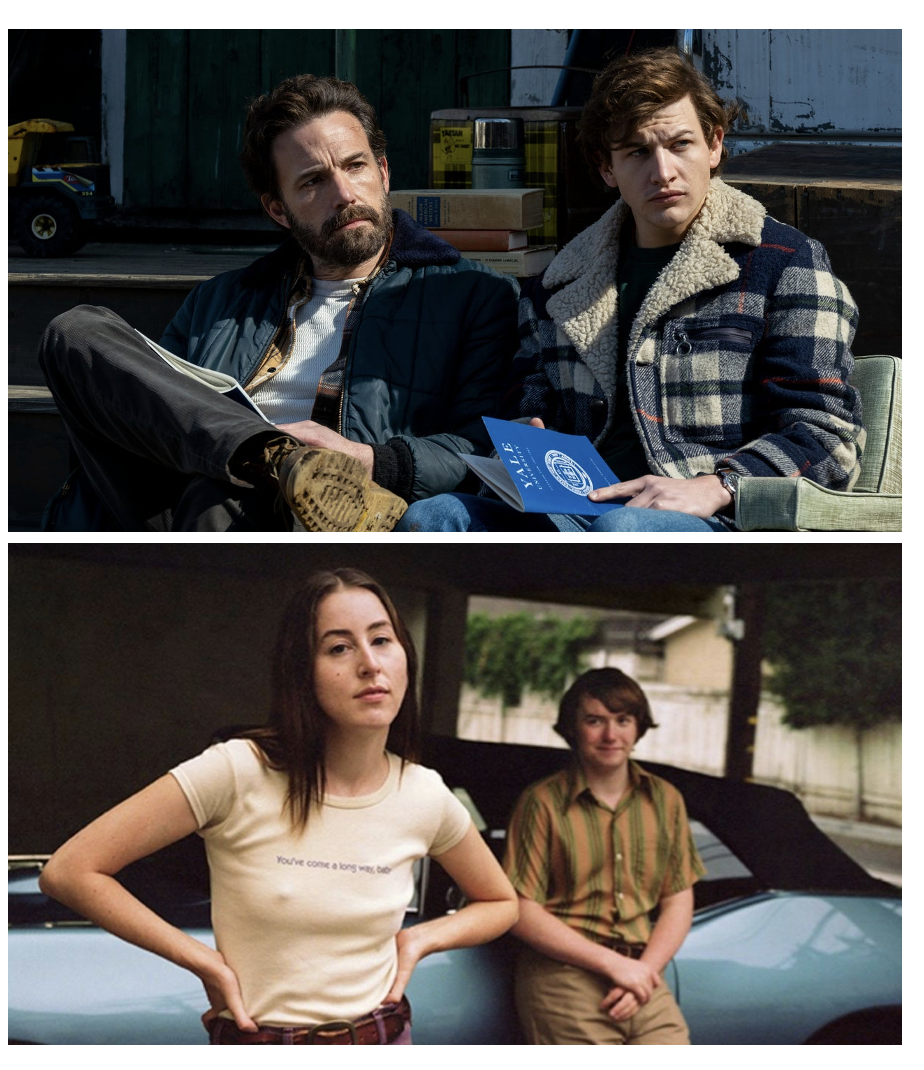
Double serving of 70s realness

This doesn’t mean they were brilliant or Oscar worthy or that YOU should love or like them.  Rather it’s that they were amazingly accurate on the essentials when so many stories about a particular place and time are not but pretend to be.

Most of the 1970s, particularly the first half, were really the tail end of what we now consider the cultural revolution of the 1960s. 

This was a time when everything felt adrift.  If you were coming-of-age at that moment your journey strangely coincided with the country’s journey.  No one knew what the new rules were in sex or sex roles; in politics and social settings; and to quote a 60s/70s expression, in love or war or the whole damned thing.

See: Peggy from Mad Men, Season 7

This made it a quite interesting but confusing time to grow up in.  To tell stories about it is like trying to hold a hyperactive puppy in your hands.  Just when you think you’ve tamed the impossible it wriggles out of your grasp and runs (or circles) in an entirely different direction.

I think this accounts for some of the disparate reaction to both films. 

The very reason I appreciate and enjoyed Licorice Pizza were the very reason four of the other five people watching the movie with me (Note:  Okay, yes, it was a screener and we watched it on Christmas Day at home!) lost interest.

The story of a weird, pseudo romantic relationship between a 15-year-old boy and a 25-year-old girl that unfolded in disjointed episodes where they sold waterbeds, met drug-fueled celebrities like producer Jon Peters and each grappled with their even stranger, ill-defined family lives, just wasn’t really compelling.
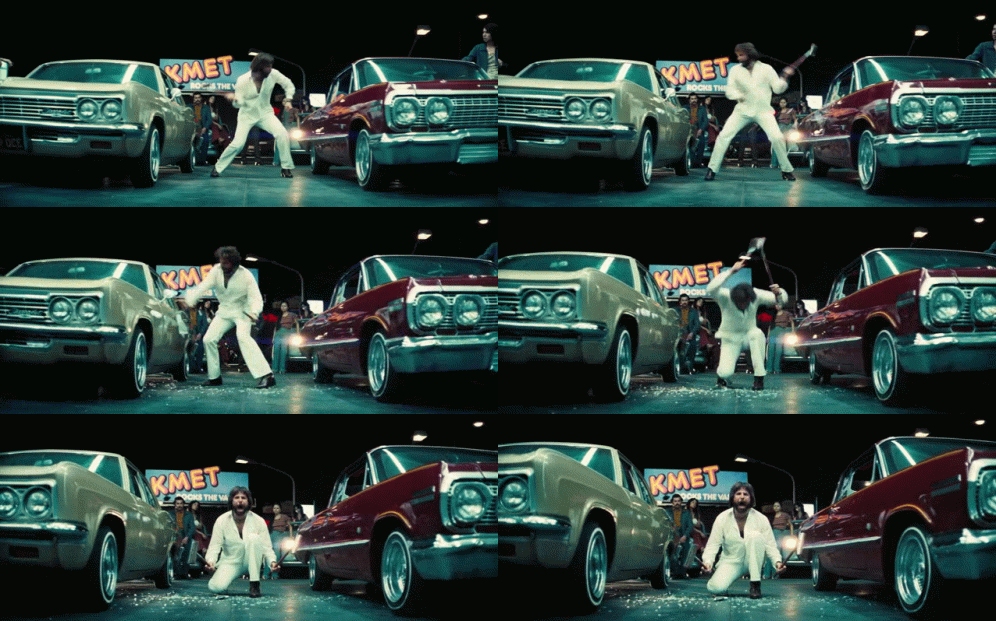
Even an unhinged Bradley Cooper cameo couldn’t do it for them

Yet for me, it was surrealistically accurate because that was what I saw as the story of the seventies.  Everything felt disjointed, and not merely because I was an adolescent.  It was a disjoined time and, in retrospect, a rather lovely one when you consider that the decade that would follow it were the Gordon Gekko-like greed is good eighties.

Sure, the seventies was also the era of Watergate but the eighties brought us Ronald Reagan. 

And let’s just let that sit there for a little while.

A chill just went down my spine

Okay, enough. 

The Tender Bar spends most of its time in the later 1970s and, as a memoir of a young boys’ coming-of-age, has a naturally gauzy quality to it.  But to its credit, it also doesn’t spare us the social reckoning that Licorice Pizza cleverly avoids. 

At this point, there was direct retribution and consequences for underage drinking, hitting women (note: particularly one’s wife) and the snobbism of economic class.  If it feels a little pat, well, at that time, on Long Island, if you were a teenager, it was a little pat.

I only know this because I grew up in Queens (Note: Not quite Long Island, but still….) and saw it play out in real time.  The years prior made it okay for kids to now call out adults in no uncertain terms.  In fact, it even got you support from that group of adults that had made the choice to evolve rather than stand their ground in insurrection to society’s changing norms.

AHEM

I loved The Tender Bar not because it was THE best of any film story but because it so entertainingly and boldly and emotionally told ITS story.  No one thought about being too sentimental because, let’s face it, it was something of an emotional time.

This was my truth of that moment and it happily coincided with what these filmmakers chose to show us.  Which is about the best you can hope to do as a storyteller of any kind.

Well done, Georgie.

Where we all get in trouble, especially society, is when we try to twist the basic truth into something patently and grotesquely untrue.

That’s not only unacceptable but it’s strangely un-American.  To this very American art form, that is.

Gordon Lightfoot – “If You Could Read My Mind”
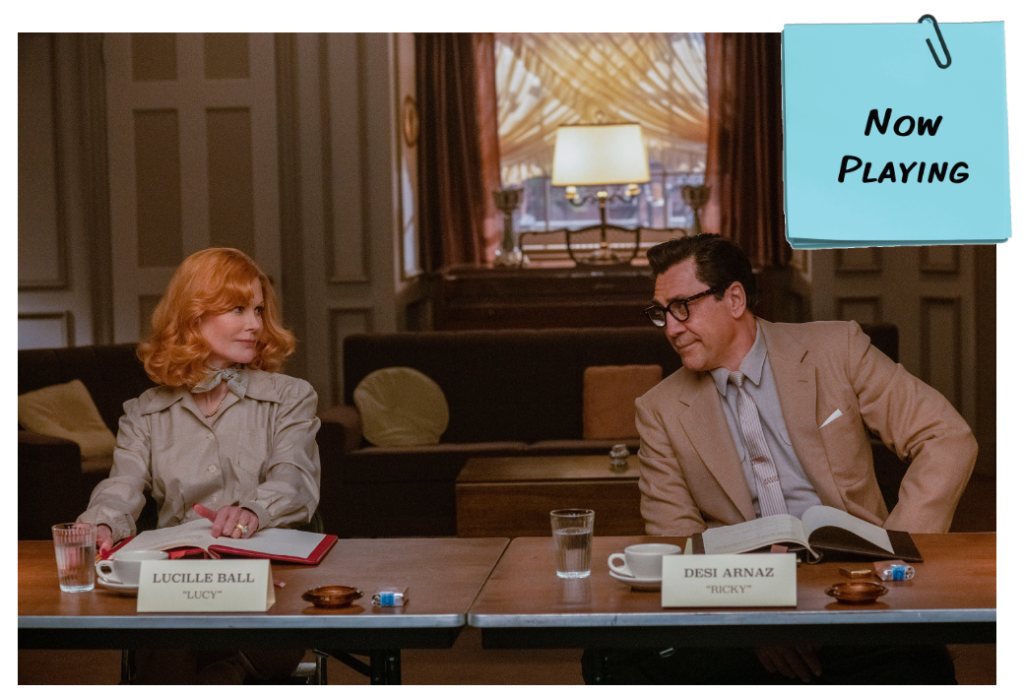
Loving the Ricardos

I’m a college professor and a writer so no matter how hard of a professional day I have, let’s face it, I’m not working in the mines. 

Please don’t share that with my college’s senior leadership team or any producer, director or editor I might work with in the future.

Even though deep down they know the same applies to them.

#WriterLife

Nevertheless, it’s hell out there these days, isn’t it?  Or some human replica of what we imagine it to be.   

In a few weeks we’ll be going into our third calendar year of the COVID pandemic.  Though three doses of either a Pfizer or Moderna vaccine (Note: The third being your all important booster shot) can pretty much ensure you of not dying, becoming hospitalized or even seriously ill with this potential demon only 30% of the country have so far been boosted.

Don’t ask me why, that’s way above my pay grade.  Though if you press me I’ll say stupidity, stubbornness and willful ignorance, not necessarily in that order.

Yes, Grandma, they are.

To give you an idea of how infectious the new Omicron variant is, New York State set a record of 21,027 new cases on Thursday, the single HIGHEST number since this all began almost three calendar years ago.  (Note: Didn’t I just bring up those THREE calendar years?  Well, I’m doing it again).

There are all kinds of other statistics but perhaps none as sobering as almost 5.4 million deaths worldwide, including 805,000 in the U.S.  The numbers continue to go up and if you continue to be unvaccinated know hell is no longer just waiting for you outside your door but finding better and more clever ways to vaporize itself beneath it and into your system even as I write.

Just call him Omicron

This is why everyone needs to do TWO things this Christmas season.

#1 – GET YOUR F’N VACCINE.

And —

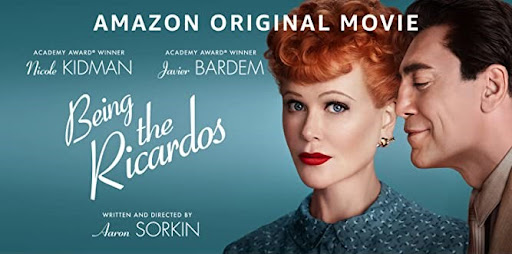
#2 – Watch BEING THE RICARDOS either at the movie theatre wearing a mask, or at home on Amazon beginning Tuesday, Dec. 21st.

You didn’t think we were going down that road, did you?

Wait, really?

But we are taking that turn because you and I and everyone we know is tired of talking about COVID and all of the things we can’t, shouldn’t or should do.  In fact, we’re going out of our f’n minds doing so.

Broadway is closing down left and right, local theatre the same.  Sporting events are getting cancelled or postponed and if you’re going to be attending a music concert in these winter months inside, good luck to you.

No, seriously, good luck.  You’ll need it.

Best wishes from Katniss

However, the one thing we can do is sit at home and partake in that age-old American tradition of watching a movie. 

The entertainment industry is trying to get us all to go out but, with infection numbers spiking so much in just two weeks PRIOR to Christmas, it’s getting more and more unlikely there is going to be a rush to anything at your local theatres.

EXCEPT for the new Spiderman: No Way Home, which broke box office records this weekend because we live in a sick world where the idea of watching a superhero is far more appealing to the American public than actually being one in real life by getting a f’n vaccine.

I mean he is so cute

But if you are actually an adult tired of all that, or a kid or adult like me who was never into superheroes (Note: Except the campy 1960s TV series Batman, which really doesn’t count because Tallulah Bankhead, Eartha Kitt, Victor Buono and Caesar Romero as super villains is too good to turn down), Being The Ricardos will momentary take your mind off of it all.

Not that writer-director Aaron Sorkin’s smart, fast-talking and clever take on the private and professional lives of Lucille Ball and Desi Arnaz – or as we still know them, Lucy and Ricky Ricardo of I Love Lucy fame- isn’t both super and heroic in its own way.

Super Lucy!

In fact, it is at times both serious and affecting.  But it is also always entertaining, thoroughly watchable and a marvel.  The latter is because somehow Mr. Sorkin has managed to throw us back into the 1950s via what is probably the most famous television series in history and yet somehow not get swallowed up by the legend of it all.

He’s is helped greatly by Nicole Kidman and Javier Bardem, who so manage to evoke the spirits of Lucy and Desi onscreen that it’s as if you’re eavesdropping on the better, mover clever version of every conversation, seduction and argument they’d tried to ever have but likely never literally ever had.

Thanks for the rave review!

This is what writing teachers and critics and writers like myself preach when we say that the work should evoke real life without ever literally being real life. 

This is because real life doesn’t happen in three-act structure and can often have endless deadly dull moments in the space of two hours. 

Films, on the other hand, can use those two hours to tell the story of a year, a month, or – in the case of Being the Ricardos – a key week in your life.  And they can do this by showcasing the spirit of your truth in a much more entertaining way than a bunch of cinema verite home movies that you personally shot or even lived could ever hope to do.

Get Back shade?

Movies, at their best, can capture the magic we know sometimes happens in life, with all the good and bad our humanity offers.  And with the right combination of artists and technicians they can also harness all that passion and verve we humans get to experience in a way that reminds us of who we are in those times, at times like these, where it’s easy to forget.

It helps that I Love Lucy still cracks me up and was one of my favorite shows as a kid.  But that’s not truly why I’m on the Ricardo/Sorkin soapbox at the moment.

No one like her!

It’s because for two hours the creative team behind this film made me forget how absolutely screwed up everything is at the moment by telling me a story about a fictional week in the lives of a couple of Americans where absolutely everything was also screwed up for them.

Yeah, it was literally quite different.  But screwed up is screwed up.

AND it made me laugh, forget and finally feel something other than COVID-stark raving madness while doing it.

Just in time for Christmas!

If that’s not the best holiday present you can give yourself in the next two weeks, I got nothin’ else.

But know you certainly won’t get it from The Power of the Dog, despite what every major film critics association want you to believe and labor with.

Meow.

But I’m right.

Being the Ricardos Trailer