Protect the Family

In the new, emotionally affecting fourth season of The Bear that just dropped on Hulu, there is a conversation about your work family vs. your family family.  Are they separate?  Do they overlap? 

Or do people you love or are close to simply become a part of YOUR family in one big tent if you decide this is so?
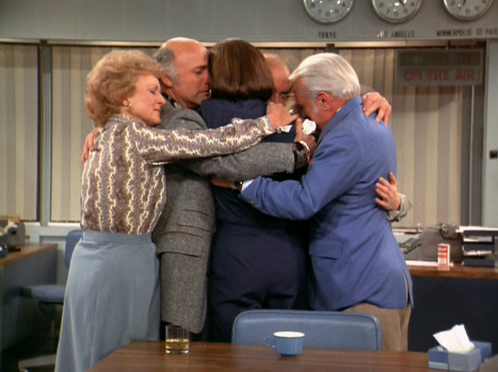
If it worked for Mary, who are we to argue?

It’s an interesting cultural question right now as Americans in towns across the country witness members of their families – some of them blood relatives and others friends, neighbors and co-workers – being grabbed, handcuffed and arrested outside their homes, at their jobs, or right off of the street.

The vast majority of these people (Note: The last estimate I heard is 90%) are, in reality, not “the worst of the worst violent criminals” despite how many times this lie gets repeated by the current administration or across the airwaves of Fox News. 

My blanket response to Fox News

Saying something over and over again does not make it true.  Nor does wishing for it to stop make it go away on its own. 

Especially when you can’t help but see the horrific arrests and sometimes beatings as plain as day on social media websites everywhere.

Or anywhere else you might get your news. 

Even, like, a newspaper.

Yes, a newspaper Grandma.

Diehard print journalism major that I am, even I must admit the most powerful of these stories come courtesy of ordinary citizens who simply whip out their cell phones and film videos of these purposely unidentified masked “enforcers”, often not in any discernible uniform, chasing people they know down the street or through vegetable gardens, cuff them and, if necessary, beat them into restraint before throwing them in an unmarked van and driving off to who knows where.

I can’t speak for anyone else but I can tell you I am 100% sure that if this happened to a member of my work family, family family or anyone else I cared about, filming it would be the least of what I’d do.

As one of Woody Allen’s characters commented in Manhattan on dealing with Nazis:

..A satirical piece in the Times is one thing, but bricks and baseball bats get right to the point.

Yes, I know whole swaths of my students (and perhaps you) don’t like it when I quote lines from Woody Allen movies, but I am who I am and Nazis are who they are.

Still, at the end of the day there is this one truth:

The vast majority of us will fight for our “families” in ferocious and unexpected ways when push comes to shove. 

Say it together now

They might work our last nerve or be a key element in a backstory of resentment.  But something happens when an outsider picks on them – or does worse. 

Suddenly you find yourself brandishing the nearest weapon available at those who want to do them in.  Or group thinking some ingenious scheme to keep them safe, or at least out of harm’s way, until you can come up with a better plan.

(Note: For me, it’s usually a sharp, snide, threatening flurry of cutting insults or pithy, bitchy phrases.  Unless it’s Nazis).

Addams Family rules

You might be totally pissed off at your family member, after the dust settles, for their behavior. Or for putting you in this position.  You might even wonder where the resolve came from.  But what you don’t do is regret it. 

Ever.   

In a way, that is what most of us will likely come away with after watching iconic Law and Order: SVU actress/director Mariska Hargitay’s raw, honest and highly original new HBO documentary, My Mom Jayne. 

Love them

For those who had no idea, Hargitay is the daughter of the late, one-time world-renowned 1950s blonde bombshell, B movie actress, Jayne Mansfield.   But at three years old, riding in a car with her mother and two of her siblings, she endured a fatal crash that killed Jayne, her lawyer boyfriend and the man who was driving them. 

Miraculously all three children survived.  But, as Hargitay admits, she has spent a lifetime running away not so much from the event, which she has no memory of, but the legacy of the high-pitched, made-up, girlie-voice and Hollywood blondeness her very famous mother left behind.

And, as it turns out, a lot more. (Note: No spoilers here.  Promise!).

You better not, Chairy!

Though what makes the film a must-see is not only what we learn about Jayne (Note: Among many other things, she was classically trained on the violin and piano, spoke five languages fluently and had an IQ of 163). It’s how after a lifetime of running away from everything she represented, and by putting her own antipathy at the center of the narrative, she manages to rescue the real Jayne from the neat little Tinseltown sarcophagus Hollywood so ably arrested and hermetically sealed her into all those decades ago.

Full Confession:  Mariska’s Olivia Benson on SVU is one of my all-time favorite television characters.  Tough, smart, brave and sensitive over 26 seasons and someone who could deal with Nazis and Nazi-like behavior far better than I could advise. 

In fact (Note: Full confession #2): On more than one occasion, while watching the news, I have actually asked myself:  #WWOBD? 

Words to live by

That is, if she actually existed and could save us from our world in 60 minutes with commercials. (Note: Oh, of course, I know she’s not REAL… Or, well, totally… I think).

In any event, watch My Mom Jayne and see if you don’t see the best parts of her in this documentary. 

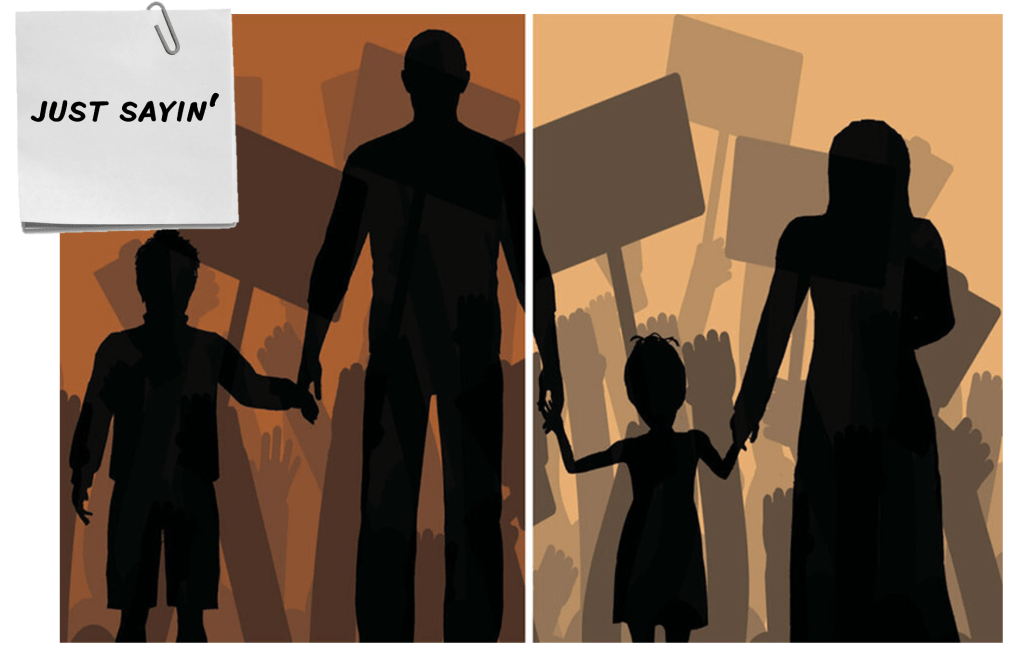
And then look at all of those people standing up for members of their families, chosen or not, across the country.

Never stop fighting

And then consider that if, in creating that character all those years ago, the SVU writers and actress didn’t draw on the qualities exhibited by the best of Americans that were already out there. 

People who would go to great lengths to protect the innocent or unjustly categorized.  Especially if it was someone they cared about.

Jack Johnson – “Better Together”
The Others

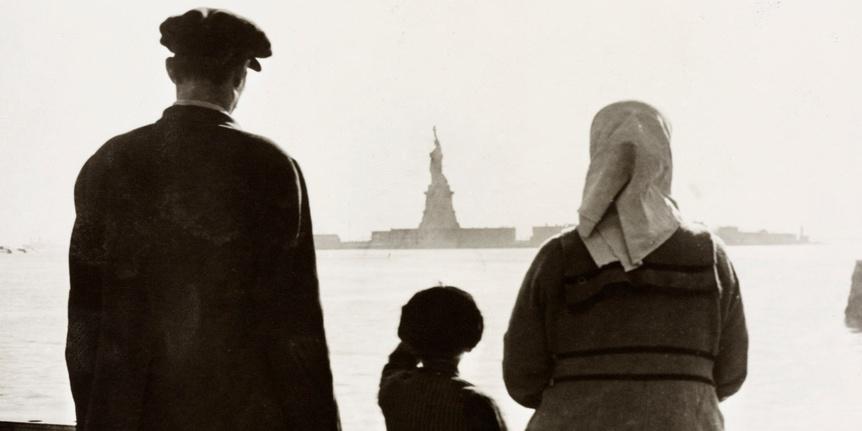
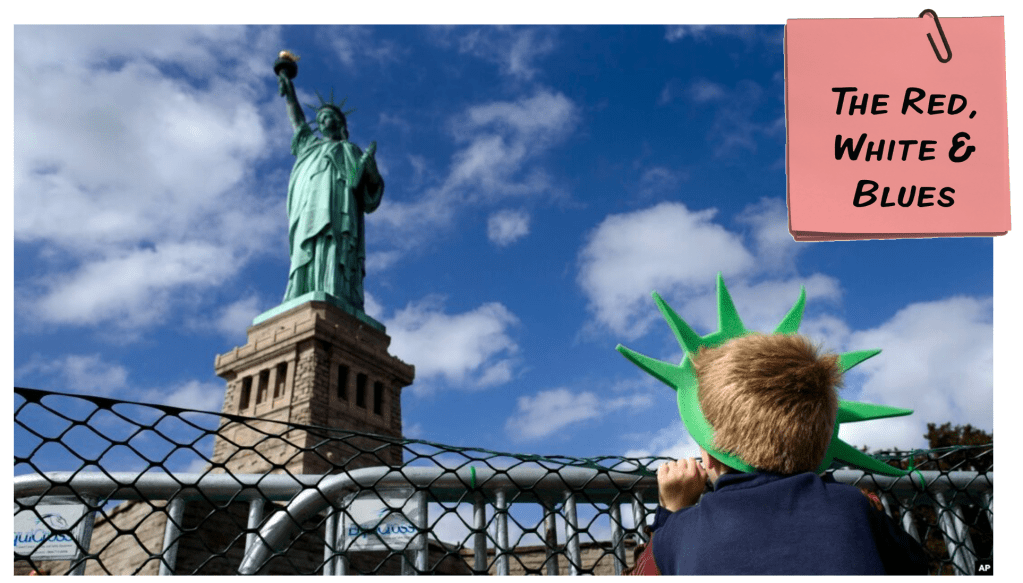
There is a 305 feet tall monument in New York Harbor that was built as a symbol to welcome all immigrants into the United States.

It is called the Statue of Liberty and was a gift from France to the U.S. in the late 1800s to honor American values and the end of slavery (Note: Ahem) after the Civil War.  

Hey gurl

The idea for this gift came from a conversation between Edouard Laboulaye, a politician, law professor and president of the French Anti-Slavery Society, and the sculptor Frederic Bartholdi. 

I’ve thought a lot about the Statue in recent weeks as the United States continues to have a centuries old debate about immigration. 

Among the questions raised in this debate are statements like:

How many do we have to take?

– What about US, or the U.S.?

– We feel bad for “those people” but right now we don’t have enough American jobs for real Americans.

And my favorite: 

Why must we dilute American culture, religion and skin color with THEM, to the point where our very own AMERICAN culture, religion and skin color, gets watered down and rendered unrecognizable?

Seriously?

There is no point getting into the details of any one of those questions, and many more, over immigration to a country whose very existence was built on a nation full of immigrants from an oppressive society traveling to a new country where everyone from anywhere would theoretically be free to life, liberty and the pursuit of happiness.

That the U.S. has not always lived up to its mission statement is not in debate.  But that this was always a fact of its intention is undeniable if you subscribe to historical facts, or any facts at all.

This week I watched the superb three-part PBS documentary The U.S. and The Holocaust by filmmakers Ken Burns, Lynn Novick and Sarah Botstein.

A must see

It’s a riveting six hours of overtly watchable, if maddening, history that sadly feels all too contemporary.

This is not only because it gives us a painstaking account of the rise and, not necessarily guaranteed at the time, fall of the Nazi Party.

Rather it is due to the fact that with the myriad of interviews with people who were there, combined with historical footage, governmental documents, and accounts from some of those serving the White House during those years, it explains the reluctance of the U.S. to open its doors fully to Jews desperate to escape (nee migrate) here, at the time. 

Too few

As the film puts it, this was principally due to:

a. A repressively strict immigration quota system and, more importantly,

b. A nationwide resistance to allowing our country to become overrun with others who would threaten the religious, economic and social balance in the U.S.

In simpler terms, this means Jews who would be needy, Jews who would take American jobs and, mostly, Jews that were branded as inferior and responsible for the economic troubles real Germans, nee Europeans, were forced to endure during the 1930s.

It wasn’t until several decades later when America had already won the war; six million Jews, not to mention many millions of others, had been killed; and the country had fully recovered from the Depression it was still reeling from in the 1930s, that US immigration quotas were lifted.

The sad truth

Yet all the while most of the top decision makers in the U.S. government knew of the grave danger and mass murders the Jews in Europe were enduring all through the 1930s. 

Also, as the filmmakers inform us, public sentiment AGAINST welcoming any more European Jewish immigrants was well over 70% during most of that time.

This included a large and very rabid Nativist, Anti-Semitic movement dominating a significant section of public and private institutions in the U.S. being spearheaded by people like much adored, wholly American aviation hero Charles Lindbergh.

Dr. Seuss on Nativism, 1941

Well, what do you do when so many in a country don’t want to open its doors for outsiders from another country and culture to come inside?

How about when those citizens, already hurting from their own economic woes, claim there is no room for THEM? 

These questions plague us to this day.  To wit:

What can you say when people whose lives are in danger, people who have no physical resemblance to the majority of US,  literally arrive here (Note: We are more connected these days and have better transportation) by the tens of thousands?

Do you tighten the borders, raise the quotas and build a theoretical and/or literal wall to keep them out?  (Note: Also known as buying them bus or plane tickets to simply get them out of your sight and away from your town).

It isn’t a game

Or do you take history into account, visit New York Harbor (note: physically or virtually) and consider who you are as a nation and how you can learn from your past mistakes?

Here is some information about our very own Lady Liberty that might shed some light on things, as she is wont to do anyway.

Mr. Laboulaye, who as mentioned had the idea for Her in the first place, was a staunch abolitionist and supporter of the Union Army during the Civil War.  In other words, he was rabidly against slavery, especially the kind that helped build the United States.

Hey Eddie!

So when that particular form of servitude was officially outlawed here  (Note: Ahem, again) he decided it could be significant to have a proper symbol of freedom greeting all newcomers on their arrival to these shores of freedom.

It would be the first visual they saw upon arrival, an encouraging beacon lighting the road to a new life in the offing.

That sculpture, Lady Liberty, actually depicts the Roman Liberty goddess, Libertas.  She holds a torch high above her head in her right hand and in her left is a tablet on which the Roman numerals for American Independence Day, July 4, 1776, is inscribed.

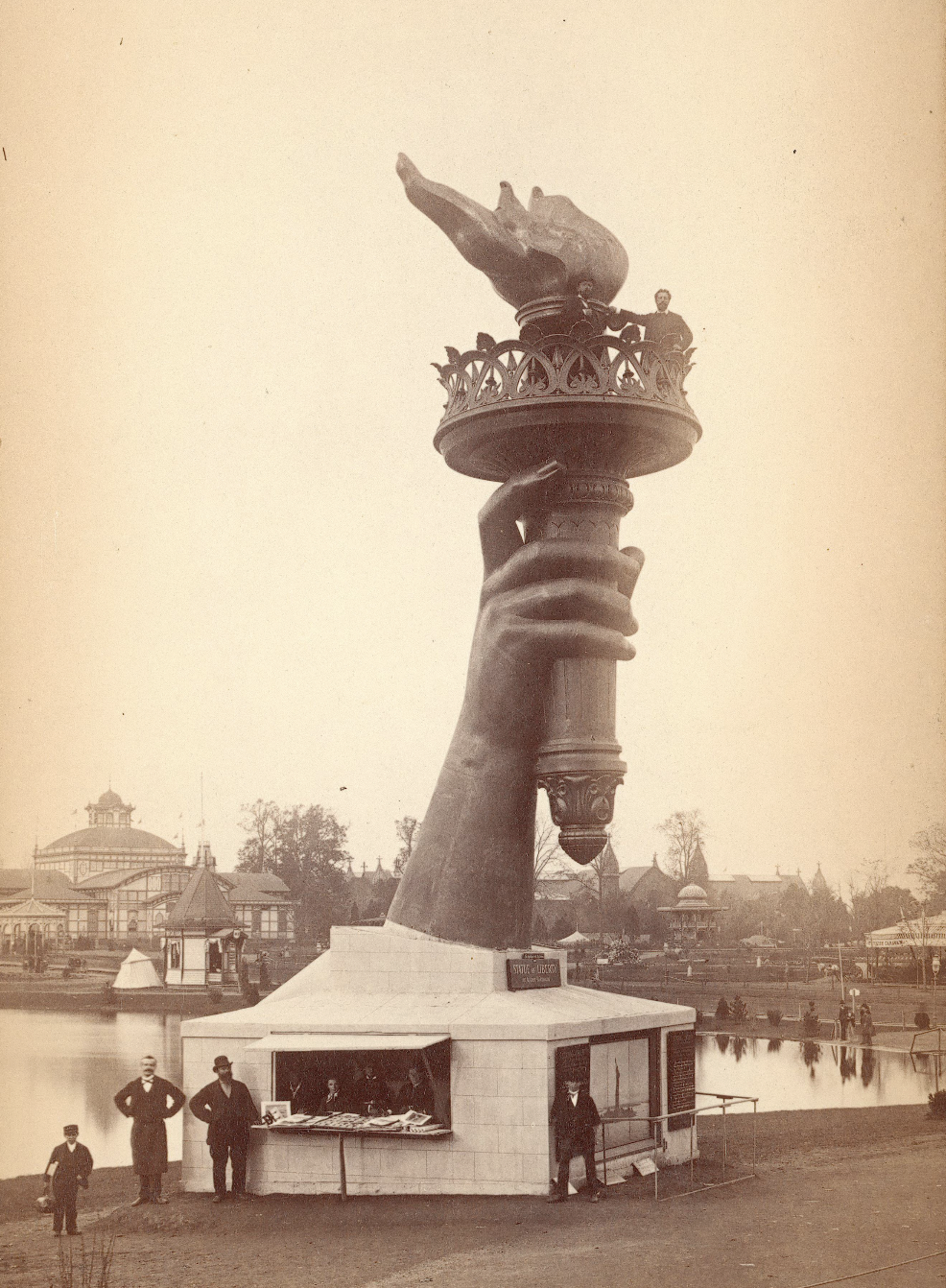
Fundraising efforts included visiting the torch for 50 cents as the platform was being built (1876, Philadelphia)

But the pedestal on which she stands, which would become part of the statue we know, took more than a decade plus to finance and build in the U.S. separately through donations spearheaded by a member of the media, a newspaper publisher (Note: Imagine that!) named Joseph Pulitzer. 

It accounts for half the height of what is now one of the most iconic monuments in the world and bears a plaque of the poem The New Colossus, written by 19th century poet Emma Lazarus.

Not coincidentally, Ms. Lazarus was a Sephardic Jew from an immigrant family of Portuguese descent, as well as an activist on behalf of Jewish immigrants. (Note: Imagine that, again!).

Both icons

And though her poem was not written specifically for the Statue her words have, over the years, become synonymous with its intent.

Among the most famous is this section:

Give me your tired, your poor,
Your huddled masses yearning to breathe free,
The wretched refuse of your teeming shore.
Send these, the homeless, tempest-tost to me,
I lift my lamp beside the golden door!

This is not to say that it takes someone Jewish inside the U.S. or a foreigner from outside the country (Note: In France, no less!) to show and tell us what democracy and American values are all about.

However, it has always been of interest to me that it took Czech born film director Milos Forman to make so many great films chronicling America, including the quintessential American counterculture musical, Hair; the fictional story of E.L. Doctorow’s America in Ragtime; an unlikely depiction and ultimate condemnation of American censorship in The People vs. Larry Flynt; and a celebration of oddball American creativity in the Andy Kaufman biopic, Man in the Moon.

Amen to that

It has also not escaped me that the very, very New York Jewish immigrant, Irving Berlin, wrote one of most popular anthems the U.S. conservative movement has ever wrapped its arms around, God Bless America.

All this is to say that every once in a while, and perhaps more often than that, it’s nice to be reminded who we really are, or strive to be, by some of the OTHERS who, rightly or wrongly, admired US.

And to welcome them into the fold and learn from them the lessons we were all supposed to have known in the first place.

Aretha Franklin – “God Bless America”