
Sunday, Nov. 18th, 2012 Today is my birthday and it just so happens to fall on the day of the 99th weekly blog post of Notes From A Chair. Perfect symmetry would dictate that my birthday land on a nice round number like my 100th post and I could bask in the serendipity of it all. It might even prompt some clever musings from me about inevitability and numerology — or perhaps their absence and meaninglessness in the world. Depending on the year of my life and my age I have gone both ways. On any given subject, that is.
However, if I had not skipped one week of blogging in 2011 this would indeed actually be my 100th consecutive post in as many weeks (rather than merely 99 out of 100) and I would’ve gotten some small amount of the absolute perfect symmetry in life I’ve so long desired – at least among the things I’ve written. There is both irony and real birthday meaning in this fact. Because the one thing I know for sure (not to pull an Oprah here) and have finally learned on this day of all days is that no such perfect symmetry truly exists in fact or fiction. And, even if it did, I’m not sure it’s what I would desire.
After living more than half a century and then some (oh, don’t look so surprised), I finally do realize what I (and you) could have greatly benefited from decades earlier – that 99 out of 100 is a hell of an average and that no one EVER achieves 100% at anything 100% of the time.
At any given point in my first half-century I would take the odd number 99 as being absolute proof that my one weak moment of blog writing “laziness” was throwing off all chance I had of being part of that rare, finite group of exceptional people that I aspired to be. I would have also concluded that if I had indeed worked “just a little harder,” perfection would have been achieved and I would’ve gotten — uh — admittance to a secretly successful and magically elite group? Revenge on all the people who ever doubted me? A free blender? Or, let’s go crazy, all of the above? Hmmm, if not all of those, at the very least I certainly would have at one time gotten depressed that once again I somehow missed grabbing the brass ring on life’s ever spinning merry-go-ride of solid gold achievement scale and was ever destined to come in an admirable but certainly not exceptional second place.
However, I am now on the other side of a half-century and living here I see that doing 99 out of 100 consecutive weeks of pretty good and sometimes exceptional essay writing as proof that, in this area, I have a better batting average than my childhood baseball hero Mickey Mantle (oh, again, don’t look so surprised!) and, actually, an even better one than then all-time Yankee home run king Babe Ruth (Yeah, I thought he was cool too, so get over it). I attribute my healthy reaction on this side of the age hump to one of the great perks of knowledge you get in living to this age. And that is – with a lot of experience, failures, successes and intensive psychotherapy you can actually get to the point in your life where you can beam at the work you’re capable of and be excited about what the future holds and how it will all turn out. And that not only applies to professional work but in other areas of existence as well. As John Lennon once said: “Imagine.”
This is not to say that wisdom, talent or good batting averages are limited to the middle or old aged. That was clear to me this week when I caught up with the movie that one too many people urged me to see this year called “Beasts of the Southern Wild.”
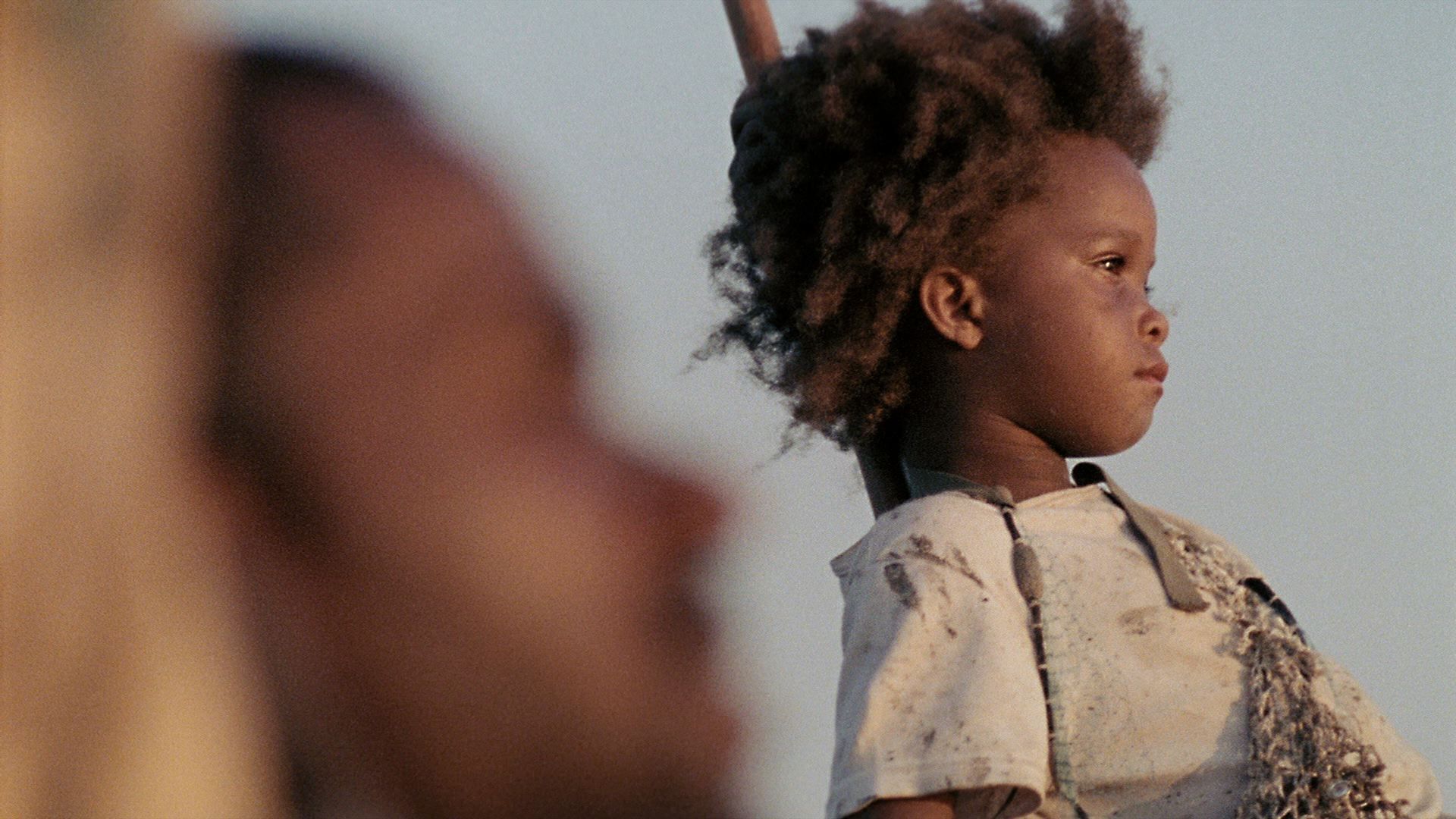
Fierce.
The idea that an 8-year-old actress can pull off the lead role in a dramatic independent film so honestly and without striking one false note reminded me that talent doesn’t discriminate on the basis of years and that one of the perks of the talented who are very young is being fearless enough to jump into the trickiest of situations with absolute natural assurance and grace. Even for those without the practically super human talent of “Beasts’” young heroine Quvenzhane Walli, the thought of failure often never even enters the mind. You’re too young and unspoiled to have a concept of what failure is and are sometimes lifted up by that to unimaginable heights.
On the other end of the age spectrum there are different but no less impressive benefits to be had. This week I attended a concert at Disney Hall by Broadway legend and consummate nightclub singer Barbara Cook. Backed by the LA Philharmonic, the 85-year-old Ms. Cook mostly sat in a chair center stage (“I wish I can stand but I need back surgery so there it is,” she lamented) and sang an eclectic group of songs so impressively and with such deep and effortless understanding for 90 minutes straight that her talent felt every bit as superhuman as an actress almost eighty (that’s 8-0) years her junior. It’s not as if Ms. Cook hasn’t known failure, defeat or whatever you want to call it. It’s just that she’s reached the point in life where it’s not even on her radar. This was never more apparent than when she sang a brilliant a cappella version of “House of the Rising Sun” – a tune we all best know from the classic rock record done by “The Animals” in 1964 that’s been played endlessly in movies, on the radio and in cover versions by about 100 different artists.
Yeah, that’s the one. You recognize the electric guitar. And the last person you’d think you want to hear do that song (which is about a New Orleans whorehouse) is an 85-year-old woman who is best known to audiences as the original Marion the Librarian in the classic Broadway musical, “The Music Man.” But that’s exactly what made Ms. Cook’s no holds barred version of it uniquely great.

How to be a Legend 101
I could go on and on about all of the other age-related stories during this and any other week. Like the broo-ha-hah 27-year-old NBC political news reporter Luke Russert caused when he asked 72-year-old House Minority Leader Nancy Pelosi whether her decision to not retire next year presents a roadblock to “younger leadership and hurts the (Democratic) party in the long term.” Or all the lamenting about the 18-25 youth vote going overwhelmingly to Barack Obama merely because he’s guaranteed them free “gifts” like a college education without inflated student loan interest rates. Or people griping that over-50 Madonna is too much of an old hag to be a singing and dancing rock star. Or that 25-year-old Lady Gaga is a fat, poser for appropriating Madge’s music. Or sheer horror at the breakup of 18-year-old Justin Bieber and 20-year-old Selena Gomez (Question: Do the majority of you really want to marry the person you dated prior to being 21?). Or the strange bliss at the fact that “Twilight” teen Bella hooked up with a vampire many centuries older for all eternity prior to HER 21st birthday.
I could go on and on. But I won’t. Instead, I’m going to do something else. I’m going to close with:
Some Things I Have Learned At My Age:
Practice and you will get better. Age can physically and mentally increase and decrease expertise. For instance, you will probably not be as good a ballet dancer at 50 as you were at 25 no matter how much you train. But if you practice incessantly from the age of 18 you will be much better when you are 25, 26 or 27 until you reach your physical and mental and/or emotional peak.

Keep rockin’
You can only change your own behavior. For the Love of God (or whoever) do not stay in or enter a relationship thinking you can change someone. You never will. And if you could, chances are you won’t want each other when you do. You can, however, change some people’s minds on issues or at least get them to understand the other side and soften their own thinking. If you read even one contemporary American history book you will know I am right on this.
Humor is not overrated in any circumstance. But if everyone is laughing and you’re not it doesn’t mean you’re humorless. To put it another way, the fact that I never liked mashed potatoes or Desperate Housewives doesn’t mean there was or is anything wrong with my taste.
Colors that look good on you can change with age. And wardrobe absolutely should. Meaning, unless you’re a guy on a farm stop wearing overalls after your 25th birthday. And if you’ve female and under 25, you don’t need as much makeup and hair product as you (or they) think you do. This might change decades later for both sexes but I doubt it.
You parents’ job is to worry about you. This makes them impossible sometimes (or even all the time) no matter what age you are. Your parents are also just like the rest of us — greatly flawed and sometimes even flawlessly great people. So the sooner you accept that and also that in some fundamental ways you are inclined to be exactly like them – the happier you’ll be. This doesn’t mean you will inevitably become them. Only that you are uncontrollably predisposed to do a lot of their “stuff.” Sort of like a dog who finds it difficult to refuse a second helping of — anything.
Luck + timing + expertise + talent = Financial Success. If anyone knew what percentage of each, they’d be rich.
Luck + timing + expertise + talent ≠ Happiness. That is something else entirely.
Pizza is the perfect food. This is non-negotiable.

That’s Amore
Listen to your body but don’t be a slave to it. It is no different than the withholding person you had a crush on in high school. If you pay it too much mind it will consume you. But if you don’t pay attention to it at all, you have no shot at all scoring the way you really want to.
Staying relevant to everyone is impossible. But staying relevant to yourself is a requirement. No joke there.
Some people know you better than you think and some people who think they know you don’t know you at all. It’s really, really tricky. And depends what period of life you’re in and with whom. (who?)
Start saving a little bit of money each month in your twenties that you will never ever touch (except in dire illness) because you’ll either live longer than you think or shorter than you hoped. If you do get old, consider this essential karmic payment for ensuring happy longevity. Or if you don’t happen to make it very far, think of it as largesse to a loved one or to a worthy charitable cause that might remember you were here with a plaque on their wall.

This advice is approved by Suze.
No animal is innately mean. But in my experience that is only 98% true of humans.
Like the way you look. Take the moment you looked the best in every decade of your life and you will probably most prefer your 20s or 30s despite how displeased you might be with your physical appearance at the time. You will not accept this as truth until you get a lot older. Which does not mean you will not be happy with the way you look then and won’t greatly prefer your older life to your younger one.
No one stays at the peak of his or her professional talents forever. This is true either because you need a break to live your personal life or the world will decide it needs a break from you and your talent.
There are some things you will never ever get the appeal of. For me, it’s Ronald Reagan, Katherine Heigl, skydiving, suburbia, sweet pickles, Members Only jackets, our worldwide obsession with the British Royal Family and the color lime green. So don’t even try.
Every birthday is to be celebrated. Because the alternative sucks. Or as my 84-year-old father has often told me, (his birthday was 3 days before mine) when I ask him how he is: “I woke up today. So I’m great.”




 notes from a chair