PC University

Screen Shot 2015-08-16 at 1.07.57 PM

There’s been quite a lot of swill in the air lately about political correctness. Mostly on how our society has devolved to the point where you can’t say anything anymore and how the nation’s college campuses have greatly contributed to this trend with affirmative action-based helicopter parenting under a doctrinaire, left wing manifesto of bland, overly sensitive inoffensiveness.

Bull crap.   Or horseshit if one prefers the non-p.c. version of bull crap.   And this is particularly the case when it has to do with college campuses and, more broadly, the millennial generation.

Interestingly enough, a lot of this criticism has been coming from any number of aging baby boomers that are no doubt pissed off at a slightly more benevolent world (well, in some sectors) that they no longer understand and thus feel excluded from.  Or perhaps now that many have college-age children, or need them in their audience to stay relevant, they simply mourn the days when they (or others) could utter a racial epithet, gay joke or sexist remark without having their reputations twittered to death all over the world. Though they could simply resent the fact that their kids don’t have to endure the hard knocks that they believe made them into the strong, successful adults they are today. It could be just that.

Is this how boomers see millennials?

Is this how boomers see millennials?

I feel like I can say this because I am a baby boomer. I am also a college professor who gets along quite well with my students – even when we vehemently disagree – which we often do in everything from movies to politics to Beyoncé (Note: Don’t hate me, she’s talented but I just don’t get what the big deal is).

Still, I find a great kinship with them because in some small ways – even if only generally – they seem to be living their lives by the sort of mythical moral code that was set forth in the 1960s in Broadway shows like Hair and albums like the Beatles’ Sgt. Pepper’s Lonely Heart’s Club Band. That would be a world where it was not cool to disrespect people of other races, sexual preferences and religions “just because” you want to make a point and are too lazy or annoyed to do otherwise. For these views, some of my students have granted me honorary millennial status. Though I’m sure in the minds of many of my fellow boomers I am simply the cause of their limited thinking – exhibit A for why our educational system is a disaster and, in turn, our American Empire will continue to decline. How can you lead when you’re so willing to go the extra mile for peace of any kind? And how can you wind up being #1 when you make a conscience choice to use equal amounts of intellectualism, heart and reality to make the most important decisions in life?

How? The same way Barack Obama was elected president of the U.S. twice. And why he would probably win a third time. The. World. Has. Changed. Have a seat or deal with the alternative. The latter is the option almost everyone I know 55 or over is desperately trying to keep at bay these days – irrelevancy, death or, perish the thought, The Republican Apprentice. (Note: Yeah, you know who I mean. Don’t make me say it).

He who should not be named

He who should not be named

Here are two articles that surfaced this week in The Atlantic that brought this on, were forwarded all over the web and much discussed on TV and the media platform of your choice.

The Coddling of the American Mind – In the name of emotional well being, college students are increasingly demanding protection from words and ideas they don’t like.

&

That’s Not Funny – Today’s college students can’t seem to take a joke

As refutation to these I would offer up a third piece in Vanity Fair this month entitled,

Tinder and the Dawn of the Dating Apocalypse 

It will reassure anyone who believes recent college grads have a too-politically correct view of the world or that sensitivity TRUMPS boorishness.

The four writers of these pieces – three of whom are boomers, the other of whom is merely 41 years old – were on various news and entertainment outlets promoting their work, including HBO’s Real Time with Bill Maher.

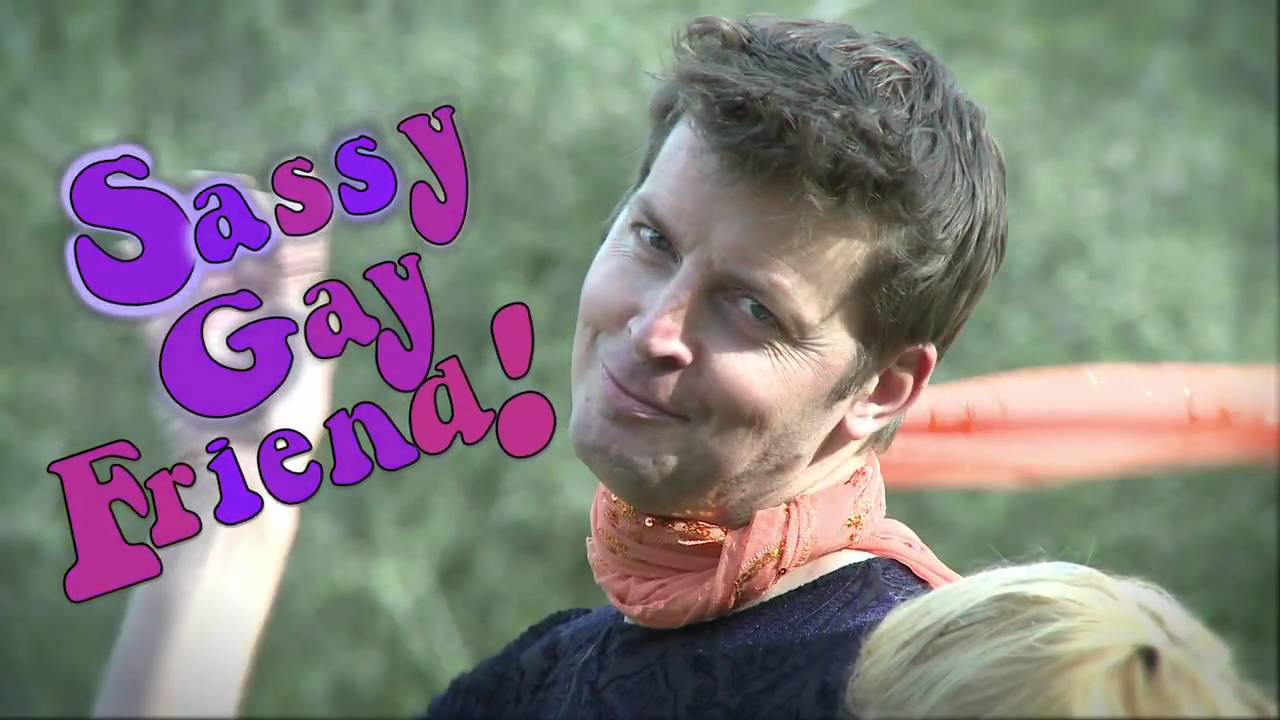
The fifty-something Caitlin Flanagan (That’s Not Funny) essentially covered the National Association for Campus Activities annual convention in Minnesota where 350 colleges came to book numerous acts, including comedians, for appearances at their schools that year. Essentially, she seemed in shock that two white students from a college in Iowa didn’t want to hire one of the convention’s most popular performers – Kevin Yee, a gay comic with a Broadway background who closed with a song about a gay man and his “sassy black friend.” Yes, he got hired by other schools but – Imagine, they thought the kids at their small Midwestern school wouldn’t get what he did??? How PC of them!!!

Look at your life, look at your choices

The writer and Mr. Maher essentially backed up that and numerous other groundbreaking revelations with quotes from comedians like Jerry Seinfeld and Chris Rock, both of whom recently noted they won’t play college campuses anymore because the environment is too-PC.

Question: What Jerry Seinfeld joke could possibly step over the line of political correctness?

Answer: Well, it was actually a line where he says people are scrolling through cell phones these days like they’re a gay French king. Right. Okay. Judge for yourself.

tumblr_nporseHjLl1ru5h8co1_500

Full confession: I didn’t think it was funny because it was perpetuating a straight guy stereotype and had no context within the rest of the joke. Yet when an edgy comic like Lisa Lampanelli rides the gay guys in her audience by calling them “faggots” and insults the sexual appetites of her GBF (Note: Uh, gay best friend?) I’m on the floor because in that same moment she lets us know where heart really is.

More troubling is the idea in Coddling, which bemoans the fact that certain words and phrases that either are or can be perceived as sexist, racist, or homophobic are listed as microagressions and discouraged in college classrooms. That is unless they are put into context. The authors vehemently write this way of thinking contributes to students being in a constant stage of outrage, even towards well-meaning speakers trying to engage in genuine discussion. They further argue shielding students from this is bad for the workplace and…bad for American democracy, which is already paralyzed by worsening partisanship.

Huh?

Here’s the thing. No one is saying you can’t use most words or phrases in a campus-based discussion – only that in an open learning environment what you say is positioned in a context. What makes colleges special is that they are a safe space where you can discuss tricky issues in a way that is too often NOT done in the real world. Does this mean college is NOT the real world, and sensitive matters demand guidelines upfront, especially for 18-22 year olds? If we’re at all to cover new ground and empower them as they get older to create new and perhaps even more innovative ways to move society forward in any sort of productive manner — Yes.

Gear up

Gear up

Of course, there’s another reason for this – words change. When I was in elementary school African-Americans weren’t even called Black people, they were Negroes. Actually, THE Negroes. That’s also the term Martin Luther King used in his I Had A Dream Speech. Not to mention queer was an insult to gays – who at best were referred to clinically as The homosexual. Yet queer has been adopted by many under 30 in the LGBT movement as their current word of choice. Not by me, of course, because, well, I AM a BOOMER.
My autobiography

My autobiography

Oh – and lest any of us forget – the time period I’m referring to was also a time where crude sexist men could diminish a woman’s thoughts or questions by saying or even implying she was having her period. What’s that – you still can? Oh.

The final refutation to all of this should, of course, rightfully come from the millennials themselves. This is what you will get when you read about the group of Wall Street, marketing and other types of college grads as they wax poetic about scrolling through pages and pages of nubile, sexy or otherwise available young prospects on the dating app Tinder even as they are sitting in a bar with other real live prospective sexual conquests right there before them. One guy in the story bragged he slept with 5 women in 8 days – Tinderellas, he called them – noting with those numbers you could rack up 100 girls you’ve slept with in a year! Another guy said he scored 30-40 per year via Hinge, another app, by selling himself as a boyfriend kind of guy even though he wasn’t and had no intention of changing. (Note: In fairness, Mr. 100 did chastise him by saying, ‘dude, not cool.’).

Don't go looking for the Goslings

Don’t go looking for the Goslings

This is not so much the end of the world but a mere continuation of the one they inherited. When I was a younger gay man I couldn’t understand the idea that when you picked up someone at a bar you called them a trick – as if you were a prostitute turning over customers. To me, it devalued the sexual act and myself as an individual. Of course, that was my feeling and hardly anyone else’s. I remember being called a nun, part of the skirt and sweater set and by one boyfriend, hopelessly middle class.

Yes, I’ve written about him before and he called me that a lot. I suppose there are worse things. In fact, I know there are. But you can’t say them to someone on any number of college campuses. Thank God. God, that is, as you know Him. Or Her. Or even if you don’t.

Good Vibrations

Screen Shot 2015-06-07 at 11.45.43 AM

I used to fly from L.A. to N.Y. twice a year on week-long visits in the eighties and nineties where I’d stay at the small apartment of a friend on the upper west side of Manhattan who was one of the most talented people I knew and probably will ever know. Whenever I’d arrive, we had a running bit where he’d stand back, look me over, and about half the time would say:

Wow, you look fantastic. Absolutely fantastic. You must not be working hard enough.

Whether the correlation was true or not (Note: About half the time it was) I knew what he meant. There is something about a creative person who is a non-actor looking great on the outside that seems to indicate that they’re not pushing what’s inside (nee – their talents) far enough.

#nocomment

#nocomment

That, of course, is bull crap. Or is it? I’ve never quite figured it out and at some point I stopped trying. Long ago I came to the conclusion that the only thing to be sure of about one’s own creativity is that the more you focus on whether what you’re doing in terms of time and effort is too little, too much or just the right amount is that much more time you’re not spending focusing on the job at hand – which is to simply employ your talents as best and as often as you can for whatever project is at hand and at whatever pace you can manage.

In the midst of summer film sequel/cartoon/superhero-itis there is a quite imaginative movie currently playing across the country that, among other things, focuses generally on this issue and more specifically on the vagaries of the creative mind. It’s a sort of anti-biopic and tells the story of one of the most talented musicians of the last century, presenting his creative process –which in this case is tantamount to musical genius – in a way most of us has never seen before. The movie is called Love and Mercy and its subject is Brian Wilson, the musician-songwriter prodigy who was the driving musical force of the iconic Beach Boys. Oh, and what’s also worth mentioning is – it’s pretty unforgettable.

America's original boy band

America’s original boy band

Love and Mercy has many things going for it but what makes it more unique than any movie out at the moment is that is a film about both a real person and about something. Set it two time periods – the 1960s and the 1980s – it tackles the young Mr. Wilson’s recording of the Beach Boys’ iconic Pet Sounds album and the mental illness of a broken, middle-aged Mr. Wilson and how he was saved at the time by his now second wife – a former model and unlikely Cadillac salesperson named Melinda Ledbetter.

Yes, Mr. Wilson’s story has a combination of elements that none of ours do – the once in a lifetime genius browbeaten by an abusive father, show business fame, success and money far beyond anyone’s wildest dreams, drugs in the 1960s, depression, possible schizophrenia and an evil abusive doctor – all of which exist against the sparkling backdrop of beautiful, coastal southern California. Then, of course, there is also the music – an instantly recognizable soundtrack of tunes to three and possibly even four generations of musical tastes.

But strip that all away – which its director, writer and cast often does – and it’s not that much different than our own. An insecure, sort of nerdy guy tries to do work most of his family and friends can’t relate to. The guy knows he’s different and strange and doesn’t really fit in but tries to and sometimes succeeds. People tell him they love him but he can’t quite take it in. And even after he does and he gets some acceptance, he is not always sure who he really is or if what they love about him even exists the way they think it does.

There are few Hollywood movies these days that move back and forth between two time periods where two famous actors, who don’t much look alike, play the same lead character in two distinctly different decades. Not to mention, I can’t really think of any summer film in recent years that was the least bit impressionistic and whose screenplay and/or scenes within weren’t either telegraphed or spelled out – either through action, dialogue or music cues – within an inch of its life. Yet somehow Paul Dano and John Cusack – who resemble each other about as much as I bring to mind Meg Ryan – manage to make us believe they are the same person while we, the audience, can not only merely follow but also really feel the story they’re in without the benefit of time cards and a studio approved list of overpaid and overqualified, un-credited screenwriters dumbing it down for us.

Imagine that.

That's a lot of haircuts

That’s a lot of haircuts

There is something to be said for feeling oneself through the creative process as either a creator or audience member. Not everything has to be made clear within an inch of its life. Not every effort has to spawn a toy or a fast food product. And not every subject or piece of work lends itself to a Twitter handle or is a complete failure if it doesn’t appeal to a reality TV show audience. There is room for more – a lot more. And both the work and the audience might surprise all of us and emerge as not only crystal clear but exciting – certainly enough of both that a good enough majority of people get it. No, I mean like – REALLY get it.

Not to bring this back to myself – though after all this is MY blog – but I watch some reality television, have over 1000 Tweets (@notesfromachair… impressed?), AND have been known to play with a toy of two and I could actually stay with this one. Not only that, but I am by no means an experimental screenwriter and have even been accused by several of the students I’ve taught over the years of being a bit too square because I tend to heavily emphasize traditional dramatic structure and detailed scene outlines in my classrooms. Yet, miracle of miracles, this one also really worked for me on that score.

Me?? Square??

Me?? Square??

However, the reason for all that is pretty easy. It’s because whatever methods one employs in the quest for self-expression, it’s really only the end result that matters. Of course we all use something slightly different or even similar to get there (Note: Which is as it should be) and we all take multiple and varied wrong turns along the way as we attempt to get what’s inside of us out. This goes not only for those of us who make art but for all of the many rest of us who are just trying to live a decent life.

And this is where Love and Mercy’s first time director Bill Pohlad succeeds far beyond what one might expect for someone who has never been behind a camera before. Somehow he manages to take the elusive subject of artistic self-expression – which often seems either unbearably ponderous or impossibly precious on film – and make it universally representative of what it’s like for all the rest of us average Joes who feel a bit weird inside just being ourselves in everyday life. It’s all a struggle – whether we’re Brian Wilson or not.

the “elusive subject of artistic self-expression”

I don’t know all the ins and outs of Mr. Pohlad’s process even after listening to an afternoon panel where he and much of the cast and crew of his film spoke about how they did it.   It’s not that they weren’t clear or concise it’s that you can never quite quantify the precise elements of the formula it takes to make a creative effort people are responding to that is both unique and unusual.   Mostly because –- there is no formula.

This became apparent when one listened to not only Brian Wilson’s music during the film about him but when one heard the actual Brian Wilson speak in person, as I did after the showing of his movie.   Receiving a long-standing ovation, his responses to questions were limited to a few simple words and an uncomplicated sentence or two.   The only time things got complicated were when others asked questions about his music. Luckily, he and everyone else there were smart enough not to try to answer those but to merely let the actual songs and film’s images speak for themselves.

Seeing the music

Seeing the music

It’s a good lesson for the rest of us to remember when trying to create our own work or do our own jobs – or explain how we do our jobs – show business or not. You’re only as good as what you produce and how you do it is up to you and perhaps, often times, unexplainable. Oh sure – some of it will make sense to others – you take a little bit from here, a little bit of that. But most of it, well – good luck trying to get what’s on your mind onto the proverbial written or oral page. Not to mention explaining the whole ordeal (process?) to anyone else. Which again, is as it should be.

This all begs the question of how good or not good it might seem to others. Does the fact that Love and Mercy didn’t make as much money as San Andreas at the box-office this weekend mean it’s not a better film? Or even that SA is worse?

It could. Or it could not.

Mostly, it just is.