Sheets of Privilege

I’ve watched Tina Fey downing a sheet cake while she excoriated Trump and the white supremacists at Charlottesville EIGHT times so far – and counting. It’s the only thing that’s made me laugh in quite a while.

You’ve probably seen her now viral appearance on Thursday night’s summer edition of Saturday Night Live Weekend Update – the one where she called the neo-Nazi man boys “chinless turds,” referred to Ann Coulter as “yard sale Barbie,” and countered Trump and his supporters with “who do you think drove that car into the crowd – Hillary’s emails???”– as whipped cream and all kinds of other carbs came pouring inside and outside of her mouth.

If you haven’t – here. And you’re welcome.

Sheetcaking, as she called it, is one answer to the post-racial right wing racism (and all kinds of other isms) that is now sweeping our country thanks to the campaign, election and reign of our first bull-in-the-china shop Electoral College POTUS – Donald J. Trump – or Donny John – as Ms. Fey more aptly derides him and his cheaply made real estate.

Still, however appealing it feels to gorge oneself on sweets and carbs in response to the upside down view of the world that Donny John and his white supremacist followers espouse – it is by no means the ONLY response.   It is the comedic response of 2017 so far and, as in any great satire, should not be taken as an absolute. It is wish fulfillment and is borne out of anger, frustration and a penchant for mouthy snideness that many of us “ethnic types” prefer.

It is the contemporary version of the fictional Isaac Davis’ cocktail party retort in 1979’s Manhattan after he incredulously mentions that he’s heard Nazis may actually be marching in New Jersey.

http://www.youtube.com/watch?v=BCb2Le3wtIk

We should go down there and get some guys together, get some bricks and baseball bats and really explain things to them.

Even when one guy counters that there is a devastating satirical op-ed piece in the (NY) Times on the subject, Isaac counters:

Well, a satirical piece in the Times is one thing but bricks and baseball bats really gets right to the point.

Let’s be honest. There is no ONE way to battle the lunacy that is now overtaking our nation. On Saturday morning, I woke up to find that two dozen Nazi white guys marched in downtown Boston but 40,000 people showed up in solidarity to counter the hate-filled rants of a crowd that had mostly dispersed by the time they had arrived.

#BostonStrong

That doesn’t account for the tens and thousands more who were home sheetcaking, talking to their neighbors, exchanging kind words with people of other religions, skin colors or sexual persuasions, or perhaps frequenting ethnic businesses and organizations that didn’t share the world view of the Charlottesville chinless turds.

The Electoral College POTUS response to Boston was classic. The first tweet:

A follow-up one several hours later, presumably after a talking to and some human contact:

Still, it begs the question of which protestors he was applauding – the two dozen or the 40,000. Certainly, it couldn’t be ALL of them.

I couldn’t pretend to know what is in Electoral College POTUS’ heart, mostly because I am sure he doesn’t even have o….well, skip it. Let’s not get sidetracked here.

Just have a good scream…. OK I’m good now #dailyrituals

The point is, you can’t believe anything he says in any given moment. Because at any given moment later – meaning five or ten seconds, minutes or hours – he might say exactly the opposite. Sometimes it’s even in the same run-on sentence.

This requires all of us to be especially aware, thoughtful and conscious about our actions as we navigate what the solutions are to our many problems. As a college professor I’ve learned over the years to avoid the word problem and refer to them as challenges. Yet in these tough times and in this particular instance I’d say problems is the more apt term.
21st century compassion

That being said, let’s not pretend that with all of our PROBLEMS we, who were fortunate enough to be born into this country, are not a heck of a lot better off than those born into third-world poverty elsewhere in the world. Even luckier are those of us born here into a higher economic class, or loving families, or, or, or, or…..

You see where I’m going with this.

There is so much chatter right now about PRIVILEGE – who is and who isn’t and how none of us are going to take it anymore. About safe spaces. About real American values and the lack thereof and who has them and who definitely doesn’t.

Yet it always seemed that the one thing we could agree on is that Nazis were bad.

Pretty much sums it up

And yet – Charlottesville showed not even all of us could agree on that. I hear reports from people I know that outside of the coastal cities and big urban areas that people are hoisting Confederate flags, brandishing their weapons to anyone ethnic — or Jewish or gay like me –- just in case they’re thinking that we’re friends or share any kind of values at all. Of course, that could just be what they normally do on a Saturday.   How would I even really know???

Well, certainly choosing to pretend this isn’t happening is not the solution to all this. Nor is Tina urging us to stay home and away from the white supremacist rallies and choose sheetcaking instead. But neither is Isaac Davis’ idea that we all get together to attend the Nazi rallies armed with bricks and baseball bats.   Two of these are extreme answers to extreme behavior that none of us truly knows the solution to. The other one is just plain dumb. I’ll leave it to you to figure out which is which.

Take your time Elmo

As a teacher whose role it often is to reach compromise I would propose that we need to incorporate not only the extremes but EVERYTHING in between. Unlike the multiple choice SAT there is no one correct answer here – except to rule out the dumb choice immediately.

Therefore, if you want to protest at a right wing, Nazi rally – do it. Yes, this is how they thrive and recruit people – by showing all the people like me and you who are against THEM – but that doesn’t mean they shouldn’t be continually confronted for their hate (and vigorously).

But if as Tina suggests, you want to stay home and instead frequent an ethnic business – e.g. a bakery – then that is also valuable. So is donating money, being kind to a right-leaning friend or neighbor, manning a phone bank for a cause or holding your nose and trying to talk about all of this with a relative who you’ve always loathed – or a colleague who seems to have values opposite of yours.   We have to do them all and we need to do it quickly. And don’t think the thought of this thrills me either. Though I vow to do it if you will.

We can figure out better strategies

This week I heard a former Neo-Nazi named Arno Michaelis, who runs something called the Forgiveness Project and wrote a book about his days of white supremacy in his teens and twenties, say that one of the few things that managed to change him was the kindness he was shown by a lesbian supervisor at work and a black co-worker.

Now I’m not saying kindness and money is THE WAY to fight Nazis. But please can we refrain from the now empty post liberal phrase this is privilege speaking when one dares to suggest anything else except the method you’re arguing for? We need it ALL – especially the comedy of Tina Fey.

The only act of privilege is sitting it out entirely.

Elvis Costello & The Attractions – Peace, Love and Understanding
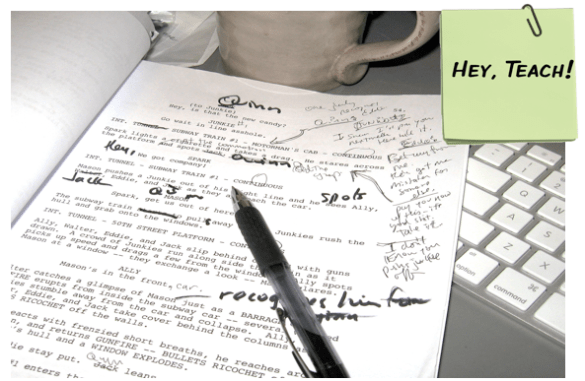
Sorkin Says

Screen Shot 2016-02-07 at 9.58.19 AM

There was a time not so long ago when I thought being a teacher in the creative arts signified some sort of failing.

After all, as Woody Allen’s doppelgänger, Alvy Singer, once famously quipped in Annie Hall:

Those who can’t do, teach. And those who can’t teach, teach gym.

Many views, Woody, as it turns out, are not as clever as we once thought they were.

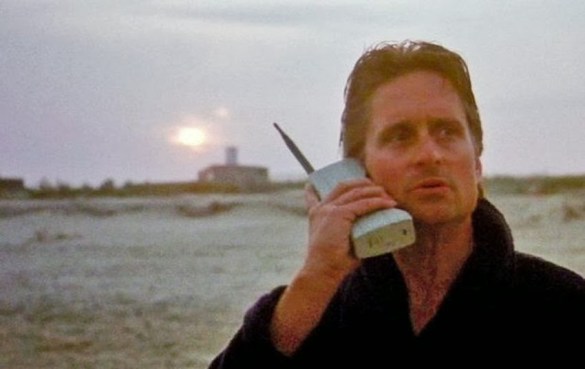
As it also turns out, the not so long ago I refer to in my own thought processes was the eighties. Which, given what’s going on in politics at the moment, feels like it was yesterday. To refresh all of our memories – it was a time when the homeless (nee poor) were vilified and money was viewed as the god and goddess of all things as exemplified by one of the most popular movie anti-heroes of the time, Wall Street’s financial baron, Gordon Gekko. In case you don’t remember, he once famously quipped Greed is good. Which pretty much sums up the callousness of thought through most of the decade for those who weren’t there. Or, as I prefer to think of it: the anti-Reagan reality.

At least the cell phones got better

At least the cell phones got better

In any case, this was all brought to mind by none other than Aaron Sorkin when he spoke this week at a panel of this year’s Writers Guild of America award-nominated screenwriters.

At one point towards the end of the evening the entire group of eleven nominees were asked by a young screenwriter, who was now attending UCLA on a military scholarship, how he could possibly proceed with the third act of an in-progress screenplay he clearly hoped to one day sell, that he felt required him to move his story into trans-racial characterizations he feared the world was not ready for.

He's listening

He’s listening

Clearly sensing the real pain and terror in this young man’s voice, it was the famous and most acclaimed of all the writers on the panel who eagerly jumped into the deafening silence and told him:

Don’t ever NOT write something because you think we’re not ready.

Hmmm. It seems that at least one who can do clearly CAN teach. Imagine that.

And Sorkin knows something about writing a character we’re not ready for #unicorns

Well, of course I’m leading with the best example of the evening. The world of mentorship is not a yellow brick road of rosy results and Emerald City glitz and glamour. Amid all the intellectual thought, encouragement and new potential roads of inspiration, there are too many others who are either ill equipped or whose methods are steeped in the art of the teardown and pretentious self-involvement. Every one of us has met at least one of them. The tough love gurus who secretly revel in telling you outwardly or implying to you all too unsubtly that your work sucks. This is usually done through a loop of lecturing where they relate a rating system of all the famous and/or commercially successful people in the field who are really lesser-than hacks you should be not only be absolutely unimpressed by but revile. That is if want your new god-like mentor to secretly continue to bestow upon you their pearls of wisdom.

ahem

ahem

This type of story was bestowed on said WGA audience by none other than panelist and current Oscar/WGA nominated screenwriter of Carol, Phyllis Nagy. It seems as a younger person, Ms. Nagy became a protégé of Patricia Highsmith, on whose seminal novel, The Price of Salt, Ms. Nagy’s screenplay was based. Ms. Nagy, then a copy editor at the NY Times, recalled a 30-minute limousine ride she took with the quite prickly Ms. Highsmith at their first ever meeting in the 1970s during which the novelist spoke only once every ten minutes to ask her a mere three questions. 

The first question was: What do you think of Eugene O’Neill?

Ms. Nagy’s reply: Not much.

To which Ms. Highsmith gave a very encouraging nod of approval.

well aren't you fancy

well aren’t you fancy

Okay, stop right there I thought from the audience. Eugene O’Neill. Really? The guy who wrote Long Day’s Journey Into Night, The Iceman Cometh and well, you get the picture. I don’t care how damn talented or famous she was – really? What does that get you? Or anyone?

Yet it seemed this was exactly the right answer because here we are all these decades later where this once young writer has gotten all of this 2015-16 attention for adapting the older writer’s 1950s story she eventually received the rights to. Or perhaps it was Ms. Nagy’s answer to Ms. Highsmith’s second question:

What do you think of Tennessee Williams?

Because this time Ms. Nagy managed to give the seal of approval to Mr. Williams – an acknowledgement she claims Ms. Highsmith quite heartily endorsed at the time.

Phew.

Tell me again how great I am.

Tell me again how great I am.

I don’t know Ms. Nagy but one hopes this is not the kind of attitude that gets passed on from one generation to the next. Yet I know it frequently does – not necessarily in Ms. Nagy’s case (Note: As I said, I don’t know her) but to other non-famous or more famous instructors and artists of all kinds my students have told me about and I myself have encountered or read about through the years.

Well, like any experience in life, you take the good with the morally questionable and try to balance it all out with your own actions. This is not unlike writing your own stories or living out the actions of your own life. Call me corny or crazy, and I’ve certainly been justifiably referred to as both, but I much prefer the conversation and mentorship I had in the eighties with Bo Goldman – who I don’t consider so much a mentor but an off-the-cuff Sorkin-like teacher I was fortunate enough to encounter during the course of a day.

Mr. Nice Guy

Mr. Nice Guy

As a young writer I met Mr. Goldman, the two-time Oscar winning screenwriter of One Flew Over the Cuckoo’s Nest and Melvin and Howard who had yet to write big studio movies like The Perfect Storm and Scent of A Woman. His agent was a new friend of mine and generously told him I was a talented young writer (Note: Who had only written one semi well-received screenplay at the time) working on a new script. I will never forget Mr. Goldman probably seeing the forlorn terror in my eyes after he asked me about what I was working on and listening patiently as I tried to explain it. But more importantly, I will also always remember him smiling generously at me and saying: Don’t force it, don’t beat yourself up, it’ll come.

He then went on to share several stories of difficulties from his own life, always putting himself and me on equal status as writers.

The reason I can’t remember the stories is not that they weren’t memorable but that Mr. Goldman’s largesse to even include me in the same sentence with him when it came to the craft that he was so lauded for at the time was both shocking and humbling. But he didn’t see the world, as some in the commercial arts do, as a competitive playing field where one is trying to best the next person nipping at your heels behind you; or attempting to put down another more renowned and lauded than you.

Plus, this is the only living creature I prefer to have nipping at my heels

Plus, this is the only living creature I prefer to have nipping at my heels

Instead it was important for him to hear my story and reach out a hand of reassurance, as no doubt someone had done for him – or not done for him – confident that in doing so he was risking nothing of his own status and perhaps enhancing it. After all, what artist doesn’t want to spend a moment or two sharing the pain and/or difficulty of the journey, hoping in some way it dissipates its affect on the psyche. Of course, on the other hand, he could have just been being nice. I suspect it was both.

This is what teaching is about and what true mentorship is. It’s also what being a human being is about. And it feels equally good to both receive and give it – no matter what anyone writes or says about it.

Needless to say, Mr. Goldman was a welcome exception to the eighties. But it’s often the exceptional we remember – no matter where we are or regardless of the times.