An Experiment

mad_scientist

As a teenager I remember standing on line in the cold for two hours to see The Exorcist in Manhattan during its first week of release.  It was a thrilling, scary and overall fantastically fun experience.  I met a group of slightly older, cool people I got to hang out with, the movie was that rare combination of smart AND frightening, and I drank wine from a bottle someone had bought at the liquor store down the street so we could all stay warm.  All of this then added to the major buzz that I already had for being so in the know.

Never mind that news reports of several members of the nationwide audience suffering heart attacks at the sight of Linda Blair’s 360-degree head revolve turned out to be false. I felt like the hippest person on my block in Flushing, Queens for the next day (or was it month?) because, let’s face it – after that evening I was.

Clearly, times have changed.

Do we all really enjoy going to movie theatres anymore?  Or better question – do we really all still enjoy movies, at least the way we used to?  Well, the answer to that is, I guess it depends.

Clearly, we don’t enjoy waiting in/on line.  Okay, maybe the latter is just me getting older but I’m not entirely convinced.  This is partly because of how popular it’s become to buy your tickets in advance and print out a reserved seating bar code you can just scan at the door, and partly because of the new subset of people who actually make a modest to decent living being paid to wait in line for all sorts of things by those wealthy or clever enough to avoid any form of human interaction they deem to be unnecessary.

See: The Cronut black market

See: The Cronut black market

Of course, both movies and movie theatres are far different today than they were in the early 1970s – a time period that is now looked on as a bit of a cinematic golden age.  And even if we ARE excited at the anticipation of going out to see a new film, forty years ago we didn’t have the option of watching it at home via a decent size screen of our own on exactly the same day the rest of those poor suckas or cooler than cool Manhatttanites (take your pick) were braving,  well – the cold.  Not to mention their fellow man.

All of this being the case, I decided to try a little experiment this weekend.

  1. Take two films I was looking forward to seeing that were BOTH opening theatrically on Friday (Yes, I know upfront neither one will come close to The Exorcist)
  2. Watch one at a movie theatre where I buy a ticket, wait in line at the entrance and the snack stand, and view it with strangers sitting next to me in the dark.
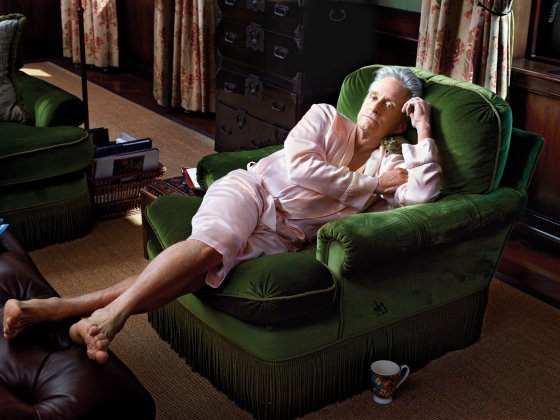
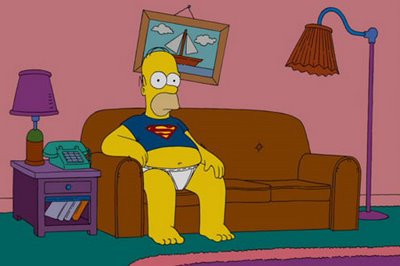
  3. Watch the other at home upstairs on my own 52-inch screen (yes, size DOES matter), sprawled across my big red couch and munching an array of my own snacks as loudly as I please.
  4. And try to determine which experience is more enjoyable.

THE FILMS:

AT THE MOVIE THEATRE
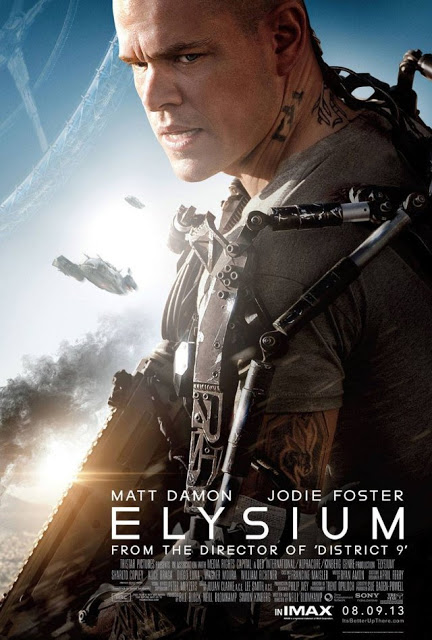
Elysium – Starring Matt Damon & Jodie Foster, Written and Directed by Neill Blomkamp.

Elysium – Starring Matt Damon & Jodie Foster, Written and Directed by Neill Blomkamp.

Pre-movie assessment: A big action movie with smarts and a story by the filmmaker who did the superb District 9.  It promises to be what we now commonly call a real movie movie, employing all the bells and whistles of today’s technology.  Also, both of its stars lean towards playing real characters involved in at least a semblance of a story.  It demands leaving your crib.

AT HOME
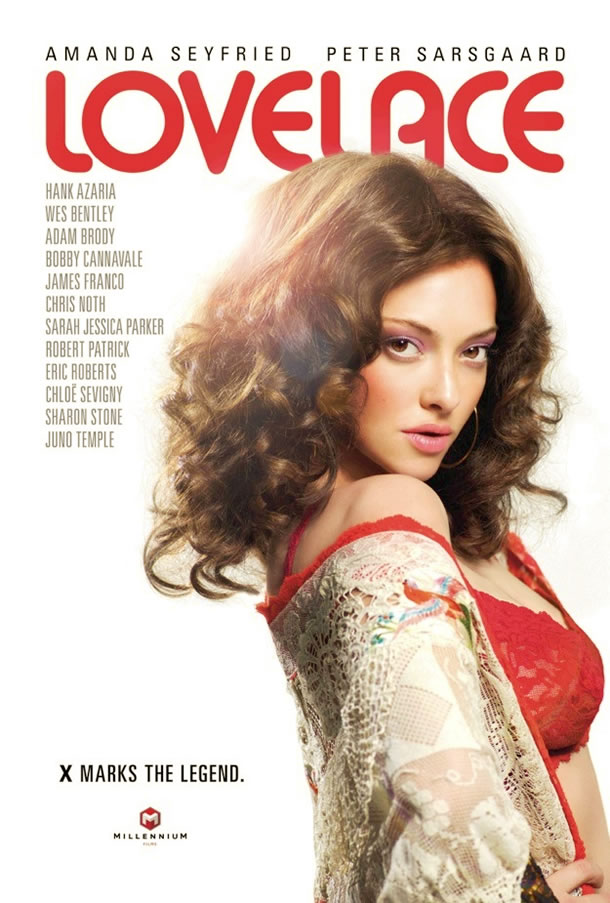
Lovelace – Starring Amanda Seyfried & Peter Sarsgaard.  Directed by Jeffrey Friedman & Rob Epstein.  Written by Andy Bellin.

Lovelace – Starring Amanda Seyfried & Peter Sarsgaard. Directed by Jeffrey Friedman & Rob Epstein. Written by Andy Bellin.

Pre-movie assessment: A small character film directed by two guys who made the Oscar-winning documentary The Times of Harvey Milk (among others), but this time about another aspect of that changing time in the seventies they both lived through and understand.  A period movie about the star of the most famous porn film ever made that is set in my youth and co-stars Sharon Stone as the uptight mother of a porn queen who grew up in not too far away Yonkers, NYI am soooo on my red couch for this one.

Here’s what happened:

Elysium at the Movies

I’d like to report that theatrical filmgoing is alive and well and not going anywhere but I can’t.  Not that this was an awful experience and not that the movie, itself was awful.  But they weren’t particularly special either.

Elysium is one of those films that should be great but isn’t.  It’s better than average, which is far preferable to being bad.  Technically it delivers well, the acting is all around very good, and for an original screenplay the story is fairly original.   It has some depth as it explores a particularly dystopic future world of the have and have-nots, plus, in the tradition of the best of sci-fi films, it attempts to be politically relevant (its issue is immigration) even though it doesn’t entirely succeed.  Okay, points for trying and bigger points for not bowing to the ridiculous and laughable in order to shoot off a few more special effects (are you listening Man of Steel?).

Looking at you Mr. Cavill

Looking at you Mr. Cavill

So why am I not at least a little excited?  Because that’s not enough to pry people out of their pods these days.  Sorry, it just isn’t.  District 9 was a bizarre alien story done documentary style that came out of nowhere and seemed to be accidentally relevant – a discovery.  Elysium screams big movie, teases us with a story, and then never delivers with enough clever twists and turns/depth of character or – and I hate that I’m saying this – particularly spectacular special effects.  Not to mention, Man of Steel has grossed more than a third of a billion (that’s with a “B”) dollars worldwide being mediocre.  In order to dissuade studios from giving us more than movie theatre mediocrity, bigger original movies have to exceed the bar of just sort of good.

As for the movie theatre experience itself, here’s what I got.  No line to buy a seat and only one couple ahead of me on a line inside to scan my credit card and print out my reserved seat.  The theatre lobby was huge – huge enough for groups of people to talk amongst themselves and to no one else they didn’t know.

Not too shabby.

Not too shabby.

The theatre itself was fairly clean, though not spotless.   It was mostly full but not sold out, probably due to the fact that Elysium was also playing on two of its other 12 screens just a handful of yards away.  Excitement in the air?  Not really, especially after watching eight trailers (yes, 8!).  The biggest in-theatre audience reaction trailer– Jackass presents Bad Grandpa. (Note:  I didn’t laugh once).  Only film even mildly interesting-looking to me:  George Clooney’s Monuments Men, though I can’t say it’s a must-see.

My seat was comfortable, no one near me was on their cell phone or felt the need to talk to their neighbor and raked seating plus a polite crowd guaranteed I had a full view of the show.  The sound was excellent, the screen was big and my popcorn was stale.  Was it worth venturing out of the house?  Eh.  I don’t regret it but I wouldn’t run to do it again if I can’t get even a contact high of crowd excitement on opening night.

Final Verdict:  I wasn’t expecting anything close to The Exorcist yet it wasn’t even close to the fun level I was expecting.

Final Grade: B or B minus – depending on how generous I’m feeling at the moment.

Lovelace At Home
3a

Perhaps Boogie Nights has forever set the bar too high for films about players in the porn industry or maybe fiction is, indeed, stranger and more interesting than the truth.  Whatever the case, the creation and travails of Linda Lovelace as a sort of lens into the changing social mores of the seventies is a ripe idea that never quite…blossoms?  Explodes?  The metaphors are endless.  Still, it’s another case of okay to good but not great.

Amanda Seyfried is convincing, Peter Sarsgaard as her awful husband is sleazy enough to make you want to take three showers (and you can, because you’re at home), while James Franco (the original choice for the part of the husband) has thankfully been bumped down to a brief bit playing Hugh Heffner that doesn’t do much.  Sharon Stone in a sexless black wig as the somewhat sexless bleak mother of the decade’s biggest star of sex is believable – which I suppose is some sort of achievement since Sharon Stone was a bit of a legitimate sex goddess herself two decades later.  But is what we’re believing all that interesting?  Not particularly, or perhaps not particularly enough.

The filmmakers capture the time period perfectly; the movie’s well made on a fairly low budget and it’s never boring.  But neither is it ever exhilarating or exciting or frightening enough.  You get the feeling you’re watching a cable movie not because you’re viewing it at home on television but due to the fact that its style, substance and/or storytelling doesn’t grab you in the way a theatrical feature about porn – say Boogie Nights  – needs to.  Lovelace is amply watchable but it never compels you – most certainly it isn’t compelling enough to view outside the comfort of your own home on the big screen.  Which is a shame.

* Not my living room, but can't beat a movie night with Bette.

* Not my living room, but how could I not post a movie night with Bette?

I had some frozen yogurt early on, paused the TV to go to the bathroom once, and then concluded towards the end of the film with some green tea and a power bar.  The sound and picture at home very good – not as great as the movie theatre and not as big (hey, we’re talkin’ porn here!) but still very good.  Especially for a film that is not big on visual effects but merely big on visuals.

Note:  It’s about as easy as it can be to watch a film VOD (video on demand).  I mean, seriously – you type in your choice of film on the search function of pay movies, it comes up, you push the button and, for $7.99 you get it for two days.  How much would it cost in a movie theatre?  Double that price, plus add for refreshments, parking and combat pay if you’ve got noisy neighbors.

VOD oh yeah!

VOD oh yeah!

Final Verdict:  For a movie about sex, I got more thrills, albeit of a different kind, from The Exorcist than from Lovelace.  I don’t think it’s unfair to say that somehow I expected more.  Though it was sort of fun to relive the seedy seventies and, the more that I think about it, the more I want to say that Sarsgaard plays a superb scuzzbucket, if you can stand it.

Final Grade:  B or B minus, depending on how generous I’m feeling at the moment.  Yes, that’s the same grade as the previous film and no, that’s not a typo.

Conclusion:

It’s not that the screens that are getting smaller and more private, it’s the films that are getting more undemanding, less exciting and to a whole new level of oddly generic.  A lot is made about the circumference of your tablet or the quality, sight and sound of you and your venue.  Yet it’s not about that at all.  The only thing this experiment has taught me is what I’ve always known.  In the end it’s all about what you’re watching – not how you’re watching it.  In deference to Marshall McLuhan – the medium is not the message – the message still is.   At least to me and a few select others who remember a time when that wasn’t the case and long for a time when it will be again.  But perhaps we’re dinosaurs.

Gay is the Old Black

Emmy bait.

Emmy bait.

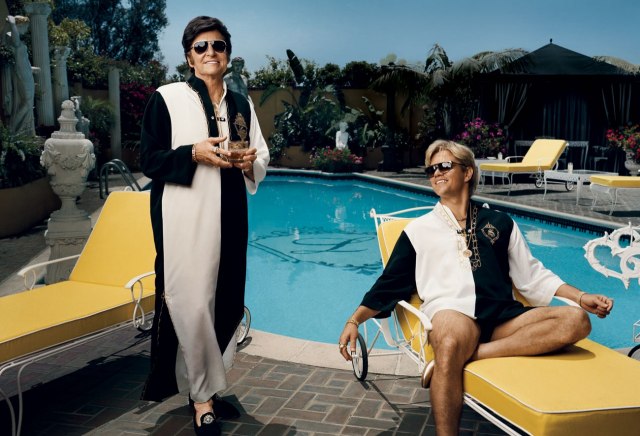
One wonders if Michael Douglas would play the part of the homophobic father of Jonathan Allen, the 20 year-old from Tennessee who, after being thrown out of the house by his parents two years ago for being gay, wowed the judges on America’s Got Talent this past week.  Or, better yet, if Steven Soderbergh would even choose to direct a movie about it.  Or if Jerry Weintraub would ever decide to produce it.  The way all three did with the continuously lauded and now award-winning HBO film about Liberace’s later years and prurient love life, Behind the Candelabra.

My guess:  probably not.  Most movie stars of Mr. Douglas’ generation dislike playing roles they deem too unsympathetic.  And don’t use the example of Gordon Gekko in Wall Street.  That film was made in and about the 1980s – a time when the general population actually agreed that “greed was good” and that ole Gordy was not so much a villain but a slightly tainted ideal many aspired to.

Of course, the majority of critics, audiences, and the cast and crew have not deemed the cable TV portrait of uber-gay Liberace unsympathetic either.  That would require that the real-life tale of the entertainer and his former lover Scott Thorson had been truly told.   The one about a 16-year old boy who was lured into the Las Vegas home of a fifty something mega-millionaire star with promises of wealth and family.  The one where the star repeatedly had sex with the boy for several years before he turned 18 (as well as any number of years after) with full knowledge said star was breaking the law. The same one where, when the older man got bored with the boy and the boy started taking too many drugs, as many young boys do, found a replacement and tossed him onto the street as he had so many others before him that were of age, with a little bit of money and a couple of fur coats – all the while publicly denying to his dying day that they ever had that kind of relationship or that said entertainer was even gay.

Eyeroll

Eyeroll

I’ve resisted writing anything but a few paragraphs about Behind the Candelabra up to this point because it seemed like the kind of film that would get some recognition for the circus stunt of Michael Douglas in sequins and a blonde-tressed Matt Damon screwing him from behind, and then disappear.

Such is not the case.  The cable film just won best drama and best actor from the Broadcast Critics Association.  It played to large and enthusiastic crowds at the Cannes Film Festival.  And mostly straight audiences (and some gay) seem to have embraced it as bold and groundbreaking.  Even those few writers who have dared to write critical pieces about the movie are often skewered, lacerated and told to get over themselves in the comments sections (even in respected places like Salon).   Also, Behind the Candelabra is likely to get nominated and win a slew of Emmy Awards, and go down in the books as “the courageous film all of the studios passed on with that director and that cast (can you believe it!) because they were too afraid of the gay subject matter.”  The latter is the meme that Mr. Soderbergh and Mr. Weintraub have been tirelessly and successfully peddling during the last six months.

Which is why, at this point, I’m weighing in.

Frankly – this film disgusts me.  Not as much as the lies about the war in Iraq, gay bullying or the right wing trying to take away a woman’s rights to choose.  That’s a different level of disgust – maybe more like infuriation.   But disgust – yeah, that about covers this.

I’ve thought a lot about other words to use to describe my feelings – queasy, nauseated, annoyed or even…jealous?  But finally, after much consternation, I decided that the perfect world is, indeed….

dis·gust  A feeling of revulsion or profound disapproval aroused by something unpleasant or offensive.

It is worth noting it’s not the people attached to this film that signal disgust to me – I respect them all (professionally that is, I don’t know them personally).  It’s the film itself and everything it tells us about where the industry is today vis-à-vis movies about gay people – or about most minorities – that makes me want to run to the toilet and be sick.

Someone tell that to the Emmys!

Someone tell that to the Emmys!

This is also not to say that the life of Liberace might not make an interesting movie.  That story – the one about how a young Midwestern piano prodigy invented (and for years carried off) the flamboyantly effeminate (some would say homosexual) persona of a character named Liberace and became the world’s greatest entertainer while still managing to convince his mostly gay intolerant world of fans he was anything but homosexual, would indeed be fascinating and almost certainly would not have caused me to write any of this.  And, even if it wasn’t particularly good, I doubt it would actually have made me feel disgusted.

Of course,  we will never know for sure since that tale was far from the one HBO and this prestigious group of A-list film professionals chose to tell in 2013 – a time when gay marriage is not only favored by the majority of people in the US (and an overwhelming majority under 25) but where its difficult to read any daily print or online news source where a major story about something homosexual is not featured on the front page.  I mean, even me – a middle aged guy who was “born that way”- sometimes gets gay fatigue.

geyyyyy

Still, true change in the movies, and the world, is not solely about the amount of ink you get or the measure of RAM you occupy on someone’s computer or website.  True change not only moves at a glacial pace but is often a one step forward, two steps back deal.  And this is where Behind the Candelabra comes in.  And me.  And my disgust.  The kind that I’m feeling right now as I compose this.

Writers are told all the time that their movies need a reason to be made. So are producers, directors, actors and studio executives.  But since writers are, by definition, the inventors of the first tangible version of a project, perhaps it is best to start with us.  As a writer one asks oneself:  What is the reason for this story?  Why make it?  What compels it to be told?  What would interest an audience?  Why will anyone care?  Why do I care?

I feel you Neil.

I feel you Neil.

I teach my writing students to ask these questions early on because I don’t want them to waste their time working on anything they are not fully invested in.  Even if it is the silliest, most exploitative story in the world, the author must find a way to imbue some kind of personal feelings of – well, something – into it.  Because if it doesn’t mean much to us, how can we expect it to mean anything to you?

I’ve watched Behind the Candelabra twice and have been looking for meaning, or even relevance, to today’s audiences.   Here’s what I’ve come up with:

  • The story of a May-December relationship told from a gay perspective could be fair diversion, one supposes.  But that would seem only fair (and not exploitative) if we had a bunch of films about other, less prurient (and more successful) same sex relationships to compare it to – which we don’t.
  • The emotional journey of a relationship can sometimes be enough to override a lack of story.  In essence, the ride you get having a front row seat to the ups and downs of human interaction between two people over a period of time can substitute for a paucity of plot points.  There are some emotions here – for instance, shock and sadness that an older person could actually convince a younger person to have extensive plastic surgery to remake their face to that of their “mentor.”  But certainly not ever sadness or shock that this relationship will end badly – or interest in how it does – which knocks out most of the tension throughout the film and causes the last hour (and more) to be deadly dull.

    A sharp contrast to this knee-knudge heard 'round the world.

    A sharp contrast to this knee-nudge heard ’round the world.

  • Maybe it’s the spectacle??  Ahh, now we’re getting somewhere.  The sequins, the clothes, the excess of a hidden lifestyle and time period in show business that no longer exists is lots of fun.  And those gays – who better than them to do this up in style!  (Though note: there is not a single gay person in the principal above-the-line talent or crew).
  • Another attraction could be the over-the-top characters themselves, who are at the very least entertaining in a very broad, stereotypical manner compared to what else was going on in the world at that time.  The homosexuals have always done this well since time began and it makes audiences quite comfortable to view them this way, thank you very much.   And certainly, why make any movie that is not at least fun!!??
  • Juicy parts for actors who can be cast against type.  The old Hollywood joke: Every time a straight man puts on a dress they give him an Oscar?  Well, not anymore.  (Note: Even James Franco’s Marilyn Monroe drag as Oscar host fell flat a few years ago).  So, you have to find new ways for them to do it.  How about a happy recipient of anal sex who dies tragically that can’t be X-rated?  It’s Oscar/Emmy bait for Michael Douglas.  (He even gets to have AIDS, but we can downplay that ‘cause the real life Liberace did!). Plus, what about an enjoyment of Speedos, suntans and Las Vegas?  It’s the flip side of Ocean’s 11 for Matt Damon and he’ll jump at that!   What actor wouldn’t want to play younger than they are, get fat and then skinny and then fat and skinny again as they age, become addicted to drugs and then recover?  No one, that’s who.
Yeah, I'm exhausted too.

Yeah, I’m exhausted too.

But please, please, please, please – do not tell me this movie is groundbreaking or even something different.  And if you’re a high-powered A-lister, don’t keep spreading your tales of woe about how the heads of movie studios are ruining the business by not taking chances on this kind of film.   They might be ruining the business by not taking chances but NOT taking a chance on this film was exactly the right choice.  It has no relevance to 2013.  It had relevance in 1983, and in 1993 – at the height of the AIDS epidemic – when it might have meant something other than an easy way to make some money, get some attention and garner a few awards for “courage.”

The people who made it should know better.  And might benefit from watching Jonathan Allen tell another all too familiar, yet far more commercially relevant and compelling story for today.  This story was  indeed shown last week not on the big screen or on cable television but on, of all things,  network reality TV  – America’s Got Talent, to be exact.

It is indeed the golden age of television.  In some circles, at least.