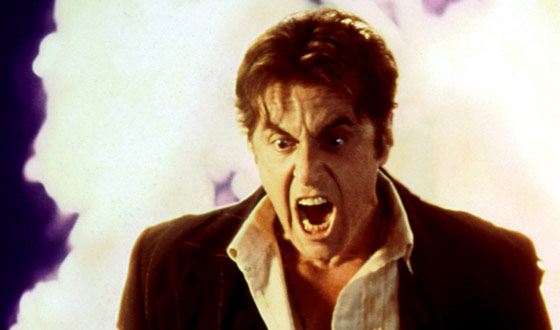
Who are you?

d69f5eeadc8bdb9828e1a46e32fa3b96

Within the last week my computer was stolen and within the last year my federal tax return refund was issued to someone else who illegally filed a claim in my name.  Now don’t panic.  I have another computer and about 65% of the stuff from the missing one is either backed up or in hard copy.  I also filed a new claim with the IRS stating that some jerk stole my social security number for tax purposes only – apparently a common occurrence these days – and have been assured by my accountant that within the next year or so I should get my full refund in the mail.

Of course, none of this takes away how absolutely creepy it feels to know that someone other than your dog has their paws on, inside and around private parts of you and your life.  It’s kind of like a blind date you didn’t ask for who stays over without permission and, aside from your wallet, steals some of your most personal items from your house, including, most importantly, your personal space.

Don't mind if I do!

Don’t mind if I do!

All of this got me thinking about the two-hour season premiere on Sunday night of the best written series on television – Mad Men – a show that at its core is about how the social and political revolution of the sixties forever changed (some say stole) the identities of American men and women but also allowed us to evolve into who we are today.  Not that I’m recommending it but theft and the turmoil it brings can be good too – waking us up to who and what we really are beyond who and what we possess.  (As if all that isn’t temporary anyway).

In approaching the herculean task of a season set in the often overwritten year of 1968, series creator Matt Weiner shows us a world of individuals who up until now were determined to be defined by what they have rather than who they are because the latter is just too scary and impossible to think about or really even know for sure.  This presents the ultimate problem for his characters because, truthfully, almost none of them have even so much as a passing clue as to their inner selves.  In fact, I’d venture to say that even if a magic Genie appeared to them offering to grant any three wishes of their greatest desire, they would be flummoxed to choose what the top three real wishes would be.  This perpetual conflict and uncertainty is why Mad Men continues to work year after year.  It is a show that series creator Weiner has acknowledged publicly has “no concept at all other than its characters.”

True words, man.

True words, man.

But in real life, as opposed to television drama (which in the case of MM, is much funnier, subtler, more dramatic and better executed), we all do have an identity, which is why no one can truly steal it if deep down you know who you are. That is the reason why I don’t get personally freaked out by the thefts mentioned earlier and why I don’t give a hoot about my Facebook privacy settings or how many items I buy online using a credit card that someone can possibly take and use as their own. Oh sure, these robber barons can make my life temporarily miserable and cause some financial strain or personal heartache, but can they truly take who I am and make it them???  I don’t think so.  Not unless they want to walk xxx number of years (not sayin’ the number, sorry kids) in my shoes and have each identical experiences of joy, heartache and everything in between that I have learned, or sometimes not learned, from.  (Note on the latter: I am nothing if not a work in progress.  Or, if you like metaphor, a chair still under construction but not completely built).

Still, it is also why the entirety of my, or most anyone else’s, true life would not make a good television series or movie.  We don’t live in constant conflict and wit that serve a three or five (or more) act structure and don’t have the best writers, directors and actors to perform it.  We only have ourselves.  Which brings us back to MM, American society and the year 1968.
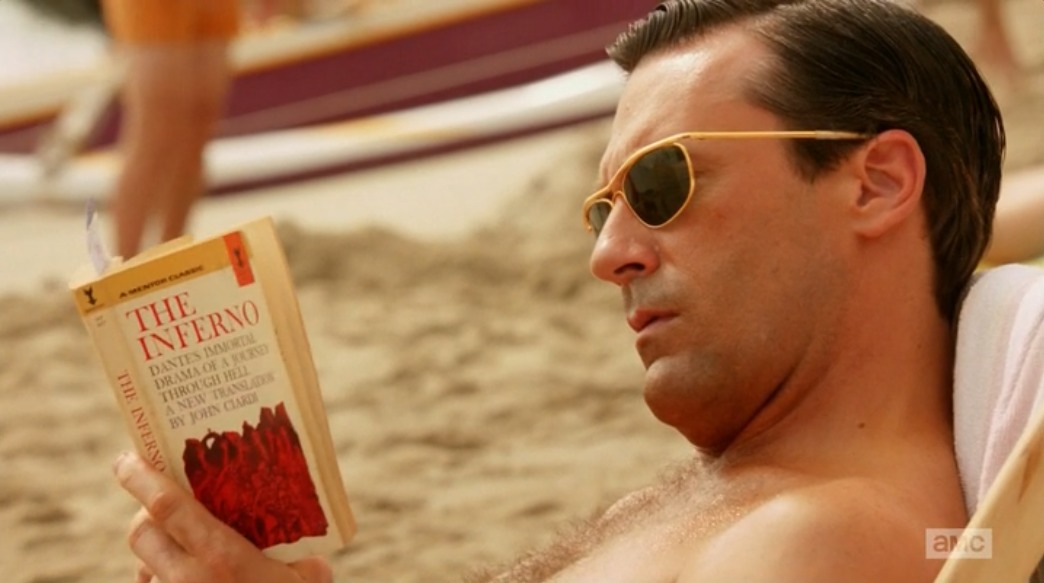
OK JON! WE GET IT! YOU'RE HOT!

OK JON! WE GET IT! YOU’RE HOT!

It is not surprising that in its next to last season Mad Men is finally tackling the issue of personal (and on a large scale, American?) identity because its iconic leading Man, Don Draper (Jon Hamm… did I mention Jon Hamm?), is someone whose own identity was literally stolen from a dead soldier and molded (by the real character, along with his writers and the actor playing him) into the alpha male of his time by stealing other traits from the best and brightest of what he saw around him in his travels from his rural American childhood, to the snazzy streets of Madison Avenue, to posh suburban New York, and then up to the polished penthouses of Manhattan.  Now in its final years, Mad Men has lost none of its own polish and luster because more and more the faux Madison-Avenue-American-dream-world from the late 50s it created is beginning to crumble before our eyes.  Rather like the way the economic bubble of the 2000s (aughts?) brought down the financial avarice of the 1980s’ “greed is good” culture and the failed American foreign power grabs of the 1980s, 90s and aughts has provoked a bit of an isolationist break from war on the part of the vast majority of the American public today.

As Mr. Weiner and company spend the next number of months against the backdrop of the assassinations of Martin Luther King and Bobby Kennedy, the campus shootings at Kent State, the riots at the Democratic convention in Chicago, the body bags of the Vietnam War, flower power, marijuana, bell bottoms, good and bad hairstyles (depending on your POV and the kind of hair you have) and rock ‘n roll, all topped off by the election of Richard M. Nixon to president (do I have to live through it a second time?!!), it is important to remember that every bit of these moments and many more are all part of what brought us all to where we are today.  It is why China, France, Germany or Japan will never actually be the United States, just as the United States can never aspire to be any one of those countries.  That’s not a quality judgment on us or them but merely a statement of fact.

You can steal an idea of something but, as Mad Men consistently shows us, ideas are intangible until they are embodied and fully fleshed and executed out by the actions of people and the reactions of others to what they do.  If you have any doubts that this show does it well – consider all of the many films and TV shows that attempt over and over to wallow in the backdrop of the late sixties for dramatic effect and how over and over again those television series and movies fail miserably, or at least in great part, in almost every way.   It is never about the backdrop or the surface or the literal of what we see.  It is always about what’s below the surface and how what is and isn’t there is played out by the people inhabiting that world.  To wit (very limited spoilers ahead):
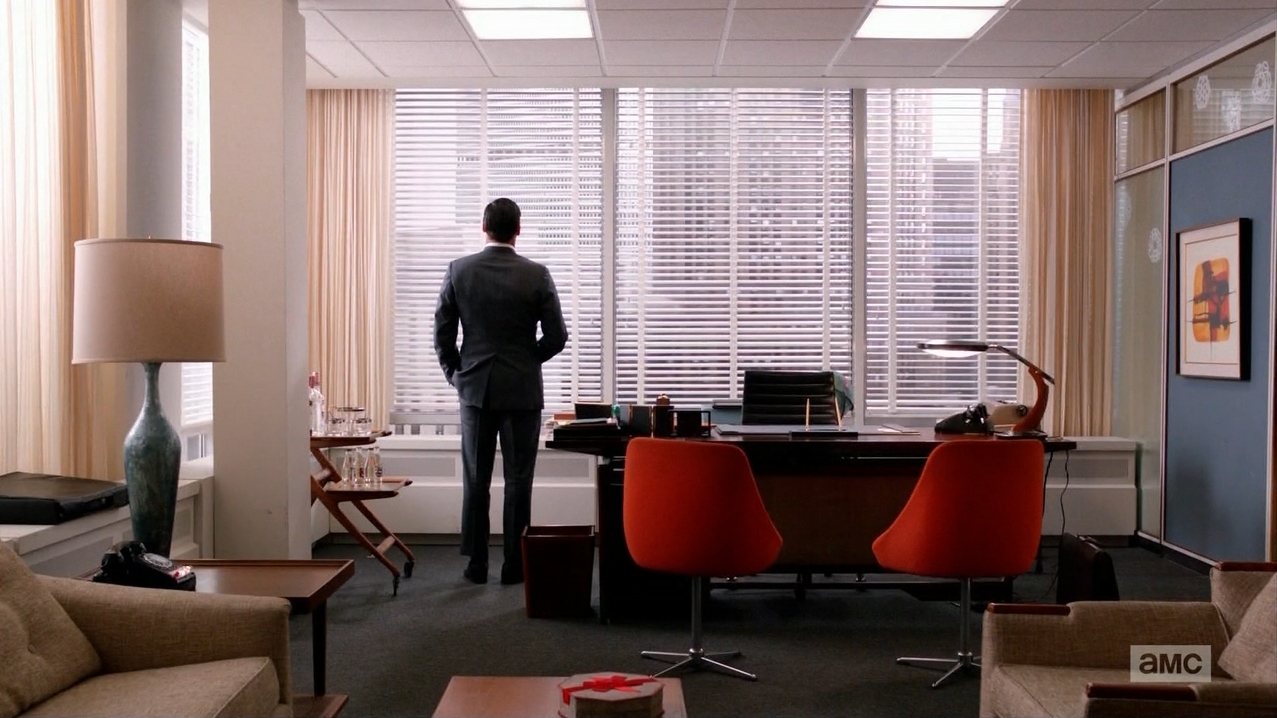
Taking in the view (last Hamm  joke for this post I promise)

Taking in the view (last Hamm joke for this post I promise)

  • When Roger Sterling, the blue blood jokester partner at Don Draper’s ad agency, lies on his psychiatrist’s couch and ponders “What’s it all about, doc?” the effect is meant to be a comically indulgent comment on the sixties that will later surprise us with a lot more.
  •  When Don’s overfed, arch ex-wife Betty travels down to Greenwich Village to find a lost 15 year old girl and is told by a hippie gang leader that “You can’t grok (the word for understand in Robert Heinlen’s seminal 1961 novel Stranger in a Strange Land) that we (young people) are your garbage” it’s meant to sound misguided and dishonest until later on Betty shows us through her own actions it really isn’t.
  • When Don’s former protégé Peggy, now running her own creative department at a rival agency, tries to do what Don, her former boss, would do when she’s stumped on how to save an ad campaign of hers that unintentionally evokes an American military atrocity in Vietnam, it feels obviously poignant until Peggy’s wry self-satisfied smile later proves it to be anything but.
  •  And, while taking his official agency photo against the backdrop of Manhattan in his too immense office, Don himself can only stare blankly into the camera lens when a desperate photographer pleads with him to just “be yourself,” it feels too quaint for words until the last scene of the season premiere proves that for this ad man drawing a blank was the only truly honest response he has in him during the entire episode.

I tell my students all the time to not worry about anyone stealing their ideas. Original ideas can never really be stolen because it is always about how they’re executed – how they play out from scene to scene and in total. 

The only thing you have to fear... is wasting post-its

The only thing you have to fear… is wasting post-its

This is much the same as our lives and how we really live them rather than how it might seem to the world.   That is also the way it is with our favorite television series, particularly ones like Mad Men, which was never about the window dressing of the often portrayed 1960s but the ways in which the people who identified as Americans got through it… and came out the other side.


Sympathy for the Devil

Homer-Simpson

My response when people tell me I’m going to hell:

Oh good, cause that’s where all my friends will be!

It’s kind of a tart, easy answer that ensures I won’t win any new buds in certain circles, but those are not circles I want to be in anyway so these kinds of answers work for me.  Plus, as a lifelong provocateur with a big mouth, especially when I’m pushed, I actually love annoying those who in my mind are a little too self-righteous and judgmental about the rest of us.  Hmm, I guess that means anyone like me – except on the other side.

This all got me thinking about Lena Dunham and Girls, James Franco in Oz the Great and Powerful and Don Draper/Jon Hamm (because they are now the same person) in Mad Men, as well as Hannibal Lecter, Dexter and pretty much any role Al Pacino has ever played.

What is it about devils and devilish behavior?   And what puts them and the way they act in that category?  Why are there some devils we love to love?  And other Lucifers we fear and hate?  And still other Beast Masters we are kind of intrigued by and want to spend time with yet publicly want to deny, or at least distance ourselves from until the doors are closed and we can luxuriate in all of their nastily seductive, id-like, primally deceptive dirtiness?

Woah, excuse me while I don’t wash up.  Ever.

The Divine Ms. Dunham

The Divine Ms. Dunham

I happen to love Lena Dunham – everything about her – which is why I don’t really want to meet her and be friends with her.  Decades of experience tell me I will be severely disappointed because she can never live up to the hype.  NO human could.  Which is why I suppose I’m looking forward to Hell.

In any event, this is because Lena Dunham is NOT Hannah Horvath, the oft-vilified lead character on Girls just as three decades ago Murphy Brown, from the self-titled TV series, was not a real person anyone could feel threatened by despite then Vice President Dan Quayle’s hysterical reaction to her.

However, this did not stop the zeitgeist from attacking and defending Murphy Brown, dubbed by Mr. Quayle et al as a scandalous role model of single motherhood for young women and the future of the American family in the 1980s, just as me writing and ranting about my love for Lena/Hannah likely won’t now quash the outcry against her.  Outcries such as the LA Times’ TV critic Mary McNamara who recently wrote that Hannah was a “lovely but irritating wild child running around the playground shouting vagina at everyone and peeing in the sandbox.”  Okay – I suppose she’s entitled.  But when she suggested that “someone needed to put that kids’ clothes back on and show her where the bathroom is,” I suddenly had the overwhelming urge to make the short drive down to her office (hopefully in the middle of the newsroom) and take a dump on her desk in support of my current favorite TV heroine.

That's it Hannah, ignore the haters!

That’s it Hannah, ignore the haters!

The latter is not only because I am a bit Satanic but because I love that Dunham is representing being a writer in your twenties with seemingly unedited indulgence (Um, yes, she’s edited – Judd Appatow is one of her producer’s for God’s sake!).  And THIS is because I am here to tell you that for most writers and many others in their 20s (and obviously sometimes beyond) it’s about always thinking you’re right and usually not caring enough if you’re not to stop your behavior.  That’s the brilliance of the show and why it and Dunham’s Hannah is so cringingly uncomfortable when she plays ping pong topless with her flab bouncing; leaves nasty messages for friends not listening for the millionth time to one of her problems; and tries to manipulate everyone around her for a free ride with money or attention so she can create something brilliant that the world must have and see for its own survival.

I mean, I certainly feel and have felt that way.  Who hasn’t?

Okay, well then let’s just say I have felt (sometimes feel?) that way and don’t find any of those traits particularly objectionable, unsympathetic or devilish for what now should be obvious reasons.  Though perhaps, you do.  The devil, as they say, is always in the details.

Still, the dramatic strategy used for Hannah is be all out in all of your flaws and don’t worry about being sympathetic if you can also be honest and entertaining.

Well, then – what about the charm of other blasphemes? Like:

A look behind the curtain

A look behind the curtain

James Franco’s version of the title character in Oz, the Great and Powerful

Here’s a two-bit circus magician whose goal through his movie is to become rich and powerful and famous while bedding as many unsuspecting women along the way as possible.  These are lofty goals to some but obnoxious ambitions to many others.  Yet members of both groups have pushed the movie to over $300,000,000 at the worldwide box office in just a few weeks.

Oz was helped by being a prequel to an iconic movie seen by more people in the world than any other.  But it also has a fairly unsympathetic lead who gets by mostly on counter charm and the goodness of others who want to believe and will inevitably be disappointed by him — until they’re not and in turn lead him to forever change for the better.

Dramatic strategy: We’ll root for the Devil in all his sin because he’s fun and underneath it not so bad.  And since he’s a famous character, we know he will come around in the end.

Still, this will not convince everyone.  As one of my students said to me, “Franco seemed stoned through the whole movie, do you think he was?  And why do I want to watch that, anyway? “

I had no answer for either.

Where there's smoke...

Where there’s smoke…

Don Draper/Jon Hamm on Mad Men

He’s an ad man who manipulates the public for profit, stole the identity of the dead soldier next to him, is a serial adulterer (until perhaps recently – though we don’t know for sure), a chain smoker and a disrespectful lout if someone gets in his way.  He is also always the best-looking and best dressed guy in the room, a brilliant ad man, a loyal friend, and the guy every guy wants to be and every woman wants to have – partially because he is rumored to be the best lay in New York City in the sixties, which is really saying something.

Dramatic strategy:  Incredible looking devils who will maybe move a mountain for a lost puppy, if they decide they’re worth it, can do anything else they want as long as they give us a wink and a nod.  You know it’s true.  I know it’s true.  Why fight it?  In real life or on television.

Donuts anyone?

Donuts anyone?

Dexter on Dexter

If Dexter were writing this (and perhaps he is) he would offer no justification for being a serial killer who has gotten away with countless murders while sacrificing the lives of his wife, girlfriends and friends plus the sanity of his police detective sister.  Everything about him is beastly, especially his choice to maintain a double life as a caring father to his young son and expose him to all kinds of potential bloodiness.

Having watched every episode of Dexter, I sort of feel like one of those women who fall in love with a guy who has been sentenced to consecutive murder sentences and will spend his next five lifetimes behind bars.  This is because somehow I know he has been either misunderstood, judged harshly for a momentary indiscretion or is really a moral guy who has been forced to take unorthodox action for the greater good because, damn it, somebody had to.  And besides – if you knew him like I did – you’d get it and know that he is not unlike any of us.  And, in the end, may be better.

Dramatic strategy:  The dark passenger devil inside us has to breathe at some point and it’s better to root for a fictional killer than spend the rest of our lives in prison, on the lam or in a box underground before our time.  Plus we ALL want to murder someone at some point in our lives. Which makes it universally interesting to see how it will play out.

Who's hungry?

Who’s hungry?

Hannibal Lecter

He’s the Devil among Devils – a killer so brilliant and crafty that he subverts all expectations among his ilk.  This is probably because he also manages to be the Court Jester of Devils if the Joker were the kind of sophisticated dinner companion one would have at a $50,000 a plate charity dinner. This is also probably why he’s starred in at least three huge films, many more bestselling novels, is the subject of a new NBC show, and has become an irrevocable part of American folklore.

Dramatic Strategy:  As Joan Rivers once famously said, “If Hitler had five good minutes, they’d put him on The Tonight Show.”  Can we talk?  Well, he most certainly can – but in a really, really funny way.  Plus, he knows how to eat.  You.  Me.  And any one of us.  And we all love danger.

Finally, there’s…

In the flesh?

In the flesh?

 Al Pacino in Everything

He began as Michael Corleone in The Godfather but between recent portrayals of Roy Cohn, Jack Kevorkian and now Phil Spector, he may indeed be The Devil himself.  And if you have any doubt, note Pacino actually did play The Devil (or himself) in The Devil’s Advocate, though his character was named John Milton, which seemed to imply something about Paradise Lost though I was never quite sure what. Side Note: I much prefer Robert DeNiro’s take on Lucifer in Angel Heart because his character was named Lou Cypher (get it??).

Dramatic Strategy:  No one does loveable old coot as The Beast like Al.  Still, there will be an update after tonight’s showing on HBO of Phil Spector despite the fact that writer-director David Mamet calls it a fable; Phil Spector’s wife says its inaccurate; and everyone knows that on both counts the Devil is anything but.

There are numerous other sympathetic Satans but I think we’ve covered the basics here.  So – one final thought:

Anything about this list jump out at you?  Anything at all?

(Silence).

Anyone?  Anyone?

(More silence).

tumblr_miu9i6OX4X1s4tfa9o1_500

The correct answer:  All the above Devils we truly love are men and there is not a woman among them.  And forget Sharon Stone in Basic Instinct, we don’t love her.  Not really.  Nor did we love Charlize Theron in Monster.  Or Faye Dunaway in Mommie Dearest.  Even Meryl’s ghastly Miranda Priestley doesn’t win our sympathies. They were campy, cultish heroines.  But loving and reveling in their nastiness?  Uh, uh. 

However, I DO love Lena/Hannah for what she dares to do that I couldn’t.  And though I do not see her as The Devil but I am willing to accept some of the public outcry and admit that others perhaps rightfully do.  What I can’t understand is – why can’t she be accepted among The Devils we love to love — like all the other men who came before her — rather than be treated as The Young Woman that we love to hate???