Sanewashing

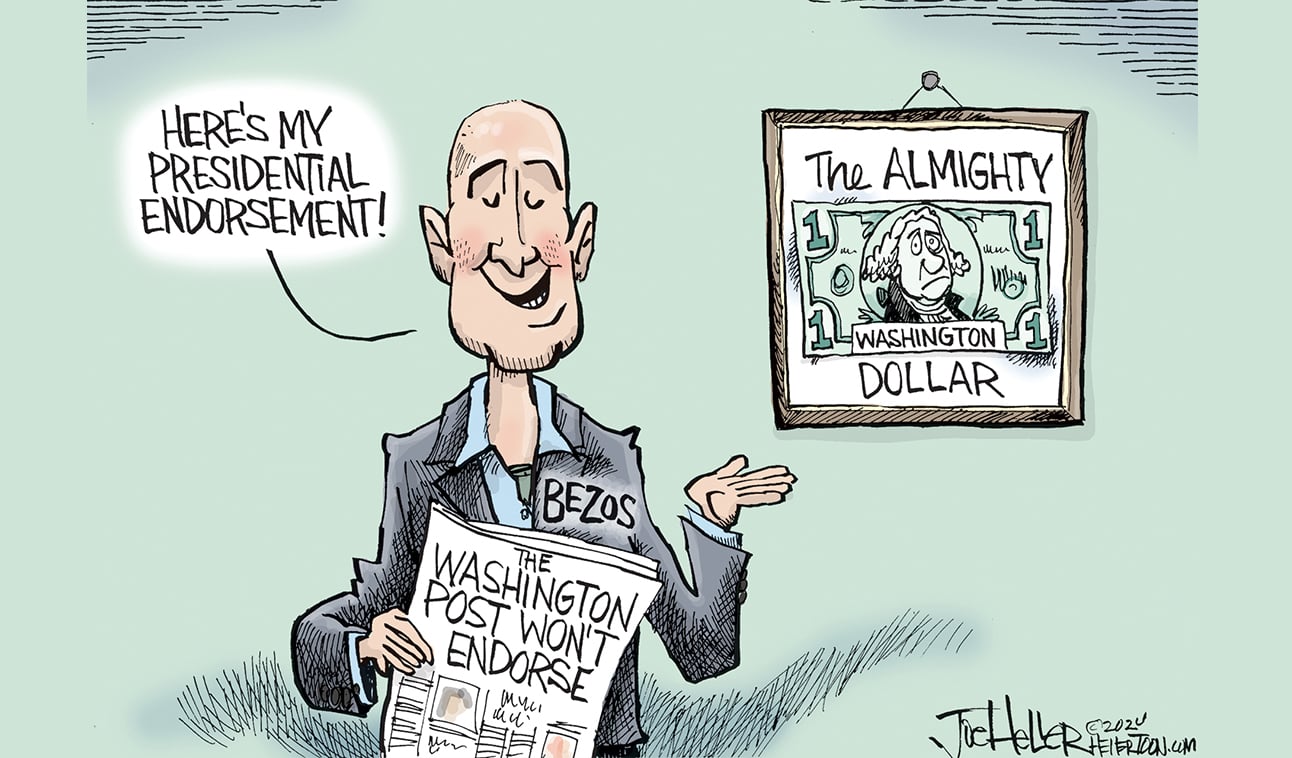
A friend sent me this story from The Daily Beast. It’s about the Jeff Bezos-owned Washington Post refusing to publish a cartoon on its editorial page depicting multi-billionaires like Bezos and Meta’s Mark Zuckerberg, as well as others, kneeling at the altar of Trump and offering up bags of money. 

But don’t take my word for it.  

Here’s the cartoon:

It is well known both men, as well as many others in the M-Billionaire class, have donated $1 million apiece to the president elect’s inaugural fund and jetted down to Mar-A-Lago to spend time with him doing…stuff. 

As for the cartoon, it was drawn by Pulitzer Prize-winning cartoonist Ann Telnaes, who’s been employed at The Post since 2008.

But not anymore.  

we get it

She quit in protest because in all her time there never once had the paper refused to publish one of her drawings.  Tweaks, yes.  Out and out refusal?  Never.  Here’s a link to her Substack with a more specific explanation:

Click here to read more

One nixed cartoon is not necessarily concerning.  But this is part of a clear trend.  Just a few months ago Mr. Bezos overruled his own editorial board and refused to allow The Post to publish its planned endorsement of Kamala Harris.  In His own piece on His opinion page, he stated, seemingly out of nowhere, that the centuries old tradition of newspaper editorial endorsements “create a perception of bias” and “non-independence.”  

Say what?

Two editorial board members who resigned, as well as a slew of other reporters who also left or spoke out against his new policy, disagreed.  As did, well, about 200,000 readers who cancelled their subscriptions.

But this was not limited to The Post.  

L.A. Times owner Patrick Soon-Shiong, another M-Billionaire who was also pictured in Ms. Telnaes’ cartoon, similarly blocked that paper’s endorsement of Harris weeks before the 2024 election.  Predictably, several members of his board, as well as two of its Pulitzer Prize-winning editorial writers, resigned.   

Poor Dorothy

Not that it any of this ruffled the feathers of the aforementioned M-Bs, or as I now think of them – the new AOCs.  

That would be – Aspiring Oligarch Class.

To whit:

Since P S-S’s announcement at the Times, he fired his entire editorial board, noting he plans to replace it with a new team of “more conservative voices ” that will make the publication he’s owned since 2018 a more “fair and balanced newspaper.”  

To that end, he announced in December he’d be injecting an AI-powered BIAS METER into its coverage.

Because what could go wrong with that?

Totally normal stuff

On one level, all of this is hilariously unfunny.  On another, the Chair (Note: I defer to the third person when my blood begins to boil), who went to grad school in journalism at Northwestern in the post-Watergate era, has to marvel at the chutzpah.

For the one or two of you out there who don’t speak Yiddish or never went to the house of a Jewish friend or met one of their older relatives, chutzpah means extreme self-confidence or audacity.

Logical

The coincidental timing of both major newspapers suddenly deciding not to endorse, the large money contributions, and the total lack of concern of what the trained journalists they have working for them and, in many cases have long employed, have to say, IS a THING.  It’s what they teach us in journalism school to sniff out (Note: That’s the technical term).  In court, it’s called evidence.  And when there are enough examples of it in enough places and at enough places, it’s called a trend.  And if you google any of this subject matter, or even political contributions among billionaires, you will come upon numerous stories from REPUTABLE news sources (Note: Not “fake.”  And not from a random podcast or on TikTok) with much more evidence.

This should keep her busy

Now of course, there is going to be blow back.  Like David Shipley, editor of the WaPo’s opinion page, who stated re: the cartoon nixing that “not every editorial judgment is a reflection of a malign force” and that HIS decision (Note: Bezos’ name was cleverly not mentioned) was made because a previous column had covered the subject and another satirical column was scheduled.

But is a cartoon a column?  And what is the limit on covering a subject like a coterie of potential U.S. oligarchs being lined up among the billionaire class all across the country for the first time in history?
All hail

Imagine if Watergate had been covered that way?  Or the existence of concentration camps during World War II?  On second thought….

I often ask friends this rhetorical question re: money and power and the wealthy who wield them as a way to expand both with no real regard for the preservation of democracy, personal freedoms or even the mere existence of a habitable planet – 

When is it enough?  

NEVER

The answer is also rhetorical but I’ll state it anyway.  There aren’t enough billions in the world to make a scared individual secure, or an insatiable person filled up, or a person who is bottom line obsessed with their own self-interest suddenly become someone who will put you or anyone else in the word before themselves.  

Money doesn’t do that.  Nor does extreme, outsized power.

It takes a village of relentless truth sayers to hold them accountable.  

Loudly and unrelentingly.  

Like the people of Bedford Falls vs. Mr. Potter

The biggest note of hope in all of this is that The Daily Beast story linked above was written by an intern named Liam Archaki.  He’s a rising senior at Amherst College with a double major in English and philosophy.  Not even a journalism major.  Also, he interns at The Christian Science Monitor – not one of those fake news, left wing rags the MAGA movement uses to describe credible – meaning vetted – sources of actual news.  

See, like other credible online sites, The Daily Beast picks up stories from other reputable bureaus and syndicates.  This is even something The Washington Post does.  At least at this writing.  Who knows what Bezos and some of the other guys have in store for us over the next four years.  We could very likely see sources like the One America News morning show hosted by  Matt Gaetz in an effort to cover “both sides.”

We’re with you Jerry

Sanewashing the most outrageous statements by publishing them in the name of a balanced agenda.

Travie McCoy ft Bruno Mars – “Billionaire”
Home is where the….?

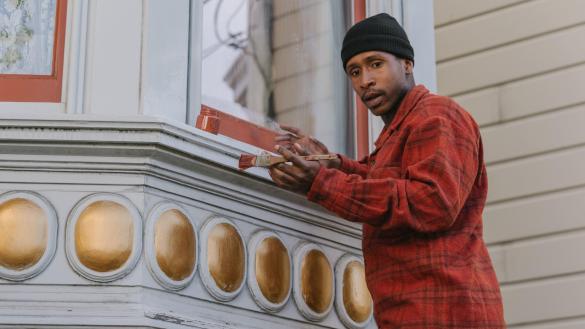
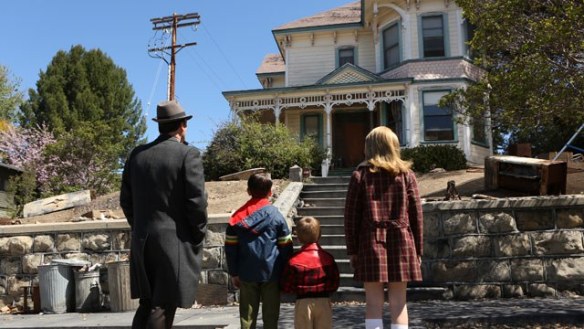
There’s a fascinating movie now available on Amazon entitled The Last Black Man in San Francisco.  It’s a semi-autobiographical story about its star and co-writer Jimmie Fails and his odyssey to reclaim the old Victorian-style house his grandfather built many decades ago in San Francisco.

The film is about many things and is quite artfully done.  But ultimately it very masterfully asks us to consider the loaded and timeless question of:

What is home?

It’s difficult, and short sighted, NOT to think about the answer these days.

A coat of paint, and a whole lotta heart

The ravages of Hurricane Dorian in the Bahamas, where we’re now being told current estimates of under 100 dead are likely to jump into the 1000s, are seen not only in TV satellite shots of rubble that were once more than habitable houses.  They are equally felt on the faces of every displaced Bahamian staring back at us from the wreckages or through the ache in their voices on radio or through the telephone.

That tone and those images are eerily familiar.  They build from last year’s wildfires in California, the devastation of 2017’s Hurricane Maria in Puerto Rico and Florida (Note: $91.61 billion in damages, according to estimates), which were preceded by Hurricane Irma and Hurricane Harvey earlier that year, which built on various other blizzards, floods, hurricanes and fires in the two years before in the U.S., all of which (and more) harken us back to what feels to be (but surely won’t be) the granddaddy/parent of them all in the U.S., Louisiana’s Hurricane Katrina (2005 and $125 billion in damages).

It is important to note that in human terms, over 150 million people were displaced internationally due to national disasters in just the time period between 2008-2013.  Still, that number doesn’t even include any of the disasters randomly mentioned above.

What she said

Nevertheless, there is ONE bright spot we can safely assume in all of this:

The vast majority of ALL of these people in all of these disasters still have a place in their lives THEY call home.

Last Black Man in San Francisco, a multiple winner at last year’s Sundance Film Festival, forces us to confront our value judgments on where people live and how they live these days.

Sure, an old Victorian townhouse in one of the great urban cities in the US is nice and trendy and all that and more.  Yet it all depends on where that particular piece of brick and metal and neighborhood fall in your personal (and racial) hierarchy and in what year it’s being rated.

How much do you think Don Draper’s whorehouse is going for these days? #stillthinkingaboutit #madmenforever #jonhamm

If you live in a big city it’s likely the hip area you’ve probably overpaid handsomely for was once a slum, an ordinary working class neighborhood or even a downtown factory outlet on the wrong side (or no side) of town.

You may think you’re hip and cool now but the same people who lived in that same place 40 years prior were on the outside world looking in and considered anything but.  Nevertheless, their place might have also been considered a whole lot homier than what you’ve made of it.  Perhaps they themselves were even a lot happier.

And if we were to really stretch the metaphor that could even be said for the guy whose only house consisted entirely of an illegal tent pitched in the alleyway of one of those streets or cul-de-sacs not more than a block from you.

Really?

Yes, truly.

Right, Chairy, it’s real easy to philosophize about all this when YOU’RE writing with a roof over YOUR over-privileged head!!

Well, perhaps.

But no one (Note: Not even Chairy) is advocating living without a bed and/or a place to stay warm or cool, is what most humans want.  It’s just that, well, NOT having these material comforts does not make anyone homeless in the truest sense of the word.

To brand a person as homeless is to dehumanize them.  It is to relegate them to a category of disenfranchised and forces them into some overall sad statistic WE can keep a healthy distance from.

It is to also put them into a group too many of us Americans these days want to keep a distance from.

When people are homeless we assume they lost the home they had, are fleeing some inferior home they occupied in some unwise place or for some unknown reason for which THEY are solely to blame.  Or are not smart enough.  Or were born into a caste system where they never really had the very basic of human needs.

Yes #kindnessalwayswins

Whichever is the case, and in some cases we assume there are many, clearly THEY are not US.  Most certainly they are also lesser than.

The images of so many immigrant families standing on line, or in 2019 American parlance cutting in line, in order to make a life in the United States is our other new version of those people without homes.  Those people who are homeless.

Imagine the effort it takes to leave the place in which you were raised by accident of your birth and come to a strange country where you likely do not speak the language and have few, if any prospects other than the fact that you won’t be murdered in cold blood.

Could YOU make the journey?  Would YOU make the journey?  Finally, WHY would YOU make the journey?

You were born and raised in Honduras, Nicaragua, Syria, Guatemala, et al.  You’d leave everything behind with the pipe dream of making your home in the United States?  What could possibly make you think a homeless person should be lucky enough to be given a HOME in the United States???

Of course, the answer is every one of those people making that journey already have a HOME, i.e. a place where they can feel safe and warm, because they brought it with them from their own country. 

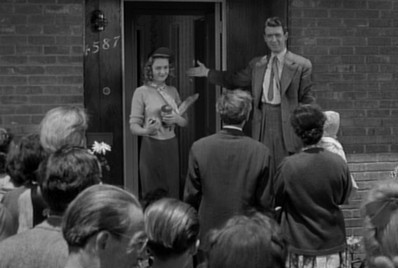
We should all be the Baileys welcoming the Martinis #breadsaltwine

It might not be brick and mortar or discernible by the contents of their suitcases or the money in their wallets.  Sometimes, it is merely a spot where they know they are okay, or will be okay in the face of adversity.  For each and every one of us, home is at least partly that or we are, indeed, the ones who are truly homeless.

As the world shifts, drowns and burns, and the borders of our respective countries of origin are slowly beginning to be sealed off, it’s important we be clear on who and what makes a real home.

As the offspring of two sets of immigrant grandparents, and a member of at least two minority groups still persecuted very actively worldwide, I know how and where I LIVE is not the determinant of who I AM.

… plus it’s not like I have an infinity pool #soLA

I especially know this after buying my first house a mere three years ago in a city prone these days to natural disasters.

If I lost it tomorrow, yes, I’d be devastated.  But I would never consider myself homeless.

Nor should you.  In regards to yourself or anyone else.  And that’s especially true if you right now you are fortunate enough to have any sort of physical roof over your head.

Diana Ross – “Home” (from The Wiz)