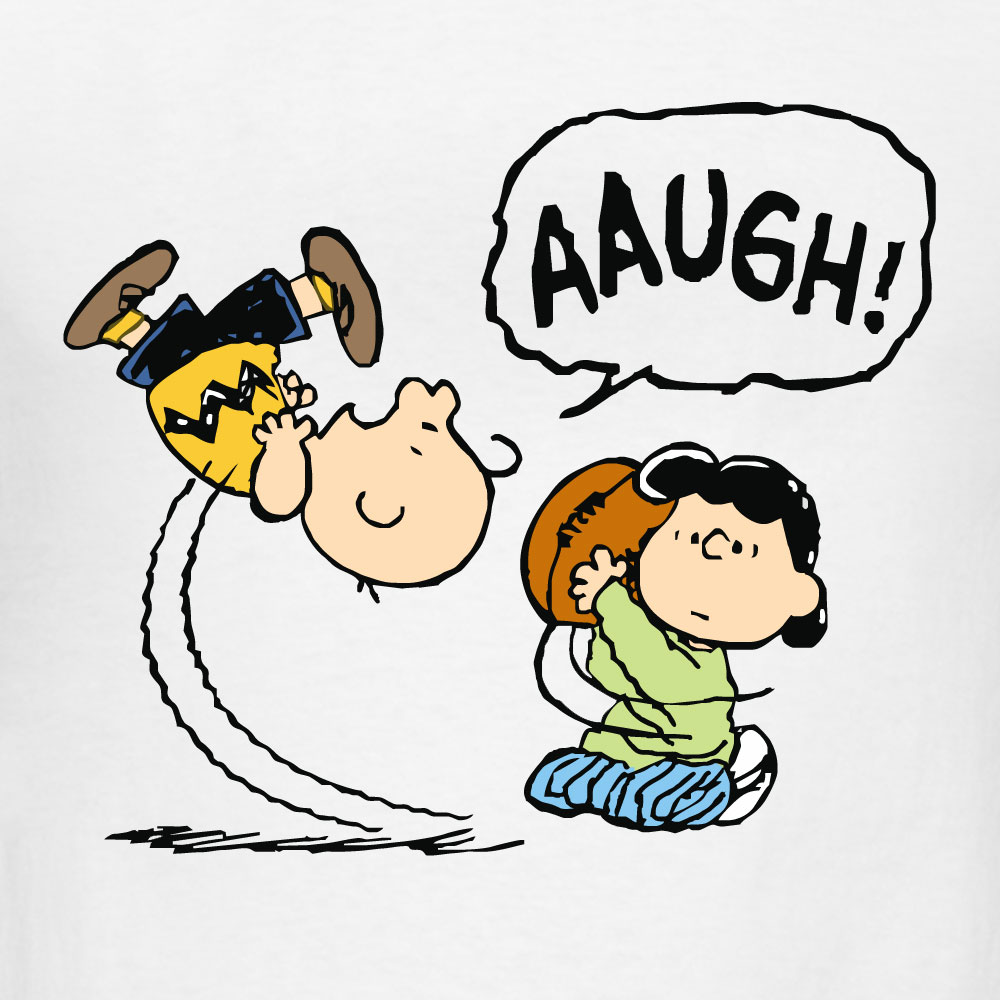
An Off Day

Has Meryl Streep ever turned in a bad performance?  I don’t believe so.  But has she given us examples of acting not up to her usual caliber?  Certainly.   (Watch 1982’s “Still of the Night” and report back). Tony Kushner’s genius “Angels in America” set the bar about as high as it could go for a playwright – and pretty much for any writer.  Forget that he won the Pulitzer Prize.  That particular piece of work, which he labored on for years of rewrites as he watched AIDS devastate life around him, will also live on for generations as the quintessential dramatic evocation of a plague whose ruthlessness and scope defied description.  That is why sitting through his musical “Caroline or Change” some years later one couldn’t help but feel  that, well…every brilliant writer deserves at the very least a “gimme.” (okay, that “one” was me – a severely disappointed fan in a severely UNconservative way at the time).  The list goes on an on and most recently ends but certainly doesn’t stop with President Barack Obama.

Split screen is not our friend.

The buzz is abuzz with POTUS’ debate performance last week against his Republican challenger Mitt Romney.  Among the colorful adjectives used: “devastating,” “bumbling,” “crushing,” “mediocre” and  “defeated.”  Even the venerable Dan Rather, who was brought down from his perch atop CBS for daring to suggest Pres. George W. Bush had avoided military service in Vietnam by joining the National Guard (even though Dubya was a member of the National Guard in the Vietnam era and did not serve in the military) proclaimed the next day on MSNBC: “Let’s say it for what it is, he got his clock cleaned…there’s no other way to put it.”

Trivia note:  According to the NY Times, the phrase “clean your clock” was first used on the SPORTS pages (I should’ve known!) of the Trenton Evening Times, July 28, 1908 about a couple of local baseball teams – “It took the Thistles just one inning to clean the clocks of the Times boys.”  This certainly doesn’t make the use of the term any more complimentary, but perhaps knowing its origin does take away some of the sting of this currently overused phrase.

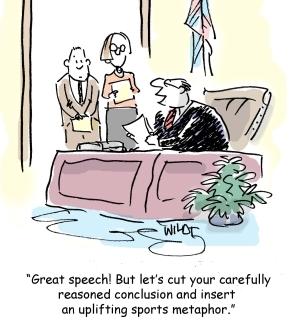
Whenever I hear guys on TV (and it’s almost always guys, let’s face it) use sports metaphors to describe or critique anything but a ball, a puck or pair of human legs reaching their preferred destination, it sets off a warning bell deep in my soul.  But that bell doesn’t zzzing. Instead it tells me in a measured voice we are no longer describing a factual event but indulging in the “oh so witty” (not!) opinion of the person observing such an event.  In which case, you might want to task another person with deciding if your timepiece was indeed really laundered or perhaps even to determine if its bath was as thorough as everyone on the sidelines of its supposed unauthorized spa treatment says it was.
Like many people, especially those in the arts, I’ve been described as overly dramatic, opinionated and argumentative by more than a few over the years (who… me?).  I’m never insulted by these commonly accepted “off” terms because to me this also means that I’m passionate, committed and quite forceful, depending on the day, arena and reviewer.  In fact, there are probably days where my audience (that’s you) see me as passionate where I feel I might be a tad overdramatic; and others where you’re nauseated by my insane opinions while I revel in the fact that I’m so committed to an issue and getting its truth out there that deep down in my soul I truly believe I am the long lost son of either Emma Goldman, Caesar Chavez or Gandhi. (okay, admittedly that feeling has only occurred once or twice).

Some days are better than others in the life of every human just as some performances are superior and some written works are more memorable (or, at least, relatable). Objectively speaking, there is no way to measure how good or bad anything is.  That is why it all comes down to two things – consensus and feeling.  And neither one can be counted on as being absolutely right or wrong.

The general consensus is that the President was having an “off” day (actually it was night) in his debate with Mr. Romney.  And perhaps he was.  Using our aforementioned standard of “consensus” we’d have to concede “off” would be the kind word.  But remember, consensus is not necessarily always correct.  I mean, the Grammy Awards voted Milli Vanilli their coveted Best New Artist award in 1990 and NBC renewed “Whitney” for ANOTHER season AND are giving her a reality show.  So if you’re still so hot on the validity of consensus well…  blame it on the rain.

What about feeling?  Hmmm.  Well, one can only imagine how Pres. Obama felt spending the night of his 20th wedding anniversary on stage in front of almost 70 million viewers debating the jollily avuncular Mr. Romney, who some say charmingly (though I say obnoxiously) joked about the prez being forced to spend his special evening onstage with a slick-haired 65 year-old man and a gaggle of television cameras.  Annoyed?  Preoccupied by a romantic encounter that already was, would happen in the future, or not occur at all because he had chosen to become President at one of the worst times in American history to begin with?  All very possible.  But despite the President dropping a few public hints, we will never quite know for sure.   Though one radio host I listened to the next day speculated that Obama was playing “the long game” (ugh, another sports metaphor), deciding that his strategy was to let Mr. Romney hold the stage unchallenged as long as he liked so in subsequent debates Mr. Obama could then hold the former Massachusetts governor to all the blatant half-truths he had so genially helped himself to.

Further Note:  Al Gore even suggested Obama’s “off” was due to the Colorado altitude and the fact that the president had arrived into town just two hours before show time.  But we all know Mr. Gore and Presidential debates are not a winning combo so I wouldn’t take his analysis to heart

Rocky Mountain “High”

The only thing we can correctly surmise about an “off” day is that every single person in the world has one or more and that no other person in the world can know with full assurance why or if the day is truly off (and by how much) other than the person who is having it.  If everyone batted 1000, there would be no reason for batting averages (jeez, now I’m even using sports?).  If it truly is all good, then does that mean not even one day can ever be bad Oh please! (Clearly, I am not Gandhi’s son).  Finally, if one believes in the consensus (dubious in itself) that it takes approximately 10,000 hours (or 3 hours a day for 10 years) of practice to truly be a master in any one field, isn’t it a good bet that a significant number of those days yield many desirably “off” results in order to allow one to become more proficient in said field, which will subsequently serve as the fuel to vault into the so desired master category a decade later?  

Speaking of which, I caught up with Paul Thomas Anderson’s “The Master” last week – a movie that is quite brilliant in parts and seems to indicate that 10 years of off days in a human life can be just as interesting as 10 years of on ones.

But I digress…

We are all so quick to discount our “off” days as something to be shunned, scorned or avoided that we hardly have time to consider just how valuable they can be.  And we need to do this, if for no other reason than to provide a break from the monotony of our perfection.

I’m kidding, of course – but only in part.  There is a dangerous rumor going around the zeitgeist that every performance needs to be played to the back row and that unless one hits a home run (yikes, I’m doing it AGAIN!) or pitches a perfect game, he (and perhaps one day she) is not worth that gazillion of dollars their multi-year contract ensures they will get paid.

As any expert in anything will tell you, there is a lot to be said for singles and doubles, for punts and for walks (oh, screw it – now I can’t stop!).  Of course, no writer wants to have their play or movie or book bomb but, on the other, hand, it certainly does take away everyone’s expectations for your next work and emboldens you to perhaps take a bigger chance in the follow-up since clearly no one will ever like anything you produce ever again.

We have no way of knowing how on or off anyone, including ourselves, will be on a given day other than to know that either verdict is certainly possible.  More likely, however, is that we’ll fall somewhere in between.  On — but in the judgment of others not as on as we could be or have been in the past.  Or definitely off — whether we (they?) love what we’re producing or are feeling lousy or annoyed enough to have not even gotten out of our bedrooms (for good AND bad reasons) at the time the day began.

Ultimately, it doesn’t really matter what the verdict is.  What matters is that we show up.  This is what people like Meryl Streep, Tony Kushner and Barack Obama consistently do – knowing full well that some days will be judged much better than the ones before or after it – by themselves and, mostly assuredly, by others.

Or – (ATTENTION: ONE FINAL SPORTS METAPHOR!) — as the great hockey player Wayne Gretsky once so eloquently put it:

“You miss 100% of the shots you never take.”

The Star Treatment

roll out the ole’ carpet

Here’s what Girls creator-star Lena Dunham said when asked if she worried that the lead character she plays on her semi-autobiographical HBO series would be sympathetic enough to grab an audience.

“I don’t always like myself, or all the people on TV,” admitted Dunham. “Also, why can’t 25-year-old women make miserable mistakes like Larry David?”

What was most memorable about Ms. Dunham’s response was not only that it was unrehearsed and honest (you spend enough years in show business and you can tell when celebs are blowing smoke up your keester) but the reaction she got from the her fellow Sublime Primetime panelists of 2012 Emmy nominated writers (almost all male) on stage at the WGA Theatre with her. They LOVED her for it.  So much so that they broke out into spontaneous applause, along with the rest of the audience, in one of the few exchanges of the entire evening of speakers that anyone will probably ever remember.

One of these is not like the others…

That was a far cry from the previous awkwardness of these middle-aged guys when the nervous moderator among them finally had to ask her a question. At almost half their ages and, well, a lot more stylish, it felt like they didn’t know…uh… what the heck to make of her (personally I loved the black and white polka dot dress, pixie haircut and arm tattoo that read “STAUNCH” in honor of Little Edie from “Grey Gardens” fame but hey, I am a gay man).  Plus, they looked afraid, very afraid – as if she were the future and, clearly, they would have no part in it, at least not in a starring role.

Perhaps this is nonsense and I’m reading into it.  But…I don’t think so.    Yet Ms. Dunham was not the only one in the group that made everybody a little uneasy that night.  There was also Matthew Weiner, creator-writer of Mad Men, the series that put AMC on the map and won him six of his nine Emmy Awards, including the Television Academy’s statuettes for best drama series four years running, that is until this past week.

Okay, maybe nervous is not quite the word for what they felt towards Mr. Weiner.  It could have been equal amounts of respect, awe, fear and, well, maybe even a little jealousy.  Yet whatever it was quickly began to dissipate when he made some of his own confessions about the cultural phenomenon he created.  When pressed to analyze the success ofashow that doesn’t seem to have a particular genre and, therefore, no strong marketing demographic, Mr. Weiner didn’t appear to have an answer until the panel and audience’s uncomfortable silences gave him a long moment to think of one.

“I think its commercial uniqueness,” he said of Mad Men,  “is that it doesn’t have a formula.  More than any other show I’ve ever worked on, people’s (the writer’s) life experiences wind up on the show unaltered.”

Shameless excuse for another picture of Jon Hamm

And that proved to be another seemingly unrehearsed answer that actually felt real, especially if one considers Mad Men was indeed turned down by every commercial and cable network several times for just that kind of uncategorical reason before it finally found a home at the then fledgling AMC network five years after Mr. Weiner had written it as a spec pilot (and admittedly right before he was convinced it would forever wind up in his drawer as the lovely writing sample it had functioned as up until then).  Also, like Ms Dunham’s response, Mr. Weiner’s answer was particularly memorable for that evening because the idea of writing a successful TV series NOT in a specific genre or WITHOUT a certain demographic seemed almost counterintuitive to what everyone on the panel and in that room of would-be writers had been hearing about TV for years from studio executives, market research studies and more than a few professors (though, hopefully, not this one).

Still, rather than the spontaneous applause given Ms. Dunham, Mr. Weiner’s answer was met with a long, immeasurable dose of awkward silence where, much like an episode of Mad Men, everyone had to stop and think.  This was probably the second most memorable response of the evening and might have even given Mr. Weiner a bit more of the already ample cultural gravitas he enjoyed prior to the time the evening began.

So — Why spend this long on Ms. Dunham and Mr. Weiner?

Well–

Simply as an illustration of how easy it is for two clear WINNERS of one evening to become two clear LOSERS of another (And in the same week!).  Yes, I’m talking about the Emmy Awards.  Because when both Mad Men and Girls failed to win a single trophy on 2012 Emmy that night, and that’s exactly how both Lena Dunham and Matt Weiner were categorized by the media and, perhaps, by more than one or two of us. THE big losers of the night.  The people who went home empty-handed.  The race-horses who were bested.  Who were no longer thoroughbreds.  At least by the latest (American?) standards.  Yes, that’s how quickly the tide, or perhaps in this case, worm, or perhaps even more apt – stomach – can turn these days.

Do these look like losers to you?

I had the great mis fortune…uh…honor (?) of being in the audience at this year’s Emmy Awards and witnessing the Dunham-Weiner downfall.  Now, don’t get me wrong.  It’s certainly fun if you’ve never been or if, like me, you spent your entire childhood preparing for the next award show and reserved the prime spot in front of your family’s television months in advance.  Plus, who doesn’t like something nice and shiny (assume you too are winning or will win one, because this is part of the fantasy, let’s face it) that you can use to prove to yourself and anyone else who asks in perpetuity that you’re truly wonderful?

Except after the time I spent with both Ms. Dunham and Mr. Weiner several evenings before I couldn’t help but feel, well, — sort of sick to my stomach through parts of the Emmy evening and for days after.  This feeling began to painfully increase when I went to the Governor’s Ball and found myself seated beside not one but two tables of the cast and creators of the BBC’s much-lauded Downton Abbey.  Both of those tables also had zero.zero Emmys between them – though the show did chalk up one supporting actress win for the unstoppable Maggie Smith  (who was not in attendance and whose award was, somehow, nowhere to be seen). Still, because it’s DAME Maggie Smith, THE Maggie Smith, a venerable acting institution, that didn’t seem to really count as a true Abbey win.   And it certainly didn’t stop a group of many of us naysayers from saying and even believing that technically, on Emmy night, those stuffy period Brits, for all intents and purposes, really had been shut out (that’s double goose egg again if you were keeping count) and that we Americans had emerged as victorious over the dominant British crown as we had almost two and a half centuries before.

We’ll let Shirley speak for us in Season 3. USA! USA!

But back to Ms. Dunham and Mr. Weiner.  As if the lack of awards for them weren’t already enough to make them the cultural losers of the night, there was even more indignation yet to endure.  Spotted in a Prada dress on the red carpet, Ms. Dunham was lauded in many tabloids in the next day days for also being the fashion LOSER of the evening (they didn’t see the cute black and white polka dot dress on the panel I saw!) while Mr. Weiner was reported on as being THE morose and drinking loser of the fall 2012 awards season, along with the rest of the cast and crew of Mad Men.  This happened when more than one media outlet reported Weiner and company were spotted licking their woundsat an undisclosed restaurant or hotel location far away from the confines of the festive (AND VERY RED!) Governor’s Ball.

Red with envy?

Note:  Truth to be told, I actually saw Mr. Weiner and his wife hurrying out and walking against the crowd from the Governor’s Ball just as the rest of us poor schnook audience members were being ushered in.  He didn’t look happy but neither did he look suicidal.  He simply seemed like a guy who had enough and wanted to leave before he got trapped among another crowd full of people who would demand a suitable reaction, or perhaps even a pithy response, to one of their inane questions when clearly there was none.

Considering all of the above, I offer this observation both for you and for myself.  It is very worth noting, especially if you’re any kind of creative person – whether active, aspiring, studying or retired – that today’s designer outfit IS tomorrow’s thrift store reject –which will inevitably come back into style the day after that as retro chic — until it’s worn out its welcome and lands in the trash bin once more, only to be recycled again if yet someone else decides its hip and cool and groovy.

On the other hand, there ARE classics that never go out of style.  Ms. Dunham and Mr. Weiner are two of those.  And there are a lot more if you go looking for them (look in the mirror and you might even find one).  They’re not always the latest thing, but that doesn’t take away from their style, workmanship or lasting appeal to the right audience.  Nothing and no one tempts anyone on every day of the week.  Except sex , pizza, a nice glass of wine and maybe Angelina Jolie. Though I’ll bet at least two, or perhaps even three of those, have their naysayers.