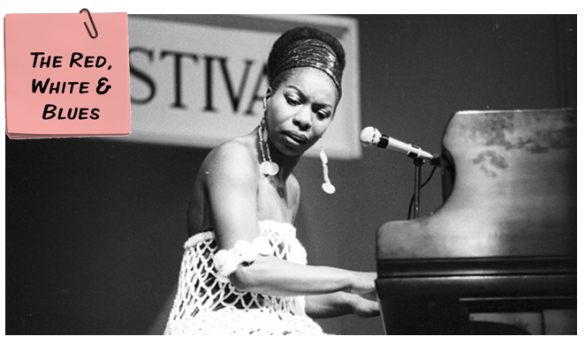
Define Hero

Screen Shot 2015-07-05 at 11.12.35 AM

There are many heroes in the world but there is a certain kind of hero that feels indigenous to the U.S. because of the opportunities that exist here if you have good timing, the right kind of talent and a little luck.

Many have said of late that the United States is on the decline – the inevitable downslide of any #1 World Superpower. Like the Roman Empire and countless others before us, there will be a point at which the influence of the U.S. will not be the primary one in the world. I’m not perceptive and certainly not expert enough to know if we are at or approaching that moment. What I am sure of, though, is that despite this country’s many challenges it still possesses a majority market share of the world’s attention and enough economic rags to riches possibilities that, if managed correctly, can create a certain type of successful individual with just the right blend of superpowers that we deem hero-ic.

No.. No... not you

No.. No… not you

Certainly, the latter applies to the rescue workers of 9/11, the everyday individuals who hold families together, the people who spend their entire lives teaching in a small elementary or high school for what in the corporate arena would be considered a pittance, or the many military men and women who have sacrificed their lives protecting the Homeland.

Those are all a given.

But let’s discuss a different kind of “hero” – the kind of people we often claim as our own American Heroes – meaning they are nothing more and nothing less that a real American success story.

Okay, perhaps HERO is not the right word to use before, after or during the July 4th holiday. One can hear the complaints now – There’s nothing heroic about making lots of money, even if it’s from your talents!! Or — clearly you don’t know any of our men and women in uniform, and we KNOW you haven’t spent any time in a Veteran’s hospital, homeless shelter or cancer ward, because then you’d know our TRUE AMERICAN HEROES.

Oh, please

Oh, please

No one is taking anything away from them. But let’s be honest about what we value day to day and who we lavish our attention on – i.e. the people that we look up to.

Hero: a man (or woman) of distinguished courage or ability, admired for his brave deeds and noble qualities.

The people we most admire in 2015 culture are those with abilities and qualities. Courage is good and nobility is to be lauded, at least on paper. But ability and quality – give us more of those.

Oprah Winfrey

Kim Kardashian

Beyonce

Steve Jobs

Barack Obama

Rod Serling

Jerry Seinfeld

Warren Buffet

Jon Stewart

Hillary Clinton

Now we’re talkin’. And no, I’m not putting Donald Trump on the list. And yes, I have put Kim on. It’s 2015, yo.

Don't worry, we haven't forgotten you too, Miss Tay Tay

Don’t worry, we haven’t forgotten you too, Miss Tay Tay

When we’re honest across-the-board and through the current generations about those in the culture we consider our American heroes – that’s a cross-section of who really comes to mind. (Note: Of course this is subjective – it’s MY list of what you’re thinking – but try to make a convincing case that on some level I’m NOT right. You can’t).

Show biz, politics, pop culture. And you can’t really be born wealthy to make the list. We like people who came from nothing and made something out of themselves. As if something were at all definable. And sorry those to the manner born. You can be lauded and rich and successful but you’ll never really be who we Americans consider to be a hero. Hence NO TRUMP. As for Franklin D. Roosevelt – he’s long gone (NOTE: Clearly!) and was our absolute exception in that category.

We don’t need to go over the above names one by one. Look them up on Wikipedia, consider the last generation or two, read and/or watch the media and think about the people this country has been known for as of late. There is no REAL Indiana Jones. He was a fictional American hero. Truly.

I want to add another name to the list you may or not know – Nina Simone. Some of you might be saying – huh? Or whom? Well, watch the current and riveting documentary now steaming on Netflix entitled, What Happened, Miss Simone? And then get back to me.
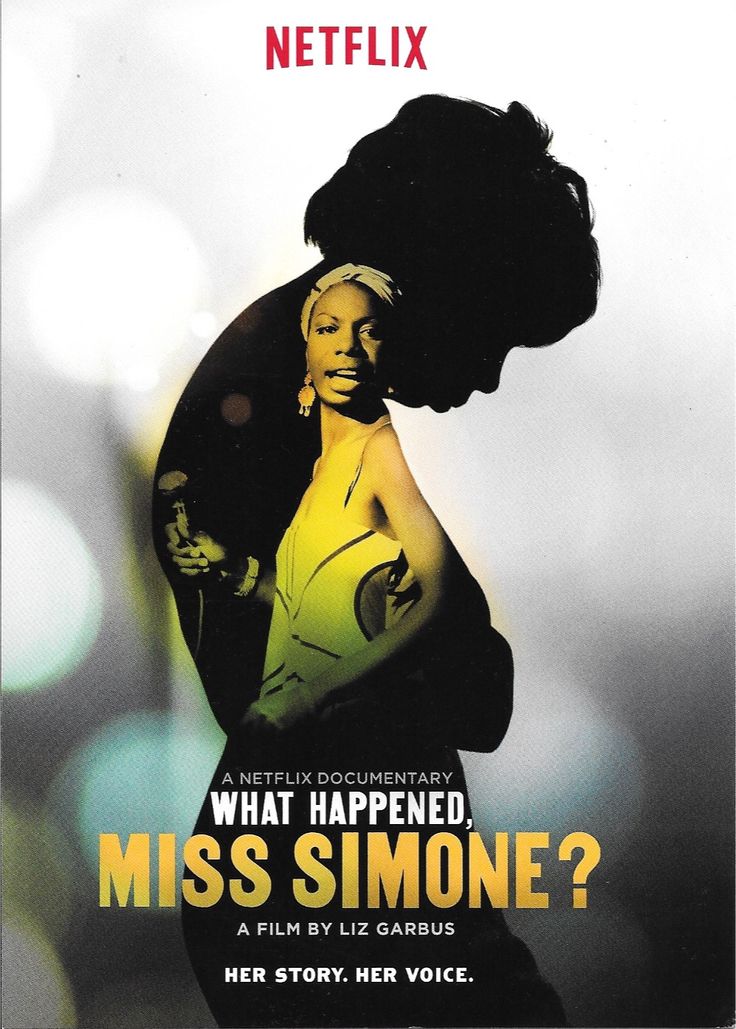
Stream me now

Stream me now

Quick background: Nina Simone was a brilliant American singer, songwriter, pianist and civil rights activist. She had several hit songs in the fifties and sixties, recorded more than 40 albums before dying 12 years ago in France and is generally considered by many in the music biz one of the greatest singer/musicians who ever lived.

Check out her famous recordings of I Put A Spell On You, I Loves You, Porgy, Little Girl Blue, Mississippi, Goddamn and Young, Gifted and Black and you’ll see why.

But what the documentary allows one to learn, or re-learn with a greater impact, is that Miss Simone was born Eunice Waymon in a poor North Carolina rural town in 1928, was a musical prodigy who played piano at 3, and studied relentlessly to be the first Black female classical pianist in the world.

Meaning, she had the talent but was born into the wrong time. So after a prestigious music school rejected her due not to her lack of talent but because of the color of her skin, in the 1950s she began playing piano at small clubs to support her family where she was told in order to make money she had to sing. Which she did – and in a way unlike anyone had ever heard before.

Many young people today are unfamiliar with her work in large part due to her role as a Black activist at the time. She marched with, performed for and befriended the gamut of civil rights warriors – everyone from Malcom X to Martin Luther King to Stokely Carmichael. Disgusted with racism and white America, she eventually chose to leave her country of origin and settle in Africa (Liberia to be exact) and then on to Holland, Amsterdam and eventually Southern France.

The talent was heroic, the activism was more than heroic and the trips and resettlements abroad were necessary – though it makes her no less an American hero for speaking up, singing out and being counted.

She has the requisite personal problems in a show business/pop culture bio – domestic abuse, financial ruin and mental illness. But what this film also clearly shows is a snapshot of someone who could have easily been one of the names on that above list had she been lucky enough to have been born 20 or 30 more years later.
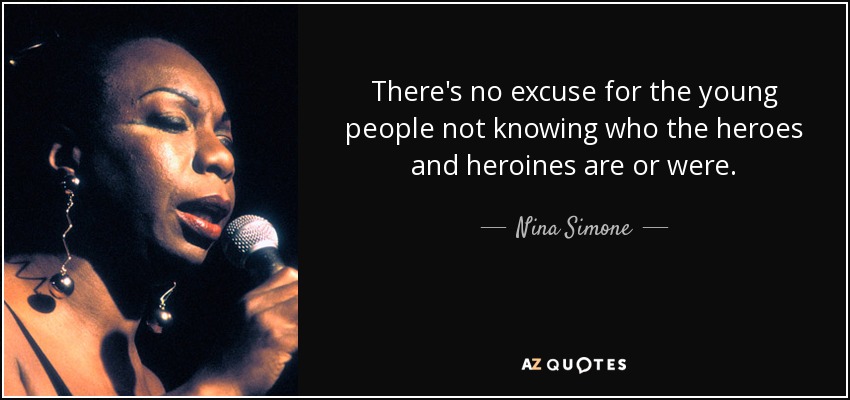
Preach

Preach

Or not. The truth is – we will never know. Perhaps it was really the times that made her what she was (Note: Or any of us) and without that turbulence the right sparks might not have ignited. If so, that makes her journey even more heroic in my mind.

I am currently writing a movie about a man you have probably never heard of – another American hero but, by my earlier definition, someone who would not be on the above list. That is because he wasn’t famous, but instead chose to take on corruption in small town America as the editor of several local newspapers and wound up paying a huge financial and personal price for it. He is one of many American heroes but he’s the unsung kind – the opposite of who we’re really talking about in our heart of hearts when we publicly hold up the ideal of the most outstanding among us.

That is not my prejudice or judgment and it is not good or bad or anything in between. It just is. That’s who we are.   And well, why tamper with perfection, right?

Especially in, on or around our Independence Day weekend.

A Rainbow of Emotions

Screen Shot 2015-06-28 at 12.44.10 PM

In a moment where the nation reels in our own yin and yang versions of pain and pleasure – from the continued assassination of innocent Black people by White racists or the passage of marriage equality by the Supreme Court that ensures LGBT people can now legally tie the knot in all 50 states – it seems reductive to compare life to a Pixar movie. Yet it feels like no karmic coincidence that Disney has just released Inside Out – one of its most thoughtfully psychological animated films ever – not to mention one that in particular deals with how our upbeat innermost emotions must always co-exist with the ever present darker feelings not so way down deep in our soul.

Of course, none of us have the vivacious voice of Amy Poehler to personify our Joy (Note: Perhaps not even Amy herself) nor do we have the gleeful rantings of Lewis Black to substitute for our own virulent misdirected Anger at the world. Or even the pathetically depressing tones of Phyllis Smith, a former assistant casting director who we know as the frumpy, humdrum, monotone-voiced Phyllis on The Office, to so brilliantly express our own inner Sadness.

Lest we forget Mindy Kaling as Disgust and Bill Hader as Fear

Lest we forget Mindy Kaling as Disgust and Bill Hader as Fear

What we do have is real life – which is never as entertaining as the best or even very good Pixar movie. But it can be if we think about it just a little more than we indulge in our own pity or happiness parties (depending on our moods) without a thought to the karmic realities that comprise what we like to refer to as the rest of the/our worlds.

Full confession – I’m more guilty than most of not following the strategies I’m putting forth here for Living Your Best Life (Note: Trademark Oprah).

Say what now?

Say what now?

Not to be a giant buzz kill but on the day SCOTUS ruled on marriage equality most of what I thought about were gay friends who contributed to the struggle but didn’t live to see this day. This was due, in no small part, to the double whammy of the ruling coinciding with the nationally televised funeral for Clementa Pinckney, the senior pastor of Mother Emanuel Church in Charleston who was one of the nine assassinated last week by a 21 year-old White supremacist after the latter had spent the previous hour in a Bible study class praying with them in their own aforementioned house of worship.

Pres. Obama eulogized Pastor Pinckney, also a state senator representing Charleston, and led the mourners in his own very compelling acapella version of “Amazing Grace” – certainly a first in POTUS history. Previously he and others have talked about the idea of reaching a state of grace and spreading that out into the world to others. Presumably this includes the forgiveness of those who have done a person wrong and nowhere were those teachings more apparent than from the mouths of the next of kin of the recently slain who only days before faced the accused murderer of their loved ones. Without exception they all forgave him to his face, or at least chose not to dwell in the bile he had elicited by looking backwards at the loss of all their relative or forward to all the blessings that would never be in the future.

This idea of grace, the ongoing struggle, the bright future – no matter what has happened to you and where it lands on the fairness scale – it’s a wonderful and noble thought, one that is an undeniably positive and useful goal. But full confession: It works for me only some of the time, and even then barely. Part of my personal fight is also fueled by anger and the quest for fairness – the idea that one is not roused to action until one – okay, me – is more personally impacted by the issue at hand.

This was a reason to think about all of the dead of the LGBT community, most especially the thousands from the AIDS epidemic, when marriage equality was announced. For, and this is my own personal belief, the movement would not have gained the steam that it had if not, in great part, due to the AIDS epidemic. Certainly, it wasn’t the only motor but just as certainly it clearly sped things up.

What would Vito think of today?

What would Vito think of today?

To be clear: we would all trade marriage equality in a nanosecond if we could wipe away the Plague and bring back those that fell – meaning died – in its wake. Clearly, we can’t. But what we also can’t do is to deny that the fact that this awful pandemic forced gay people to make themselves publicly known, many times against our own will or perhaps choice, and this inadvertently contributed greatly to forcing people to know us – the real us – rather than the sanitized version groups usually choose to present (or not present) to society at large. And that – along with a lot of grass roots work – is primarily what accelerated change and led us to where we are today.

Justice Ruth Bader Ginsburg – or Aunt Ruth as I like to call her – said as much in an interview last week – and I immediately surmised, in a moment of total self-indulgence, that these thoughts must ‘run in the family.’ Though I (and perhaps she) have been thinking this for years it’s hardly an original idea. I heard the filmmaker/novelist Clive Barker say pretty much the same thing about gay rights five or 10 years ago on Bill Maher’s Real Time (or perhaps it was Politically Incorrect – who can remember which fabulous liberal spewfest it was) – and clearly he is no relative of mine. The hair, the body, the horror – not a Ginsberg in his gene pool, let’s be honest.

Not a Ginsberg (but he's welcome anytime)

Not a Ginsberg (but he’s welcome anytime)

Still, that doesn’t mean it isn’t clear that brother Clive (who has been out and proud for years), Aunt Ruth, myself and perhaps many of you don’t share something. And that is the recognition that the world is very much about the good and the bad each informing the other – the yin and the yang. That just as it seems one’s world is going to end, and perhaps in some ways it does, it is simultaneously the birth of something else.

caglecartoon

‘nough said

One supposes this is just our mutual human condition – one of many aspects of humanness we have in common, though so often we don’t want that to be the case. Still, it’s important to remember when the next big civil rights issue arises – that civil rights of all kinds for all people are intertwined. Charleston, Stonewall, Israel, Iraq, and ad infinitum back and forth through time. How often one writes about this (or performs it or films it) and how even more frequently the message is ignored, the world goes on and we continue with our days as if it’s all new to us or, even worse, in that particular case it doesn’t really apply. Bitchy, twitchy, witchy, kitschy and all else in between.

It’s important to recall our collective history and our mass behavior when one is feeling down – or perhaps even too hopeful. Not in so much a fatalistic, sad way but an inevitably accepting, understanding and eventually life-affirming way. Dark and light, light and dark, dark and light – neither of them lasts – certainly not forever – nor would you probably want either of them to on their own. If you really think about it. The folks at Pixar obviously thought about it for the six years it took to bring Inside Out to the screen and simplified it so even a CHAIR could make sense of it and use it to understand the current events of the day.

Go figure.