Our Not So Golden Globe

Each year the Hollywood Foreign Press ushers in a star-studded season honoring excellence in film and TV with the Golden Globe Awards.

It’s a televised party in Beverly Hills where celebs and film/TV makers drink, eat and try to make merry in the very tight quarters of an overstuffed hotel ballroom.

Think your rich Aunt Mildred’s chance for the over-the-top second wedding she never had or the bar mitzvah reception for the son of some tech giant classmate of yours who bought Apple stock early and married late that you only managed to get on the list for because you ran into him at the airport while trying to hide the fact you were flying coach.

and as a bonus – this guy harasses you on the way in!

Of course, that doesn’t quite do it justice.

The Golden Globes are often the most entertaining of all old show biz awards shows because for some god forsaken reason they consistently get almost every major star in the industry to show up and give or get one of those quite surprisingly small mini-replicas of our great golden earth.

Although, I am glad that they got rid of that ugly marble podium

Though even that was tricky this year because nothing about our earth or the product produced during this time period seems to represent anything particularly golden, at least not in the traditional sense.

No, in real life we citizens of the world are holding our collective breaths about the possibility of real global warfare between the United States and Iran.  Or we are obsessing yet doing very little about climate change as this weekend we watched large swaths of the real Australian sky burn an ominous blood red thanks to over 146 (and counting) environmentally induced brush fires.

Don’t worry, I’ll recycle the empties

Neither the evening nor few of the nominated and/or winning films provided much release from those catastrophic doldrums either.  For instance, I very much enjoyed Quentin Tarantino’s Once Upon A Time in…Hollywood and its meticulous recreation of a 1969 Los Angeles.   But its win as best comedy/musical, director, screenplay and supporting actor still can’t help but remind us all of one of the most grisly crimes of our 20th century, the Tate-LaBianca murders; that is even as it tries to rewrite that history to give its victims (and us) our much more well-deserved (well, preferred) Hollywood ending.

Are you sure this didn’t clinch it?

The best drama and director award for Sam Mendes’ 1917 forced us to look back in terrifying detail at a fictionalized version of fact-based events in and around the battlefields of WWI.   While extremely well made, this also doesn’t so much as provide hope for humanity but hold a magnifying glass up to ALL the battlefields of our past and, inevitably, remind us of all those likely to come in our future.

On the television side, a miniseries win for yet another recreation of the catastrophic – the nuclear disaster of Chernobyl – brilliantly reminded even the most casual of viewers that another nuclear winter could even today be just one ignored safety regulation away. Not to mention that the recognition of Succession as best TV drama brought home every cynically snowflake propaganda worry we all ever had about Fox News and the Murdoch family through its fictional, though albeit much more entertainingly awful doppelgängers, the Roys.
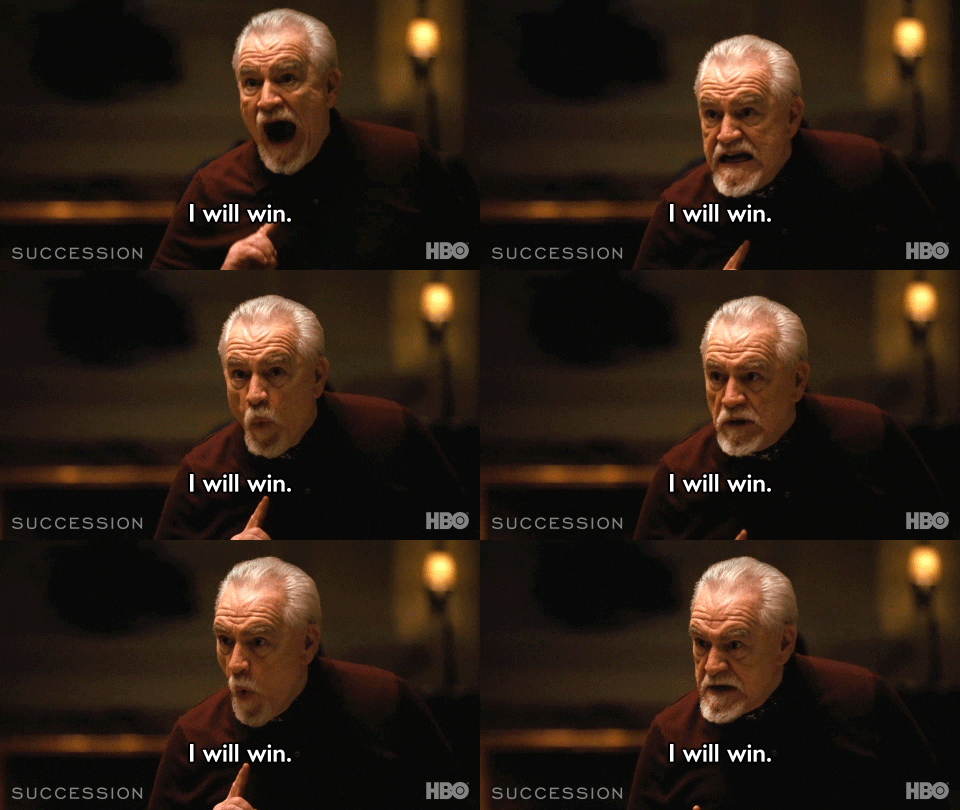
He did! He did!

There were some small breaths of encouragement. Taron Edgerton and Renee Zellweger won best acting awards for personifying the real-life, stage and singing facsimiles of Elton John and Judy Garland as they rose to fame, slid into addiction and, well at least in one case, managed to survive.

Phoebe Waller-Bridge and her Fleabag season 2 gave some glamour and sympathy for those of us consistently making the wrong yet most human of choices even if it didn’t give us our full Hollywood happy Tarantino finale.  But perhaps that’s a clue to its popularity.  It doesn’t sugar coat our mistakes yet still shines some teeny tiny minuscule glint of light into all of our hopelessly aberrant collective futures.

Added bonus: Hot Priest!

Such was not the case with Globes’ host Ricky Gervais for most of the evening.  His shtick about being the worst possible choice to lead the festivities proved incredibly prescient given the world events of the preceding week and the jokes he chose to perform.

He opened by touting the Globes’ decision to this year serve an all-vegetarian menu but then chided its members for being, ahem, vegetables.  He attempted a timely jab at director Martin Scorsese for recently stating superhero movies were not cinema but more like amusement park rides he had no interest in and then cracked at the irony of the director’s statement because Scorsese was too short to actually meet the height requirement to ride in one. (Note: Har, Har?)

Me, during the opening monologue

Joaquin Phoenix, who won a Globe for playing the nihilistic title role in Joker, did try to be real and modest and world-aware.  Yet he managed to end his speech by saying it wasn’t enough to simply urge the Globes’ worldwide audience to “vote” their issues at the ballot box or voice concern about Australian climate change the way that others who came before him onstage had done. No, what he proclaimed from the podium was that what each one of the affluent in that room should do was to pledge to stop flying private jets to Palm Springs!  

Do not come for my Palm Springs trips!

Well, you gotta start somewhere, right?  And no, I am not paraphrasing.

Yes, of course, there were lovely moments.  Michelle Williams’ win for playing Broadway legend Gwen Verdon in Fosse/Verdon urging women to use their voices and votes to make the reality of the country better reflect its 51% female population.  Kate McKinnon’s tearful tribute to Ellen DeGeneres as the role model of what could be possible for her young lesbian self.  Tom Hanks on the true wonder of being a working actor who is nothing more than a small part of a larger team who must deliver in that moment to make each shot or the scene any good at all.
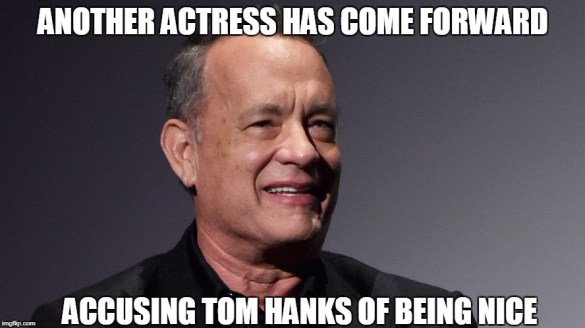
Everybody loves Hanks

Still, at the end of the evening one couldn’t help but think that our en masse feelings about the Globes/Globe, both in the ballroom and for those watching at home, were best captured by Mr. Gervais’ in his not very encouraging but thankfully closing line of the night to us:

Get drunk, take your drugs, f-k off.

This being a Hollywood production, needless to say that very last phrase was bleeped.

Complete list of the 2020 Golden Globe Winners

Sam Smith ft. Renee Zellwegger – “Get Happy” 

Is The Irishman why we go to the movies?

After spending three and a half hours seeing Martin Scorsese’s The Irishman, financed by Netflix, at a screening at the Writer’s Guild Theatre in Beverly Hills, there are lots of thoughts and feelings to be sorted out.

None of these have to do with the future of film exhibition or whether Netflix is justified in its release pattern for the new Scorsese film.  For those who don’t know, that would be only eight theatres in NY and LA this week, followed by additional movie screens in more cities seven days later and, finally, its streaming debut just ten days after that (Nov. 27) for anyone with a Netflix subscription or the ability to hop on to someone else’s account.

Netflix is so needy #validation

Scorsese, who turns 77 years old on Nov. 17, is one of THE best American filmmakers of the 20th and 21st centuries, or any century.  Yeah, he’s publicly expressed his disinterest in superhero films and sounded the alarm bells about a money guzzling, tent-pole-driven, market-researched-to-death movie industry obsessed with the Marvel/DC Universe at the expense of cinema dealing with humans and the complexity and nuance of their emotions.

But, for the record, he’s right about that.  Most of us would tire of potato chips and chocolate bars if we ate them 75% of the time.  Even if we didn’t, think of the affect it would have not only on our bodies but our souls, assuming it already hasn’t.

Avengers: Age of Gluttony

Point being, Scorsese not only has a good argument about what passes for present-day cinema but has earned the right to grouse.  For Taxi Driver, Mean Streets, Raging Bull, Good Fellas, New York, New York, The Aviator, Casino and The Departed alone, he can opine from now until the end of time about what displeases him and/or makes him happy about any one group of films or the movie industry in general.

also thank you for this gif

Which makes one wonder if the same goes for his audience.  If you’ve been a Scorsese admirer and mostly loyal fan all these years, do you have the right to be disappointed in the latest entry into the master’s oeuvre that everyone else seems to be calling brilliant?

Well, of course you have the right.  This is still a free(ish) country.  But is it called for, or even worth it to bring up?

Yeah, it is.

Oh there’s more…

Movies by their very nature are a communal experience.  Sure, many of us now too often watch in the confines of our own homes, and too often do it alone.  But the cinema Scorsese makes and presents is shared with others in a dark room where it’s then debated and dissected afterwards.  It’s part of the gift he’s given us for over half a century and to ignore real life discussion of a new Scorsese film would be like negating the very existence of the artist himself.

So here’s the thing…

Is that Ray Romano?

The Irishman is extremely well made, brilliantly acted and doubtless couldn’t be directed better by anyone else on the planet.  But it’s as cold as a tray of ice cubes on a bleak winter’s day and about as revelatory and/or insightful.

Ouch, Chairy!

After 209 minutes it’s difficult to not wonder aloud, Why did I just spend all of this time watching this?  What did this film tell me that I didn’t already know?  In what way was I touched, repelled or even slightly moved by the lives of these “wise guys” and the people around them?  (Note: Not to mention, I already knew the Mob murdered Jimmy Hoffa!!!).

This is especially true if you’ve ever seen a mob film by Scorsese.  Or watched one in that genre by his friend and contemporary, Francis Ford Coppola.  Or even binge watched the HBO series The Sopranos.

Don’t drag me into this! #cuttoblack

It’s unfair to say that with The Irishman Scorsese has made his version of a sequel to a sequel of his latest superhero film.  The Irishman has many flaws (Note: Despite what the critics are saying), but once it reaches the three-hour mark it forges some new ground.  In its last half hour, one begins to realize why the director spent all of these years trying to make this story and why it is likely the final chapter of every mob story he has ever told.

You can trust the Chair

But suffice it to say that dark and foreboding as it might be, that third act ending doesn’t so much surprise as simply…play out.  It takes you down a road you didn’t expect to see onscreen but pretty much could have imagined would have happened exactly that way off screen.

Would you have imagined it, if left to your own devices?  The answer is probably not if you weren’t a contemporary of Scorsese.  So in that sense, it does play in to the director’s own definition of cinema and, in its way, far surpasses anything you will see in the latest Marvel/DC superhero film.   Which is not to say it is Scorsese, or even cinema, at its best.

God, he’s so rich

There are many different reasons why we go to the movies.  Though let’s qualify that to reflect a 2019 reality.  There are many different reasons why we watch movies.

Escape comes to mind.  File this under the category of general entertainment.  We want to laugh and forget or, if we are addicted to catharsis, we want (and need) to cry and commiserate.

I already know I’ll be a disaster during this movie

Perhaps we want to feel superior to a person or class of people being portrayed onscreen.  Taken one step further, we might even joyfully hate watch something we know will be hopelessly dumb, awful or not to our taste just because we can, especially if we’re the type that has no empathy for its own highly overpaid craftspeople boring us.  (Note: Rest assured the latter also includes ALL of its above-the-line talent [nee actors, producers, writers AND directors] despite what they might say or admit to in interviews.  Though this should never, ever include Scorsese or anyone of his caliber).

But mostly, many of us go to and/or watch movies simply because we are true blue fans, Scorsese or otherwise.

… and for the popcorn #arteriesclogging #delicious

We hope for the best, realize we may be disappointed and yet still are pleased that we saw it.  Some but not all of us in that category can usually find something to like in almost anything, even if it’s the good intentions of those who might have let us down.   (Note: See a few paragraphs above). More importantly, there is always a chance we will see something we like, perhaps even love, and be transported.

And for that experience, we will be grateful, perhaps forever grateful.

With so many other ways to spend our time these days there is still nothing quite like sitting in the dark (or semi-dark, or even light) and watching someone else’s idea of life unfold.  For a short time we get to feel something we might have never felt before, or in that particular way

I have a lot of feelings, OK?!?!

There are Scorsese films where we have that for a few fleeting moments, for numerous moments or, sometimes, all the way through.

You (okay, I) want The Irishman to be the latter even though the best you can say about it is that it’s in the former.  But like all great cinema, the movie and its director contain some moments where you feel as if you are in the presence of screen super heroes.

And that says something.  Actually, it says a lot.

Muddy Waters – “Mannish Boy” (from soundtrack for The Irishman)