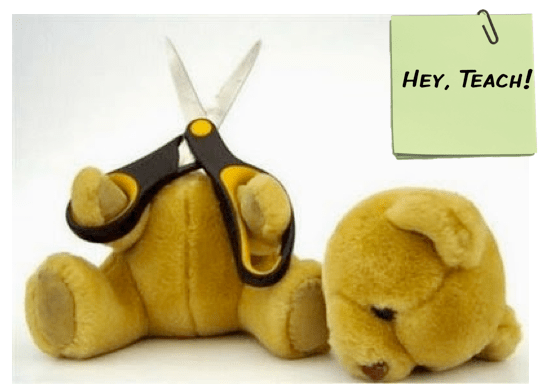
What’s worse than not completing a task to the best of your ability?
Believing that no matter what you do your efforts will never be YOUR BEST. And, in turn, not THE best. Of anything.
It’s amazing when one looks across our own socio-political-pop cultural landscape how many people are absolutely convinced they are THE BEST when we all know in our heart or hearts they are exactly the opposite. On the other hand, did you ever have that supremely talented friend or colleague (Note: It could even be the face looking back at you in the mirror each morning) you knew would be famous who, through the years, vanished into obscurity? The person that you can’t even find on LinkedIn who could easily have invented it – or most certainly something the equivalent or much better in their own individual field?

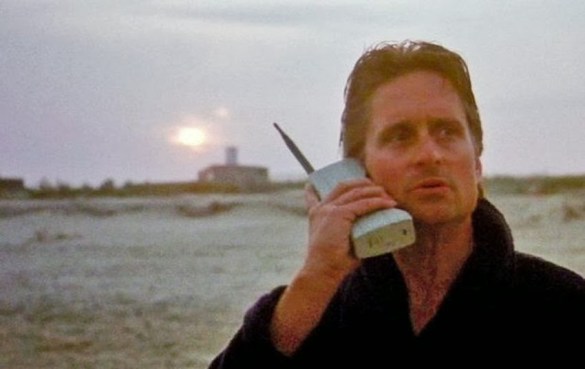
… and he was never seen or heard from again
If you’re under 25 and can’t relate to this — take a gander around the room, your hometown, your school or the social media platform of your choice and choose such a person with that predestined future. Then refer back to this post in 10 or 20 years — yes, notes will be around…somewhere – and check on that name. Or some others you didn’t single out but had considered. I guarantee you at least one or more will fit the bill. Probably more.
This has nothing to do with the individual capabilities of any one person, even yourself, and more to do with a series of other factors, most of which would be too long and complicated to go into here. Still, there is one that we do have time for because, well, it’s been on my mind a lot lately and is probably among the most universal. And that is…
Self-doubt
And the twin/doppelgänger that comes with it –
Self-sabotage.
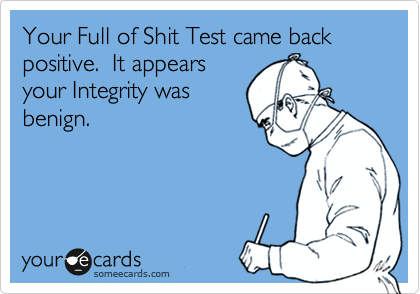
What makes me qualified to write about this? Simple. I’ve been one of their chief practitioners for years. On and off. Lately more off than on but still… you never do know when these evil siblings will rear their ugly heads. They’re a helluva persistent pairing.
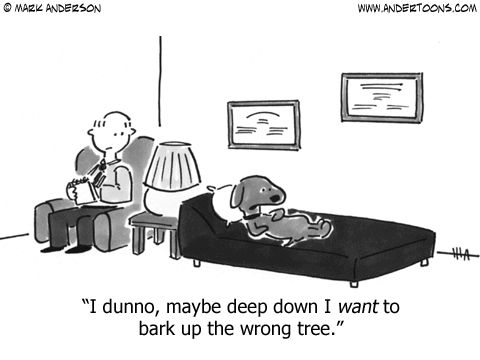
#deepthoughts
I talk to students every semester about writer’s block – or as I like to call it – the simple fear of being BAD, or whatever your version of it is. The selfs, however, are a whole other animal.
It’s the voice that assures you that you’re no good, especially when you’re about to be if you’d just let yourself alone. It’s the sound of your worst enemy dissing you in your brain, the doubting “friend” who is so miserable in their own life they can’t bear for you to succeed, or most especially be better than them. The relative who wants to keep you in their place or under their control. Or it could be the dulcet tones of your neighbor who has told everyone you’ve gotten too big for your britches.
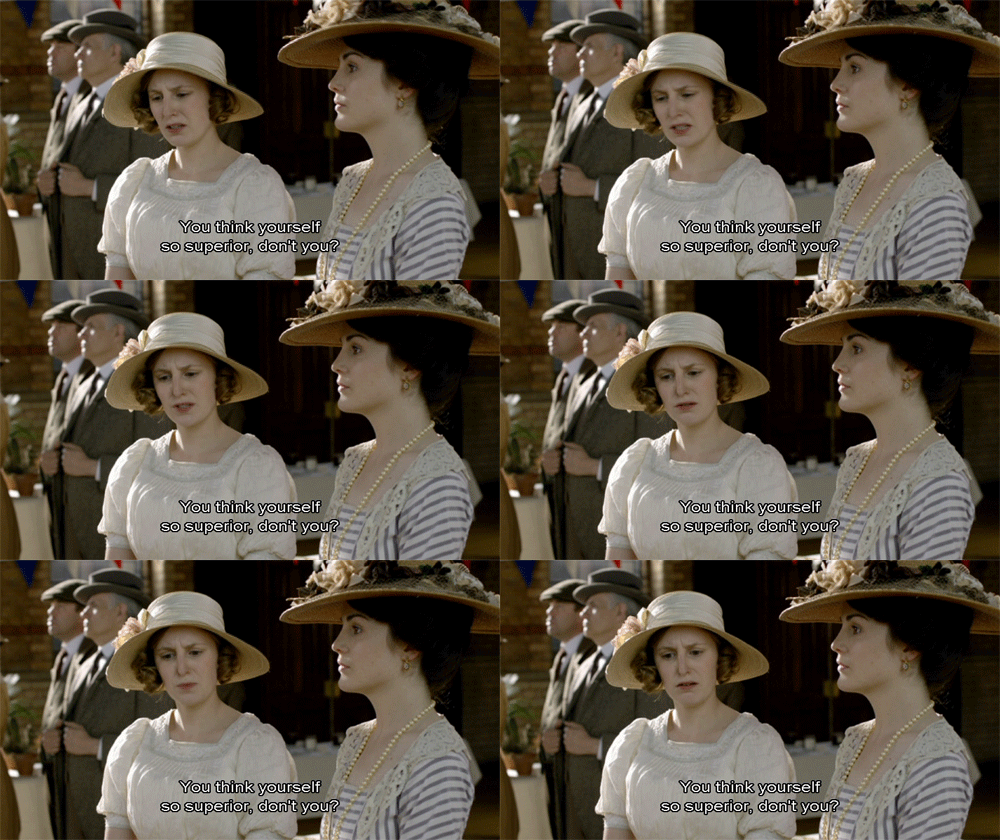
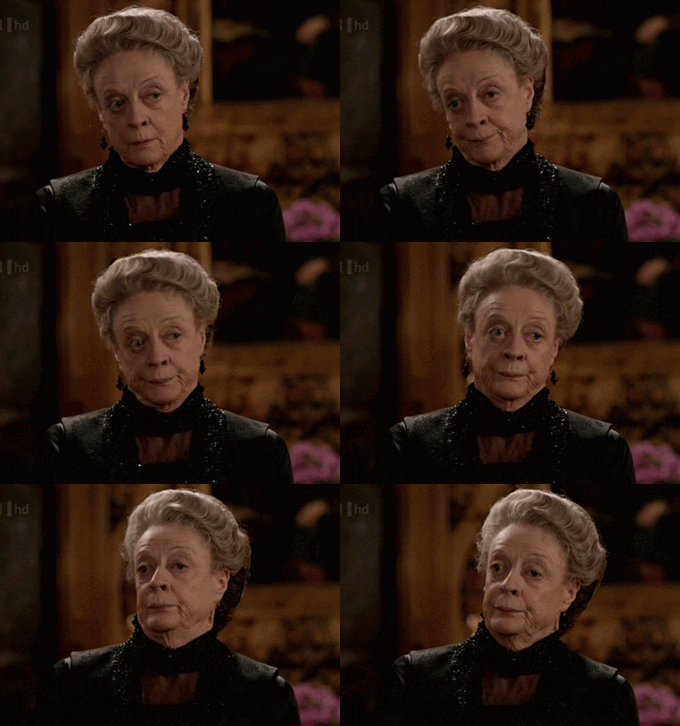
Sometimes we’re all Lady Ediths
More to the point, and for some insane reason – it could simply be you. The dark reflection of yourself that claims it doesn’t want you to fail but fears more greatly that you might leave the comfortable or miserable place you’ve gotten used to all this time (months, years or perhaps even more) and finally succeed at something – or perhaps something else.
For me, this doesn’t usually happen at the beginning of a project. I actually love challenges that people tell me I can’t or shouldn’t do. It’s more at the end – when it’s almost over – and I fear it’s time to be judged. To hand it in – give it over to the world – or even a close-knit group of people you do or don’t respect. But how bad could that even be? Who could judge me harsher than myself???
Sound familiar?
Can Donald Trump actually believe he’s right about all the hate he’s spouting? Uh, well…yeah. I don’t know him but in the case of oversized egomaniacs they’ve just managed to invert the paradigm and chosen to behave badly in an extreme effort to deflect their insecurities. I’m not necessarily talking about #Drumpf – though I could be – who knows – I don’t know him. Instead, let’s use Hitler. Did you read that autopsy results recently unearthed that he actually had a micropenis? Case closed!!

Okay, I jest. But only just a little. I don’t claim to know Hitler or Trump’s pathology. Or even Mussolini’s. Or Napoleon’s. Not that they’re similar. Though not that they aren’t, either.
You and I and maybe some others instead do not turn the hate outward and thereby inflate our tiny egos by seducing others to follow (like I said, Trump/Mussolini/ Hitler are just examples). We instead direct our hate or insecurities or whatever else you want to call it – inward – at opportune or inopportune times, depending on how you want to (or don’t want to) see it.
What this does is stop us all in our tracks before any risk is involved. But when we act like this we’re not the anti-Drumpf. We’re actually using our bluster in a similar way, just pointed in another direction – towards ourselves.
Case in point….
I can tell you this because I caught myself doing it the other day. It came at the end of a very long process, at the conclusion of an extremely tiring week, in the form of a mild but total freak out.
I’ll spare you the details. We all have our individual challenges and anxieties. One guy or gal’s freak out is another’s everyday life – and vice-versa. Well, whatever works for you. Or doesn’t.
For me, it doesn’t work. As a writer I’ve learned ways to block out the world. But this sort of thing extends beyond the written page and even the creative arts. It can apply to any task at hand in any profession. There are a million reasons not to do your job or your hobby. To not complete what’s required of you or what you secretly long to work on and finish but fear will be an embarrassing disaster you have thus decided not to complete or even start at all costs.

What does work for me is pretending that what I’m doing is just for me. Because, well, isn’t it? In the scheme of things – say 100 years from now, who will give a crap about this piddly thing you’re/I’m/we’re devastating over? You are doing it just for you. That others might appreciate or criticize it is immaterial. Truly. Do any of us really believe when we’re 80 or 90 this project is at all going to matter? Ahh, but if it succeeds it could change people’s lives. Or — if we at least make it work to the best of our ability in that given moment it could actually change our life – if only in that given moment. And trust me, that moment of pride or relief, whichever you prefer, can be a really rewarding and life-affirming something.
So I try to stay in touch with that. I also take advice from Julia Cameron’s seminal book The Artist’s Way and write morning pages. This is three pages of stream of consciousness anything when you wake up or start work that day. Literally. And unedited. Whatever’s on your mind. And you don’t even have to punctuate. No one will ever see it but you and even you don’t have to read it over if you don’t choose to! What does it accomplish? It clears your psyche, gets out the cobwebs, lets you spew out the doubt and get it out from your brain where, if it festers, it will be do the most damage. It’s sort of what #Drumpf is doing to us en masse. Can you imagine if he actually had to contain all of those hideous thoughts? There’d be no tacky golden towers big enough.

I feel you going down a dangerous path, Chairy. Resist the urge.
Finally, I’ve found great freedom is surrendering the idea of being great. At this point in life, I just want to be. And after decades as a journalist and writer working with many highly creative and original thinkers, I’ve discovered the vast majority of the best of them are simply doing the work – doing their jobs when genius struck. It is true that the greatest revenge in life is loving what you do and making a living at it. When you can get excited and the ideas are flowing you’re too busy to think about result. Nor do you care. And it’s shocking how easy over the years it becomes to psych yourself into this state of mind. If you spend enough time leaving yourself alone if can actually just sneak in and happen. Naturally.
Certainly, we all do fall backwards. It can be frustrating being a part of the real world, especially these days, when every media socially rules. But those maximum density moments are exactly the time to retreat into yourself and create a safe place where you can play – just with yourself (Note: Make of that anything you will – literally). The world likes to call it play but if you indeed play your cards right it can become your work. What we have to keep reminding ourselves when we get too crazy is that they can easily be exactly the same things if we allow them to be.
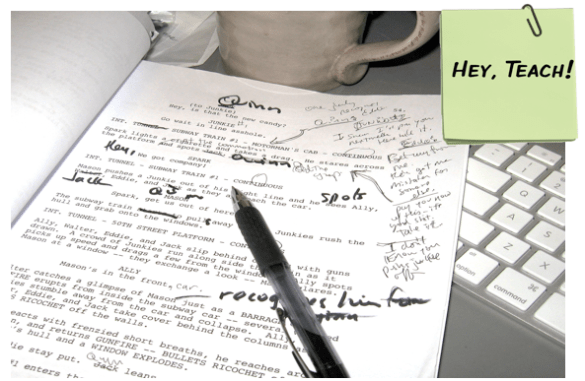




 notes from a chair