Conduct Becoming

I spent my birthday this weekend with Bradley Cooper and it was more than I could have hoped for. 

Oooo Chairy, tell me more

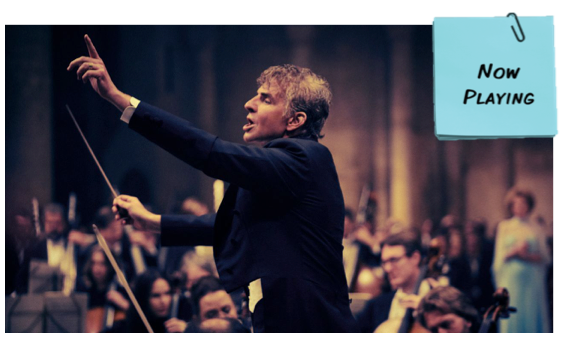
He spoke after the screening of Maestro, a film he directed, co-wrote and stars in which I will happily tell everyone is original, riveting and at times even brilliant.

There, I said, it – the B word.  It no longer means Bradley or Bernstein.  And it’s not a word that I throw around lightly or, really, very much at all.

Brilliant literally means radiant, excellent or intelligent and the film is alternately all of those three, sometimes even at once.

You may quote me.

Moira gets it

Maestro is a sort of biopic of famed conductor, composer, musician and teacher Leonard Bernstein, told through the lens of his long and complicated marriage to actress Felicia Montealegre.  It was a marriage of two people who were turned on by creativity and creativity energy, which are not necessarily the same thing. 

To say the pair loved each other would not be an over-exaggeration.  But, as the movie so ably demonstrates, the dynamism of people like Bernstein, whose personalities and creativity and egos burn so bright on everything and everyone they touch becomes crushing, to both themselves and the people around them. 

The real Mr. and Mrs. Bernstein

Somewhere down the line, in a partnership or a marriage, the latter being the ultimate partnership, someone cedes center stage publicly and privately and, in this case, it was the unique and charismatic Ms. Montealegre.  

Until it wasn’t.

I’m listening…

The strength of the film is that as riveting as the unexpected magical realism of the first half is – aka the rise of Bernstein the show biz “star” and the his courtship of love and life – it’s the second half that gives the movie it’s weight.  That happens because of the storytelling ability of Cooper and co-writer Josh Singer and the qualities and actions of Ms. Montealegre herself, which are brought sharply into focus by the depth of the performances of Carey Mulligan and Cooper and the dynamic shifts they employ as a flesh and blood, and even occasionally pretentious, couple onscreen.

It’s an unexpected and truly original mix of drama, comedy and subtexts all played out to a series of carefully chosen musical cues of some of the composer’s best-known and perhaps not as well-known music.

Plus.. you know… Mr. Handsome

So much so that once Cooper and his co-writer, Josh Singer, were introduced at the Writers Guild Theatre for a talk back post-screening, they received a spontaneous and quite unexpected standing ovation.

Side Note:  The Writers Guild Theatre audience is a notoriously TOUGH crowd.  I’ve been going to these screening for years and there is seldom, if ever, a standing O.  As the recent WGA strike demonstrated, scribes DO NOT give it up for just anyone or anything.  Nor are we a crowd of star f-ckers.   As a group, writers are singularly unimpressed with movie stars in person unless it’s one-on-one and we think they might like something we wrote.  But in an en masse group directly after a screening, the work has to really put out, as they say, in order to receive anything more than professional, polite, or even mildly enthusiastic applause. 

We all did our best Meryl

In the case of Maestro, I think it’s the mere risk taking and audacity the film traffics in that the crowd admired.  And once its two writers started answering questions from writer-director/moderator Rian Johnson (Note: Yeah him, you could tell he liked it too), it became apparent why. 

The pair explained they spent almost five years writing the screenplay, immersed in research and determined to dig out some sort of narrative structure to tell a pretty unwieldy story.  They also clocked interminable hours figuring out how to relate the composer’s vast music library to what was going on in the moments of his life they chose to dramatize; or chose to leave out when it wasn’t pertinent.  Until finally, it miraculously became some sort of seamless, inevitable and occasionally tough to take story with a relatable beginning, middle and end.

It takes a room of ink-stained wretches (Note: That would be EVERYONE in the WGA) to know just how nearly impossible it is to get all of the above right on paper, much less in a final edited film.

Watch it Chairy

In fact, at one point Singer, who won an Oscar in 2015 for writing Spotlight, verbalized what was likely on every writer’s mind.   None of that would have been possible were he not co-writing and conceiving all of this with the person who would be directing the script AND starring as the title character.  Or had both Steven Spielberg and Martin Scorsese not been producers.

Nevertheless, the rest of us wretches can still dream, can’t we?

I mean…sure it could happen!

There is one more element to Maestro that allows it to soar in a way that movies during the period Bernstein and his crowd existed in never could. 

His homosexuality — or, I guess, bisexuality.  It’s hard to tell what’s what for men of certain tastes who were young adults in the forties, fifties and early sixties.

Yeah, there have been a lot of films with gay characters in the last thirty years.  But, well, not ALL that many compared to how many stories there are.  The fact that Maestro makes Bernstein’s continuous and clearly insatiable hookups, relationships or whatever you want to call them with men an integral part of the narrative unlocks an essential element of conflict, compromise, respect and more than a little self-loathing from both members of this couple’s perspectives.

And as a bonus one of them is Matt Bomer!

Their keen awareness yet simultaneous lack of self-awareness when it came to themselves and their partnership occurred in a delicate dance of acceptance and denial that a gay person like myself couldn’t help but feel was at the center of so much of this story.  It likely would not have even been possible to have employed it with so much deliberate casualness in a big budget studio feature as recently as, say, 10 years ago.  You’d have seen it but it would have been skewed or soft-pedaled to one side or the other.  As Maestro portrays Bernstein, it was a major moment, or shall we say a major series of moments, of a major life, which had so many more the film chose NOT to go into.

All of which contributed to earning Leonard Bernstein and this re-telling of his life the title of Maestro, and the movie all of the inevitable praise it so richly deserves.

Okay, now cue the detractors – because certainly they are coming too.

And don’t come back!

But whoever they are, and misguided as I might say they will be, watch it yourself, preferably on a big screen, stay with it, and decide on your own.

As we should all be doing about so many things that matter these days.

Candide Overture – Leonard Bernstein conducting
Screenplay by… Adam Schiff

Everyone likes a good story.

But what is a good story and how do you construct it?  Then, how do you tell it?

I brought my students to a panel this week at the Writers Guild Theatre that featured the 2020 WGA nominees for best screenplay.  Overall, they had a great time listening to writer-directors Greta Gerwig (Little Women), Rian Johnson (Knives Out) and Noah Baumbach (Marriage Story), as well as the screenwriters responsible for Joker, The Irishman, Booksmart and A Beautiful Day in the Neighborhood, among others, talk about how they do what they do.

Allow me to sweep up all those names you just dropped

Even if they aren’t always the best at speaking in person about it, these women and men know a ton about story construction and how to seduce an audience through visual, verbal and other means.  They are tasked daily with figuring out what makes people tick and give them a computer screen, a piece of paper and/or a camera, you would undoubtedly be dazzled by what they come up with.

In the last 12 months, many of you already were.

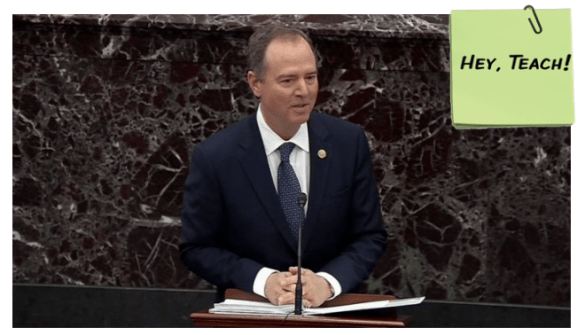
But as they spoke, I couldn’t help but think of another former screenwriter, my congressman Adam Schiff (D-CA).  On that very night he had just spent hours on the Senate floor, as the lead House manager for the Impeachment of Donald J. Trump, trying to convince a recruited audience to vote for the removal of a president many voted for and still continue to support.

For those disgusted with politics, think of it like the nasty studio head purposely test marketing your new movie (Note: The one he hates) before a hostile audience he gleefully assembled in order to determine whether it will be released or not.

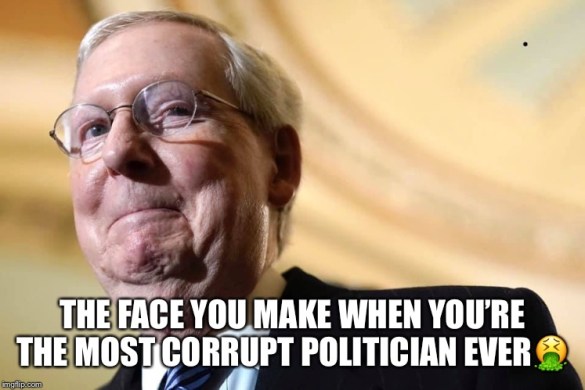
Or just think of Senate Majority Leader Mitch McConnell…doing anything at all.

The purest definition of #ShtEatingGrin

The screenwriting skills of Rep. Schiff, who back in the nineties actually moonlighted as a screenwriter (Note: He received an offer from film producer Nick Weschler (The Player) to option his crime thriller The Minotaur while working as an assistant U.S. attorney) were on great display all week.

Though he had a lot of help from six other extremely articulate fellow male and female managers in proving his case, he was the one principally tasked with how to structure and execute the narrative they were about to perform.

Is it any wonder then that he chose to start with a quote from Alexander Hamilton and end with another from Atticus Finch?

My 15 minutes will never be up!

Too much a reach?  Consider that Rep. Schiff was primarily trying to put pressure on a handful of senators to allow key witnesses Trump had previously refused to allow testify before Congress to at least finally be heard.

To do this he had to not only construct a legal narrative but present his case in a way that the public could understand so they might also apply some outside pressure on their representatives to hear those stories and vote in favor of impeachment.

So what better way to prove his case to them than to quote Hamilton, the only Founding Father to have a musical named after him that is currently an international phenomenon, one that has grossed more than half a BILLION dollars on Broadway alone, has more than 20 touring companies worldwide, a Pulitzer Prize for drama and a record-setting 11 Tony awards.

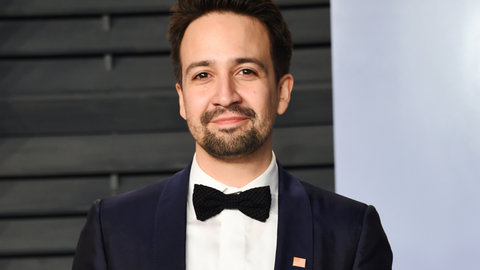
… and here’s a #ShtEatingGrin that is deserved!!

I mean, when Congressman Schiff starts out by likening Trump to the type of charlatan none other than HAMILTON warned us about, a man unprincipled in private life… bold in his temper… known to have scoffed in private at the principles of liberty… to flatter and fall in with all the nonsense of the zealots of the day it carries some weight, right?  Not to mention it doesn’t hurt when Hamilton also characterizes that man as someone who, much like Trump, could only be trusted to pursue his own interests.

Which is to say nothing about Atticus Finch, hero of THE great American classic novel, To Kill A Mockingbird.  That’s the same one that none other than Aaron Sorkin recently adapted into a hit Broadway play that is just about to start its own two-year international tour.

BONUS: Ed Harris with Hair!

Every writer knows the moral weight Atticus Finch’s words carry when we seek to convince an American audience (or any American) to use the common sense their parents taught them when they were kids about the differences between right vs. wrong.  But it takes a screenwriter’s knowledge of both drama and the audience they’re tasked with seducing to know where to place it.

Gotta say as a screenwriter and teacher of writing myself, I was incredibly pleased my very own congressman was smart enough to give the Atticus quote his key ACT THREE moment in the Trump case.  Especially when Schiff himself confessed on the Senate floor that as a young lad he first heard those words from his own father (Note: Just as Mockingbird’s own writer Harper Lee had heard them her own Dad, fictionalized as Atticus).  To drive the point home further, Rep Schiff revealed that he even attributed Atticus’ words to his own father before learning years later they were actually being passed on to him by his very moral Dad only because he had taken the time to actually READ the classic story and PARENT with it. (Note: Nice touch when speaking about the well known to be NON-READING Trump).

This will be the worst school trip ever

But that wasn’t all.

As one watched Rep. Schiff and his colleagues unspool the case against our ELECTORAL COLLEGE POTUS (Note:  Full Confession; I was riveted to my DVR), it was hard not to once again recall the WGA event.  Particularly that moment when Greta Gerwig told the audience that it was only because she found out LW’s writer Louisa May Alcott managed to hold on to the copyright of her novel at a time when women were mostly powerless, that SHE was able to come up with the boldest female empowerment moments for Jo, Alcott’s heroine, in this new movie version.

Greta deserved Betta #saoirseknows

This idea of digging deep into the facts and constructing your narrative around real actions your main character takes (or took) rather than claims he/she makes was also on display with each Trump video clip Schiff and his posse unspooled on the Senate floor as they were crosscut with evidence of the true real-life contrary actions taken by Trump and documented by staff, cabinet members and in some of his own candid audio tapes in the House managers’ presentation.

It also brought to mind Rian Johnson’s confession about tricks he uses as a screenwriter as he plans his stories for ultimate dramatic effect.   He freely confessed that 80% of his writing process is outlining and structuring his story just as The Irishman’s screenwriter Steve Zailian’s admitted that in order to figure out how to execute every film story on which he’s hired (Note: See his IMDB page and be impressed) he needs a plan and OUTLINING is a good way to come in with a PLAN.

First note in outline: This line must appear every 10 minutes

No wonder after the über-outlined case against Trump unfolded on that very first day even arch adversaries like Sen. Lindsey Graham took Schiff aside and privately shook his hand at the intricately planned and structured way in which he laid out the story he was telling, convincingly taking the senators, step by step, through the Trump narrative HE had decided to tell in order to prove his case.

Of course as everyone in Hollywood knows, particularly screenwriters, you can do everything right and still not get the results you want.

Think of that film recut at the last minute (Note: Orson Welles’ Magnificent Ambersons).  Or consider that terrific cult movie not released properly that first time around (Note: Harold and Maude or The Rocky Horror Picture Show) that had to be rediscovered months or even years later because their messages were sabotaged by the arbitrary moment in which they were determined to first arrive.

Once upon a time this film was a box office bomb

I can’t help but worry whether this will be the case for the storytellers in the Schiff posse, no matter how well constructed and executed their narrative might be.  Particularly when I read this sobering statistic in the Cook Political Report:

A majority of seats in the U.S. senate represent just 18% of the country. 

This means that ANY hope for a majority vote on any one issue in the Senate could conceivably be SUNK by a GROUP OF SENATORS accounting for UNDER ONE FIFTH of all voters in the country.

In other words, the will of more than EIGHTY PERCENT of the country that agree with my Congressman, and me, on the Trump of it all, could EASILY be ignored in the next week.  Or even two or three.

You got that right, Sutton.

This is not the Hollywood ending Schiff or anyone on the WGA panel that evening would write.    But, and not to be a downer, it is also important to remember that for all his wisdom at the end of To Kill A Mockingbird Atticus LOSES his case.

Will we settle for an ending to a similar story that took place almost a full century ago?

Or will we create our own narrative?

Hmmmmmm.

Original Hamilton Cast – “My Shot”