Powerful Women

Screen Shot 2015-04-12 at 8.48.31 AM

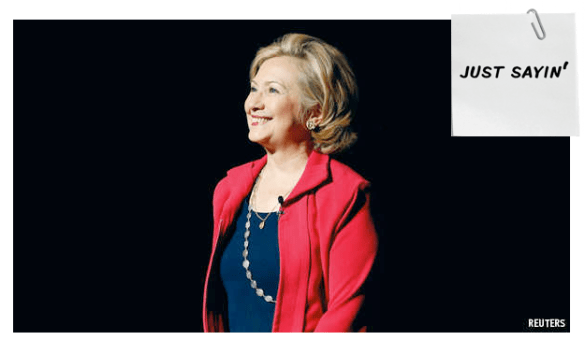
My stepmom, who I loved very much, died this week – the same week that Hillary Clinton announced she was running for president. If Mrs. Clinton succeeds she will be the first woman to run our country. My stepmom – who from now on I will refer to as my Second Mom because that is what she really was and that was how I felt about her – ran and successfully raised a blended family of five children from two very different sets of parents for almost 45 years. This was not a first in the world but was certainly one of the firsts in a plethora of blended families that began en masse in the U.S. as a result of the changing social mores of the very early 1970s.

Meet Shelly

Meet Shelly

When my folks split up in 1969 it was not so much rare but extremely uncommon. Divorce was slowly on the rise and the myth of the idealized, perennially happy nuclear unit one saw advertised in the media was being exposed for the smoke and mirrors bit of real imperfect unreality it often most certainly was.

Numerous women have run countries of note over the centuries – Cleopatra, Indira Gandi, Golda Meir and Margaret Thatcher immediately come to mind – especially if one leaves out post B.C. royalty, which I most certainly am happy to do since I believe the anointment of kings and queens should stop at one’s high school prom. But interestingly enough, no female in our last 250 years has ever had or come very close to getting the top job in the United States.
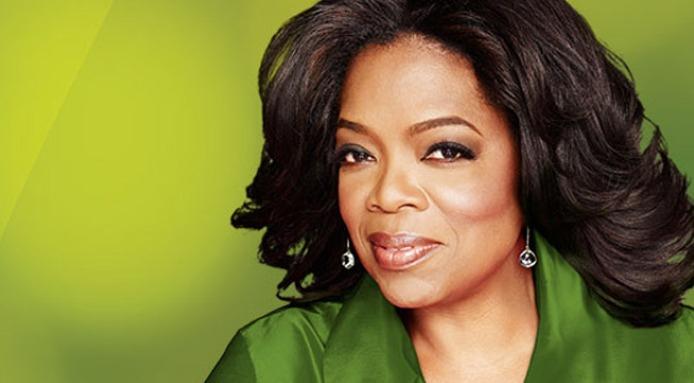
This lady excepted, of course

This lady excepted, of course

That the most powerful country on Earth for many decades, if not centuries, has never had a female at the helm feels counterintuitive. This is especially true when I consider that many women like my Second Mom have proven time and again they intuitively know how to run things – especially people, bringing out the best qualities in them and their encounters with their environments.

Of course, this might not hold true across the board. We all have heard and/or experienced isolated parental horror stories. But overall these are often about both sexes – the horrible, harridan mama and the absent and/or abusive papa. So taking those many tales as a whole we can safely say that this argument at best produces a wash. Which leaves us once again with the question of the day – why are women so often undervalued and why do we not fully appreciate them in the moment of their greatest triumphs?

I've been saying this for years!

I’ve been saying this for years!

My Second Mom had the unenviable task of intermittently (meaning each summer and for various weeks in the year) incorporating the two existing children of the man she had married into a new life with this new husband who in turn she was asking to become the father and therefore breadwinner to the three other children she was bringing along from her previous marriage. Really? Now that I’m two and a half decades older than she was at the time she took all of this on my mind reels at her task at hand. It’s taken all I could muster to handle her death this week. Merely getting out of bed and doing the work I’m tasked to do – which doesn’t include raising ANY kids at all except myself – has me pretty much hog-tied. (Note: I think that is the first time I’ve ever used the term hog-tied in a sentence but nevertheless it somehow felt appropriate). And I’m a man. In 2015. Not a female with five children aged 3-15. In 1971.

A toast to my Second Mom

A toast to my Second Mom

Yet she did this, for many years, and with great humor, wisdom and a big open heart. There are really no books to teach such things. I had barely become a teenager when we met and was sharp, smart, had an attitude and determined to hate her. In other words, leave out the hate part and I was pretty much what you read now. Yet it took a simple game of bowling with my Dad and my much younger sister for her to totally win me over in less than five minutes. How does a Mom, much less a Second Mom, manage to do this? Was it her fringed, faux suede poncho, her long, wavy auburn hair, her penchant for throwing in a snide retort in every fourth sentence? More likely it was the fact that she immediately got me.

To be a great parent is to understand things about your children that they themselves haven’t realized and to guide them into discovery, acceptance and, finally, joy in being the best of themselves. She knew I was gay before I did (Note: I used to wonder how but now well, I mean I can’t even believe I once asked that question); realized I should be a writer way before anyone else in my family ever thought I should; told me I could achieve and handle stuff I felt sure I never could or secretly fantasized I might; and comforted and held me when I was hurt and scared, even when I was far into my adult years and on the surface seemed way, way, way beyond mothering. I couldn’t ever repay her for those many moments and even in recounting this tiny portion feel as if I can barely write about it. On the other hand, if she were here right now I know she’d smile and tell me I was being ridiculous and to just wait – I could not only handle this but a lot, lot more that I had in front of me. (Note: Damned if she wasn’t right again on all counts. Oh well).
shelly's advice

shelly’s advice

To do this sort of thing not only against all odds but to a sometimes hostile audience, is a feat that I will not quite ever understand. It can’t be a guy thing for this not to compute because certainly there are great Dads in the world who have exactly these qualities and understand innately how to do it. Just as there are females who can’t and don’t. Yet like all things great – these types of people are rare. Like all great leaders.

lead·er

  1. the person who leads or commands a group, organization, or country.

It takes all of the above qualities and more to effectively run a country – especially one of the size, stature and power of the good old US of A, which thus far has rejected every Mom in its history from ever getting the opportunity to do so. Talk about unappreciative, ungrateful or just plain clueless kids. Well, ahem, I guess that’s par for the course. We kids never quite realize the stuff we should until it’s almost too late. The important thing is we do realize it at some point, take what we’ve been taught and put it into practice.

#YES

#YES

Make no mistake – Hillary Clinton should not be elected president because she is a woman and a Mom. Those assets are only a small part of the experience she brings to the job. But to pretend that these are not assets and to not add them to the list of her many qualifications is its own form of acting out – like the mouthy teenager who believes their Mom is an annoying pain who is constantly crawling up their butt for no reason instead of a person with the patience of a saint who is infinitely smarter about certain things because of their experiences and love of their job.

Hillary Clinton has been:

  1. First Lady of the state of Arkansas
  2. First Lady of the U.S.
  3. U.S. Senator and the first woman to represent the state of N.Y.
  4. U.S. Secretary of State
  5. A respected lawyer
  6. A tireless human rights advocate and
  7. A national punching bag who has been dragged through scandal more times than most any one of us reading this AND has lived long and large enough to tell her tale to the world.

fcd2d4a962648dd631f26ab4f7e83dc7

I am not quite sure why at 67 someone with that history still aspires to endure a grueling 18-month election to be the leader of the free world but if I had to guess it would probably be precisely because that person has the sort of history that they do. People make their own choices (Note: Hard Choices – yuk yuk) and it is never an accident the uber-successful are where they are. I tell my students this every time they question me about why a gigantic movie star is a gigantic movie star. Plenty of people have talent but it does take a Village of determination, among other qualities and people, to get there.

See, she gets it!

See, she gets it!

As I posted on social media earlier this week, one might not AGREE with Mrs. Clinton (Note: Why did we all feel, from her earliest days on the national scene, that we have the right to call her “Hillary”) on the issues and instead have their own candidate of choice. But to scream that somehow she is unqualified, not intellectually up to the task or – and this is the most popular – morally lacking (uh, consider her predecessors in the last 50 years) is to be just plain…MAKING STUFF UP. In 2007, I once heard the blogger and former Republican now turned Democrat Andrew Sullivan whining disgustedly on television to Bill Maher that he can’t imagine listening to that voice for the next four years in some pathetic effort to devalue a Hillary Clinton presidency. And that’s coming from a learned guy who agrees more than disagrees with her on any given subject. This gives you just a preview of what is to come in the next couple of years, and then even more, should she get elected. So fasten your seat belts, as both Margo Channing and Ralph Nader once warned.

giphy

Yet if nothing else Hillary Clinton has certainly proven she can take care of herself on that and many other scores. Like many women of her time, she’s had to wear many hats in a large variety of styles and shapes over the years. My Second Mom wore a lot of hats, too. In fact, one of my favorite things she once told me occurred when we were walking through some overdone Las Vegas hotel into some fancy five star restaurant. She had her hair tucked into an unstylish short brimmed cap and when someone took notice of it she turned to me and said, “Oh fuck it, I don’t look like those other women anyway.”

No, she didn’t. She looked, and was, a lot better.

Hillary 2016.

Stereotype Sundae

BIGGAY4

When I read that something called The Big Gay Ice Cream Shop will open in downtown L.A. this spring I was surprised on four counts.

  1. That we’ve come so far that someone has decided to be ridiculous enough to think they could open up a business called The Big Gay Ice Cream Shop and make any money.
  1.  That someone had determined this name wouldn’t offend a significant group of people, perhaps some of them even homosexuals.
  1. That there were already TWO existing and hugely popular Big Gay Ice Cream Shops in New York (the first one opened two and a half years ago), which were spawned by its mobile forerunner, the Big Gay Ice Cream Truck, and that they were all created by not one but TWO…Big Gay Men.

AND

  1.  That I – a smaller but probably just as big of heart gay man – didn’t know about any of this and initially thought it was all just one big dumb, and questionably borderline, gag.

So much for my hipness factor.

Well, by comparison, I'm still pretty hip.

OK  – I guess I could be worse…

This all raises a much broader question – what is a stereotype these days and do you marginalize yourself or the particular group of people you belong to by embracing, portraying and perhaps even BEING (or condemning?) the stereotype?

Stereotype:

1. A conventional, formulaic, and oversimplified conception, opinion, or image.

2. One that is regarded as embodying or conforming to a set image or type.

Are the two owners of The Big Gay Ice Cream Shop stereotypically gay?  Well, in some ways not at all.  They are very successful, independent entrepreneurs who started a business from ground zero simply by selling ice cream out of a food truck and in just a few years they have three stores in the two biggest cities in the U.S. and are making lots and lots of money.   Clearly, that is a rarity these days.

Yet in some ways they are totally stereotypical – two middle aged homosexuals with a self-professed campy dream who are snide and funny and have a penchant for the eighties TV show The Golden Girls.  Not only that, but GG star Bea Arthur is their store mascot (along with a unicorn) and one of their offerings is indeed named The Bea Arthur – an ice cream cone with vanilla ice cream, dulce de leche and crushed ‘nilla wafers. 

l

Inside The Big Gay

Not to mention this side note: Each frozen delight they serve is spotlighted on their website by an array of customers holding up or eating a particular item.  From a sociological standpoint I was particularly intrigued by the two prepubescent boys holding up two cups of ice cream called The Gobbler (pumpkin butter and maple syrup or apple butter and bourbon butterscotch, pie pieces and whipped cream).

Uh…two young boys holding up creamy products advertising menu items from The Big Gay Ice Cream Shop?  If this were the Bible Belt (or even Orange County) there would at best be lawsuits and neighborhood outcries and at worst…well, I don’t want to go there.

Perhaps it’s evidence of how far we’ve come that people’s minds do not “go to that place” of stereotype anymore – meaning somehow connecting anything gay –centric or owned by gay men with the abuse or indoctrination of young boys.  (Perhaps?!) When I was growing up – not all that long ago – this would NEVER EVER EVER have been possible.  And I am still ambulatory, have my eyesight (sort of), and am able to roller skate.

Still got it!

Still got it!

How much diversity do you see within your life, the lives of those within your minority group or how you’re represented in the media and how much is enough?  (Note: Everybody at some point feels as if they are in some kind of minority, even if they’re in the majority). If you’re gay do you proudly proclaim you love Judy Garland, Barbra Streisand and Bette Midler in your off hours as a hairdresser, but only at times when you’re not redecorating your apartment or cruising for men clad in leather chaps? Or what about the flip side of the problem, posed by a young African American comedian I saw some decades ago (but whose name I can’t recall, darn it!).  He claimed to have absolutely no rhythm whatsoever (and he didn’t) yet had to embarrassingly prove it to disbelieving people who insisted he demonstrate because a rhythmless Black man didn’t seem humanly possible to them.

One supposes stereotypes do cut both ways – some traits you’d prefer to have (or do have), others you are a bit embarrassed to have (but why?) and still others are a perceived exaggeration of traits attributed to ALL people of your tribe you don’t want anything to do with.

This issue becomes a little more difficult for writers and other artists when representing those minority groups and problematic for audiences who are the spectators.  Just what is your obligation to your crew (or to other peoples’ crews?) Do you have to go out of your way to find a gay guy that doesn’t like Judy (NOTE: I do love her and for some reason most of us do call her Judy) or not show gay men continuously searching for sex?  After all, aren’t most guys – gay AND straight – continually searching for sex, at least in the back of their minds?

The premiere of HBO’s new half hour show about gay men in San Francisco, Looking, presents exactly this challenge.  Starring the very amiable and charming Jonathan Groff, the show seems to consist mostly of a subset of a subset of gay men – urban guys who are mostly dark haired, with varying degrees of facial beards (except for Mr. Groff’s nubile young guy) who mostly look for sex.  It is only in-between that they do a variety or artistic jobs or work as waiters.  Stereotypical?  Well, most certainly.  But all of it or just in certain parts?  And are the characters really stereotypes or just merely post-modern representations of people who, as a given, are a lot more than just that (Sex in the City, anyone?). Well, I for one am not quite sure yet.

4 Non Blondes

4 Non Blondes

By the end of the episode, I – a gay man who has lived some sort of existence in various shades of stereotype – felt as if I had absolutely nothing in common with these guys – nor did I ever.  For one thing, they were much freer than I ever was sexually when I was younger and for another, their friendships and relationships felt so flighty and superficial that I probably would have ran away from them rather than to want to touch them or even gravitate anywhere near them.  (Note:  Or perhaps bitch about their superficiality behind their backs, which makes me another form of gay stereotype, sorry to say).

Of course, as a television show this is both entertainment and a fantasy.  Do we bridle that the rich and powerful Grayson family on Revenge distort patriarchal relationships or that Nurse Jackie is an all-too ridiculous take on people who work in hospitals?  Probably not.  But mostly because there have been hundreds of hospital centered shows with other images (St. Elsewhere, Chicago Hope, Grey’s Anatomy, even General Hospital) and thousands of rich, screwed up, primarily heterosexually oriented families on nighttime time soaps (Dynasty, Knots Landing and Desperate Housewives – gay sensibility though they all were – and do not make me get into the latter).

But how many television series almost solely about gay men have there really been?   (Hint:  You can count them on less than one hand).    That puts an unjust burden on the creators of Looking and it’s an unfair one for a dramatist whose only real job is to tell a story the way it happened or happens in his or her mind.  Dallas Buyers Club, the current historical drama about a straight man with AIDS in the 1980s, was criticized for its narrow focus on its homophobic lead character – a straight guy with AIDS who subverts the status quo and sells unapproved drugs that prolong his life and the lives of others (mostly gay men) – because it leaves out all the simultaneous other proactive steps hundreds of gay groups across the country took at the time in getting their own illegal drugs and protesting the government in other ways that prolonged their own lives.

how-to-survive-a-plage-poster-article

the other Ron Woodroofs

Yet the sad truth is that a narrow focus is sometimes needed in order to maximize dramatic impact in narrative work.  And if you reject that notion entirely consider this question:  What IS that writer to do – not write roles in stories that will likely win its two leads, Matthew McConaughey and Jared Leto the male acting Oscars this year?  (Uh, not a chance of that).  Just what is the obligation to history, realism and representation when you want to create a satisfying and dramatic story, or live a satisfying, if not at times dramatic, life.

Members of most minority groups would probably answer it this way — don’t give YOURSELF majority status in our overall story when you were really a minority. Don’t leave our real stories out, don’t represent us as one or two stereotypes and DO NOT act as if you’re doing us a favor by merely showing us onscreen at all or say that we’re classically “oversensitive” for complaining at all.  Does that mean we don’t make films like Philadelphia, Gentleman’s Agreement or Schindler’s List anymore?  Okay, now my head is really spinning – all dizzying gay man clichés be damned.

In the case of Looking its creators and lead actor are openly gay and are working for HBO –a network that pretty much allows talent to do almost anything they please.  So one can assume they are telling this story from a personal  POV (which is all any writer can really do) and letting the chips fall where they may.  Yet is that enough or do they (or you, or I?) need to think about being more inclusive, less stereotypical, and overall more universal when writing about ourselves and the rest of our group/crew/tribe or….? It’s the tricky challenge of all this.

I teach my students the more specific you are about a character the more universal you will be.  But if all your characters are of a rarefied subset group of still another group subset and not varied enough – well, their behavior might be real or true to life for you but could easily bore the hell out of everyone else.  I mean, no one’s real life is consistently THAT interesting over the long periods of time that a television series represents.  Not even Oprah’s – trust me, it isn’t.  You only think it is because of the wide variety of people we’ve gotten to see her talking to.

Well, I didn't say not luxurious

Well, I didn’t say her life wasn’t more luxurious

I learned this the hard way many years ago as a young reporter and then-movie publicist attending one too many red carpet events.   I don’t even know when I finally knew I’d had it but perhaps it was when I was a guest at the premiere of A Few Good Men – one of the most lavish affairs I ever remember attending.  It was at the ballroom of the Century Plaza Hotel, there was a full orchestra, great food and Tom and Nicole were right next to me and everyone else, holding hands and walking from table to table along with all of the other stars and most of Hollywood.  At one time this would be dazzling, exciting, unplugged and unleashed fun and decadence.  Yet after so many of these it felt like being the plus one at the wedding of your much richer and more desirable cousin in whose shadow you had always stood in at a time when you were finally ready to be the movie star of your own life.  It looked good and on the surface it would tell a great story but when you really thought about the people and everything that was going on, there was not much there there.

In short, it bore no relation to your truth.  Though this might be different for those who were a part of the film, or fans who very much enjoyed what these people had made and were just happy to be invited to whatever party was being thrown.    Maybe part of the mission in life is to create your own party  – a thought that might sound stereotypical but in reality an action that you can make original and appealing to a lot more people than yourself if you work it the right way.

** Special Chair Note: This week we will begin listing each blog by subject matter with a corresponding and stylish post-it note on the left hand side of the page.  They will then be archived by that category for easier future access.  For your convenience, our beloved Holly Van Buren – editor, photo chooser, and caption writer extraordinaire, has gone back and archived every blog (yes, that’s all 165!) under one of six categories.  Just click on the subject links at the top of the page you are interested in and you will be able to read your favorite posts from the past (Thanks Holly!).  Also, remember to click on the title of each week’s post at the top of the page (e.g. Stereotype Sundae) – in order to access that week’s song!