Gay is the Old Black

Emmy bait.

Emmy bait.

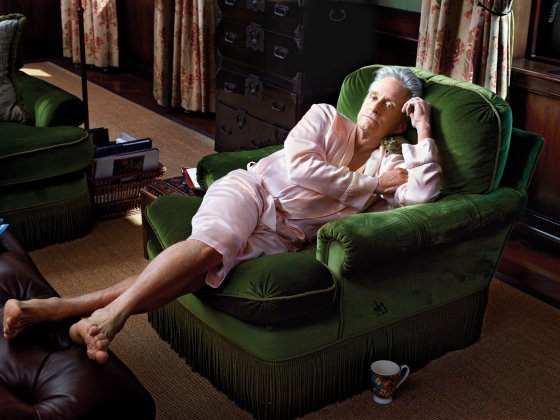
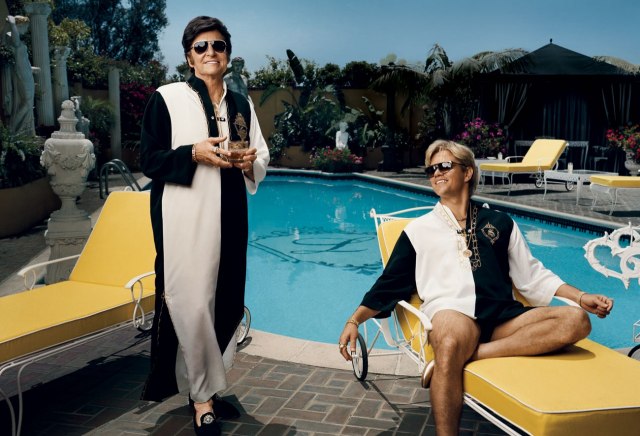
One wonders if Michael Douglas would play the part of the homophobic father of Jonathan Allen, the 20 year-old from Tennessee who, after being thrown out of the house by his parents two years ago for being gay, wowed the judges on America’s Got Talent this past week.  Or, better yet, if Steven Soderbergh would even choose to direct a movie about it.  Or if Jerry Weintraub would ever decide to produce it.  The way all three did with the continuously lauded and now award-winning HBO film about Liberace’s later years and prurient love life, Behind the Candelabra.

My guess:  probably not.  Most movie stars of Mr. Douglas’ generation dislike playing roles they deem too unsympathetic.  And don’t use the example of Gordon Gekko in Wall Street.  That film was made in and about the 1980s – a time when the general population actually agreed that “greed was good” and that ole Gordy was not so much a villain but a slightly tainted ideal many aspired to.

Of course, the majority of critics, audiences, and the cast and crew have not deemed the cable TV portrait of uber-gay Liberace unsympathetic either.  That would require that the real-life tale of the entertainer and his former lover Scott Thorson had been truly told.   The one about a 16-year old boy who was lured into the Las Vegas home of a fifty something mega-millionaire star with promises of wealth and family.  The one where the star repeatedly had sex with the boy for several years before he turned 18 (as well as any number of years after) with full knowledge said star was breaking the law. The same one where, when the older man got bored with the boy and the boy started taking too many drugs, as many young boys do, found a replacement and tossed him onto the street as he had so many others before him that were of age, with a little bit of money and a couple of fur coats – all the while publicly denying to his dying day that they ever had that kind of relationship or that said entertainer was even gay.
Eyeroll

Eyeroll

I’ve resisted writing anything but a few paragraphs about Behind the Candelabra up to this point because it seemed like the kind of film that would get some recognition for the circus stunt of Michael Douglas in sequins and a blonde-tressed Matt Damon screwing him from behind, and then disappear.

Such is not the case.  The cable film just won best drama and best actor from the Broadcast Critics Association.  It played to large and enthusiastic crowds at the Cannes Film Festival.  And mostly straight audiences (and some gay) seem to have embraced it as bold and groundbreaking.  Even those few writers who have dared to write critical pieces about the movie are often skewered, lacerated and told to get over themselves in the comments sections (even in respected places like Salon).   Also, Behind the Candelabra is likely to get nominated and win a slew of Emmy Awards, and go down in the books as “the courageous film all of the studios passed on with that director and that cast (can you believe it!) because they were too afraid of the gay subject matter.”  The latter is the meme that Mr. Soderbergh and Mr. Weintraub have been tirelessly and successfully peddling during the last six months.

Which is why, at this point, I’m weighing in.

Frankly – this film disgusts me.  Not as much as the lies about the war in Iraq, gay bullying or the right wing trying to take away a woman’s rights to choose.  That’s a different level of disgust – maybe more like infuriation.   But disgust – yeah, that about covers this.

I’ve thought a lot about other words to use to describe my feelings – queasy, nauseated, annoyed or even…jealous?  But finally, after much consternation, I decided that the perfect world is, indeed….

dis·gust  A feeling of revulsion or profound disapproval aroused by something unpleasant or offensive.

It is worth noting it’s not the people attached to this film that signal disgust to me – I respect them all (professionally that is, I don’t know them personally).  It’s the film itself and everything it tells us about where the industry is today vis-à-vis movies about gay people – or about most minorities – that makes me want to run to the toilet and be sick.

Someone tell that to the Emmys!

Someone tell that to the Emmys!

This is also not to say that the life of Liberace might not make an interesting movie.  That story – the one about how a young Midwestern piano prodigy invented (and for years carried off) the flamboyantly effeminate (some would say homosexual) persona of a character named Liberace and became the world’s greatest entertainer while still managing to convince his mostly gay intolerant world of fans he was anything but homosexual, would indeed be fascinating and almost certainly would not have caused me to write any of this.  And, even if it wasn’t particularly good, I doubt it would actually have made me feel disgusted.

Of course,  we will never know for sure since that tale was far from the one HBO and this prestigious group of A-list film professionals chose to tell in 2013 – a time when gay marriage is not only favored by the majority of people in the US (and an overwhelming majority under 25) but where its difficult to read any daily print or online news source where a major story about something homosexual is not featured on the front page.  I mean, even me – a middle aged guy who was “born that way”- sometimes gets gay fatigue.
geyyyyy

Still, true change in the movies, and the world, is not solely about the amount of ink you get or the measure of RAM you occupy on someone’s computer or website.  True change not only moves at a glacial pace but is often a one step forward, two steps back deal.  And this is where Behind the Candelabra comes in.  And me.  And my disgust.  The kind that I’m feeling right now as I compose this.

Writers are told all the time that their movies need a reason to be made. So are producers, directors, actors and studio executives.  But since writers are, by definition, the inventors of the first tangible version of a project, perhaps it is best to start with us.  As a writer one asks oneself:  What is the reason for this story?  Why make it?  What compels it to be told?  What would interest an audience?  Why will anyone care?  Why do I care?
I feel you Neil.

I feel you Neil.

I teach my writing students to ask these questions early on because I don’t want them to waste their time working on anything they are not fully invested in.  Even if it is the silliest, most exploitative story in the world, the author must find a way to imbue some kind of personal feelings of – well, something – into it.  Because if it doesn’t mean much to us, how can we expect it to mean anything to you?

I’ve watched Behind the Candelabra twice and have been looking for meaning, or even relevance, to today’s audiences.   Here’s what I’ve come up with:

  • The story of a May-December relationship told from a gay perspective could be fair diversion, one supposes.  But that would seem only fair (and not exploitative) if we had a bunch of films about other, less prurient (and more successful) same sex relationships to compare it to – which we don’t.
  • The emotional journey of a relationship can sometimes be enough to override a lack of story.  In essence, the ride you get having a front row seat to the ups and downs of human interaction between two people over a period of time can substitute for a paucity of plot points.  There are some emotions here – for instance, shock and sadness that an older person could actually convince a younger person to have extensive plastic surgery to remake their face to that of their “mentor.”  But certainly not ever sadness or shock that this relationship will end badly – or interest in how it does – which knocks out most of the tension throughout the film and causes the last hour (and more) to be deadly dull.
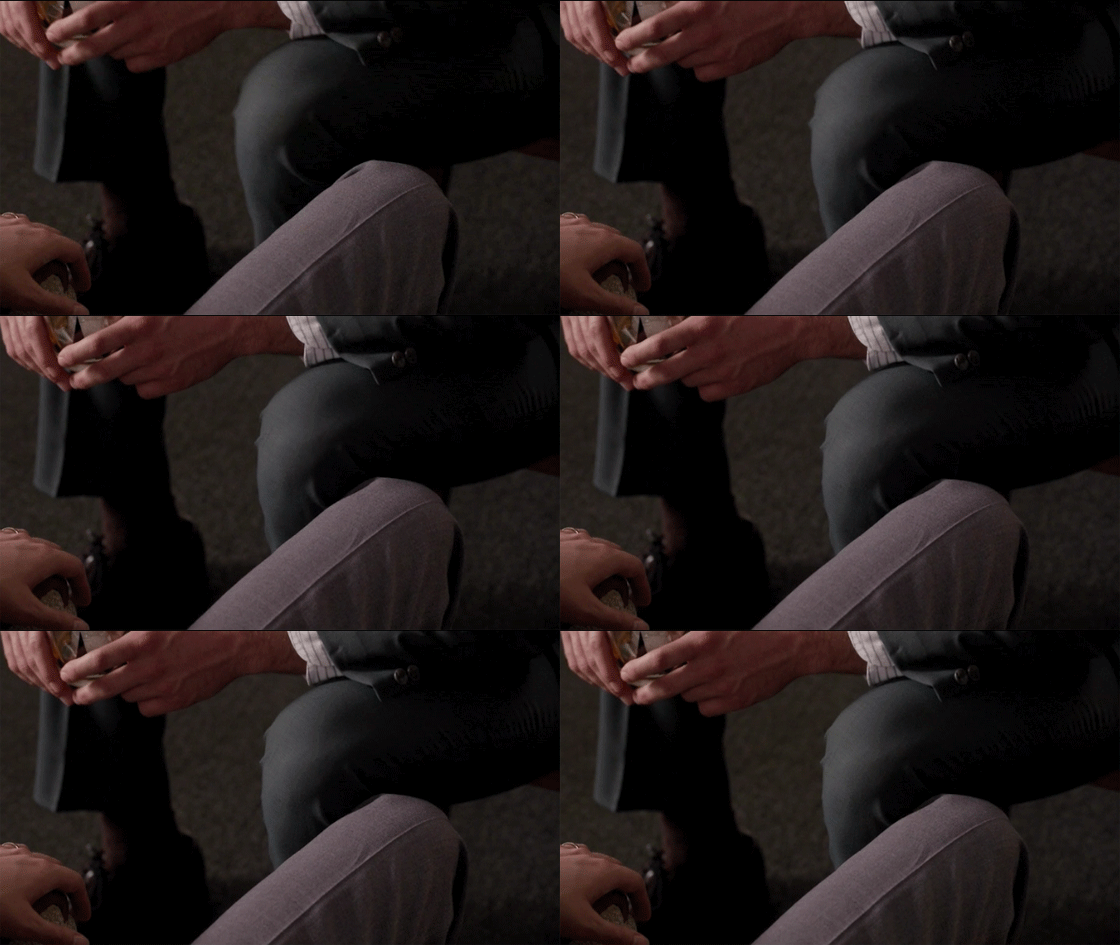
    A sharp contrast to this knee-knudge heard 'round the world.

    A sharp contrast to this knee-nudge heard ’round the world.

  • Maybe it’s the spectacle??  Ahh, now we’re getting somewhere.  The sequins, the clothes, the excess of a hidden lifestyle and time period in show business that no longer exists is lots of fun.  And those gays – who better than them to do this up in style!  (Though note: there is not a single gay person in the principal above-the-line talent or crew).
  • Another attraction could be the over-the-top characters themselves, who are at the very least entertaining in a very broad, stereotypical manner compared to what else was going on in the world at that time.  The homosexuals have always done this well since time began and it makes audiences quite comfortable to view them this way, thank you very much.   And certainly, why make any movie that is not at least fun!!??
  • Juicy parts for actors who can be cast against type.  The old Hollywood joke: Every time a straight man puts on a dress they give him an Oscar?  Well, not anymore.  (Note: Even James Franco’s Marilyn Monroe drag as Oscar host fell flat a few years ago).  So, you have to find new ways for them to do it.  How about a happy recipient of anal sex who dies tragically that can’t be X-rated?  It’s Oscar/Emmy bait for Michael Douglas.  (He even gets to have AIDS, but we can downplay that ‘cause the real life Liberace did!). Plus, what about an enjoyment of Speedos, suntans and Las Vegas?  It’s the flip side of Ocean’s 11 for Matt Damon and he’ll jump at that!   What actor wouldn’t want to play younger than they are, get fat and then skinny and then fat and skinny again as they age, become addicted to drugs and then recover?  No one, that’s who.
Yeah, I'm exhausted too.

Yeah, I’m exhausted too.

But please, please, please, please – do not tell me this movie is groundbreaking or even something different.  And if you’re a high-powered A-lister, don’t keep spreading your tales of woe about how the heads of movie studios are ruining the business by not taking chances on this kind of film.   They might be ruining the business by not taking chances but NOT taking a chance on this film was exactly the right choice.  It has no relevance to 2013.  It had relevance in 1983, and in 1993 – at the height of the AIDS epidemic – when it might have meant something other than an easy way to make some money, get some attention and garner a few awards for “courage.”

The people who made it should know better.  And might benefit from watching Jonathan Allen tell another all too familiar, yet far more commercially relevant and compelling story for today.  This story was  indeed shown last week not on the big screen or on cable television but on, of all things,  network reality TV  – America’s Got Talent, to be exact.

It is indeed the golden age of television.  In some circles, at least.

Excess

tumblr_mib22iQH2L1qgc0b0o1_500

How much is too much?  That is the question many are asking about Baz Luhrmann’s The Great Gatsby.  But before we get into that, it’s worth considering when you move past the point of saturation and graduate to excess? In show business we call this going over-the-top.  In film studies, we simply call it melodrama.  Unless, of course, we’re being hip and oh so au courant – then we call it postmodern.

I, for one, don’t apologize for loving excess if it is truly excessive.  For instance, one of my favorite TV shows, American Horror Story, reeks and swims in oceans of excess (and this news just adds to it!).  However, one of the problems with my least favorite and now finally put out of its misery defunct TV series, Smash, was that it somehow refused to be in on the joke it was perpetuating and yo-yoed on various dramatic diets instead of just indulging as the glutton that it was always meant to be, given it’s body type.

Or – as an ex once years ago commented to me about an older star who refused to embrace where he now was in life…

 When you’re dead, lie down.

(Granted, that’s a little harsh but so was the ex, which is part of the reason why I refer to him as such today).

As for excess, we’ve had plenty to choose from lately.  Yet as much as I love to indulge it seems like there should be some guidelines, or at least simple common sense do’s and don’ts.

Susan Sontag once wrote in her perhaps most famous essay, Notes On Camp,

The ultimate camp statement is: it’s good because it’s awful.”

I agree because, I mean, I know enough than to try to say Ms. Sontag is wrong about much of anything.  Though I would add an addendum to her observation: Awful is good but some things never make it to that plateau because they are just plain bad.  And bad is just bad to the bone.

As in everything, this boils down to personal taste.  And one’s lack thereof.  Now, some excesses to consider:

 Saturday Night Live

I don't know about this...

I don’t know about this…

Doing a brief parody of accused child kidnapper, rapist, young girl torturer Ariel Castro seated at their mock version of the Benghazi hearings this week – TOO SOON???  You’d think.  Yet somehow they had to sneak it into their opening skit Mother’s Day weekend.

You can’t parody a tragedy that just happened, especially when the tragedy would be in itself a parody if it weren’t so horribly sad.  It’s not camp. It’s not postmodern.  And it certainly isn’t melodramatic.  What it is, is just plain wrong.

The Chair’s Mother’s Day

I could probably work on my tablescapes...

I could probably work on my tablescapes…

I had 16 family members over and enough food for 32 (because ya never know).  My menu:  homemade turkey chili for a crowd, hot dogs, sausages (veg and real), rice, guacamole & chips, heirloom tomato salad with lettuce and celery, cheeses, grilled breads, six different kinds of fruit, and homemade chocolate cake.  People also brought: large cold shrimps on ice, bruschetta, Lawry’s spare ribs, Lawry’s yorkshire pudding, homemade quiche Loraine, homemade strawberry buttercream cake, two dozen black and white cookies, 24 home made lemon bars, larger containers of chocolate, coffee crunch and crème gelato, and flowers.  Lots and lots of flowers.  Too much?  No – we’re simply Jewish.

Time Magazine

behold-a-millennial-in-its-element

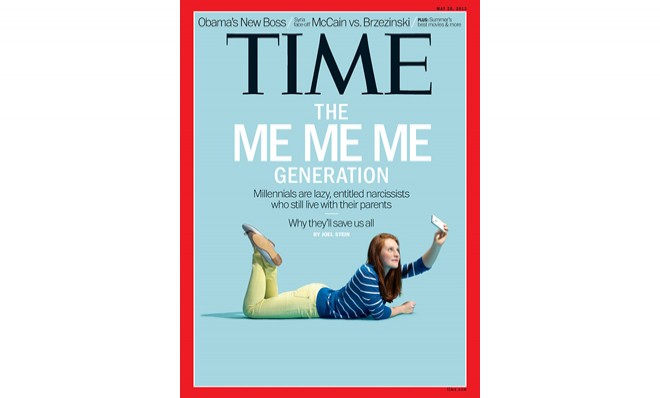
In an effort to not seem as irrelevant as it has indeed become, Time’s current cover features a young woman lounging with her Smartphone in hand and the headline:

THE ME ME ME GENERATION.  Millennials are lazy, entitled narcissists who still live with their parents.

Wow.  Just…wow.   Tabloid anyone?

Of course, there is the rejoinder underneath all that type that the editors obviously think is their get out of jail free card:  Why they’ll save us all.

This sort of reminds me of the old journalism joke that went around one of the first newsrooms I worked at.  A reporter decides to get revenge on a powerful person he doesn’t like and asks the person:  I hear you beat your wife, care to comment?  The person, let’s call him Joe Smith, replies:  “I never did such a thing.  That’s not true!”  The reporter takes notes, goes back and writes a story which reads: “Joe Smith denied beating his wife today amid accusations that he did indeed…”

Point being, you don’t get to plant an unflattering provocative photo with two thirds of an insult inserted underneath it, knowing full well that you are doing so, and then claim a mantle of respectability by adding a line at the bottom that perhaps disclaims everything you just said and did.  It’s sort of like the school bully who slams into you into the locker in junior high and then sheepishly says,  “Oh, sorry, did that hurt?  I didn’t mean it.”

No matter.  The Millenials will be laughing, texting, blogging (though not exclusively) and running the world long after Time Magazine’s print edition is gone.  Which, checking my own Smartphone, could be any minute.

Behind the Candleabra

Sparkle motion

Sparkle motion

Billed by some as the story of the tempestuous 6 year relationship between Liberace and his much younger lover Scott Thorson – played by Michael Douglas and Matt Damon respectively.  But as you watch, a question arises, among oh so many things in this HBO Film – WHY????????????????

Yes, I saw it.  It is VERY accurate to the times, especially that 1977-1983 gay old time in Los Angeles, Palm Springs and Las Vegas.  How do I know?  Because — I was there.

However, of all the involving, multi-layered, fascinating stories of that period, especially in the entertainment world and elsewhere, one can’t help with finally coming up with yet one more question — WHY????????????????

I suppose part of it is the excess of the sequins, the feathers, the bejeweled pianos and an inside seat to, yes…what’s the behind all those candlebras on Lee’s pianos.

But let’s face it – the big curiosity is:

Do Michael and Matt really….do IT?

The Answer: Yes, more than you want to see.  (And more than you want to know).

I actually saw the real Liberace (onstage, not in person) and he was not only a hoot but a helluva piano player.  And faaabulously excessive.  But only part of his life was filmed here – the very last part – and it appears to be for all the wrong reasons.  It’s old lechy, gay guy as oddity.  A perverse uh…love story?  Well, sort of.  Except the real, most interesting story was the man’s entire life and how he got that way.  Not just the creepy, lechy part Mr. Douglas and Mr. Damon (both quite good in their roles, especially Mr. Damon) will publicly blitz across cable television in two weeks for all the world to see with the help of A-list director Steven Soderbergh and A-list screenwriter Richard LaGravenese.

Watching their candleabra burn is sort of like being invited to a dinner party at Wolfgang Puck’s house and choosing only to eat the dessert.  Tasty but lots of empty calories because you didn’t indulge in the whole meal when you know you should have.

And speaking of whole meals – there is The Great Gatsby of film excess, Baz Luhrmann and his new 3-D film.  But for this I am this week only handing you over to my editor and partner in crime on notesfromachair – Holly Van Buren.  Holly will from time to time be weighing in on all things pop culture because a. she is half my age and way, way hipper than I am. b. She saw it this weekend and I didn’t and c. there will be some new and exciting additions to notesfromachair in the coming months, most notably a monthly feature I like to call:

HOLLY’S CORNER  (take it away, Holly —)

copil_pedepsit_la_colt

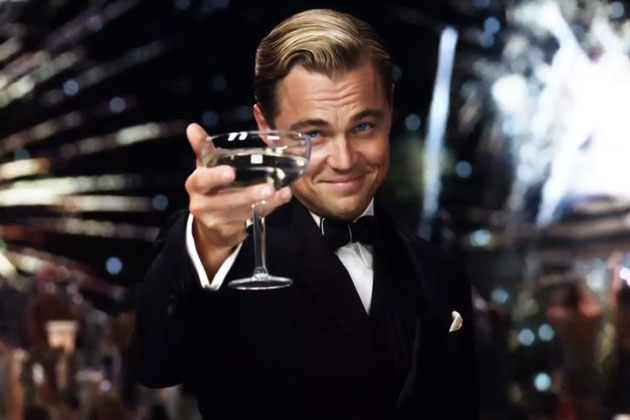
Many thanks to the chair for letting me take a seat this week (certainly not the last of my terrible puns, be warned).  Never was there a more appropriate topic to discuss Baz Luhrmann’s most recent flick than that of excess. I, for one, agree with the Chair on the idea that excess is only good when it’s above and beyond anything you would expect… and I can’t argue that Luhrmann’s version of F. Scott Fitzgerald’s famously-read-in-high-school novel didn’t heed that call (and then add some), but like the characters ponder in the story itself re: Gatsby’s lavish, over the top affairs, “what’s it all for”?

I think I'll need that drink

I think I’ll need that drink

I decided to see the film in 3D because, frankly, I was curious. Typically I opt to see 3D films in standard 2D, partly because I wear glasses and having to wear multiple pairs of glasses at once makes me feel like a Kentucky Derby jockey, but also because I find that it completely takes me out of the story. Too much is focused on the effects, and little on the affect (trademark pending on that gem). I thought I’d give it a try on old Gatsby because at its very core it is indeed a tale of excess and I was hoping (praying) that the symbolism would quite literally jump out at me. Unfortunately, this was not the case.

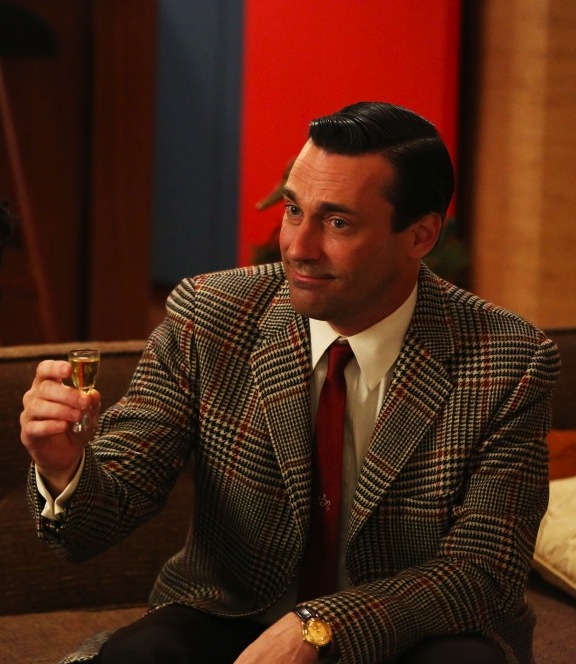
Instead, I found myself watching The Great Green Screen, a tale of 1920s New York City by way of Narnia. So separated from their surroundings, the characters might as well have been on Pandora, romping around with James Cameron’s Na’vi tribe.  And yes, you could argue that the version of the 1920s created in the film is pure fantasy (complete with arguably one of the best (and anachronistic) hip hop/pop soundtracks I’ve heard in years), thus making my Avatar correlation totally legit. But lest we forget the key difference here: NYC IS A REAL PLACE! A real, breathing, heavily photographed and documented metropolis. Give me the glimmer, the glamour and the art deco to the hilt, but don’t give me some cheap green screen facsimile that injects absolutely zero atmosphere or emotional connection to the characters. If Baz wanted my head spinning after one of Gatsby’s great parties, a job well done – but unfortunately for all the wrong reasons.  If I was in the mood for a visual hangover, I’d much rather watch Don Draper drink his new turtleneck-clad business partner under the table.

Shameless Jon Hamm photo? I'll drink to that!

Shameless Jon Hamm photo? I’ll drink to that!

Excess and indulgence might seem like equal partners, but unfortunately, this film may have overdosed on both, leaving me with the same feeling as when I eat an entire sleeve of Mallomars – queasy and full of regret. Perhaps what they say is true, the novel is simply unfilmable… but let’s revisit that when the next version comes out in 2034.