
With all the know-it-alls in the world, it might be refreshing to once in a while hear someone publicly say, “I have no idea.” That is, instead of yourself when you’re at some personal or professional impasse.
This is quite different than you or someone else stating it in the plural: “I have no ideas.” Meaning, you are convinced you are unproductive, uncreative or on the whole not very smart compared to all of the other “geniuses” working in the entertainment business today, or even yesterday (we’ll get to the past later).
Isn’t that something? Add just the letter “s” and you totally change the meaning from potentially a good, honest admission of not knowing to a bad, self-destructive and totally fictional one of stupidity and personal self-flagellation. Clever to state it this way, huh? Well, that was my idea.
Though I obviously won’t be a network comedy writer any time soon, I did once have the idea that I could be and started my professional writing career in Hollywood (after writing one sensitive dramatic screenplay that got me the attention of a few agents and nothing more). I was writing spec episodes of “Cheers,” “Kate and Allie,” “The Tortellis” and “The Golden Girls.” I don’t really know why. But I guess because nothing was happening and I figured, hey, I’m a funny guy, maybe this is what I should really be doing rather than trying to inflict my outdated POV on the powers-that-be, whoever they are. Anyway, I got a writing partner for the big jokes, had lots of pitch/idea meetings with real shows and eventually was actually sort of promised a writing assignment for an episode of Lucille Ball’s short-lived sitcom comeback “Life With Lucy”. But the studio and the audience had other ideas, the most prominent of which was the admission of having no idea why that show was on the air in the first place. Lucy’s comeback was quickly cancelled after several episodes and I lost my patience trying to break into an insanity I clearly didn’t have the stomach, or perhaps the right ability for (I mean, Lucy got cancelled!).

Oy.
Then I had yet another idea that it might be best for me to follow my heart and write the sensitive dramas I had always wanted to write in the first place despite it being the age of either “Die Hard” and/or “The Cosby Show.” A good idea? A bad idea? Well, who was I to ask at the time since I didn’t seem to be having anything but the latter? However, it turned out to be not just good but an excellent decision, because I would very soon get yet another idea for a script based on my very dysfunctional and sort of sad childhood that I had the notion (neé idea) would at least prove to people (and perhaps myself) that I could, indeed write. That turned into the best idea yet. It became not only my first huge sale but a feature film with a bunch of big names at the time and opened the many doors for listeners who now wanted me to talk about past, present and future ideas. Listeners I never dreamed I would talk to in this or any other lifetime. I mean, I had no idea….
I bring this up now because it’s the beginning of a new semester for me as a writing professor and I find myself in the privileged seat of listening to countless ideas from many, many young people who, with varying degrees of confidence, are volunteering (or being forced through requirements of a class) to share ideas of their own. Imagine – you listen and listen in a class and finally there comes the point where you are required to put up or shut up. Scary? Abso(fuckin)lutely. But it shouldn’t be. You have to expose a bit of yourself or your thought process or your point of view and, whether you like it or not, have to go with your own original idea not only in class but in life – that is if you really want to get anywhere worth going.
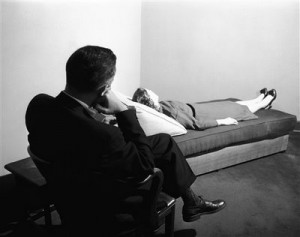
Roughly the layout of my classroom...
Saying “I have no ideas” is not an option. In fact, it’s the one thing that’s frowned upon in my classes and workshops because it’s a lie. I mean, everyone has an idea. And many more than one. The key is – do you have the courage to state it?? (Note: It’s the same type of courage it takes to honestly answer a question with: “I have no idea” because it at least puts you on the path to figuring something out).
An idea is a seedling, a notion or a thought. It can be inspiring, confusing, derivative, offensive or even just plain odd. But, and this is the biggie, is only an idea. If you look at the dictionary definition of the word, as I love to do in times like these, you will see that an IDEA is defined as:

Meaning, who the heck knows what is going to happen with it. It’s at its core just a notion that has come into existence as a by-product of using your brain. And unless you are actually brain dead (which means you couldn’t walk, talk, much less take a class of any kind), you have probably thousands of ideas in any given day.
I’m amazed at how creative, unusual or just plain cool even the oddest of my students’ ideas are or could be, even when they are mere thoughts, conceptions or lead balloons that don’t seem to be going over with anyone else. That’s because I know in my heart of hearts, and through decades of more than a few broken hearts of my own, that today’s lead balloon can easily become tomorrow’s gold standard. Or could lead us to the road for one. The question is, how do you convince students (or adults) or the man on the street of this? And, as one gets older, how do you remember this lesson each time you read any part of your own new or old work? Or engage in general in life?
The answer, as it often is, is to go back to the truth – in this case, your (the) definition. An idea is a thought. How can it be bad in itself? And since thoughts are produced by your mind ad infinitum, that’s like saying that one of your sneezes is bad. How do you quantify a good sneeze? (Doctors, please don’t write in). Or smile? Or, as long as we’re choosing random bodily functions, an orgasm? Re the latter, “My worst one was right on the money,” as Woody Allen once so wisely said. Amen.
I try to remember this when talking to the students and working on my own ideas. I also try to remember that it’s not entirely bad, when faced with a new challenge of how to execute one of my or their many thoughts, to state, “I have no idea.” Actually, it’s pretty liberating. Because if you have no idea then anything you say can’t be mistaken for one and thus absolves you from stupidity, inferiority or a factory of dumb thoughts. It does, however, open the door to explore something or a series of things that might lead to one or two notions worth listening to. Contrary to what I was like in my younger years, I try to say this “I have no idea” thing at least once or twice a week, and sometimes more often than that when I’m teaching. It’s amazing how many doors it opens up – how many random thoughts young (and even older) people can have when you admit to them you are as confused as they might be or feel they are (you mean I’m not the only one?). It also builds potential bridges because more than a few people imagine that if someone in a position of authority (or friendship) doesn’t know, maybe that one tiny thing they suddenly (or earlier) thought to say might not be so bad either.
(Note: I have to confess that each time I watch the news these days, I long to have at least one person in public life say the “I have no idea” thing and invite others to brainstorm with them).
Martin Scorsese, who has spent a 50-year career in movies, and has had and continues to have an endless supply of ideas, comes to mind right now.

Drinking game alert!
I watched “Hugo” for the second time and did a bit of a favorable turnaround on the film. On first view I almost gave up on his ideas because the set up of the film was so long. But on second view, knowing the set up, I was excited about all the ideas I knew were to come because, bottom line, “Hugo” is a film about a forgotten pioneering artist who had endless ideas in uncharted territory of a then very new art – moviemaking. Riffing on the true story of Georges Méliès – and in a fictional world unlike/like our own where a pioneering master of early films had his work destroyed through age, money and lack of appreciation by the business people – “Hugo” wants to shout at the world that ideas and the people who are bold enough to create them are to be valued when everyone has turned their back on anything new in favor of just living an unimaginative life. Actually, more than valued. Treasured. And preserved.
But at one time each idea Méliès, the real or fictional one, had was a notion, a thought, a concept. Much in the same way as one of our own in 2012.
I suspect it’s because Scorsese is a veteran “idea” and “I have no idea” man of storytelling that he has managed this long a career. He knows you have to develop countless ideas (with more writers than you can shake a stick at, not that I recommend stick shaking towards my brethren or myself) than movies they make (but usually it’s a 1-10 ratio). Mr. Scorsese – a name that usually evokes genuflection in film and TV classes – is willing to jump off the net. And see where it all goes, knowing full well it might, in all reality, go nowhere. But knowing also that it might, just very might, be his next great, or at least, new, or cool, idea. As they say in life and in old Hollywood adages: “You learn from the best.”



 notes from a chair