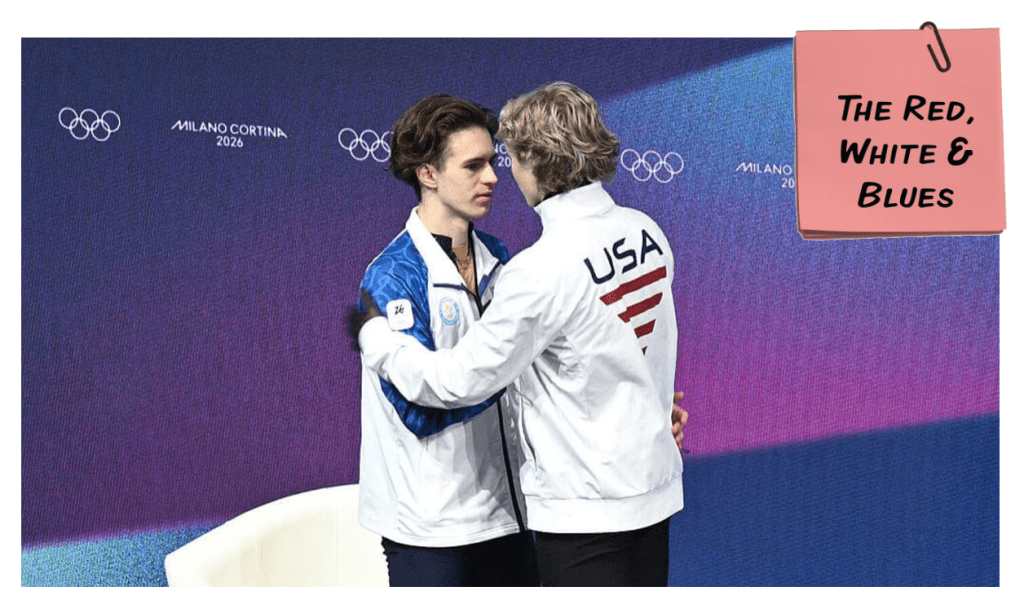
If you want to see any real life examples of the above, look no further than the actions of one gold medal-winning American ice skater at this year’s winter Olympics.
Because you won’t find them in the turdly pronouncements from the occupant-in-chief of our freshly minted gold gilded White House.
Twenty-one year old Ilia Malinin, dubbed the skating world’s Quad God, aka the first athlete on Earth to rotate four and a half times in the air on ice skates dozens and dozens of times competitively, helped lead the Americans to an overall team gold medal in ice skating.
That was because when asked at the last minute he agreed to skate his long-form solo program as a key component in the American team event, and save them from an anticipated loss, rather than rest up and wait for his solo competition a handful of days later where he could simply have employed it all for his own glory.

The result was young Mr. Malinin helped win Gold for the team but was unable to duplicate that same stellar performance in his Olympic solo debut, where he stumbled badly and landed in eight place.
Yet unlike what we hear daily from the Oval Office of Outrage there were no excuses, no blame game (Note: Unless blaming himself counts) and no accusation of a rigged voting system that gave an unfair advantage to his opponents.
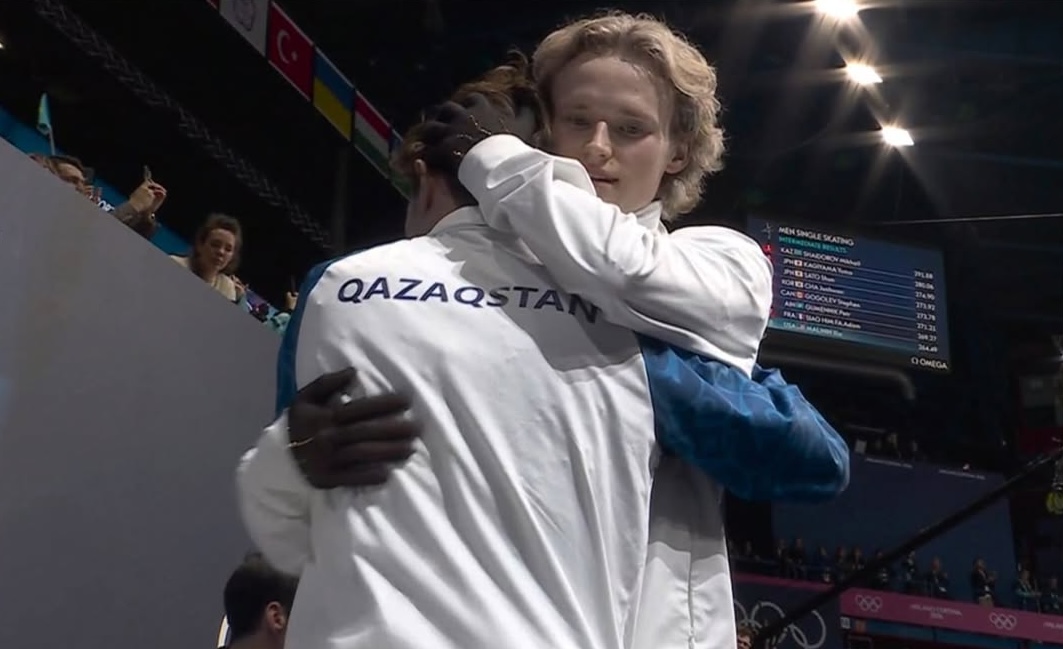
In fact, after hearing his disappointing score the first thing the much favored 21-year-old did was to march directly over to his competitor and now new gold medal winner, Mikhail Shaidorov of Kazakhstan, and embrace him in a long hug.
Where he could be heard telling him: You deserve it.

It’s been quite a long time since we’ve heard any sort of admission of loss, much less an admission of blame, from the upper echelons of the American political or business elite.
Somehow it’s become okay for a small group of uber billionaires, led by the tech bro class of MAGA friendly contributors like Elon Musk, Mark Zuckerberg, Jeff Bezos and Larry Ellison, to hold more wealth than the bottom 50% of American households – aka over 170 million people.

Not to begrudge anyone the fruits of their labor (Note: Fruits that are enabled through the perks of living in a democracy where they are free to think of the rest of us as mere nuisance shareholders) but that means they control more than 31% of the wealth in the entire U.S, a wealth that has increased 21% (Note: AKA $8.1 billion) in the year since the Golden King of MAGA took office.
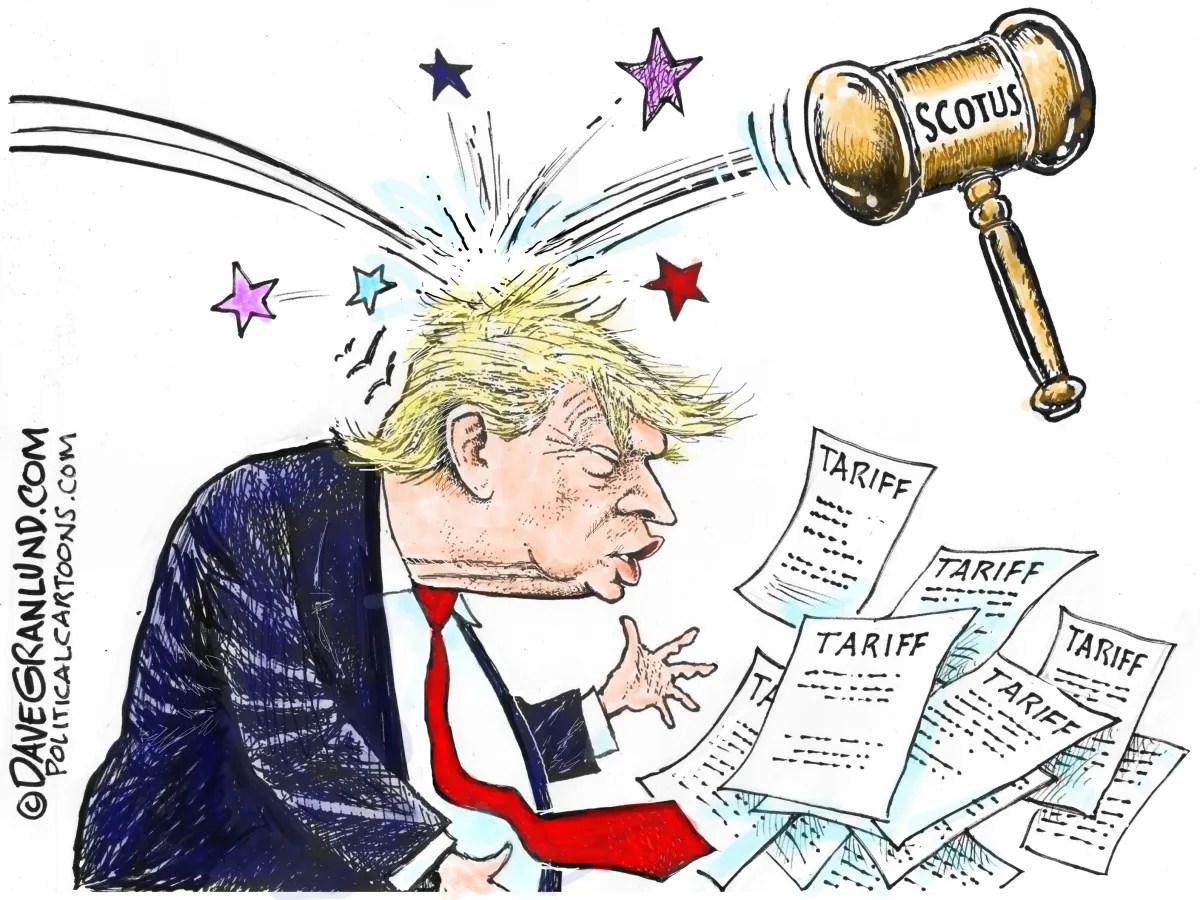
Speaking of which, when the massive tariffs he was doling out randomly, and at his whimsy, to countries all over the world, were deemed constitutionally illegal this week in a rare rebuke to him from the far right leaning majority in the U.S. Supreme Court, there were no hugs.
Nor was there any respect from him for the rules, decorum and otherwise, or the judges.

Instead, there were proclamations that instead of tariffing specific countries he would try and stretch his presidential powers and go around the ruling by issuing a blanket 15% world tariff to everyone country in the world (Note: The latter edict can last only 150 days, unless extended by Congress).
But most notably there were also the insults and invectives from the soon-to-be 80-year-old squatter in our White House Executive Residence, which he has become known for.
Calling the judges who voted against his wishes “a disgrace to their families” and “an embarrassment to the nation.” Accusing them of being “very unpatriotic and disloyal to our constitution.”

And this was a continuance of an invective of insults he tweeted in the months running up to the decision. Speaking in November of those who opposed his tariff policies, which have cost the average American household $1000-$1300 on imported goods last year, he wrote on his personal platform, Truth Social:
Evil, American hating Forces are fighting us at the United States Supreme Court…. Pray to God that our Nine Justices will show great wisdom, and do the right thing for America!
Well, I suppose you could say that is an exceptional statement because when you use exceptional as an adjective it means unusual or not typical. Also, if you consider the entirety of American presidents, that statement is both not typical AND unusual.

But American exceptionalism, thought to be first coined by the French historian Alexis de Tocqueville in relation to the U.S, was originally centered around the idea that this country was unique because it was not centered on a ruling class or elite but rather aspired to rights of freedom and liberty for all laid out in its founding documents, the Declaration of Independence and the Constitution.
Yet as time and centuries evolved the term began to evolve into something it was never intended to mean. Something that does not at all apply to what made our country exceptional, nor what others deemed exceptional about it to begin with.

From the dreadful 1980s until now, the phrase was somehow co-opted, nee appropriated, by American right wing politicians and leading members of the modern Republican Party as a way to own patriotism and assert their position as THE keepers of MORALITY in the U.S.
America is THE most freedom-loving, THE least corrupt and THE great example of the moral high ground the world has ever seen. Especially those Americans who are church-going, conservative, and married with children.
Case closed. And no arguments. Especially these days.

That was the mantra as I all too clearly heard it as far back as the Reagan era and its only become more cemented in stone as the decades have worn on.
In fact, former Republican Speaker of the House Newt Gingrich, a guy who cheated on his first and second wives, the latter when she was suffering from a brain tumor, even wrote a book in 2012 called, A Nation Like No Other: Why American Exceptionalism Matters, where among other things he argues that one of the reasons we’re so great is our rights are granted by God, not the government.
This would, of course, be news to the Founding Fathers, who purposely left direct references to God out of the U.S. Constitution in order to enshrine the country as one with a secular, non-theocratic government.

And news to France, which gifted the Statue of Liberty to the country with the greatest melting pot of immigration in the world – the United States – in 1884.
And to poet Emma Lazarus, who was asked at a fundraising event that year to donate a poem that could be engraved on its base. At the time she had been working to aid refugees in New York who had fled antisemitic pogroms in Eastern Europe (Note: My ancestors). So she came up with the sonnet, The New Colossus, and the now famous lines that have welcomed all immigrants who passed through the New York Harbor by boat, or symbolically by other means, for the last 150 years.
Give me your tired, your poor, Your huddled masses yearning to breathe free, The wretched refuse of your teeming shore. Send these, the homeless, tempest-tost to me, I lift my lamp beside the golden door!
One shudders at the misplaced irony of those words in our current calendar year.
And in the previous one.
Though not so coincidentally, Ilia Malinin’s parents are both immigrants Yup. Skating couple Tatiana Malinina and Roman Skorniakov, from Uzbekistan and Russia, respectively. They were world class competitors who immigrated to the U.S. for a better life and became coaches at an elite ice skating club in Virginia.
It is there that Ilia, a first generation American was born, educated and learned not only his sport but sportsmanship that made him a world class leader of team America. Not only in the moments he won but for the way he acted when not EVERYTHING went his way.
That was not only exceptional but the true definition of American exceptionalism.
Or it should be.
Watch ILIA MALININ cinch gold here





 notes from a chair