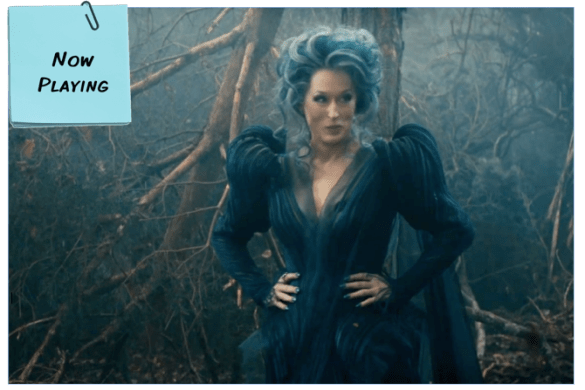
Gettin’ Woodsy with Meryl

Screen Shot 2014-12-21 at 8.25.02 AM

Anytime you get to spend a few hours with Meryl Streep and Tracy Ullman is a good time and I was fortunate to spend three or more with them some days ago during a screening of the new film musical Into the Woods and the q & a session afterwards.

Yes, most of the rest of the cast were also onstage as were the director, writer, producer, costume designer, cinematographer and, well, others. There were also 1000 plus people seated in the audience with me. But the movie, those two actors and okay, pretty much everyone else either live or on digital associated with the film, were delightfully entertaining and articulate. Will this movie change the world? No. But what really will at this point?

When the real news is a small country hacks into a major studio’s computer system and successfully prevents the release of a film it assumes will be offensive in spite of the fact that it hasn’t even seen it yet, well – what movie or story about one can top that? And what can take your mind off of it? Certainly not the batch of depressing, heady, dramatic or just plain bland and/or derivative holiday films in store for us this season.

We get it.. enough already

We get it.. enough already

I’m extremely grateful and privileged to be part of two Hollywood unions – not least of all for the fact that right around this time of year I receive free DVDs of most of the these movies to screen at my leisure. But between Unbroken, Still Alice, Nightcrawler, Foxcatcher, A Most Violent Year and that much needed remake of Annie, can it get any creepier, heavier, or just plain sad? (Note: You decide which adjective fits which film). And Merry Christmas and Happy Chanukah to you too.
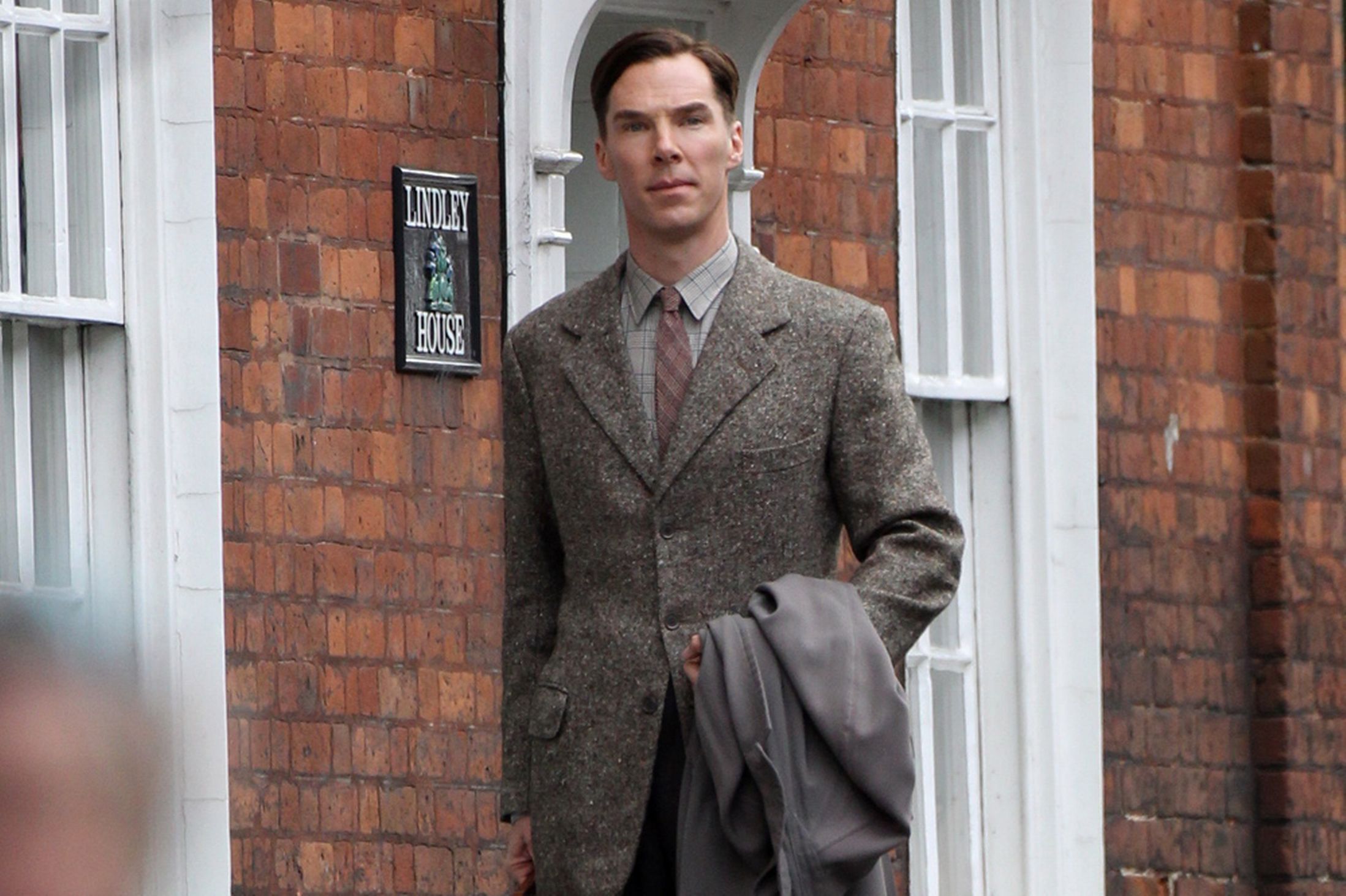
Oh and I'm just a ball of laughs...

Oh and I’m just a barrel of laughs…

I tend to watch mostly heavy, sad or heady movies and I certainly gravitate towards writing them. But there are moments when even I need a break. There will be hell to pay from my much more “serious” friends, colleagues and family members but Into the Woods gives you just that break without making you feel as if you’ve just spent 120 plus minutes in a game of Candy land where unearned life lessons abound around scenes, dialogue and characters designed to primarily service the product placements that surrounds them. Yes, we’re talking about the Annie trailer here.

So let’s continue with Into the Woods.

Stephen Sondheim and James Lapine wrote the Broadway musical 27 years ago as an homage to fairy tales while simultaneously taking to task the happily ever after endings they traffic in. The movie, like the stage show, is deceptively escapist except eventually it’s not. If one allows oneself to be transported by it there are earned lessons that resonate in a post-9/11 world. That’s an entire universe away from NBC’s recent much ballyhooed live production of Peter Pan – a stunt idea that felt merely like a moneymaking, ratings grabbing event.   This Into the Woods movie feels like it has a reason for being – and therefore a reason to be seen. When will the powers-that-be learn? Maybe never. But they’re looking to make money, not to complete thoughts.
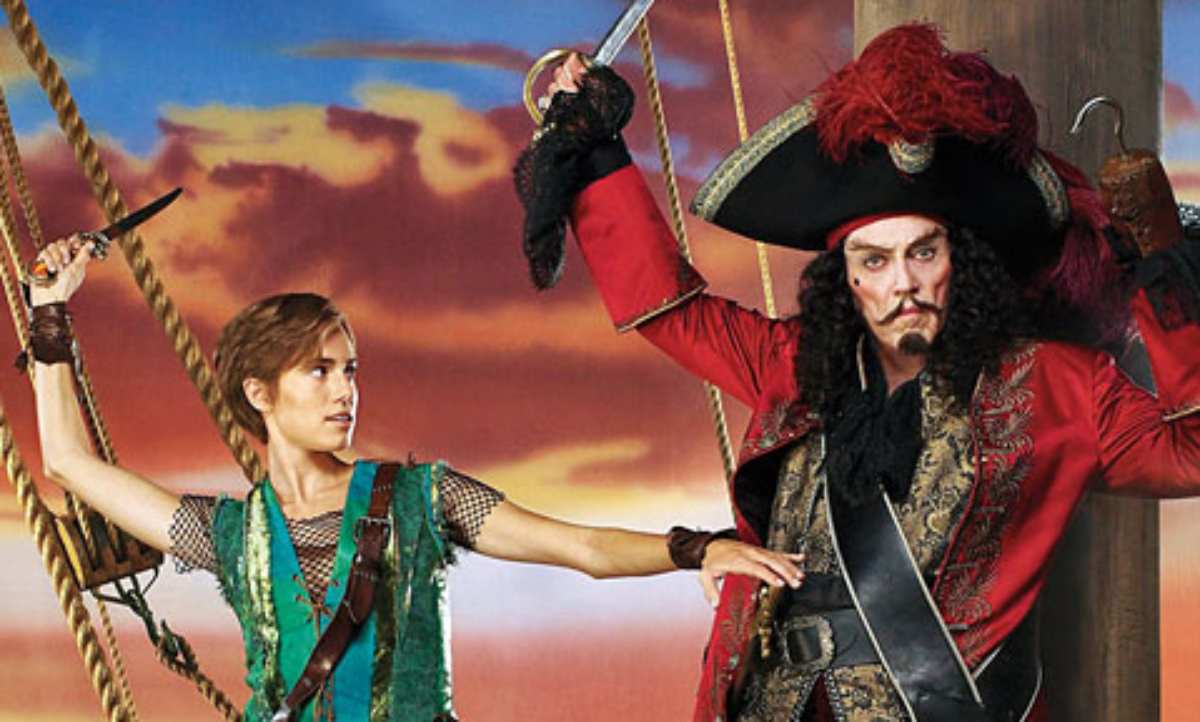
still processing this...

still processing this…

Don’t go in with too raised expectations. This is simply a good, old-fashioned musical that looks great and feels just weighty enough without hitting you squarely over the head with its message continuously. It diverts you for two hours (not three – yay!!!) into a strange magical alternate universe where not everything works out as you hope but as it seems meant to – much the way it occurs 90% of the time in life. (Note: The latter statistic is based solely on my own many decades of living, breathing and seeing countless outcomes and, trust me, if anything I’m underestimating the number).

Speaking of numbers, at one point during the Woods talk back it occurred to me there were a dozen members of cast and crew onstage at the Samuel Goldwyn Theatre in Beverly Hills throwing out occasional pearls of wisdom about being a working cast and crew member on the top tier of the entertainment industry. Shouldn’t other artists, or aspiring artists, or even the rest of us movie gossips at least get to hear the best of what they had to say rather than having to hunt it down via some website where, given all the Internet traffic this week, we will be buffered into oblivion and quit before it even starts?
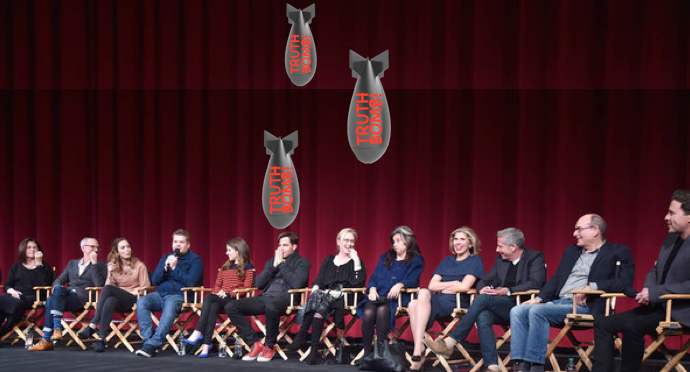
the cast about to drop some truth bombs...

the cast about to drop some truth bombs…

So — this goes out to everyone. You may or may not like the film (Hint: Drop the sour face, or as my Aunt Nan used to say – the farbissina punim – and at least give it a chance) but you will certainly find value in at least one or two of their thoughts. And if you don’t, you should. Yes, should.

TOP 10 WORDS OF INTO THE WOODS Q&A WISDOM FOR INDUSTRY PROFESSIONALS

1. If a really talented person suggests your next project to you, it would be wise to listen. Director Rob Marshall scored big with his 2002 movie musical version of Chicago and following that level of commercial success many doors open for you. So it was not surprising that a hot director of a movie musical would get to meet with the royalty of musical composers – Stephen Sondheim – and be allowed to review his quite large body of work for the possible adaptation of his next big screen project.

St. Stephen

St. Stephen

But rather than push for a preconceived idea of what he wanted to do, Mr. Marshall instead chose to engage in an extended discussion of Sondheim’s canon and what he hoped to do creatively in the future. According to the director, Into the Woods was actually Sondheim’s choice of the show of his that would best suit Mr. Marshall. I would’ve been happy to do any of them, the director admitted, but he finally looked at me and said, I think you’re really right for this.

2. You can love doing the kind of job you most assuredly turned down three times before. Meryl Streep plays the gloriously wicked witch at the center of Woods but she didn’t initially want to play it. The actress recalls that the moment she turned 40 years-old she was quickly offered three different witch roles and as a quasi political stance couldn’t see herself being thrown on the casting junk heap because moviemakers were so quick to age a woman of her age out. But having now proven her point many times over, at the age of 65 she realized the opportunity to get to be in a Sondheim musical was just too good to pass up. And yes, she chose to reveal her current age matter-of-factly and quite normally – which was probably the most political act of all.
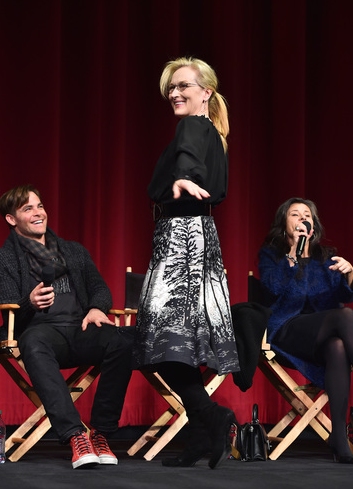
Werk it, gurl!

Werk it, gurl!

3. Inspiration comes from the most unlikely places. The development of big budget films being what they are, it wasn’t until he was watching the ceremonies commemorating the tenth anniversary of 9/11 three years ago that director Rob Marshall was able to finally personalize the themes of Woods. The moment he heard Pres. Obama tell the surviving family members of those who died on that day that you are not alone, he was immediately reminded of the classic Woods song No One is Alone and realized the inherent dangers of the contemporary world can cause life to turn on a dime, just as they do in fairy tales, and that you cannot necessarily save the people you love.  And to the naysayers: No, we’re not saying this movie is a 9/11 musical. Grow up.

4. When you audition, have a little fun. We all audition for jobs but for actors the process is a stressful part of their continuously free-lance lives. So Chris Pine – known more in the movies as Star Trek’s bad boy Capt. Kirk rather than a singing prince, decided that if he had to demonstrate his chops as a crooner he’d rather do Sinatra than attempt Sondheim. That’s why he chose to sing Fly Me To The Moon for his audition. And got the part of what he gleefully describes as a gloriously two-dimensional prince.

Oh but that HAIR!

Oh but that HAIR!

5. Don’t be thrown by what others say or even imply about you. Anna Kendrick, an Academy Award nominee for Up in the Air and the second youngest person to ever be nominated for a Tony Award, was a bit taken aback prior to filming. That was because wherever she went people would stop her and feel compelled to say, I think it’s so interesting that you got cast as Cinderella.

Turning to the q&a audience the actress asked: Now what does that fck-ng mean? Well, we all know what that means. But really, who fck-ig cares what they think?
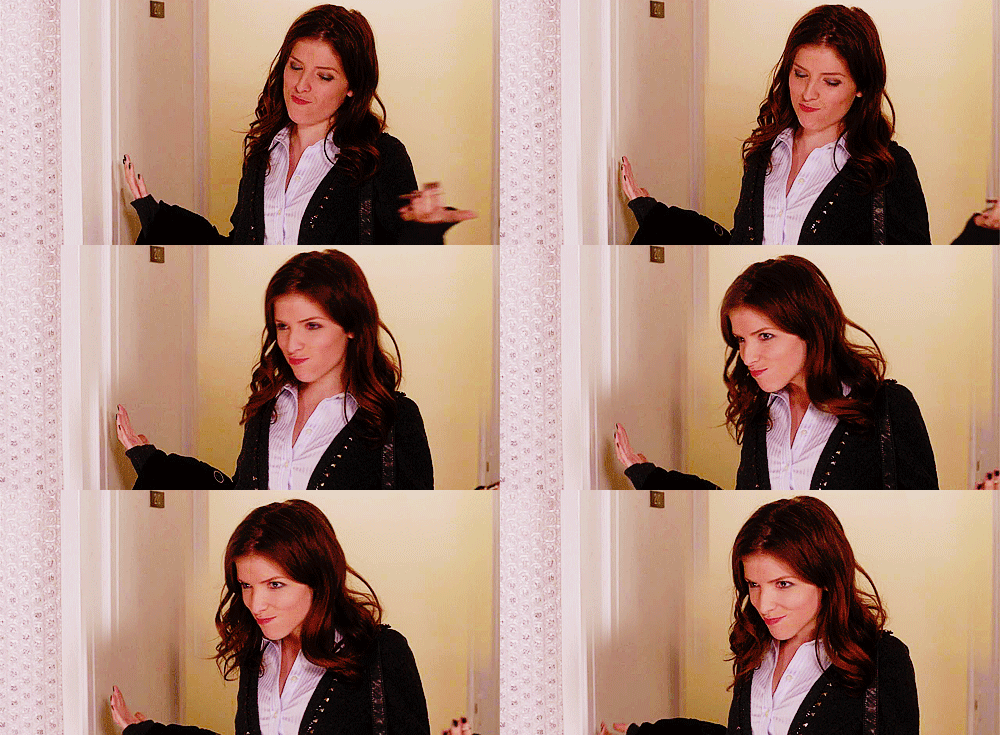
Hate on haters

Hate on haters

6. Do your best even when you are told there is no chance you will get the job. James Corden, the very funny British comic actor who plays the Baker, did a staged reading of the Woods screenplay in New York but was told from the outset that it would in no way ensure or even make likely he would be cast in the film. Not being delusional Corden told the screening audience he gave the reading his best anyway because he was happy to even be included and knew movie parts like that have to go to someone famous. But he was so memorable that day that Marshall promised to go to bat for him and eventually landed him the part. As for Corden, he’ll be a lot more famous in 2015 when he replaces Craig Ferguson as the host of CBS’s Late Late Show.

7. You can have a career AND a personal life. The day Emily Blunt was cast as The Baker’s Wife she found out she was pregnant with her first child. This news was quite ironic since the entire story arc for her character is that she is a woman who cannot have a child but desperately wants one. The actress assumed her pregnancy would likely cost her the role but when the filmmakers found out they decided to proceed anyway and hide her behind trees and behind and to the side of James Corden. By the time filming ended she was seven and a half months pregnant and a lot more challenging to hide – a fact that Corden suggests we check out for ourselves with a remote control and the pause button when we’re watching the movie on DVD.
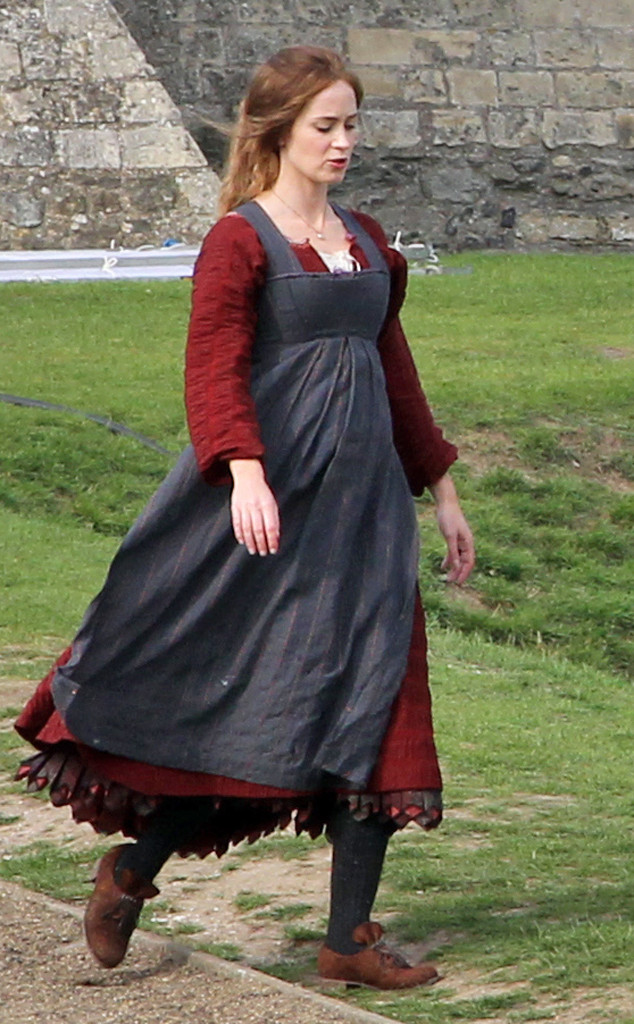
Fairy Tale Maternity Style

Fairy Tale Maternity Style

8. Writers are inherently cynical. Sondheim collaborator and multiple Tony Award winner James Lapine was tasked with adapting the book of his stage musical into a screenplay. This meant the challenging work of dropping the key conceit of the storybook characters presented directly addressing the audience from the stage and figuring out a way to re-dramatize the action for moviegoers. But the writer was not particularly overwhelmed by the challenge because he is convinced that nothing will ever happen with any project he ever works on, particularly for the movies. I am not sure why but somehow that was immensely reassuring to me. #YouAreNotAlone.

9. Always Cast Meryl Streep First. Granted this is a no-brainer but it is worth noting that once it was decided that Woods would be a film, the first person Rob Marshall approached was M.S. When she said yes, the doors to every actor in the world flung wide open. She also knew all of her lines on the very first day of rehearsal. See, cause that’s also part of the job.

She can do no wrong

She can do no wrong

10. Try to work with your friends. Of all the people onstage Tracy Ullman and Meryl Streep were clearly having the best time. They insulted each other, giggled together and seemed genuinely happy to be there. In fact, Ullman had to force Streep to face front when the compliments began flowing for her performance – at one point physically turning Streep’s body and chair back towards the audience so her friend could be properly appreciated.

Their friendship dates back some 30 years to another film (can you guess which one without looking at IMDB? Hint: It’s good and…). And in the course of the evening one couldn’t help but wonder if yet one more could be in their future. When producer Marc Platt noted that there was indeed a movie version of the hit musical Wicked in the works both Ullman and Streep wildly motioning that they would love to play the younger versions of Glinda and The Wicked Witch in the Wizard of Oz prequel for the big screen.

Right. I know. They were joking. But is it any more ridiculous than hiring ____________________   and ______________________ .

Feel free to fill in the blanks.

And Happy Holidays.

http://www.youtube.com/watch?v=IEkKIlGDjm8

Spinning

It's all about how you see it.

It’s all about how you see it.

There is an old adage that the more specific you get, the more universal your message will be.  That’s why when Pres. Obama pointed out the 102 year old African American woman in the audience at his State of the Union speech who had to wait six hours in line to vote in Florida in the presidential election in November, his shout out was not corny but resonant to so many people. We’d heard stories like this for more than a century of minorities, especially women, discouraged or deterred from voting, but what made this one especially affecting was that several new details had been added.  It was not just an older Black woman but it was a 102 year old woman.  It was not a story of civil rights-like voter suppression from 50, 100 or even 150 yeas ago.  It happened within the LAST year.  

That’s also why the gun violence/“they deserve a vote” section of the speech also worked.  We’ve all seem victims of gun violence from both sides – the shooter and the shooted and the respective families of each.  But there was yet another new twist on it this time.  Due to the proliferation of assault weapons used in so many of these mass shootings, firearms which blast up to 30 bullets in five seconds, many more people die in record time.  But because any one of these individual blood fests – Columbine, Aurora, Virginia Tech – can cover a greater number of people and acreage, more than one or two humans these days also manage to escape or survive and then, live to testify.  Whether it was the young man in the Colorado movie theatre who has become an anti-gun activist despite the bullet fragments still lodged in his body or the fighting spirit of Congresswoman Gabby Giffords and her ability to resume life after a near fatal brain injury, it’s really just simple math: the greater the area and number of victims you’re dealing with the more likely the percentages that something will go wrong and someone will live to speak out against you.   Once again – old story, but with a new slant.  Of course, there was the classroom of 20 dead children and 5 adults at the Sandy Hook elementary school where everyone did die, proving there are exceptions to every rule.  But let’s face it, the lack of survivors and extremely young median age of everyone in that 2012 mass shooting only made that tragedy even more unique and caused it to stand out given the norm of the  “aughts” decade of where we now all reside.

Putting your own “contemporary” spin on an old story is something we all do either on the page or in real life, whether we know it or not.  Actually, it’s impossible not to do it if the yarn takes place in or is being told through the lens of someone who lives today.  But often times we feel quite insecure about it – as if we’re unoriginal or ripping off some other tale of woe or happiness that we particularly liked either consciously or subconsciously.  And if me writing about the notion that no story is new except for the personal spin you put on it sounds as if you’ve heard it before – well, you probably have.  But perhaps not put exactly this way.  See, addressing an issue in an opinion piece is no different than creating a story from ground zero to tell your friends, or writing it down in short story, play, screenplay or book form for your readers.  Or verbally addressing a crowd, or talking to Matt, Diane, Oprah, Katie, Jay, Dave, Jerry Springer or the nation or the world in an interview.  A version of every story in the world has been offered in some form ad nausea.  You might swear it’s new because you’ve never heard it, or the people who were around the last time it was told are long gone, but pretty much someone or something has done it prior.  And perhaps better (though certainly different) than the version you’re hearing or seeing now.  And if you need any proof of that just look at the various movie versions of Annie Hall, When Harry Met Sally and 500 Days of Summer after watching Two for the Road and Scenes from A Marriage and see if you don’t see what I mean.

It's even hard for your face to be original!

Uh… Who’s that girl?

Perhaps this seems corny or obvious even though I don’t mean it to be.  Yet that’s a normal reaction in any discussion of archetypal stories, archetypal behavior or archetypes in general, since the very essence of the word is defined as:

“A symbol, term, statement or pattern of behavior – a prototype upon which others are copied, patterned, or emulated.”

In other words, any discussion of cliché become cliché because a. it is literally about cliché and b. because it has been done and talked about so much before.

The most famous of these thoughts were advanced from Joseph Campbell’s “The Hero with a Thousand Faces,” which rethought some of the work of the famed psychiatric mind of Carl Jung, both of whose works were re-adapted by Christopher Vogler for, of all things, screenwriters in the movie business two decades ago in what is now considered a bit of a movie industry how-to masterwork entitled The Hero’s Journey.

And here for your viewing pleasure...

And here for your viewing pleasure… click for closer view

THJ was quite popular among studio executives and adult storytellers of all ages in Hollywood as it helped crystallize a “formula” for storytelling (and who in the entertainment biz doesn’t want that all knowing formula) that had been written about for decades and probably centuries but in different language.  Simply put, it states that if you’re trying to weave a compelling tale you FOREMOST must have in your tale certain kinds of characters that will compel fellow humans to listen, buy movie tickets or read about.  These include: a hero, a villain, a mentor, a love interest, a best friend, a jokester and so on and so on…. i.e., recognizable types human beings have been known to respond to en mass  (Note: it was no coincidence Vogler first conceived his “adaptation” of these theories in a seven page film studio memo while an employee working at — Disney)

We can bellyache all we want about this – “oh please, it’s the same old thing over and over; that book was from the nineties, this isn’t new; I’m tired, I need a drink, and why am I reading about something that was popular 20 years ago when we know they didn’t have the web back then and, let’s face it, computers have changed everything”  – but the dirty little truth is that when utilized judiciously (and sometimes blatantly) it always works.   Even a discussion of it often evokes enough controversy to warrant validation because the fact is I didn’t twist anyone’s arm to read this but for better or worse, most of you are still reading (I think).  And – if you are still reading – it means you’re curious to know more about old stories, archetypes, THJ and why they work (or at least, what I am going to say about it) – which in itself lifts it very essence above cliché and thus reinforces the following point:

When you or anyone else puts your own individual SPIN on the familiar it immediately CEASES TO BE SUCH.  And will in that moment can be seen in some NEW WAY.

One foot in front of the other..

One foot in front of the other..

This might be an obvious intellectual insight but it is shocking to me in how many moments of real life so many of us (myself included) don’t truly believe it.

This became apparent to me earlier this week when I decided that a new piece of writing I’ve made a bunch of notes on for myself wasn’t really worth doing because I felt like I didn’t have anything new to add to the subject despite pages of observations to the contrary.   But lucky for me, after teaching several days ago to a group of many young yet like-minded writers, I’m not sure I still feel this way.

Standing, sitting and sometimes pacing before 40 different students in four different classes I had to listen to any number of story outlines, ideas, detailed treatments and verbal pitches for 40 separate original story ideas for either film or television and noticed something sort of funny.  What was universally the biggest fear of each creator of these many wonderful, uh, narratives, were self-doubting thoughts like – “I know this has been done before,” “right now this is incredibly cheesy,” “I know/don’t want this to sound(s) like —- (fill in film) or an episode of — (fill in TV show from the past) or, my favorite, “This is a bad rip-off of —- but I can’t think of anything else, and maybe, really, I shouldn’t do this at all and just think of something else.  If I even can.”

Truly, anything old can be new again.

Truly, anything old can be new again.

After all these years I couldn’t believe how another old adage is true – you reflect what you give off.  Meaning the question in my own mind became – was my own self-defeatist attitude so unoriginal that I was literally seeing it among a group of people in their early twenties who had not been writing even half as long as I have? And then I wondered – “jees, is this kind of thing contagious and am I infecting them with this type of thought unwittingly?  Or is this something they came to on their own.  Something that, dare I say it, is archetypal?”

Well, here’s the good news:  I don’t think I’m the Typhoid Mary of writing teachers.   But like Jung and many of his ilk who studied along with him realized – there are certain archetypes, specific kinds of behavior that are endemic to all humans.    And since most writers and would-be writers are human (notice I said most – there are a few exceptions who shall go nameless – Okay, Shakespeare, Proust), it is not unusual they would share these exact feelings of self-doubt, albeit exhibit them all in their own individually unique forms of expression.  Put another way:  When you put your own individual spin on a behavioral cliché, it ALSO ceases to be a cliché.

Accepting all this as a given, it feels not out of line to occasionally ask oneself this cliché question – How do I become the hero of my own story?  I think the answer is to go by the above advice and let whatever we dare to hang out – knowing there are no guarantees but knowing there are also no rewards if we don’t try to spin out something.

Find yourself

Find yourself

Brenda Euland, writer extraordinaire said in her wise and seminal book If You Want to Write, that no one will tell a story exactly the way that YOU tell it.  She hung out with Louise Bryant and John Reed and a bunch of other New York Bohemians almost a century ago but spent most of her later life back in her native Minnesota where she was known mostly famously as a prescient writing teacher who periodically gets rediscovered over the decades, usually after the latest “how to” fad passes.   Lest you think her personal story of a bohemian who hangs out with famous people in N.Y. doesn’t get famous herself, goes home with her tail between her legs, and spends the rest of her days handing out advice as a teacher to help people do the very thing she didn’t manage, sounds familiar (nee archetypal) – it really isn’t.  Ms. Euland was, indeed, a talented writer.  But fame and recognition is a funny thing.   Despite all evidences to the contrary, some people become known for, or grow into, that which they had never planned at the outset, fame or not.

Other times, they seemed destined for greatness, or at least worldwide recognition at the outset and nothing and no one can stop them.  Watch Beyonce’s HBO Special, Beyonce: Life is But a Dream, and determine for yourself whether you think this is fair or even true.  Then consider the work of filmmaker Michael Bay and do the same.  Then perhaps the oeuvre of our greatest living playwright of the last century, Edward Albee, now represented on Broadway in a yet another great revival of his classic play, Who’s Afraid of Virginia Woolf?, and note it was not this play but several of those that most of us don’t know because they were not well-received that are his own personal favorites.  Of all the artists I know of, Albee manages to be the least cliché, the least archetypal, in work or in his life.  Yet even he admits to feeling about his plays, especially those that have trouble on the outside, like a parent who wants to protect the most vulnerable of their children from the vagaries of a cold, cruel world.  Talk about cliché.  Talk about archetype.  Yet re Albee – never was.  Never will Be.

The SugarMan himself

The SugarMan himself

Then finally – watch a documentary called Searching For Sugar Man – a real life story no one could have written for fear of being not cliché but ridiculous.  It tells the tale of a singer named Rodriguez, a brilliant 1970s songwriter-balladeer who seemed destined for stardom a la Bob Dylan, according to industry experts, at even one listen, but whose two outstanding albums sold quite poorly in reality.  Meaning they did zilch.  Consequently, Rodriguez then disappeared from public sight in the US, yet someone got hold of his album in South Africa and from the mid-seventies on he became a star on the magnitude of Elvis, especially since it was believed that one night on stage he grew so despondent at the acoustics and audience response to his music that he blew his brains out in front of a live crowd.

There was one problem with this folktale, which endured for a decade and a half – unchallenged – it wasn’t true.  Until someone got the idea to research the details of what happened to him and the real Rodriguez was found outside of Detroit – having spent life as a poor day laborer with no knowledge of his stardom overseas, but still in possession of the ability to sing, write and perform in almost the same manner he had decades ago.  Plus – and this is the best part – he was also found to be content with the financially difficult life he had and the children he had raised despite the stardom and financial bonanzas that eluded him.  Though he enjoys making music still, he doesn’t do it all the time, gives away money from his occasional South African tours to his family and friends, and just continues on.  His story is a true original.  A real life non-cliche because it twists the story trope of the talented artist who is never accepted and lives penniless for the rest of his days in bitterness or drug/alcohol abuse into a real life happy ending that seems unbelievable but can’t be because it’s true.   One wonders – how many others like that are there out there and who is going to tell them?