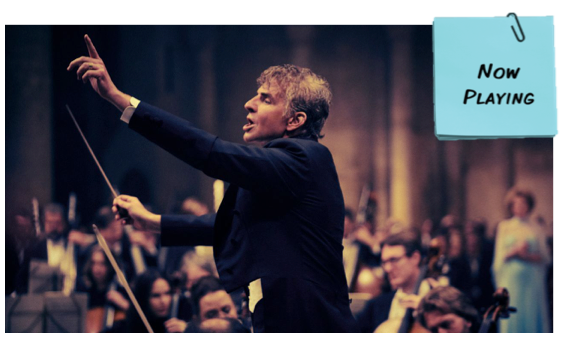
Conduct Becoming

I spent my birthday this weekend with Bradley Cooper and it was more than I could have hoped for. 

Oooo Chairy, tell me more

He spoke after the screening of Maestro, a film he directed, co-wrote and stars in which I will happily tell everyone is original, riveting and at times even brilliant.

There, I said, it – the B word.  It no longer means Bradley or Bernstein.  And it’s not a word that I throw around lightly or, really, very much at all.

Brilliant literally means radiant, excellent or intelligent and the film is alternately all of those three, sometimes even at once.

You may quote me.

Moira gets it

Maestro is a sort of biopic of famed conductor, composer, musician and teacher Leonard Bernstein, told through the lens of his long and complicated marriage to actress Felicia Montealegre.  It was a marriage of two people who were turned on by creativity and creativity energy, which are not necessarily the same thing. 

To say the pair loved each other would not be an over-exaggeration.  But, as the movie so ably demonstrates, the dynamism of people like Bernstein, whose personalities and creativity and egos burn so bright on everything and everyone they touch becomes crushing, to both themselves and the people around them. 

The real Mr. and Mrs. Bernstein

Somewhere down the line, in a partnership or a marriage, the latter being the ultimate partnership, someone cedes center stage publicly and privately and, in this case, it was the unique and charismatic Ms. Montealegre.  

Until it wasn’t.

I’m listening…

The strength of the film is that as riveting as the unexpected magical realism of the first half is – aka the rise of Bernstein the show biz “star” and the his courtship of love and life – it’s the second half that gives the movie it’s weight.  That happens because of the storytelling ability of Cooper and co-writer Josh Singer and the qualities and actions of Ms. Montealegre herself, which are brought sharply into focus by the depth of the performances of Carey Mulligan and Cooper and the dynamic shifts they employ as a flesh and blood, and even occasionally pretentious, couple onscreen.

It’s an unexpected and truly original mix of drama, comedy and subtexts all played out to a series of carefully chosen musical cues of some of the composer’s best-known and perhaps not as well-known music.

Plus.. you know… Mr. Handsome

So much so that once Cooper and his co-writer, Josh Singer, were introduced at the Writers Guild Theatre for a talk back post-screening, they received a spontaneous and quite unexpected standing ovation.

Side Note:  The Writers Guild Theatre audience is a notoriously TOUGH crowd.  I’ve been going to these screening for years and there is seldom, if ever, a standing O.  As the recent WGA strike demonstrated, scribes DO NOT give it up for just anyone or anything.  Nor are we a crowd of star f-ckers.   As a group, writers are singularly unimpressed with movie stars in person unless it’s one-on-one and we think they might like something we wrote.  But in an en masse group directly after a screening, the work has to really put out, as they say, in order to receive anything more than professional, polite, or even mildly enthusiastic applause. 

We all did our best Meryl

In the case of Maestro, I think it’s the mere risk taking and audacity the film traffics in that the crowd admired.  And once its two writers started answering questions from writer-director/moderator Rian Johnson (Note: Yeah him, you could tell he liked it too), it became apparent why. 

The pair explained they spent almost five years writing the screenplay, immersed in research and determined to dig out some sort of narrative structure to tell a pretty unwieldy story.  They also clocked interminable hours figuring out how to relate the composer’s vast music library to what was going on in the moments of his life they chose to dramatize; or chose to leave out when it wasn’t pertinent.  Until finally, it miraculously became some sort of seamless, inevitable and occasionally tough to take story with a relatable beginning, middle and end.

It takes a room of ink-stained wretches (Note: That would be EVERYONE in the WGA) to know just how nearly impossible it is to get all of the above right on paper, much less in a final edited film.

Watch it Chairy

In fact, at one point Singer, who won an Oscar in 2015 for writing Spotlight, verbalized what was likely on every writer’s mind.   None of that would have been possible were he not co-writing and conceiving all of this with the person who would be directing the script AND starring as the title character.  Or had both Steven Spielberg and Martin Scorsese not been producers.

Nevertheless, the rest of us wretches can still dream, can’t we?

I mean…sure it could happen!

There is one more element to Maestro that allows it to soar in a way that movies during the period Bernstein and his crowd existed in never could. 

His homosexuality — or, I guess, bisexuality.  It’s hard to tell what’s what for men of certain tastes who were young adults in the forties, fifties and early sixties.

Yeah, there have been a lot of films with gay characters in the last thirty years.  But, well, not ALL that many compared to how many stories there are.  The fact that Maestro makes Bernstein’s continuous and clearly insatiable hookups, relationships or whatever you want to call them with men an integral part of the narrative unlocks an essential element of conflict, compromise, respect and more than a little self-loathing from both members of this couple’s perspectives.

And as a bonus one of them is Matt Bomer!

Their keen awareness yet simultaneous lack of self-awareness when it came to themselves and their partnership occurred in a delicate dance of acceptance and denial that a gay person like myself couldn’t help but feel was at the center of so much of this story.  It likely would not have even been possible to have employed it with so much deliberate casualness in a big budget studio feature as recently as, say, 10 years ago.  You’d have seen it but it would have been skewed or soft-pedaled to one side or the other.  As Maestro portrays Bernstein, it was a major moment, or shall we say a major series of moments, of a major life, which had so many more the film chose NOT to go into.

All of which contributed to earning Leonard Bernstein and this re-telling of his life the title of Maestro, and the movie all of the inevitable praise it so richly deserves.

Okay, now cue the detractors – because certainly they are coming too.

And don’t come back!

But whoever they are, and misguided as I might say they will be, watch it yourself, preferably on a big screen, stay with it, and decide on your own.

As we should all be doing about so many things that matter these days.

Candide Overture – Leonard Bernstein conducting

Seventies Stories

We tell a lot of stories and we tell ourselves A LOT of stories.  Some of them are true but most of them are not entirely true.

Scratch that. 

None of them are entirely true because there is no absolute truth other than we will all die one day.

HAPPY JANUARY!

Resolutions be damned!

It’s better not to obsess about absolute truth or death because, really, what will that get us?  Instead, I’ve found over the years the better strategy is to accept that there are simply basic truths.

Like when you watch a group of many, many hundreds of weaponized people violently storm the Capitol building in Washington, D.C.  on, say, January 6, 2021, shouting they want to hang a US Vice President before he can, in an hour or two, ratify the results of a presidential election they didn’t like, this is, by definition, an insurrection.

That is because insurrection is defined as a violent uprising against an authority or government. 

You tell em, Lizzy!

It is also true because they built a gallows for the hanging, seriously injured and/or caused the death of many police officers AND destroyed many tens of thousands of dollars worth of government property in doing so.

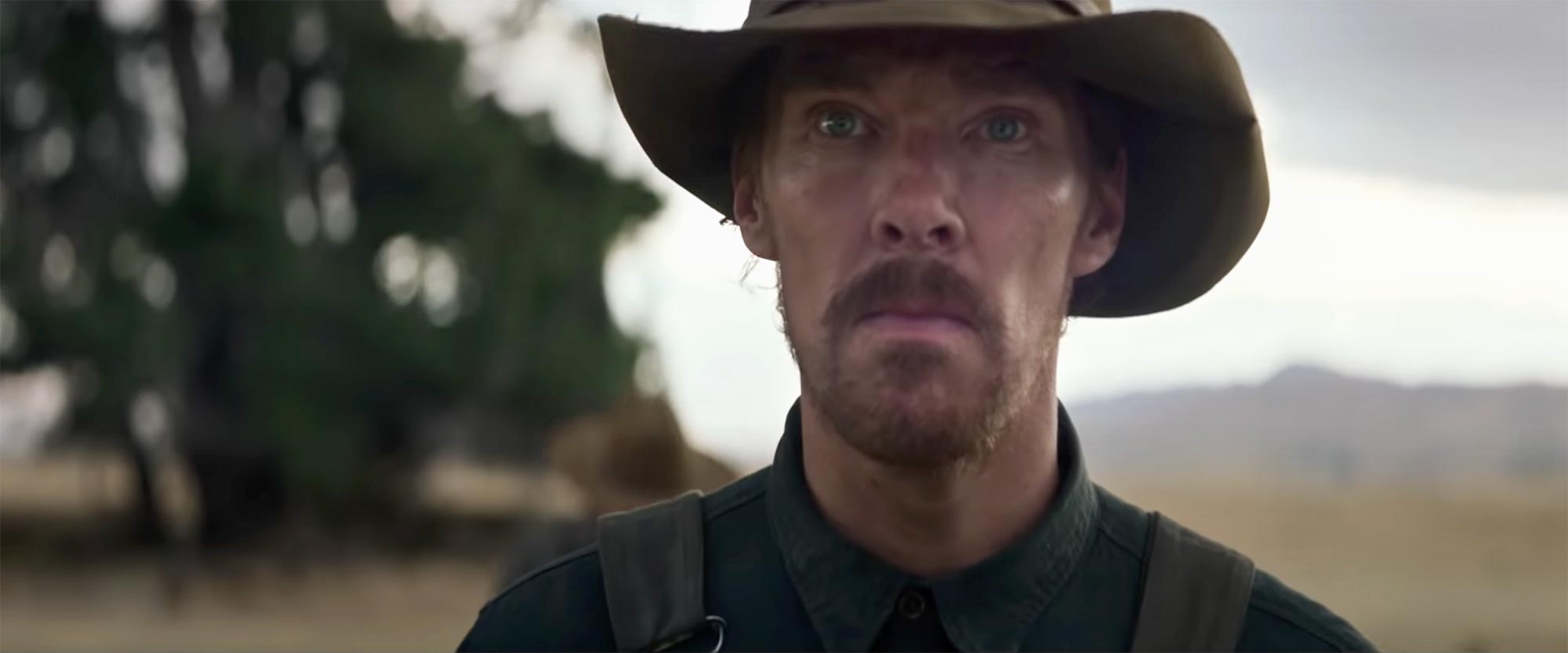
On the other hand, there is no way to categorically proclaim Power of the Dog, a film I found beautiful to look at but vague and strangely homophobic in its vagueness, is the best movie of the year.

Now you might truthfully state it is the best REVIEWED film of the year and, by extension, a front-runner in the Oscar race for best picture and director.  But you can’t prove it is overall THE best by any rational standard.

Unless there is an Oscar for highest cheekbones, nothing is a sure bet!

No opinion of greatness is an absolute truth.  Just as no memory or memory piece is an absolute evocation of what literally happened.

The best we storytellers, which includes all of us (non-writers especially included), can do is capture a basic spirit of what happened and through character, plot and actions, show it to you.

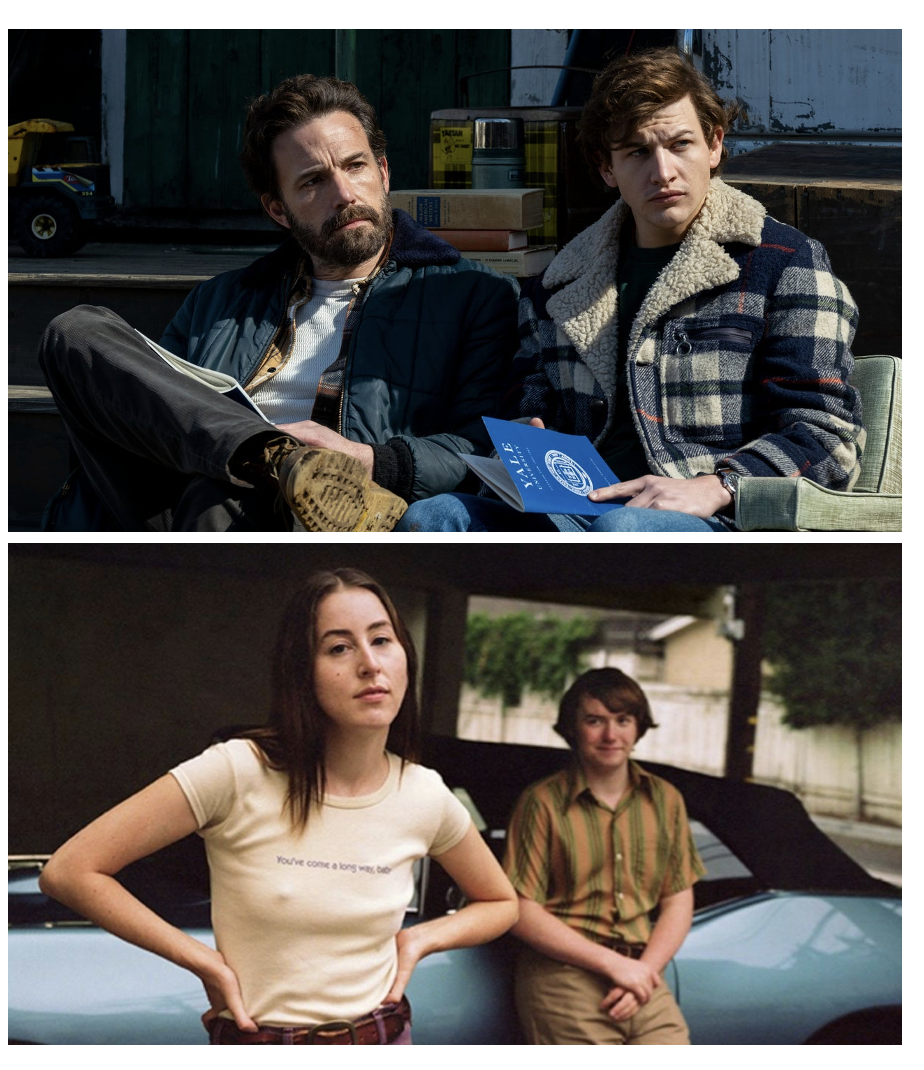
This came to mind this week as I found myself debating the merits and debits of two films set in the decade I basically grew up in – the 1970s.  These would be Licorice Pizza and The Tender Bar.

Let me state at the outset that as a bit of an expert on the seventies, since I was at my most impressionable, observant and un-jaded at the time, both of these movies told the basic truth.

Double serving of 70s realness

This doesn’t mean they were brilliant or Oscar worthy or that YOU should love or like them.  Rather it’s that they were amazingly accurate on the essentials when so many stories about a particular place and time are not but pretend to be.

Most of the 1970s, particularly the first half, were really the tail end of what we now consider the cultural revolution of the 1960s. 

This was a time when everything felt adrift.  If you were coming-of-age at that moment your journey strangely coincided with the country’s journey.  No one knew what the new rules were in sex or sex roles; in politics and social settings; and to quote a 60s/70s expression, in love or war or the whole damned thing.

See: Peggy from Mad Men, Season 7

This made it a quite interesting but confusing time to grow up in.  To tell stories about it is like trying to hold a hyperactive puppy in your hands.  Just when you think you’ve tamed the impossible it wriggles out of your grasp and runs (or circles) in an entirely different direction.

I think this accounts for some of the disparate reaction to both films. 

The very reason I appreciate and enjoyed Licorice Pizza were the very reason four of the other five people watching the movie with me (Note:  Okay, yes, it was a screener and we watched it on Christmas Day at home!) lost interest.

The story of a weird, pseudo romantic relationship between a 15-year-old boy and a 25-year-old girl that unfolded in disjointed episodes where they sold waterbeds, met drug-fueled celebrities like producer Jon Peters and each grappled with their even stranger, ill-defined family lives, just wasn’t really compelling.

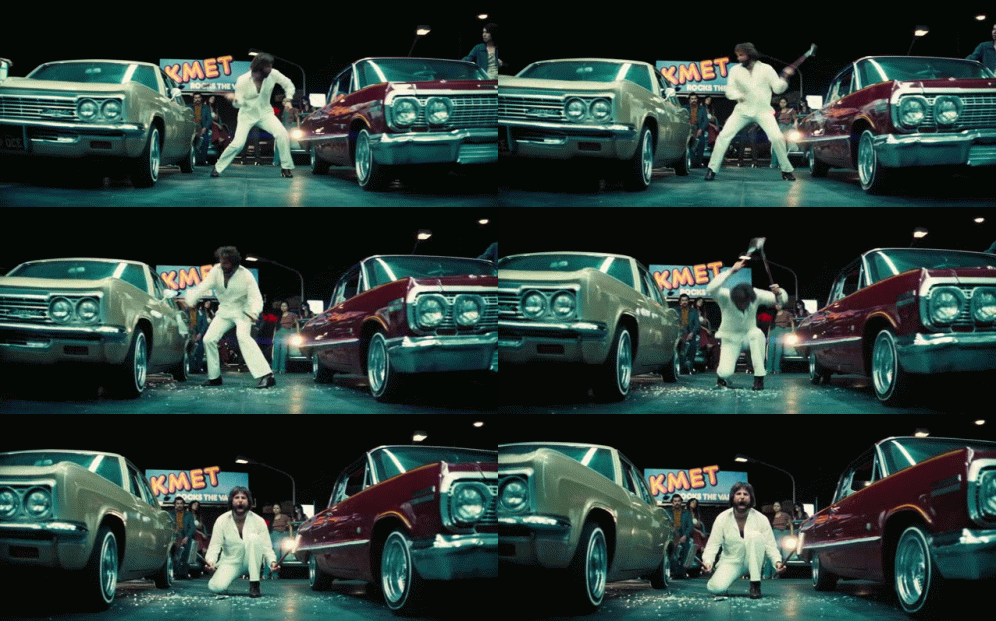
Even an unhinged Bradley Cooper cameo couldn’t do it for them

Yet for me, it was surrealistically accurate because that was what I saw as the story of the seventies.  Everything felt disjointed, and not merely because I was an adolescent.  It was a disjoined time and, in retrospect, a rather lovely one when you consider that the decade that would follow it were the Gordon Gekko-like greed is good eighties.

Sure, the seventies was also the era of Watergate but the eighties brought us Ronald Reagan. 

And let’s just let that sit there for a little while.

A chill just went down my spine

Okay, enough. 

The Tender Bar spends most of its time in the later 1970s and, as a memoir of a young boys’ coming-of-age, has a naturally gauzy quality to it.  But to its credit, it also doesn’t spare us the social reckoning that Licorice Pizza cleverly avoids. 

At this point, there was direct retribution and consequences for underage drinking, hitting women (note: particularly one’s wife) and the snobbism of economic class.  If it feels a little pat, well, at that time, on Long Island, if you were a teenager, it was a little pat.

I only know this because I grew up in Queens (Note: Not quite Long Island, but still….) and saw it play out in real time.  The years prior made it okay for kids to now call out adults in no uncertain terms.  In fact, it even got you support from that group of adults that had made the choice to evolve rather than stand their ground in insurrection to society’s changing norms.

AHEM

I loved The Tender Bar not because it was THE best of any film story but because it so entertainingly and boldly and emotionally told ITS story.  No one thought about being too sentimental because, let’s face it, it was something of an emotional time.

This was my truth of that moment and it happily coincided with what these filmmakers chose to show us.  Which is about the best you can hope to do as a storyteller of any kind.

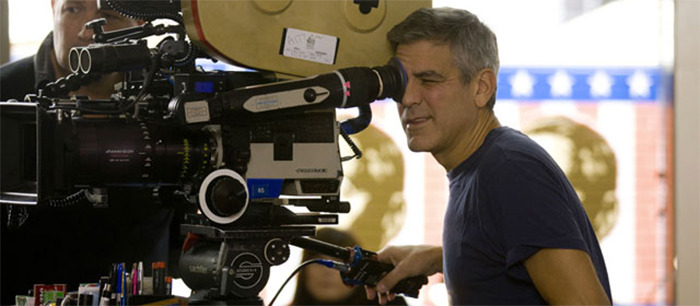
Well done, Georgie.

Where we all get in trouble, especially society, is when we try to twist the basic truth into something patently and grotesquely untrue.

That’s not only unacceptable but it’s strangely un-American.  To this very American art form, that is.

Gordon Lightfoot – “If You Could Read My Mind”