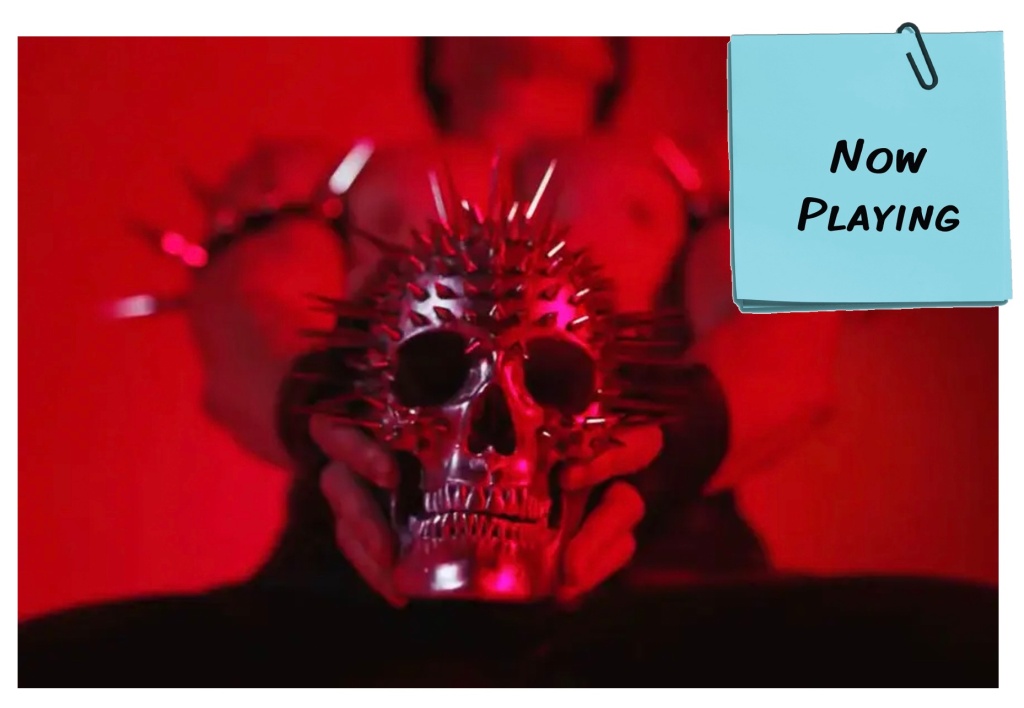
I was watching the first two episodes of season 11 of American Horror Story the other night because:
a. I needed an escape
b. It takes place in gay NYC in 1981, and
c. I figured, how much worse could they make the impending doom of that time than it already was?

Plus, one thing I can always count on this show and Ryan Murphy for is a few cheap thrills.
And let’s face it, these days nothing is cheap and little, if anything, feels thrilling.
Well hell if I can’t say American Horror Story: NYC and Ryan didn’t deliver every cheap, thrilling, tawdry, salacious and ridiculously familiar tidbit with a twist that I could imagine, and then some.
But the problem is, it also made me think.

In an age of alternative facts is it okay to simply mix real events and fictionalized nonsense to the point where even I, an overly analytical gay guy who lived through those times, can barely tell the difference between fact and fiction?
Or, say it isn’t so, is that actually the point???
AHS: NYC is the latest in a whole series of sensationalized TV and movie fact-tion that to varying degrees feasts on real people, real events and even numerous real names and images.
They then swallow them whole and spit them out into a based on a true story but not really dramatization of events and eras that definitely existed but, well, in not exactly the way we’re telling it.

Netflix’s recent humorless (note: and in my mind heartless) feature Blonde, an adaptation of Joyce Carol Oates’ novelistic approach to the barely fictionalized life of Marilyn Monroe (note: real name used) instantly comes to mind. As does the retelling of one view of Princess Diana’s life in last year’s Spencer, not to mention the singular tragedy porn take of director Pablo Larrain’s telling of the brief post-assassination period of Jacqueline Kennedy’s life in 2016’s Jackie.
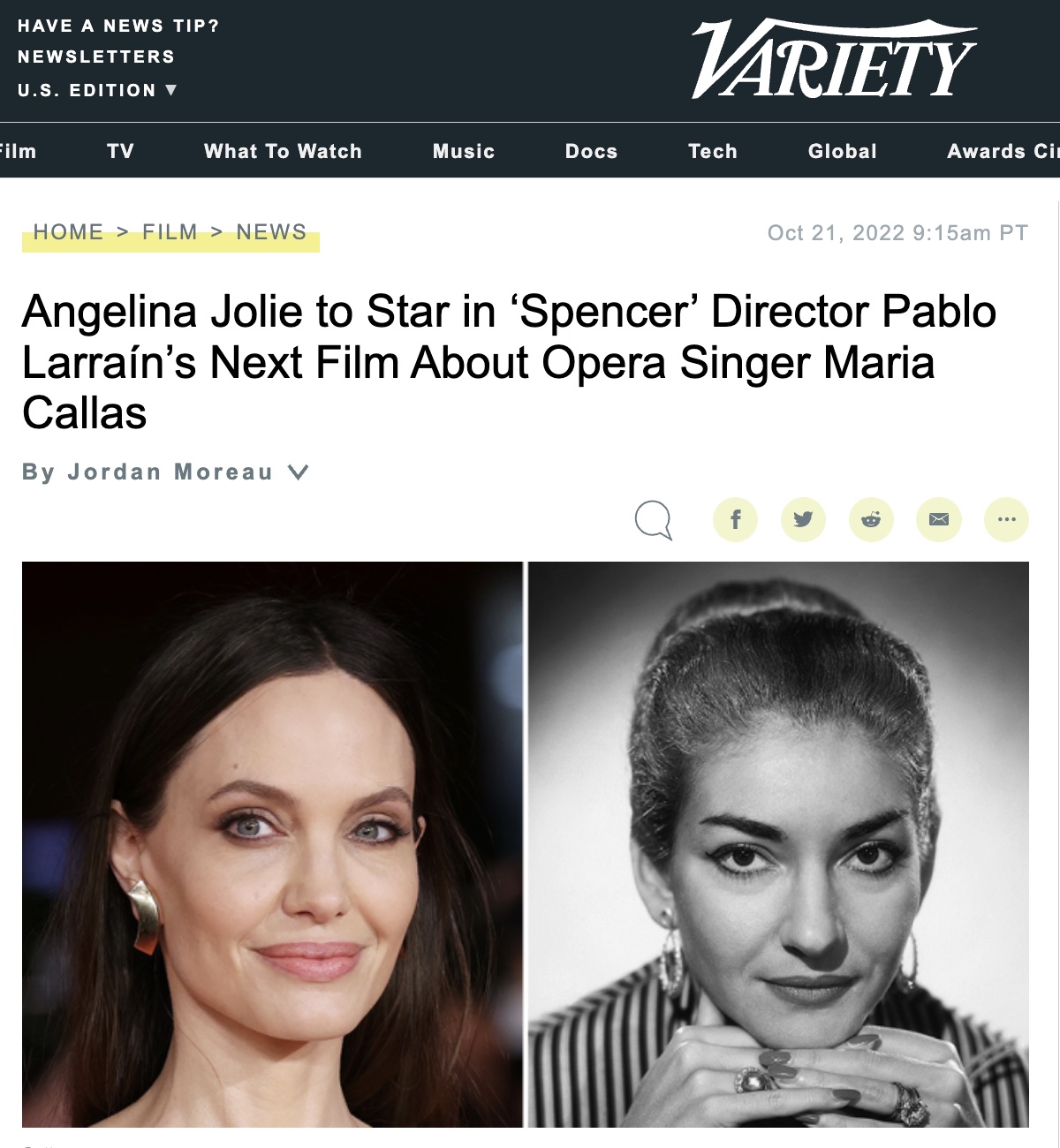
This approach is not limited to the real lives of women, though those stories often prove irresistible fodder since we in the public have loved to fetishize females as somewhat tragic figures who never seem to get either the credit or the love that they deserve.
Full confession: I’m as guilty as any on this score. Me, a guy from the boroughs, spent my teens, twenties and some years beyond feeling so badly for the very young, very from the boroughs and very inexperienced at love Fanny Brice/ Barbra Streisand in Funny Girl.
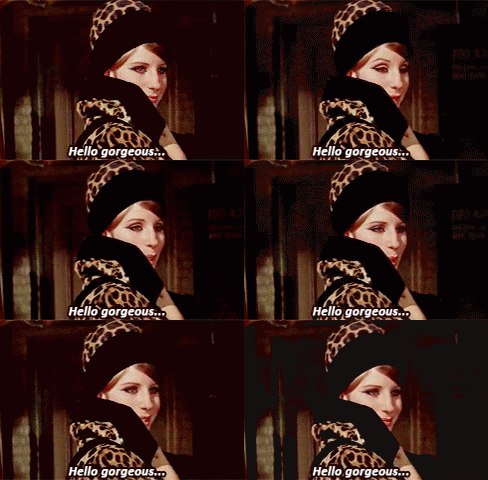
I mean, she marries the handsome, worldly gambler Nick Arnstein because she so purely and desperately loves him and, despite their differences, knows she can make it work as she does everything else on stage. Until she is forced to finally realize the hard way that mere love is not enough to make a relationship work.
It’s compelling to watch versions of the naïve, odd-looking, inexperienced kid from the cheap seats and the handsome, high-living lothario with a heart of gold who falls in love with her that we’ve all heard and read about, right? Except, well, it’s all kind of made up.
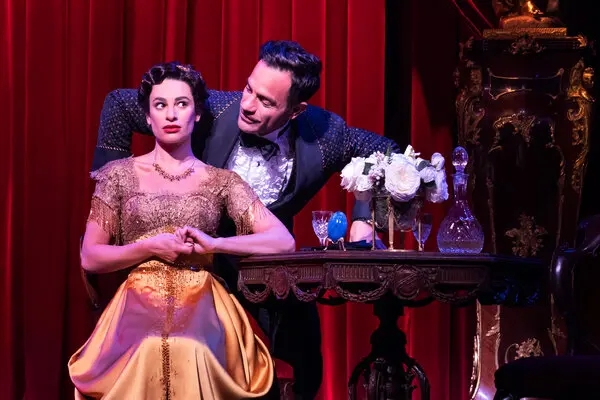
It was only with this new 2022 Broadway iteration of Funny Girl that even I, Mr. Show Biz, found out the real Fanny Brice was married and divorced from her first husband prior to ever meeting Nick-y Arnstein, her second one. Not only that, but she already knew he was an unapologetic racketeer into all kinds of illegal stuff long before she married him and even well after.
But, I mean, how romantic is that story? (Note: I, for one, find it wildly compelling but that is yet another story).
There has been a tradition of plundering through people’s lives in hopes of making some creative and commercial sense of their existences. You clean up a little here, romanticize a little there, condense the timelines when convenient and change the names to protect against any one who can sue you.
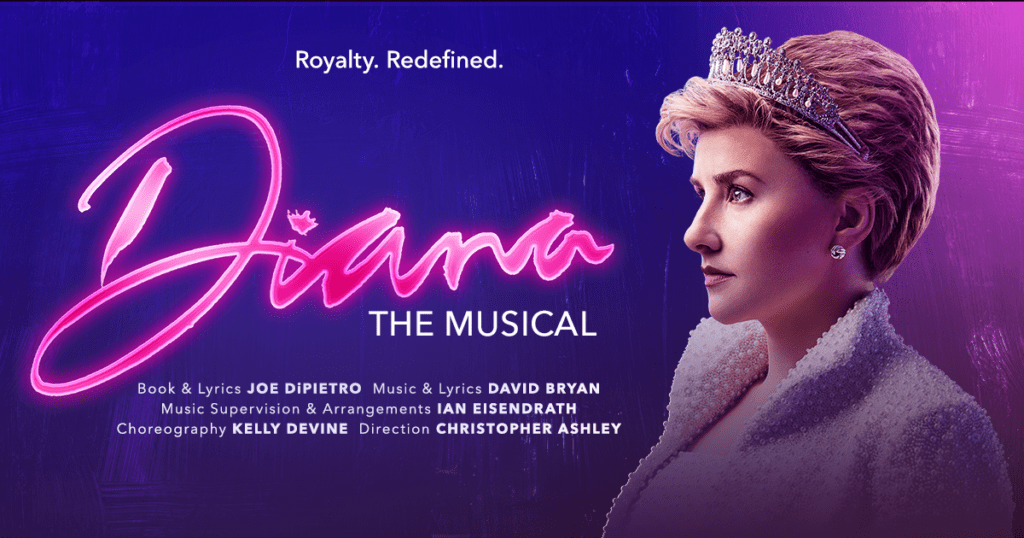
No one really cares that Fanny wasn’t a virgin and that she brazenly married a racketeer if it’ll ruin a better story and make them not appear…sweeter. Just like audiences don’t really want to know that in Gypsy the real life stage mother from hell, the iconic Rose, also had female lovers, one of whom she shot and killed after she dared to make a pass at her daughter Gypsy.
It’s one thing to tidy up specific people’s lives but it’s quite another to pick and choose from many, many lives you are appropriating, not to mention in what ways you are doing it. But well, is it?
The Law and Order franchises have made ripped from the headlines roman a clef a true television art since 1990 and lives on to this day. (Note: Do not say ONE BAD WORD ABOUT MARISKA!). And there is hardly a decade of history in the last 250 years that has not been pilfered for reinvented real-life tales, tall or otherwise.
This is all a lot to consider (or not) while watching the beginning of AIDS, the murderous virus of homophobia, the leather cruising, the excessive drug use and the pilfering of fact and fiction as the subculture of gaydom before it was mainstreamed and/or talked about as portrayed in AHS: NYC.
It’s 1981 and we’re given a bit from the much criticized movie Cruising (1980) when a closeted gay detective played by Looking’s Russell Stovey examines what remains of the body of a handsome, fictionalized, leather-clad airline pilot murdered by the docks.
But the detective is living with an angry, middle-aged out gay journalist, played by renowned out gay director-actor Joe Mantello, a composite of many but sort of a roman a clef of a real-life but much younger out gay journalist at the time, Michaelangelo Signorelli, who became famous for outing famous closeted gays in the late eighties for not doing more to lead the fight against AIDS.

So far, so good and a smart mix of fact and fiction – kind of.
But then it gets kind of murky when we’re introduced to several requisite gay killers, one of whom is stalking our sweet, young, looking-for-love but not necessarily for sex, hero Adam, causing his best friend to go missing and Adam to become desperate.
A series of clues lead him to a bathhouse where he stumbles upon a famous photographer of provocatively naked, rough-looking gay males, but someone who also likes to capture images of flowers. He should really be called Robert Mapplethorpe but isn’t because this isn’t a Fanny Brice-type biopic.
However, it sort of is because the Mapplethorpe type has a rich boyfriend/manager/art patron named Sam, portrayed by Zachary Quinto, as a sleazy, sadist who is a little older and who is clearly based on Mapplethorpe’s real life lover/patron, Sam Wagstaff.
By all accounts, the real Sam was a kind man who loved Mapplethorpe, bought him a building to finance and create his art, and believed in his work when almost no one else did. Nevertheless, his AHS version likes drugging young men, locking them in cages against their will and doing god knows what to them before they meet some looming awful demise. At least by the end of episode two.
There’s also a lot more.
The obviously well-educated ex-military gay psychopath who, with some help, drugs and kidnaps men at gay bars, and then tortures and/or kills them by injecting needles under their fingernails. He and the crimes in the opening are sort of but not exactly based on New York’s notorious real life Last Call Killer as well as some of the murders portrayed in Cruising.
Not to mention the chanteuse at the gay bathhouse played by Patti Lupone, who so far has no dialogue but sings two songs great. The problem is one of them is the haunting Oscar-nominated tune I Am Calling You, from the 1987 film, Bagdad Cafe, and she’s singing it in 1981 to a group of gay men, many of whom are likely to be dead by the time the real version of this song was first written and recorded six years later.
On the other hand, does this matter when you get to see Patti in a Cleopatra/Cher/Victor/Victoria type headpiece, doing an homage to the world’s most well-known, real life gay bathhouse singer, the young Bette Midler of the early 1970s?
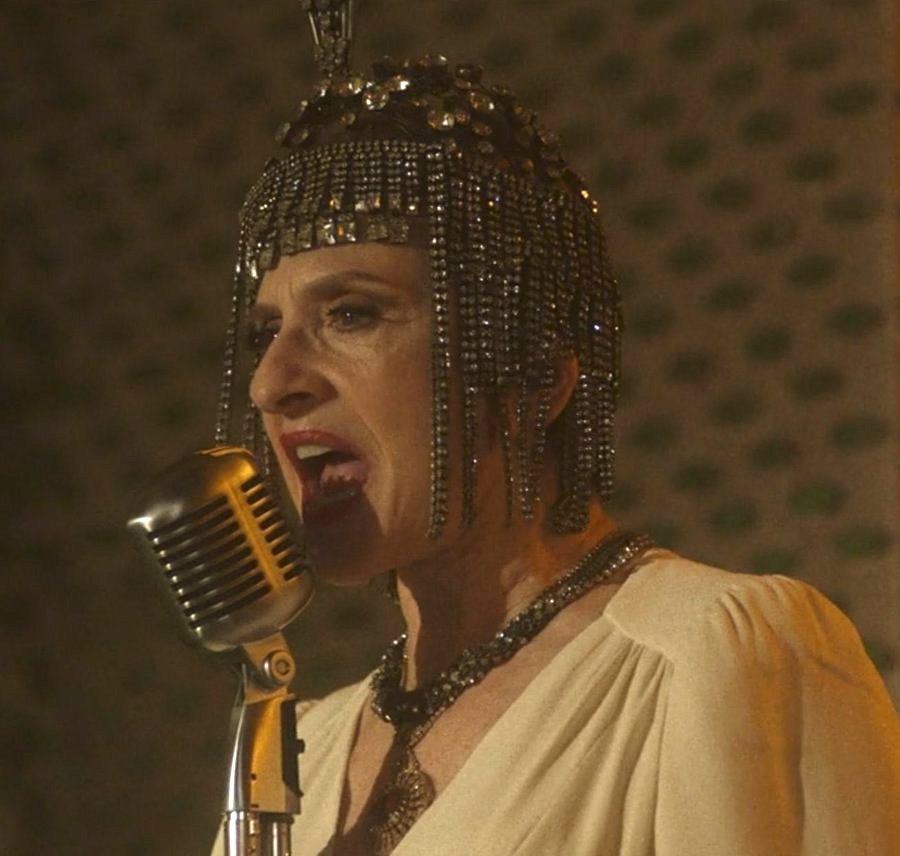
Not to anyone else but me, it seems.
AHS:NYC and the like may not be historically accurate but they don’t have to be. They are real enough, real-ish, which is fine as long as they are believable enough to be moneymaking and/or entertaining.
To use the present vernacular, they provide us infinitely more digestible alternative facts than our actual history.
And then some.
The lovely Kellyanne Conway first coined the oxymoron alternative facts in early 2017 on NBC’s Meet the Press in an effort to defend, or at least massage, the Trump administration’s lies about the number of people at his inauguration.

Days before, at his very first appearance as White House press secretary, Sean “Spicey” Spicer bellowed to a group of disbelieving reporters that President Trump had the largest audience to ever witness an inauguration – PERIOD…!
That easily provable lie and blatantly improvable alternative fact quickly became an embarrassing international meme and butt of many a Saturday Night Live gag.

Numerous comparative aerial photos, as well as final Washington, D.C. Metro figures for that day became irrefutable truths that Trump didn’t have anywhere near the attendance they claimed. In fact, the first inauguration of Barack Obama more than doubled the real Trump numbers, which Spicer had already exaggerated by about 20-25%.
It didn’t seem like a big deal at the time, more of an embarrassing mess that would ultimately be cleaned up in the history books by real facts, not alternative ones.
And look where we are now.
George Michael & Lynn Mabry – “I’m Calling You”




 notes from a chair