Even if you don’t celebrate the holidays and are just getting through them.
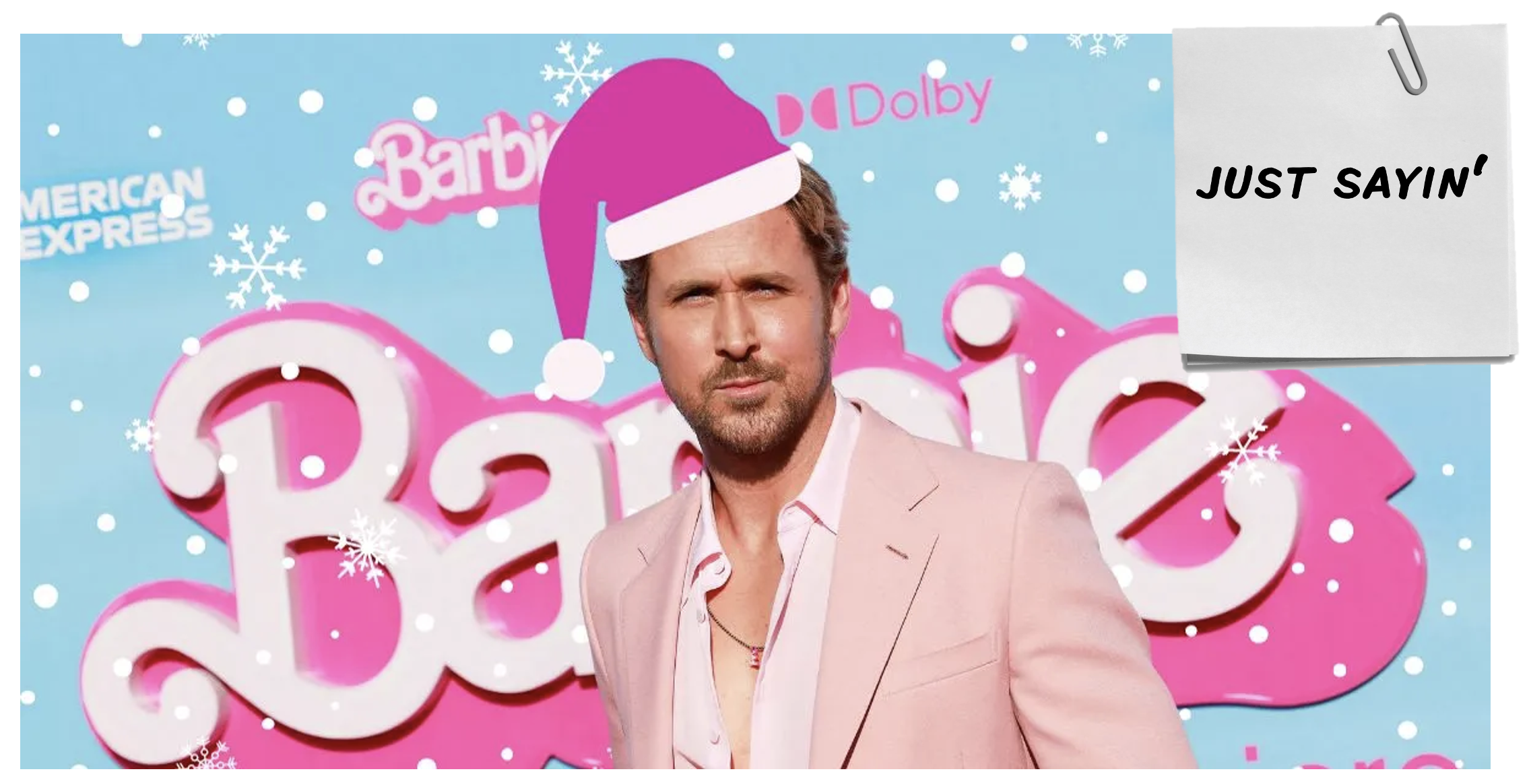
The world feels more complicated than usual right now, which is why we’re posting the just released Merry Kristmas, Barbie version of Ryan Gosling & Mark Ronson performing I’m Just Ken in the recording studio.
Yes, Ken, it is
Also, the Chair just re-watched Barbie at home with his husband and a dear visiting friend, neither of who had ever seen it before.
We will discuss that, the real meaning of the color pink, and A LOT more next week in our year round wrap-up.
Meanwhile, remember – male, female or non-binary….
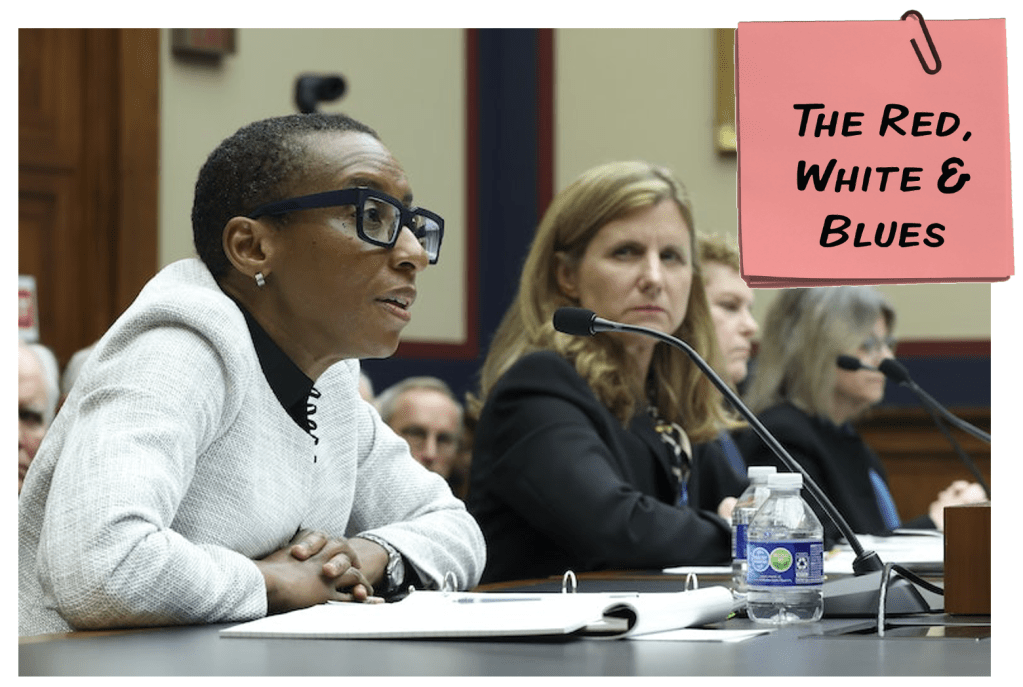
It was sickening to hear the presidents of what are considered to be three of the country’s most prestigious universities of higher learning — Harvard, the University of Pennsylvania and M.I.T. — try to sidestep, prevaricate and otherwise legalese their way out of a definitive answer when asked point blank at a Congressional hearing this week:
Does calling for the genocide of Jews violate your (university) code of conduct and rules regarding bullying or harassment?
Still, for me it was not terribly surprising to hear answers like:
It depends on the context…
Or…
If targeted at individuals not making public statements…
Or…
If the speech turns into conduct, that’s harassment…
As my young teenage self used to reply to my parents after they nixed any one of my perfectly reasoned requests:
A simple no would have sufficed.
I’m already exhausted
Parsing words and phrases are a hallmark of big companies, nee institutions, these days. (Note: With some X-ceptions). And some of the most noted, bigger institutions under fire right now, especially by the razor thin Republican majority in the U.S. House of Representatives, are the large and well-financed Ivy League universities and colleges turning out many of the upcoming American leaders of tomorrow.
Liberal bastions teaching slanted points of view to brainwashed students.
As if a religious college or university would be some alternate bastion of inclusion.
Dramatic?
Nevertheless, these university presidents really fell into it when Rep. Elise Stefanik (NY-R), the fourth ranking Republican in the House and Liz Cheney’s replacement as Republican conference chair once she decided to co-chair the second Trump impeachment committee, began her line of questioning.
Quick backstory: Stefanik was a moderate Republican who turned full MAGA after Trump lost his re-election bid. In fact, she spoke out against ratifying Pennsylvania’s electoral votes after the Trump mob stormed the Capitol building on Insurrection Day. At which point, Stefanik, a Harvard alumna, was promptly removed as a senior member of the prestigious Harvard Institute of Politics.
Noted
Now I’m not saying it was the backlash she received from Harvard for being a Team Trump election denier that caused Rep. Stefanik to come fully-armed with a lacerating string of pointed questions and follow-up accusations against these three female college presidents last week at a hearing entitled, “Holding Campus Leaders Accountable and Confronting Anti-Semitism.”
Nor am I saying that her politics and personal animus did not contribute to how she went about it.
All I am noting is that one needs to look at the fullest picture possible in order to make a judgment on an issue – particularly this issue.
Yeah, you missed it
The latter is something those of us in higher education work tirelessly to achieve and relate to our students when they fly off the handle and make assumptions that can’t quite be supported. The kind of thing my teenage self used to do continuously before I had the good fortune to train my mind in college and grad school to ask questions and only answer them once I had the full set of facts.
Speaking of which, I am not for one millisecond defending the embarrassing, nonsensical and, frankly scary answers those three smart, professional women of higher education gave to Stefanik’s ambush… I mean….cross-examination.
really, really, really bad
University of Pennsylvania president Liz Magill issued a mea culpa expanded statement condemning anti-Semitism the next day for saying things like, condemning statements of Jewish genocide would be “context dependent.”
But it didn’t help much. Magill was forced to resign a few days later though, for the time being, she will remain a faculty member at the institution’s law school. That’s right, you shouldn’t be shocked to learn Ms. Magill is indeed a….trained attorney.
Double, triple, quadruple yikes
Her much too nuanced, too cautious and too intellectualized response is typical of exactly what is wrong with not only higher education but with the public stage of thought policing these days. And it was the very predictable hesitancy of Magill, as well as of Harvard’s Claudine Gay and M.I.T.’s Sally Kornbluth to substantively wade into anything too absolute that Stefanik was counting on to create a viral revenge moment at the institution that helped train her, as well as institutions like it.
Stefanik has already, in the aftermath of her viral triumph, promised a “reckoning” and a deeper look into sources and funding of the nation’s colleges and universities across the board as well as how their diversity, equity and inclusion offices function.
She’s choosy about consequences
And she vows this under the banner of their treatment of Jewish students and unchecked anti-Semitism on campuses.
Um, right. Like Sister Aloysuis says in John Patrick Shanley’s famous Pulitzer Prize-winning play:
I have doubts. I have such doubts!
(Note: Yes, the play is indeed titled Doubt but I didn’t want to give the line away before you read it).
See, free speech does not mean one has the freedom to incite riots and advocate, or even heavily imply violence, against any minority group, as some presidential candidates (Note: And in one case, even a former president) have been known to do. It means everyone is entitled to their opinions and beliefs but are limited in how and where they can broadcast them, especially when they are in rarified, controlled spaces (e.g. colleges) and violent intent is concerned.
I hear ya
Certainly, MAGA’s Stefanik understands this. But she also understands the tricky position cowering university presidents are in these days when addressing controversy. And clearly the public faces of universities under Congressional questioning understand just how quickly their answers can be used against them by agenda driven politicians who want to fire their words as weapons back at them.
So they parse – and parse badly – never anticipating that given where we are right now in the real world it will all rightly get read as anti-Semitism by a top member of a political party whose leader makes racist, not to mention sexist, pronouncements daily.
In fact, rooting out the vermin our country -as non-white immigrants as well as anyone vociferously disagreeing with the Republican agenda gets referred to – has become a new staple in the stump speech of that party’s runaway leader to be its 2024 nominee for POTUS.
How is this happening again?
I choose to believe that there is not a single president among those three that actually believes it is okay to publicly advocate for the genocide of Jews – and not only because I’m Jewish.
The problem is their first instinct was to NOT definitively stand against it for fear of… retribution? Controversy? Offense?
If a rank amateur “mean girl” like Stefanik can hornswoggle them so easily, how will they fare if Trump and his crew of psycho pirates ever get back into the White House?
k bye
As of right now, not well. However, there is almost a year for them, and us, to get more fully educated. At which time we can then publicly – and very simply – espouse the courage of our convictions to anyone and everyone that will listen.










 notes from a chair