Twas the night before Christmas and on the West Coast...
It’s that time of the year in the world of show biz
When it’s spooky and silent, even if you have kidz
Cause the town closes up and all calls go unanswered
Leaving new screeners and old TV shows to be cancelled.
Yes, just when you thought there was hope you’d break through
The red carpet rolls up and there’s nothing to do
Except to go home and spend time with your loved ones
Or open a bag of Top Ramen with no one.
You had hoped to buy presents but didn’t earn the money
Or you do have the cash, but you don’t have a honey
Or you’re doing quite well and you’re happy as pie
Except you can’t help but think that this dream soon will die
Cause HBO just nixed “Hung” and “Bored to Death,” too
They grew tired of cable sex and a stoned sleuth half-Jew?
But for Mike White’s new “Enlightened,” a big fat renewal?
Well, it’s a little new age-y and not very cruel
Perhaps that’s the secret, since Kim K’s divorce
Be a little more real, and a little less coarse
Wait, that doesn’t make sense, cause K’s still get big ratings
And Revenge is a hit, while Glee’s quickly abating.
American Horror’s taken Ryan’s attention (and I can’t say I blame him)
It’s got sex, blood, guts AND, no divine intervention
I’ll bet he goes home and eats more than Top Ramen
And Jessica’s Golden Globe nom surely must calm him.
Not a creature was stirring
Hmm, let’s make a new plan, we can switch to the movies.
A lot more respect and a lot, lot less hooting
But did you see “Twilight,” or sit through “Transformers II?”
How about “The Green Lantern,” or that “Scooby Doo 2?”
Well “Drive” was a hoot and this year Woody’s done well
At least it shows you can also be old and still very much sell
Or if you’re young there’s the Black List for scripter’s unknown
Even when they’re not made, you get deals and great phone
Go Gosling, Go Bullock; Coop, Pitt and Jolie, I can see you!
Go Cruise, Clooney and even Ms. Streep now feels brand new
Still it’s tough not to think of how much can go wrong,
Or pretend the list of disasters aren’t incredibly long
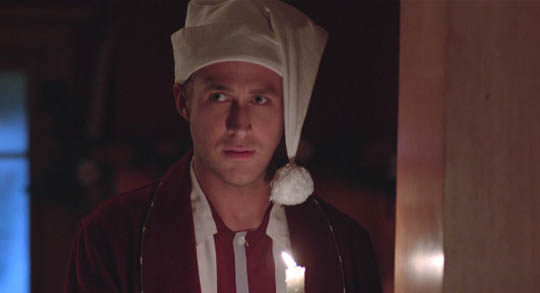
Ry in his cap
It’s so tiring thinking of ways uber-defeatist
Or just running in place while Sorkin’s sold his next fetus,
I did once read that selling your body could actually work
But three hour gym days drive everyone berserk.
Wait, what’s that I see – off there in the distance,
It’s a Hollywood God – no, it’s Ben Affleck. Or Matt Damon?
I can’t see their faces; cause it’s her, you damn fool.
She’s Marilyn Monroe and she’s sitting right by a pool!
Santa Baby
No, it’s not Michelle Williams, though she’d actually do
Could you imagine that “Dawson’s Creek” girl’d one day make you drool?
Ill bet that Michelle never thought that would happen
How could she when even Van Der Beek didn’t pay attention?
Look Marilyn’s nodding, I think it’s what we just stated
Or is she blowing me a kiss, and my sadness has just abated
No she meant what she said and she said what she meant
She was looking at us, not that clone of Clark Kent
The smartest of people is what I think are cool
And the ones that I met in that hip acting school
Or the grips on the crew who are nice and just real
Not the ones who just used me while copping a feel
Wait, are you a mirage that everyone sees
Hey Mar, I’m DeNiro, “you talkin’ to me?”
You know that I am, and now try to break free
And don’t fret like the rest of the fish in this sea.
A real life is precious as precious can be
Like Taylor’s Krup Diamond which, by the way, just sold to me
The mistake that you make is you try to fit in
When the ways you are different is what gives you the win
Your smile and your brain and your sweet disposition
And the art that you bring to each difficult mission.
I made my mistakes but at least they were mine
Now go and make yours cause to me, you’re divine
Woah, I think she’s just vanished, along with the pool
And it had to be her cause I’m feeling so cool
And as I look up in the sky on this bright L.A. night
Where once there were not any stars in my sight
There is Marilyn saying with everything that she feels
Believe in your talent, you are the REAL DEAL.
Holidays come in blues – as well as reds and greens. Meaning there are many ways and many shades to ring in the season and the New Year. No – I’m not speaking about blues meaning the Jewish celebration of Hanukah and reds and greens being the Christian holiday of Christmas. The latter has somehow been modified, modernized and appropriated by societies at large – including this Jew – though I do have a special out if called on that because I live with an Italian Catholic.
Actually, the blues I’m addressing are the kind that Miles Davis played with his horn; the type that Billie Holliday and all the great jazz singers crooned about; and the genre that even disco songs like “I Will Survive” spoke about.
Just what are the blues? Definition please:
Blues:
A state of depression or melancholy. Often used with The.
A style of music that evolved from southern African-American secular songs and is usually distinguished by a strong 4/4 rhythm, flatted thirds and sevenths, a 12-bar structure, and lyrics in a three-line stanza in which the second line repeats the first. Or has B.B. King has said: “The blues is an expression of anger against shame and humiliation.”
But the correct answer is more that that. Ideally the correct answer is: I know them when YOU have them. (Because who really wants the blues, right?)
Common wisdom used to be that artistic and creative people had a particular penchant towards the blues. We’re more sensitive, more troubled, feel things more deeply. I bought into that for a while – okay, most of my life -until I opened my eyes a bit more into how everyone handles “this condition” in their own way.
Choices:
Stoicism
Humor
Drugs & Alcohol (or any combination thereof)
Feeling it
Other ways I don’t understand (e.g. pretending it doesn’t exist; taking it out on others; becoming a nasty, mean bitter person in the moment or for a whole lifetime)
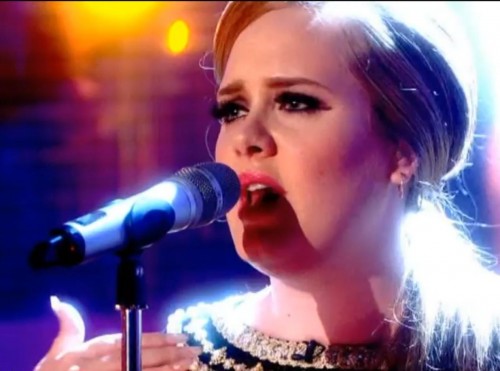
Artists do have one edge – to use it as a fuel for our work. If you can lift yourself off the couch – or bed – or even floor. Also known as “making lemons into lemonade,” so to speak. It shouldn’t be lost on anyone that two of the biggest CDs of the last few years (in both sales AND artistic achievement) are Adele’s “21” and Amy Winehouse’s “Back to Black” – both written in hibernation by their young singers after particularly devastating breakups. As was Alanis Morissette’s “You Oughta Know” from the “Jagged Little Pill“ CD a decade before. And back through time. (Choose song or other cultural touchstone based on your age and contemporary media platform of choice).
Turning blues into gold
But — it is also interesting to note: Stephen Gaghan wrote “Traffic” from the personal experience of his own drug addiction and James Frey made up a bestseller (or two?) based on the same, except he exaggerated his own real life for dramatic effect (Uh, as most artists do. And as ALL writers also do) and passed it off as real. And don’t forget James Baldwin’s great and seminal non-fiction work of being Black in America, “Notes of a Native Son,” that does not paint a very pretty picture of said condition, or that Alice Walker, blinded in one eye as a girl by a BB gun accident and dealing with early depression, eventually went on to write something you might now know as, well, “The Color Purple.”
This month’s crop of holiday movies (yes – even “New Year’s Eve” included) mostly come out of some sort of adversity/conflict, which I (or anyone with a brain) would say since drama (and comedy) is all about conflict. Particularly this year – look at “War Horse,” “The Descendants,” even “My Week With Marilyn” to some extent. The Blues is sadness and often conflict – outer and inner. But that is simply only one emotion in the course of a day and can easily turn, often by WORKING through it Literally.
Note: Woody Allen uniformly does this by working all the time – adhering to the adage “a busy mind is a healthy mind” – lest he ever have time to think his own dark thoughts that are right around the corner
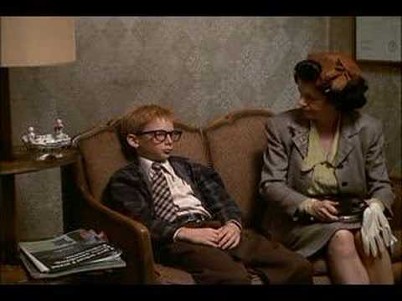
From “Annie Hall”
Young Alvy (Woody) at 9: The universe is expanding.
Doctor in Brooklyn: The universe is expanding?
Alvy at 9: Well, the universe is everything, and if it’s expanding, someday it will break apart and that would be the end of everything.
Alvy’s Mom: What is that your business?!!
Click for the full clip
I relate to this. For years I was haunted by the ending of the original “Planet of the Apes” because my young self wisely reasoned if it’s thousands of years later and the planet is just apes that means…none of us will be here???? Boy, what a scary thought that was (and sometimes continues to be) for pre-teenage Steven Ginsberg. However, it did provide what I always thought was one of the best moments my young alter ego had in my 1993 “loosely autobiographical” movie, “Family Prayers.”
I am not saying you have to have the blues to create. Certainly not. (I mean, Julianne Hough can’t be unhappy these days and look at the brilliance of her and the film of the new “Footloose” AND the upcoming trailer for “Rock of Ages!”
But if you do find yourself in that position (the Blues, not Julianne Hough-soon-to-be-Seacrest) during this holiday season there is stuff you can do.
Start a project – any project – but one you can complete. Not one that will be (is) half finished. (advice: there is some joy in any kind of completion).
Admire a piece of art by someone who had it worse than you and use the fantasy to fuel your imagination into something better or different while everyone is charging up their credit cards in reality.
Eat cheese, as Liz Lemon says on “30 Rock.” (Note: Substitute food and/or vice of your choice, but be careful).
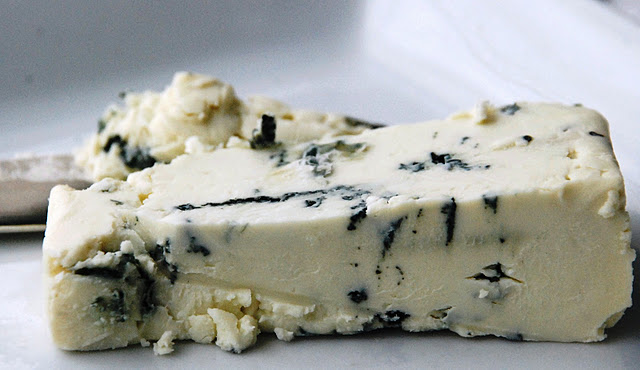
Perhaps a slice of blue cheese? (too easy, couldn't resist)
Bottom line – use the blues to your advantage – don’t let them use you. I’m tempted to say even celebrate them. That doesn’t mean be happy about having them. But just recognizing they’re there and hanging them out to dry in the light of day (or night, if you’re anything like me) can turn them not necessarily into a nice large cup of lemonade, but something of a holiday surprise. The kind of gift that those of us who like to create (that’s really all of us) long for, but can only truly give ourselves.

 You had hoped to buy presents but didn’t earn the money
Or you do have the cash, but you don’t have a honey
Or you’re doing quite well and you’re happy as pie
Except you can’t help but think that this dream soon will die
Cause HBO just nixed “Hung” and “Bored to Death,” too
They grew tired of cable sex and a stoned sleuth half-Jew?
But for Mike White’s new “Enlightened,” a big fat renewal?
Well, it’s a little new age-y and not very cruel
Perhaps that’s the secret, since Kim K’s divorce
Be a little more real, and a little less coarse
Wait, that doesn’t make sense, cause K’s still get big ratings
And Revenge is a hit, while Glee’s quickly abating.
American Horror’s taken Ryan’s attention (and I can’t say I blame him)
It’s got sex, blood, guts AND, no divine intervention
I’ll bet he goes home and eats more than Top Ramen
And Jessica’s Golden Globe nom surely must calm him.
You had hoped to buy presents but didn’t earn the money
Or you do have the cash, but you don’t have a honey
Or you’re doing quite well and you’re happy as pie
Except you can’t help but think that this dream soon will die
Cause HBO just nixed “Hung” and “Bored to Death,” too
They grew tired of cable sex and a stoned sleuth half-Jew?
But for Mike White’s new “Enlightened,” a big fat renewal?
Well, it’s a little new age-y and not very cruel
Perhaps that’s the secret, since Kim K’s divorce
Be a little more real, and a little less coarse
Wait, that doesn’t make sense, cause K’s still get big ratings
And Revenge is a hit, while Glee’s quickly abating.
American Horror’s taken Ryan’s attention (and I can’t say I blame him)
It’s got sex, blood, guts AND, no divine intervention
I’ll bet he goes home and eats more than Top Ramen
And Jessica’s Golden Globe nom surely must calm him.