
“Age is a harsh mistress.” I said this last year to a student at our annual holiday party when he spied a picture of me and my significant other taken 25 years ago. A picture I don’t ever give a second thought to, I realized, until a young person happens to spy it and a look of disguised shock and awe came onto his face. Shock that, I like to think, is because I was and still am so devastatingly attractive (“he was even better looking back then!”) but that probably has more to do with how someone so close to their age could’ve gotten so much, well, older-looking. And awe, I suppose, at the fact that I am still alive and retain any sort of the youthful vigor or even mobility when I am in their presence.
I still have enough memory to know that I did indeed feel exactly that same way in my early twenties. And that it is, indeed, okay. What is not okay – by any measure – is that the movie business – which is almost 100 years old itself – feels exactly the same way.
It’s not news that anyone over 25, or to be kind, perhaps 35, is considered by most of the powers-that-be at movie studios as somewhere between dead or not worth pursuing. But as myself and many other writer/director/producers/editors/designers and, yes, actors in the biz have been saying for years – it is not only rude and inconsiderate to think that way since the industry and many of the people who run it are older than that, but it’s an extremely poor business model.
You can bemoan this as a creative person. You can shout it angrily as a movie fan who suddenly finds there is nothing exciting to go to as a lover of big screen entertainment. But, much like any other changes in the world, none of that does any good until it’s proven on the balance sheet and by the risk of someone else that this way of thinking is, indeed – just plain wrong.
The N.Y. Times wrote quite a perceptive story this week about a movie featuring primarily sixty and seventy somethings that we like to call “The Best Exotic Marigold Hotel.” A film that is now inching up to a worldwide box-office gross of – wait for it – close to $90 million dollars — on a production and marketing budget of a fraction of that cost.

Certified mariGOLD
I saw the film several weeks ago and thoroughly enjoyed it. In fact, it’s surprisingly good for a movie about a bunch of British seniors who separately decide to retire to India. Is it the best movie I’ve seen in 10 years? Well, no, but it doesn’t have to be because that only happens once a decade. Instead, it’s simply fun, heartfelt, touching, very profitable, well made and got an 83% positive audience response on the AMERICAN film website rottentomatoes.com.
Perhaps even more importantly, it didn’t cost $200 plus million to make and another $100 plus million to market. And it doesn’t star Taylor Kitsch (sorry Taylor?). In short — it’s no “John Carter.”
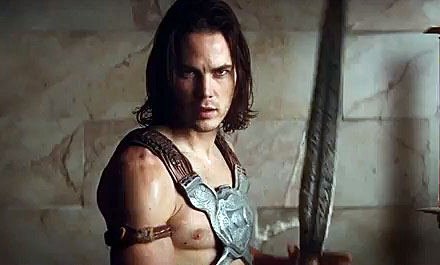
In the sequel, let’s lose the chestplate
Here’s the way it works and why it shouldn’t work that way. Hollywood movie studios want to make films that will not only make money but will become cottage industries. Meaning, known quantities based on books or comic books or board games for teenagers that can have sequels. Or that can sell toys, soundtracks, dolls and fast-food tie-ins, among other things. And perhaps can spawn TV series, cartoons, Broadway shows or, at the very least, an endless stream of theatrical re-releases to new generations or to unsuspecting moviegoers who studio heads believe will crave any kind of faux-repackaged DVD extra they can buy at their local Costco. (Note: For those poor schnooks who don’t have Costco in their neighborhood, substitute your best local discount store – though I doubt it could possibly compete with the Big C).
Anyway, in the unending quest of franchise-mania (did I make up a new word?), these same studios are willing to risk large chunks of the farm in any effort to prove to their corporate bosses (who often see the movies as glam but not their primary bread and butter) that they are indeed worthy of keeping their jobs. But because the mode of delivery is changing and we now can get entertainment literally everywhere (not to be gross, but isn’t it only a matter of time until the iPod video player toilet?), the movie business, like its compatriots in the recording industry, are panicked.

It exists.
Some sample movie studio dialogue:
“WTF is happening? How are these kids continuing to download these movies illegally?” (Uh, yeah, in my unscientific survey I can testify that the majority of them do and will continue to do so no matter how much we preach about intellectual property, cause it’s a new world).
“Do they really want to watch a movie on a tiny phone? Should we have a phone/mobile device division? Let’s get some interns to work on it – we don’t have to pay them, they’ll do it for free – and maybe they’ll come up with something?? Hell, maybe they can make the films themselves and we can charge, what – $1 a pop – okay, maybe two if it’s full length. Great – so now – who’s got the nerve to run it upstairs to — Nabisco?” (Well, not Nabisco but substitute some nameless corporate entity – you know what I mean).
“Oh, and don’t forget to tell them ‘no, we’re not gonna pay these kids to make the films’… well, okay – we can create a new guild minimum for phone films but it’ll be negligible – but no profits! You know what – don’t even mention paying them for now unless they ask!…”
(Yes, this is a fictional conversation. Or is it? I’ll never tell).
A much less stressful – and perhaps simpler and more inventive strategy – for said studio people might be this: to look at what one is selling and see who wants to buy it. That is who else except the usual suspects being catered to. As the NY Times so wisely points out, and what myself and, again, many of my friends have been saying for years – “baby boomers have literally carried on a life long love affair with the movies.” And there is a good reason. Those of us in or around that generation were raised in the golden age of films of the 1960s and 1970s. A time when the creative output included – I mean, do I have to list them? Go to oscars.org and look up Academy Award nominations. Or type in any film festival of your choice and see what was competing at the time. Then go watch “John Carter” or even more adult type films that won the top awards this year like “The Artist” and “Iron Lady “ and compare them to, oh – “The Godfather,” “Cabaret,” “Mean Streets,” “The Manchurian Candidate,” “The Parallax View” “The Bicycle Thief,” “The 400 Blows” and “Raging Bull” and see if you don’t see what I mean.

Show some respect
Interesting enough, “Marigold” managed to make money (fun alliteration?) not by being a throwback to those films but by unapologetically telling a story about older, though not ancient BRITISH people. Yeah, they’re not even American but they are acclaimed actors and some Oscar winners who can act too – Dames like Judi Dench and Maggie Smith, among others – actors who are actually in their 70s – a generation beyond the boomers.
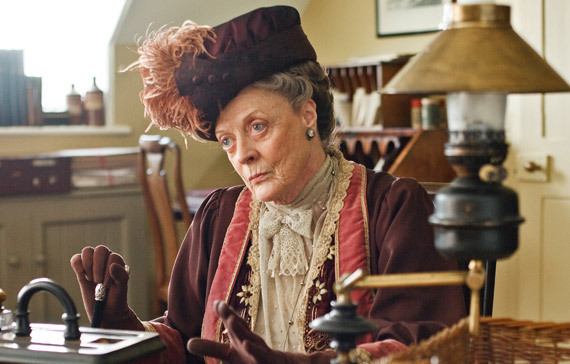
The Downton Bump?
Why is anyone going to see this film full of well – practically dead people? Is 70 the new 50 or 60? Maybe. But mainly they’re going because, uh, it’s good. And because there’s nothing else to see for anyone above a certain sensibility and age even though they have lots of money and are more than willing to spend it.
See – here is a list of movie stars today who are 70 and above —
Jack Nicholson; Warren Beatty; Al Pacino; Dustin Hoffman; Robert Redford; Barbra Streisand; Jane Fonda; Gene Hackman (he’s 80!) and Woody Allen. And Harrison Ford turns 70 in – July. (Don’t believe me – look it up)

Oh Indy…
Now — here is a list of American movies stars 62 and above –
Meryl Streep – still one of the most bankable female movie stars now out there. Just sayin’. Robert DeNiro; Diane Keaton; Helen Mirren; Michael Douglas; Sylvester Stallone; Arnold Schwarzenegger; Goldie Hawn; and Sigourney Weaver.
Does anyone out there really think that the only way young audiences will go to see them in the movies is if they play foil, father, mother or grandmother to Taylor Kitsch, Shia LeBouf or Kristin Stewart? I mean, give me a break. I don’t want to even see them in those roles. And neither do my 20-year-old students. They want to see them in films that are — good. As do the many masses of potential ticket buyers who are not young anymore. (Note to moguls: Some of the young people I know voluntarily went to “Marigold” not at my prodding and reported back to me that “they liked it, they really liked it” – a phrase that was admittedly coined by Oscar winner Sally Field, who also belongs on that list).

The Picture of Dorian Gray
If many more of these actors other than Magic Meryl got to star in their own movies (and, perish the thought, some of these movies were sometimes written and/or directed by people close to their age group) could they lose any more money than “John Carter?” No way because we know that no studio would spend as much as they did on that debacle. Or on some others this summer that I don’t need to mention but you know who you are. That’s not what we’re asking. We only want some more choices, some different choices, some more vaguely intelligible choices that could possibly bear box-office fruit (and they don’t even have to reek of heaviosity) before our variety of films is no bigger than the images you can conjure on your local mobile toilet device.
P.S.: “Marigold” opened wide to 1233 theatres this weekend and will gross more than $10 million nationally this week, putting its box office gross over $100 million worldwide. And it’s still playing.
Just sayin’.



 notes from a chair