Pop Culture Crack

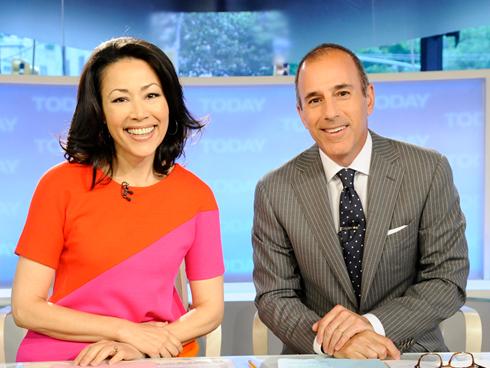
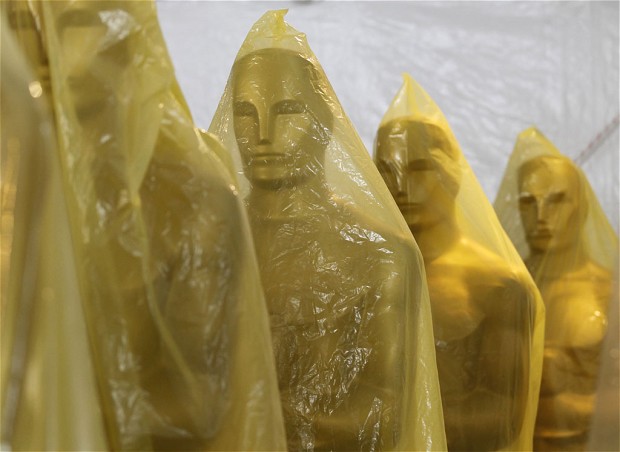
<> on October 19, 2009 in Santa Clarita, California.

The Oscars are the crack of pop culture.  And like any drug addict, we culture vultures out there have a love-hate relationship.  We love the idea of it but when we indulge too much we feel sick to our stomachs.  We fetishize everything about it – what it looks like, how it will feel when we get a good dose of it (because like any good vice, all you can remember is how great you felt the very first time you indulged and not how awful the last time), what the excitement will be like when we’re in the midst of all the cool friends we’ll get to hang out with when we are partaking, and how we’ll experience all the glamorous surroundings we’ll be able to live in for those few (or too many?) hours we are feeling its effects before being dropped back into the harsh realities of everyday life the next morning, suddenly feeling lousy and realizing we’ve once again participated in something that, in the long run, really isn’t good for us.

Am I exaggerating?  Well, as one of Will Ferrell’s most memorable characters once stated on Saturday Night Live: “Maybe I am and maybe…I am.”  But that doesn’t make it any less true.  Chances are if you’re still reading, you are a pop culture vulture, as addicted as I am, and will continue to be so.  The Oscars (no longer called the Academy Awards, per the announcement by this year’s producers, who decided the term sounded too musty) are just made (born?) that way no matter how disappointing, boring, over-the-top, inappropriate, endless or just plain bad they are in any given year.  And let’s face it, they’ve been all of that and more, year after year.  So let’s do what any self-respecting pop culture addicts do – give in and – INDULGE.

Yes, Mother Monster.. I was born this way.

Yes, Mother Monster.. I was born this way.

Think of this post in three sections – the television show; drinking game ideas (or merely soft drink/party games for those under 21); and my best attempt to give you some informed predictions so you can, at the very least, win the Oscar (NOT the Academy Awards) pool.

THE TELEVISION SHOW

It’s going to be a long one this year and it’s going to be very gay. Like even gayer than I am.   And that’s pretty gay.  But not as gay as this show. Not that there’s anything wrong with either of us.

What do I mean by gay? (And yes, of course I’m stereotyping – but only in a good gay way).  Well, one of the themes of the evening will be Oscar devoting itself to musicals.   No more movie music being relegated to a tacky medley of nominated songs or no medley at all.  Still don’t believe me?  Okay, here are a partial list of some of the singers: Barbra Streisand, Shirley Bassey (she sang the original Goldfinger for everyone under 30), Adele, Catherine Zeta-Jones and the reunited cast of Chicago (because there’s been an outcry), as well as Hugh Jackman, Anne Hathaway and the reunited cast of this year’s multi Oscar-nominated Les Miserables (because it’s been too long). Plus – there’s a singing host who the producers claim sounds “exactly like Sinatra” (their quote, not mine) named Seth MacFarlane, who will be closing out the evening in song with Broadway diva (divette?) Kristin Chenoweth in a specialty number that is being kept under close wraps.  What little information we do know is that this musical number will be sung AFTER the announcement of best picture – the usual close out moment of the evening.  Why do I say this is gay?  Because if there’s one thing about my tribe, it’s that when we throw the party we not only make our own rules but WE – NOT YOU – and certainly not TRADITION – decide when it’s over.

Yes, it can get gayer than this.

Yes, it can get gayer than this.

Okay, so then – why am I guessing it’ll be a long show?  Well, aside from the James Bond tribute, the salute to musicals, Seth MacFarlane’s monologue, the crew from the accounting firm that tabulates the written and, for the first time this year, online ballots, the In Memoriam segment, the backstage hosts, and the web shout outs, this year we have an unusually long list of famous people who have been announced to be participating on camera.

Among these are an all-star presenters list that includes but is not limited to: Jack Nicholson, Dustin Hoffman, Michael Douglas, Jane Fonda, Jamie Foxx, Melissa McCarthy, John Travolta, Nicole Kidman, Sandra Bullock, Halle Berry, Ben Affleck, Liam Neeson, Reese Witherspoon, the cast of The Avengers (that’s Robert Downey, Jr, Chris Evans, Samuel L. Jackson, Jeremy Renner and Mark Ruffalo) and Mark Walberg with his teddy bear Ted co-star Seth MacFarlane TED.  Plus last year’s acting winners – Meryl Streep, Jean Dujardin, Octavia Spencer and Christopher Plummer.  Plus – and this is my favorite part – special appearances by Charlize Theron, Channing Tatum, Joseph Gordon-Levitt and Daniel Radcliffe.  What’s a special appearance?  Tune in and be afraid, be very afraid..  But here’s my suggestion: food and drink, some blankets and some pillows and…some attitude.  Lots of it.

PARTY GAMES!

Another delightful indulgence

Another delightful indulgence

If you want to challenge your friends, relatives, enemies or professional rivals, here are some thoughts for possible moments during which you can raise a glass, a cup or a goblet.  Or wager a bet.

  1. The number of candid camera shots in the audience of the golden couple du jour, Ben Affleck and Jennifer Garner (this year’s Brad and Angie).  (Answer: 8?)
  2. Each time or total number of Meryl Streep references, jokes or shout outs.
  3. The number of times (or each time) Catherine Zeta-Jones sings off-tune in her musical number.  (Hopefully, there won’t just be one – number that is – I’m hoping for at least 3 clunkers).
  4. Ben Stiller appearances in a stupid costume (even though he’s not scheduled on the show I still don’t rule it out)
  5. One out-of-place star of an ABC television show who will sneak in as a presenter or participant in an over-the-top moment of network hubris.
  6. Longest standing ovation lasting longer than 30 seconds.  Or any standing ovation if you get particularly thirsty.
  7. Biggest surprise appearance with extra points (or drinks) for each decade of age or each decade of not having been in the public eye.
  8. Number of times Seth MacFarlane breaks into the voice of Family Guy’s Stewie, another animated character, or into song.
  9. Number of Harvey Weinstein jokes or thank-yous.  (And if the thank-you and joke are in the same moment then it only counts once).
  10. How many times, or each time, the camera catches the Tommy Lee Jones scowl. (I’m so hoping for the number 10).

Certainly, feel free to use your imagination in this section and add and subtract as you see fit.

PREDICTIONS

Blogging the Oscars!

Blogging the Oscars!

This is an imperfect science at best, even for veteran Oscar watchers like myself.  The trick is to not get sucked in by what you want to or perceive will win but to try to think like you are one big mass of Academy, uh Oscar voters.  That means you’re likely white, over fifty, somewhat liberal, somewhat opinionated, and a little personally petty but still idealistic enough to want to reward someone who makes you feel good by representing the best of humanity with their movies.  (Note:  You might even give the odd vote to a filmmaker who sends a political message as long as its not too overly threatening or out of the mainstream of cable news subject matter).

Rather than be coy like this year’s show we’re going to start with the most talked about awards and work our way down. There is logic in this since what will give you the edge in the pool is you getting the vote right in the “smaller” categories people know the least about.

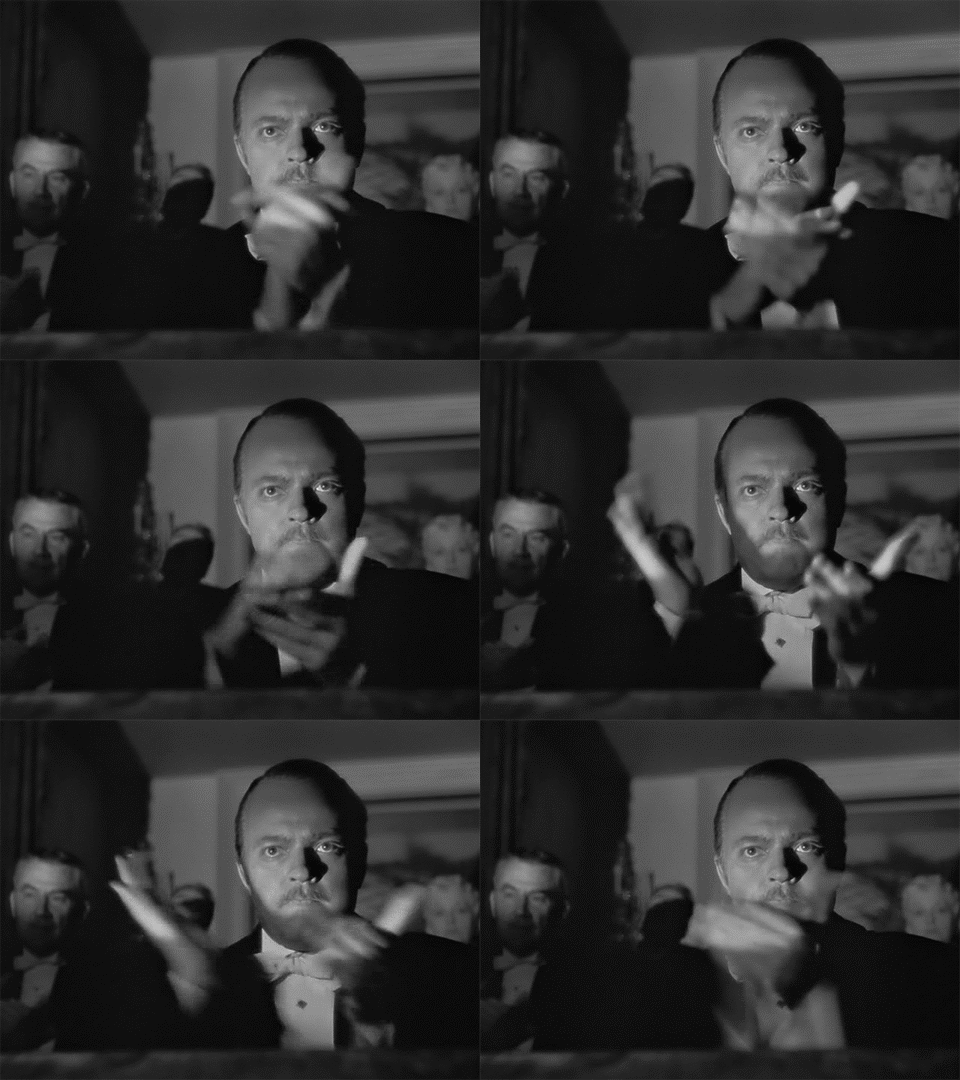
Hollywood on Hollywood? Oscar bait much?

Hollywood on Hollywood? Oscar bait much?

1. Best PictureArgo (fuckyourself).  It’s won every guild award and the Oscar voters are also all individual guild members.

  My Personal Choice:  Silver Linings Playbook – I’m a softie and it’s really tough to do those kinds of movies and get them right.  Plus, I’m all for dramatic license but I can’t get past the idea of advertising a political film that says “based on true events” and then distorting facts in order to create a dramatic point.  It’s okay to condense situations or create a composite character – that’s dramatic license.   Blatantly changing facts to suit a dramatic need is a no-no.

2. Best Actor – Daniel-Day Lewis, Lincoln.  He has as much chance of losing as I do of winning in this category.

My Personal Choice:  Daniel Day-Lewis because it was a resurrection, not a performance.

3. Best Actress – Jennifer Lawrence, Silver Linings Playbook.  It’s a showy part in which she never overacts and where she shifts from drama to comedy and somewhere in between on a dime.  She is not going to get eclipsed by Emanuelle Riva in Amour or Jessica Chastain in Zero Dark Thirty because I like my television and do not want to destroy it with a glass object on Oscar night.

My Personal Choice:  Jennifer Lawrence.  See Above.

3. Best Supporting Actor – Robert DeNiro, Silver Linings Playbook.

Yes, we're talking to you.

Yes, we’re talking to you.

His studio ran a great campaign reminding voters that DeNiro hasn’t won an Oscar in many decades (see Meryl Streep Oscar campaign playbook of last year).  But more importantly, DeNiro gave an honest, raw and vulnerable portrait of an older man without making it treacly or obvious.  That’s why other actors practically genuflect in his presence and that’s why he will win.

My Personal Choice: Robert DeNiro. See Above.

4. Best Supporting Actress – Anne Hathaway, Les Miserables.  Let’s put it this way – I was at the Motion Picture Academy screening of Les Miz and there was about a minute’s worth of applause during the film after her song.  Enuf said.

My Personal Choice:  Don’t hate me – Anne Hathaway.  You try singing that song and making it something we’ve never heard sung before

5.  Best Director – Steven Spielberg, Lincoln.  This is the toughest category.  I was about to write in Ang Lee for Life of Pi because a. there’s been a groundswell of support these last few weeks and b. Pi breaks new ground technologically.  But something tells me Oscar voters, many of them mainstream Hollywood types, really do want to reward Steven for helping to keep the industry afloat.  Plus, even though Abraham Lincoln was a Republican, the movie is a bit of a kiss off from liberal America to Congressional gridlock coupled with a warm embrace to a president who tries to reach beyond Washington, D.C. directly to the people.

My Personal Choice:  David O. Russell, Silver Linings Playbook.  It’s not his year but it’s the film with the most inherent booby traps by which a director can go terribly wrong.  And he didn’t fall into any of them.  In fact, he ran with them and created something quite unique – a feel good movie that isn’t cliché.  Try it some time.

6. Animated Feature FilmWreck It Ralph.  The Academy isn’t hip but the video game patina, the reviews and the general feeling that it IS the best animated film of the year will buoy Ralph to victory.  Brave is a close second.

My Personal Choice:  Paranorman.  Not because it is the best but because I WAS (am?) PARANORMAN.

7. Cinematography – Claudio Miranda, Life of Pi.  For filming what everyone in the industry thought was the unfilmmable.  And for giving a boost to the art of 3-D.

My Personal Choice: Robert Richardson, Django Unchained.  He’s won three Oscars and is one of the best that’s ever been in the business.  He brought a beauty and ugliness to the Old West and the Civil War era and did it without a lot of trickery.  I like that.

OK time for a bathroom break while those boring accountants stoll out..

OK time for a bathroom break while those boring accountants stroll out..

8. Costume Design – Jacqueline Durran, Anna Karenina.  It’s won almost everything in this category elsewhere.  Personally, I thought the clothes were a little overindulged, like the rest of the film.  Clearly, I’m a philistine.

  My Personal Choice:  Joanna Johnston, Lincoln.  The clothes reflected the characters and felt real.  I can’t imagine making Lincoln’s stovepipe hat not seem like a prop.

9. Documentary Feature – The Gatekeepers.  I watched ALL of the documentaries and, truly, any one is worthy of the win.  An exceptional group.  The majority opinion is on the seemingly unbelievable but true story of a once lost and now found singer in Searching for Sugarman.  But there is something about watching the various former heads of the Israeli CIA talk about the real and ongoing history of war, torture, espionage and the like that has international resonance for today.  Plus, Academy voters seldom pass up anything that has to do with this part of the world.

   My Personal Choice:  A tough one but…The Gatekeepers

10. Documentary Short SubjectInocente. I know the least about this category because I haven’t seen the nominees.  But awarding a good short on immigration seems timely and prognosticators seem to give this one the edge.

My Personal Choice – I’m blindfolded.  Don’t make me choose.

11. Film Editing – William Goldenberg – Argo – I guess it’s about the final escape sequence that didn’t really happen.  The America/John Wayne type thing and all that.  Or perhaps the opening documentary-like footage in the Middle East crosscut with Washington, DC.  But this looks like a sure winner.

My Personal Choice:  Dylan Tichenor and William Goldenberg, Zero Dark Thirty.  Re-creating the capture of Osama Bin-Laden and not making it rah-rah glossy.  They deserve an award for that.

12. Foreign FilmAmour.  Ever go to a party where everyone had a meaningful or great time and you were just bored?  That’s me at Amour.  Don’t hate me.  I do have a soul.  Just not during those two hours.  I don’t get the hoopla but hoopla, in this case, is inescapable.  Meaning, take the bet.

My Personal Choice: Anything but A.

13. Makeup and Hairstyling – Lisa Westcott and Julie Dartnell, Les Miserables.  So many rags, so many dirty faces, so many close-ups.  The Academy loves this movie and, as a group, know so little about hair and makeup that doesn’t make you look good.  Therefore, they will be very impressed.

Although I'm sure that's how Helena showed up to work that day...

Although I’m sure that’s how Helena showed up to work that day…

My Personal Choice:  24/7 personal hair and makeup for moi.  More hair than makeup.

14. Original Score –   Mychael Danna, Life of Pi.  Certainly the most original score.  And it’s the only score people keep talking about.  It is close to a certainty.

My Personal Choice:  To listen to the soundtrack of Saturday Night Fever (which didn’t get any music nominations) on a loop instead.

15. Original Song – Adele Adkins and Paul Epworth, Skyfall. It’s ADELE.  Please!!!

My Personal Choice:  You’re not serious, are you?

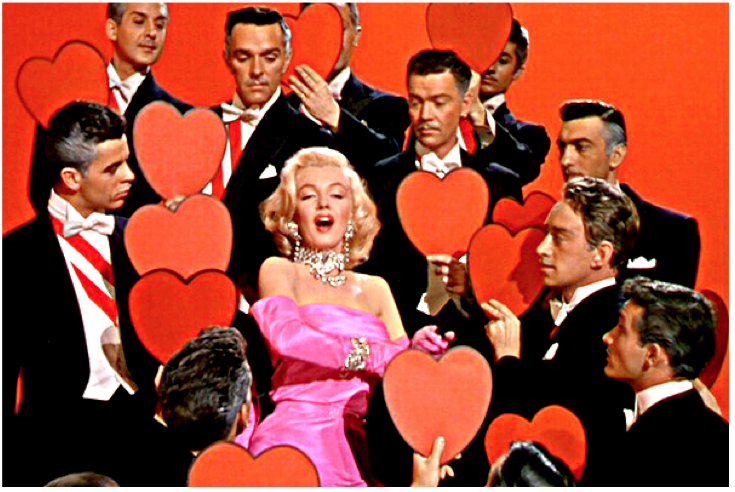
The ultimate Bond girl.

The ultimate Bond girl.

16. Animated Short FilmPaperman, John Kars.  Boy meets girl thanks to a piece of paper.  It’s sweet, clever and lovely.  And the best in the category (where I’ve again seen all the nominees) by a lot.

My Personal ChoicePaperman – It’s a writer thing.

17. Live Action Short FilmAsad, Bryan Buckley and Mino Jarjoura.  Another difficult category in which I have seen all five nominees.  At first this story of a young boy trying to survive the perils and poverty in Somalia felt earnest but derivative.  But as it went on it turned expectation and convention on its ear and delivered in a light-handed yet very meaningful way.  It feels like something the voters will want to reward.  Close second would be Buzkashi Boys – a more heavy-handed young boy coming-of-age story in Afghanistan.

     My Personal ChoiceCurfew, Shawn Christensen.  He made the kind of short I’d like to make and did it with an unexpected dance, a lack of post-modern irony and without backing away from very real human drama.  Bravo.

18. Sound Editing – Eugene Gearty and Philip Stockton, Life of Pi.  It’s not easy to figure out the right balance of animal sounds, the ocean, the jungle, and a lot of voice-over narration.  But Argo, Les Miz, Lincoln and Skyfall were all very tough challenges.

My personal choice:  I’m unqualified to choose.  Okay, Life of Pi.

19. Sound Mixing – Andy Nelson, Mark Paterson and Simon Hayes, Les Miserables.  It won the Guild awards and when the Oscar voters hear sound mix the obvious thought is – vote musical.

My personal choice:  Same as above.  In this case only, I am no smarter than an Oscar voter.

20. Visual Effects – Bill Westenhofer, Guillaume Rocheron, Erik-Jan De Boer and Donald R. Elliott, Life of Pi.  The perception is that this is what this film is primarily about.  It will win.  The end.

     My Personal Choice:  I’ll bite – Life of Pi

Note:  I have saved the writing categories – my favorites – for the finale.

21. Adapted Screenplay – You don’t know how much I DON’T want to write this.

Though I'd love to sit in on that development meeting..

Though I’d love to sit in on that development meeting..

Chris Terrio, Argo.  It wasn’t a bad film but I don’t get the outpouring.  Does Hollywood love seeing itself cast as the heroes?  Are Americans in general just hungry to see something, anything good portrayed about US foreign policy?  Has Ben Affleck, or at least his work, seduced more people than he himself has done personally?  Probably all of the above.  But this does not explain why a screenplay that condenses and fictionalizes numerous events, and to my mind has A LOT of lagging moments that feel written, especially in the first half, has become the critical darling of so many.  As for Academy members – writing awards unfortunately can sometimes be seen as big consolation prizes.  Even though Ben didn’t write Argo, it’ll be yet another olive branch to him.  (Note:  I still think his movie Gone Baby Gone is terrific – AND his best).

My Personal Choice:  Hmmm – can I vote for both David O. Russell, Silver Linings Playbook and Tony Kushner, Lincoln?  No?  Damn.  Okay – I have to go with Mr. Russell for being real, clever, dramatic and a bit Hollywood all in one.  Mr. Kushner did a Herculean job on an impossible task.  How do you tell a microcosm story of Lincoln in two and a half hours?  By playing a bit with the facts – maybe a bit too much in the climactic vote scene.  Hence my vote for Russell.

22. Original Screenplay – Quentin Tarantino, Django Unchained.  The key word is ORIGINAL.  He didn’t win for Inglorious Bastards.  Mark Boal did win for The Hurt Locker so voters probably won’t be swayed this time by his work on Zero Dark Thirty.  And if Michael Haneke wins here for his script of Amour, that’s the sound of my flat screen crashing out the window that you’ll hear.

  My Personal Choice:  Django, mother-f-ker.

Spinning

It's all about how you see it.

It’s all about how you see it.

There is an old adage that the more specific you get, the more universal your message will be.  That’s why when Pres. Obama pointed out the 102 year old African American woman in the audience at his State of the Union speech who had to wait six hours in line to vote in Florida in the presidential election in November, his shout out was not corny but resonant to so many people. We’d heard stories like this for more than a century of minorities, especially women, discouraged or deterred from voting, but what made this one especially affecting was that several new details had been added.  It was not just an older Black woman but it was a 102 year old woman.  It was not a story of civil rights-like voter suppression from 50, 100 or even 150 yeas ago.  It happened within the LAST year.  

That’s also why the gun violence/“they deserve a vote” section of the speech also worked.  We’ve all seem victims of gun violence from both sides – the shooter and the shooted and the respective families of each.  But there was yet another new twist on it this time.  Due to the proliferation of assault weapons used in so many of these mass shootings, firearms which blast up to 30 bullets in five seconds, many more people die in record time.  But because any one of these individual blood fests – Columbine, Aurora, Virginia Tech – can cover a greater number of people and acreage, more than one or two humans these days also manage to escape or survive and then, live to testify.  Whether it was the young man in the Colorado movie theatre who has become an anti-gun activist despite the bullet fragments still lodged in his body or the fighting spirit of Congresswoman Gabby Giffords and her ability to resume life after a near fatal brain injury, it’s really just simple math: the greater the area and number of victims you’re dealing with the more likely the percentages that something will go wrong and someone will live to speak out against you.   Once again – old story, but with a new slant.  Of course, there was the classroom of 20 dead children and 5 adults at the Sandy Hook elementary school where everyone did die, proving there are exceptions to every rule.  But let’s face it, the lack of survivors and extremely young median age of everyone in that 2012 mass shooting only made that tragedy even more unique and caused it to stand out given the norm of the  “aughts” decade of where we now all reside.

Putting your own “contemporary” spin on an old story is something we all do either on the page or in real life, whether we know it or not.  Actually, it’s impossible not to do it if the yarn takes place in or is being told through the lens of someone who lives today.  But often times we feel quite insecure about it – as if we’re unoriginal or ripping off some other tale of woe or happiness that we particularly liked either consciously or subconsciously.  And if me writing about the notion that no story is new except for the personal spin you put on it sounds as if you’ve heard it before – well, you probably have.  But perhaps not put exactly this way.  See, addressing an issue in an opinion piece is no different than creating a story from ground zero to tell your friends, or writing it down in short story, play, screenplay or book form for your readers.  Or verbally addressing a crowd, or talking to Matt, Diane, Oprah, Katie, Jay, Dave, Jerry Springer or the nation or the world in an interview.  A version of every story in the world has been offered in some form ad nausea.  You might swear it’s new because you’ve never heard it, or the people who were around the last time it was told are long gone, but pretty much someone or something has done it prior.  And perhaps better (though certainly different) than the version you’re hearing or seeing now.  And if you need any proof of that just look at the various movie versions of Annie Hall, When Harry Met Sally and 500 Days of Summer after watching Two for the Road and Scenes from A Marriage and see if you don’t see what I mean.

It's even hard for your face to be original!

Uh… Who’s that girl?

Perhaps this seems corny or obvious even though I don’t mean it to be.  Yet that’s a normal reaction in any discussion of archetypal stories, archetypal behavior or archetypes in general, since the very essence of the word is defined as:

“A symbol, term, statement or pattern of behavior – a prototype upon which others are copied, patterned, or emulated.”

In other words, any discussion of cliché become cliché because a. it is literally about cliché and b. because it has been done and talked about so much before.

The most famous of these thoughts were advanced from Joseph Campbell’s “The Hero with a Thousand Faces,” which rethought some of the work of the famed psychiatric mind of Carl Jung, both of whose works were re-adapted by Christopher Vogler for, of all things, screenwriters in the movie business two decades ago in what is now considered a bit of a movie industry how-to masterwork entitled The Hero’s Journey.

And here for your viewing pleasure...

And here for your viewing pleasure… click for closer view

THJ was quite popular among studio executives and adult storytellers of all ages in Hollywood as it helped crystallize a “formula” for storytelling (and who in the entertainment biz doesn’t want that all knowing formula) that had been written about for decades and probably centuries but in different language.  Simply put, it states that if you’re trying to weave a compelling tale you FOREMOST must have in your tale certain kinds of characters that will compel fellow humans to listen, buy movie tickets or read about.  These include: a hero, a villain, a mentor, a love interest, a best friend, a jokester and so on and so on…. i.e., recognizable types human beings have been known to respond to en mass  (Note: it was no coincidence Vogler first conceived his “adaptation” of these theories in a seven page film studio memo while an employee working at — Disney)

We can bellyache all we want about this – “oh please, it’s the same old thing over and over; that book was from the nineties, this isn’t new; I’m tired, I need a drink, and why am I reading about something that was popular 20 years ago when we know they didn’t have the web back then and, let’s face it, computers have changed everything”  – but the dirty little truth is that when utilized judiciously (and sometimes blatantly) it always works.   Even a discussion of it often evokes enough controversy to warrant validation because the fact is I didn’t twist anyone’s arm to read this but for better or worse, most of you are still reading (I think).  And – if you are still reading – it means you’re curious to know more about old stories, archetypes, THJ and why they work (or at least, what I am going to say about it) – which in itself lifts it very essence above cliché and thus reinforces the following point:

When you or anyone else puts your own individual SPIN on the familiar it immediately CEASES TO BE SUCH.  And will in that moment can be seen in some NEW WAY.

One foot in front of the other..

One foot in front of the other..

This might be an obvious intellectual insight but it is shocking to me in how many moments of real life so many of us (myself included) don’t truly believe it.

This became apparent to me earlier this week when I decided that a new piece of writing I’ve made a bunch of notes on for myself wasn’t really worth doing because I felt like I didn’t have anything new to add to the subject despite pages of observations to the contrary.   But lucky for me, after teaching several days ago to a group of many young yet like-minded writers, I’m not sure I still feel this way.

Standing, sitting and sometimes pacing before 40 different students in four different classes I had to listen to any number of story outlines, ideas, detailed treatments and verbal pitches for 40 separate original story ideas for either film or television and noticed something sort of funny.  What was universally the biggest fear of each creator of these many wonderful, uh, narratives, were self-doubting thoughts like – “I know this has been done before,” “right now this is incredibly cheesy,” “I know/don’t want this to sound(s) like —- (fill in film) or an episode of — (fill in TV show from the past) or, my favorite, “This is a bad rip-off of —- but I can’t think of anything else, and maybe, really, I shouldn’t do this at all and just think of something else.  If I even can.”

Truly, anything old can be new again.

Truly, anything old can be new again.

After all these years I couldn’t believe how another old adage is true – you reflect what you give off.  Meaning the question in my own mind became – was my own self-defeatist attitude so unoriginal that I was literally seeing it among a group of people in their early twenties who had not been writing even half as long as I have? And then I wondered – “jees, is this kind of thing contagious and am I infecting them with this type of thought unwittingly?  Or is this something they came to on their own.  Something that, dare I say it, is archetypal?”

Well, here’s the good news:  I don’t think I’m the Typhoid Mary of writing teachers.   But like Jung and many of his ilk who studied along with him realized – there are certain archetypes, specific kinds of behavior that are endemic to all humans.    And since most writers and would-be writers are human (notice I said most – there are a few exceptions who shall go nameless – Okay, Shakespeare, Proust), it is not unusual they would share these exact feelings of self-doubt, albeit exhibit them all in their own individually unique forms of expression.  Put another way:  When you put your own individual spin on a behavioral cliché, it ALSO ceases to be a cliché.

Accepting all this as a given, it feels not out of line to occasionally ask oneself this cliché question – How do I become the hero of my own story?  I think the answer is to go by the above advice and let whatever we dare to hang out – knowing there are no guarantees but knowing there are also no rewards if we don’t try to spin out something.

Find yourself

Find yourself

Brenda Euland, writer extraordinaire said in her wise and seminal book If You Want to Write, that no one will tell a story exactly the way that YOU tell it.  She hung out with Louise Bryant and John Reed and a bunch of other New York Bohemians almost a century ago but spent most of her later life back in her native Minnesota where she was known mostly famously as a prescient writing teacher who periodically gets rediscovered over the decades, usually after the latest “how to” fad passes.   Lest you think her personal story of a bohemian who hangs out with famous people in N.Y. doesn’t get famous herself, goes home with her tail between her legs, and spends the rest of her days handing out advice as a teacher to help people do the very thing she didn’t manage, sounds familiar (nee archetypal) – it really isn’t.  Ms. Euland was, indeed, a talented writer.  But fame and recognition is a funny thing.   Despite all evidences to the contrary, some people become known for, or grow into, that which they had never planned at the outset, fame or not.

Other times, they seemed destined for greatness, or at least worldwide recognition at the outset and nothing and no one can stop them.  Watch Beyonce’s HBO Special, Beyonce: Life is But a Dream, and determine for yourself whether you think this is fair or even true.  Then consider the work of filmmaker Michael Bay and do the same.  Then perhaps the oeuvre of our greatest living playwright of the last century, Edward Albee, now represented on Broadway in a yet another great revival of his classic play, Who’s Afraid of Virginia Woolf?, and note it was not this play but several of those that most of us don’t know because they were not well-received that are his own personal favorites.  Of all the artists I know of, Albee manages to be the least cliché, the least archetypal, in work or in his life.  Yet even he admits to feeling about his plays, especially those that have trouble on the outside, like a parent who wants to protect the most vulnerable of their children from the vagaries of a cold, cruel world.  Talk about cliché.  Talk about archetype.  Yet re Albee – never was.  Never will Be.

The SugarMan himself

The SugarMan himself

Then finally – watch a documentary called Searching For Sugar Man – a real life story no one could have written for fear of being not cliché but ridiculous.  It tells the tale of a singer named Rodriguez, a brilliant 1970s songwriter-balladeer who seemed destined for stardom a la Bob Dylan, according to industry experts, at even one listen, but whose two outstanding albums sold quite poorly in reality.  Meaning they did zilch.  Consequently, Rodriguez then disappeared from public sight in the US, yet someone got hold of his album in South Africa and from the mid-seventies on he became a star on the magnitude of Elvis, especially since it was believed that one night on stage he grew so despondent at the acoustics and audience response to his music that he blew his brains out in front of a live crowd.

There was one problem with this folktale, which endured for a decade and a half – unchallenged – it wasn’t true.  Until someone got the idea to research the details of what happened to him and the real Rodriguez was found outside of Detroit – having spent life as a poor day laborer with no knowledge of his stardom overseas, but still in possession of the ability to sing, write and perform in almost the same manner he had decades ago.  Plus – and this is the best part – he was also found to be content with the financially difficult life he had and the children he had raised despite the stardom and financial bonanzas that eluded him.  Though he enjoys making music still, he doesn’t do it all the time, gives away money from his occasional South African tours to his family and friends, and just continues on.  His story is a true original.  A real life non-cliche because it twists the story trope of the talented artist who is never accepted and lives penniless for the rest of his days in bitterness or drug/alcohol abuse into a real life happy ending that seems unbelievable but can’t be because it’s true.   One wonders – how many others like that are there out there and who is going to tell them?