
How much is too much? That is the question many are asking about Baz Luhrmann’s The Great Gatsby. But before we get into that, it’s worth considering when you move past the point of saturation and graduate to excess? In show business we call this going over-the-top. In film studies, we simply call it melodrama. Unless, of course, we’re being hip and oh so au courant – then we call it postmodern.
I, for one, don’t apologize for loving excess if it is truly excessive. For instance, one of my favorite TV shows, American Horror Story, reeks and swims in oceans of excess (and this news just adds to it!). However, one of the problems with my least favorite and now finally put out of its misery defunct TV series, Smash, was that it somehow refused to be in on the joke it was perpetuating and yo-yoed on various dramatic diets instead of just indulging as the glutton that it was always meant to be, given it’s body type.
Or – as an ex once years ago commented to me about an older star who refused to embrace where he now was in life…
When you’re dead, lie down.
(Granted, that’s a little harsh but so was the ex, which is part of the reason why I refer to him as such today).
As for excess, we’ve had plenty to choose from lately. Yet as much as I love to indulge it seems like there should be some guidelines, or at least simple common sense do’s and don’ts.
Susan Sontag once wrote in her perhaps most famous essay, Notes On Camp,
“The ultimate camp statement is: it’s good because it’s awful.”
I agree because, I mean, I know enough than to try to say Ms. Sontag is wrong about much of anything. Though I would add an addendum to her observation: Awful is good but some things never make it to that plateau because they are just plain bad. And bad is just bad to the bone.
As in everything, this boils down to personal taste. And one’s lack thereof. Now, some excesses to consider:
Saturday Night Live

I don’t know about this…
Doing a brief parody of accused child kidnapper, rapist, young girl torturer Ariel Castro seated at their mock version of the Benghazi hearings this week – TOO SOON??? You’d think. Yet somehow they had to sneak it into their opening skit Mother’s Day weekend.
You can’t parody a tragedy that just happened, especially when the tragedy would be in itself a parody if it weren’t so horribly sad. It’s not camp. It’s not postmodern. And it certainly isn’t melodramatic. What it is, is just plain wrong.
The Chair’s Mother’s Day

I could probably work on my tablescapes…
I had 16 family members over and enough food for 32 (because ya never know). My menu: homemade turkey chili for a crowd, hot dogs, sausages (veg and real), rice, guacamole & chips, heirloom tomato salad with lettuce and celery, cheeses, grilled breads, six different kinds of fruit, and homemade chocolate cake. People also brought: large cold shrimps on ice, bruschetta, Lawry’s spare ribs, Lawry’s yorkshire pudding, homemade quiche Loraine, homemade strawberry buttercream cake, two dozen black and white cookies, 24 home made lemon bars, larger containers of chocolate, coffee crunch and crème gelato, and flowers. Lots and lots of flowers. Too much? No – we’re simply Jewish.
Time Magazine
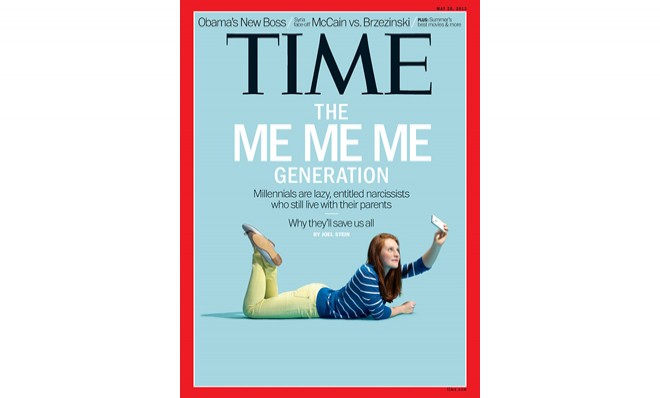
In an effort to not seem as irrelevant as it has indeed become, Time’s current cover features a young woman lounging with her Smartphone in hand and the headline:
THE ME ME ME GENERATION. Millennials are lazy, entitled narcissists who still live with their parents.
Wow. Just…wow. Tabloid anyone?
Of course, there is the rejoinder underneath all that type that the editors obviously think is their get out of jail free card: Why they’ll save us all.
This sort of reminds me of the old journalism joke that went around one of the first newsrooms I worked at. A reporter decides to get revenge on a powerful person he doesn’t like and asks the person: I hear you beat your wife, care to comment? The person, let’s call him Joe Smith, replies: “I never did such a thing. That’s not true!” The reporter takes notes, goes back and writes a story which reads: “Joe Smith denied beating his wife today amid accusations that he did indeed…”
Point being, you don’t get to plant an unflattering provocative photo with two thirds of an insult inserted underneath it, knowing full well that you are doing so, and then claim a mantle of respectability by adding a line at the bottom that perhaps disclaims everything you just said and did. It’s sort of like the school bully who slams into you into the locker in junior high and then sheepishly says, “Oh, sorry, did that hurt? I didn’t mean it.”
No matter. The Millenials will be laughing, texting, blogging (though not exclusively) and running the world long after Time Magazine’s print edition is gone. Which, checking my own Smartphone, could be any minute.
Behind the Candleabra

Sparkle motion
Billed by some as the story of the tempestuous 6 year relationship between Liberace and his much younger lover Scott Thorson – played by Michael Douglas and Matt Damon respectively. But as you watch, a question arises, among oh so many things in this HBO Film – WHY????????????????
Yes, I saw it. It is VERY accurate to the times, especially that 1977-1983 gay old time in Los Angeles, Palm Springs and Las Vegas. How do I know? Because — I was there.
However, of all the involving, multi-layered, fascinating stories of that period, especially in the entertainment world and elsewhere, one can’t help with finally coming up with yet one more question — WHY????????????????
I suppose part of it is the excess of the sequins, the feathers, the bejeweled pianos and an inside seat to, yes…what’s the behind all those candlebras on Lee’s pianos.
But let’s face it – the big curiosity is:
Do Michael and Matt really….do IT?
The Answer: Yes, more than you want to see. (And more than you want to know).
I actually saw the real Liberace (onstage, not in person) and he was not only a hoot but a helluva piano player. And faaabulously excessive. But only part of his life was filmed here – the very last part – and it appears to be for all the wrong reasons. It’s old lechy, gay guy as oddity. A perverse uh…love story? Well, sort of. Except the real, most interesting story was the man’s entire life and how he got that way. Not just the creepy, lechy part Mr. Douglas and Mr. Damon (both quite good in their roles, especially Mr. Damon) will publicly blitz across cable television in two weeks for all the world to see with the help of A-list director Steven Soderbergh and A-list screenwriter Richard LaGravenese.
Watching their candleabra burn is sort of like being invited to a dinner party at Wolfgang Puck’s house and choosing only to eat the dessert. Tasty but lots of empty calories because you didn’t indulge in the whole meal when you know you should have.
And speaking of whole meals – there is The Great Gatsby of film excess, Baz Luhrmann and his new 3-D film. But for this I am this week only handing you over to my editor and partner in crime on notesfromachair – Holly Van Buren. Holly will from time to time be weighing in on all things pop culture because a. she is half my age and way, way hipper than I am. b. She saw it this weekend and I didn’t and c. there will be some new and exciting additions to notesfromachair in the coming months, most notably a monthly feature I like to call:
HOLLY’S CORNER (take it away, Holly —)
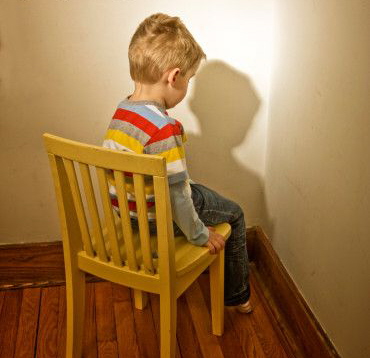
Many thanks to the chair for letting me take a seat this week (certainly not the last of my terrible puns, be warned). Never was there a more appropriate topic to discuss Baz Luhrmann’s most recent flick than that of excess. I, for one, agree with the Chair on the idea that excess is only good when it’s above and beyond anything you would expect… and I can’t argue that Luhrmann’s version of F. Scott Fitzgerald’s famously-read-in-high-school novel didn’t heed that call (and then add some), but like the characters ponder in the story itself re: Gatsby’s lavish, over the top affairs, “what’s it all for”?
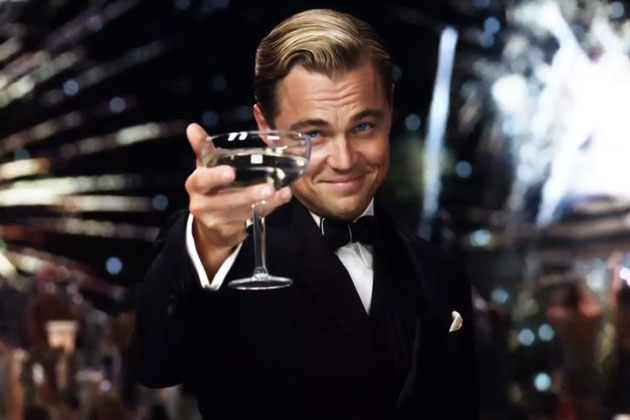
I think I’ll need that drink
I decided to see the film in 3D because, frankly, I was curious. Typically I opt to see 3D films in standard 2D, partly because I wear glasses and having to wear multiple pairs of glasses at once makes me feel like a Kentucky Derby jockey, but also because I find that it completely takes me out of the story. Too much is focused on the effects, and little on the affect (trademark pending on that gem). I thought I’d give it a try on old Gatsby because at its very core it is indeed a tale of excess and I was hoping (praying) that the symbolism would quite literally jump out at me. Unfortunately, this was not the case.
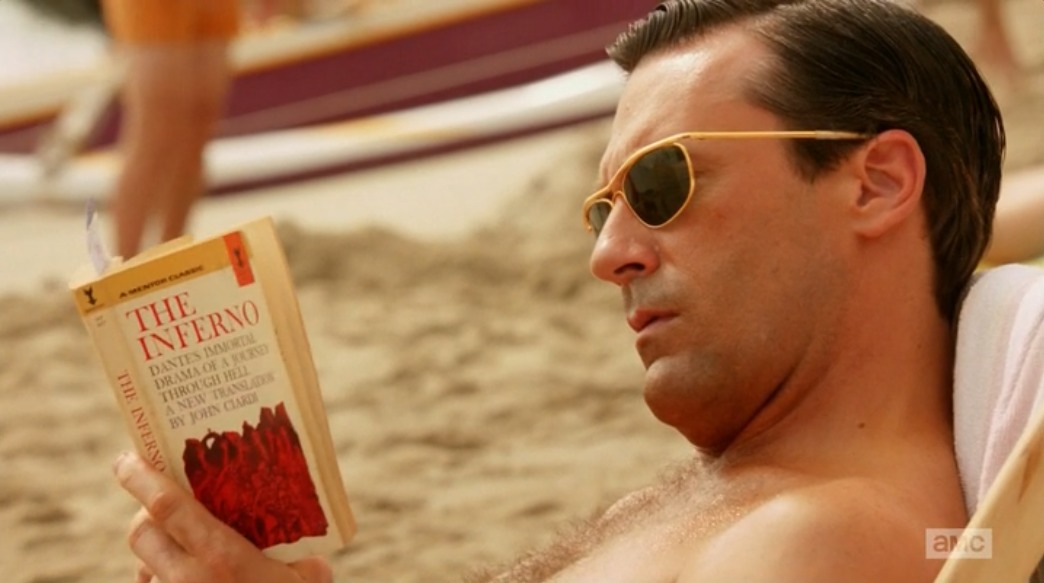
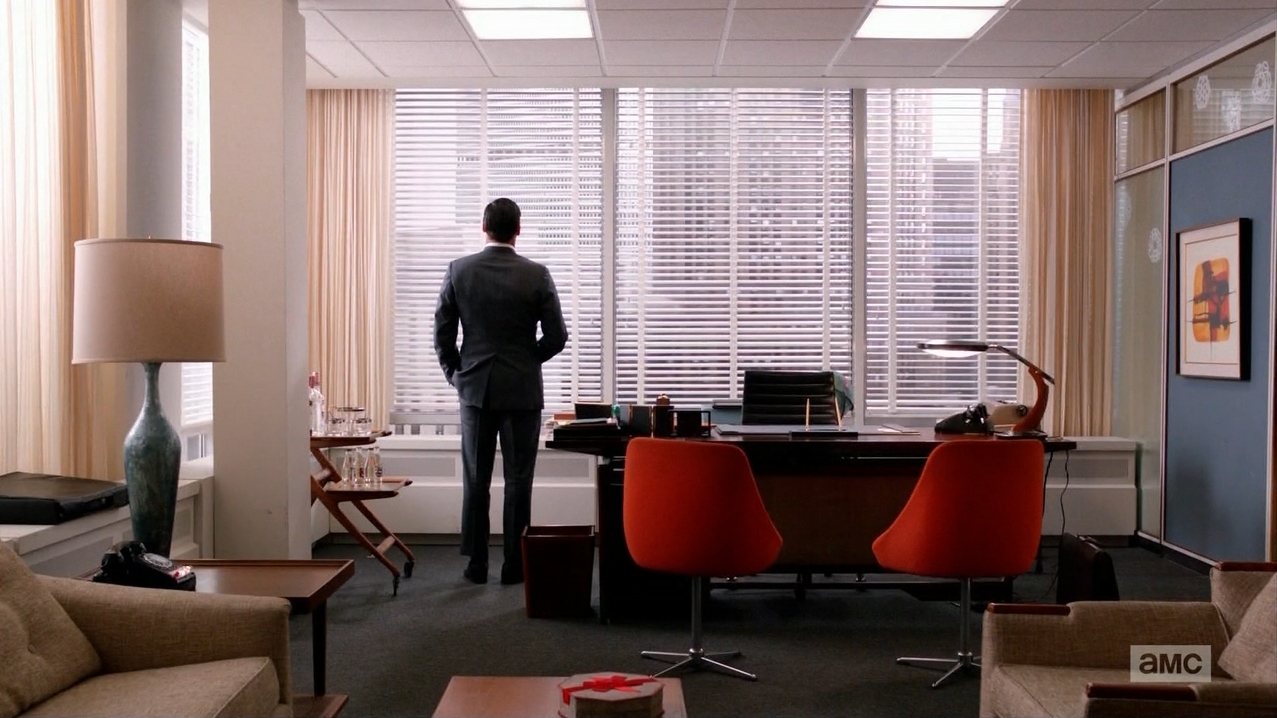
Instead, I found myself watching The Great Green Screen, a tale of 1920s New York City by way of Narnia. So separated from their surroundings, the characters might as well have been on Pandora, romping around with James Cameron’s Na’vi tribe. And yes, you could argue that the version of the 1920s created in the film is pure fantasy (complete with arguably one of the best (and anachronistic) hip hop/pop soundtracks I’ve heard in years), thus making my Avatar correlation totally legit. But lest we forget the key difference here: NYC IS A REAL PLACE! A real, breathing, heavily photographed and documented metropolis. Give me the glimmer, the glamour and the art deco to the hilt, but don’t give me some cheap green screen facsimile that injects absolutely zero atmosphere or emotional connection to the characters. If Baz wanted my head spinning after one of Gatsby’s great parties, a job well done – but unfortunately for all the wrong reasons. If I was in the mood for a visual hangover, I’d much rather watch Don Draper drink his new turtleneck-clad business partner under the table.
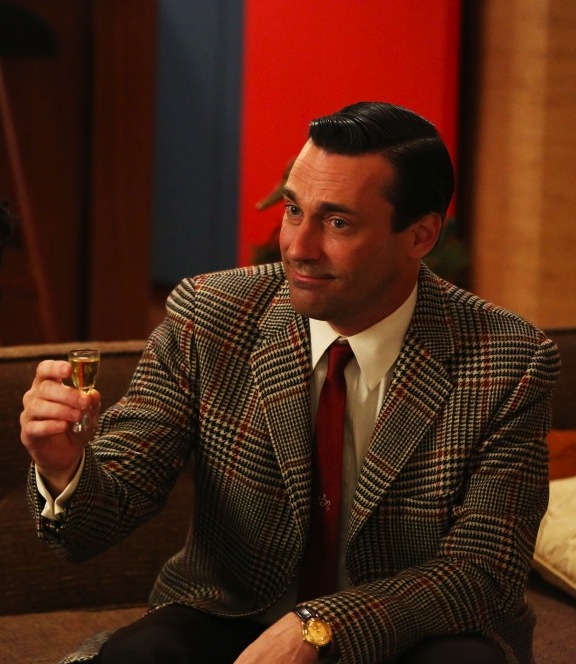
Shameless Jon Hamm photo? I’ll drink to that!
Excess and indulgence might seem like equal partners, but unfortunately, this film may have overdosed on both, leaving me with the same feeling as when I eat an entire sleeve of Mallomars – queasy and full of regret. Perhaps what they say is true, the novel is simply unfilmable… but let’s revisit that when the next version comes out in 2034.



 notes from a chair