All The Same

Just(ly) Married

Just(ly) Married

I don’t cry at weddings.  For me, weddings are a joyous moment between two people who love each other that attendees are asked to share in.  Hence, I always find them a happy experience assuming:

a. I agree with the spousal choices of the couple in question
b. I like (or at least don’t dislike) the couple in question
c. I am happy with the gift I am giving the couple in question (if indeed there is a gift involved)
d. I am not sitting uncomfortably in some lame outfit or unnecessarily bizarre location mandated by the couple in question.

But tears?  Not so much.

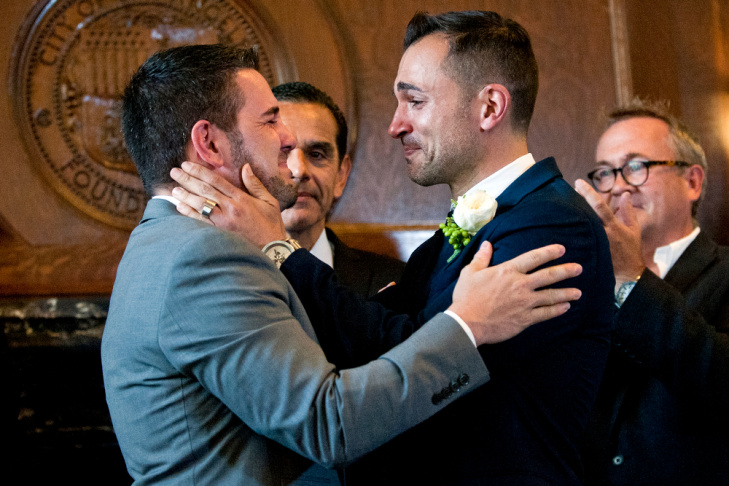
However, I did cry at a wedding of two people I didn’t know and wasn’t even invited to this week.  It was the wedding of Jeff Zarillo and Paul Katami, two men who after the last few days I feel as if I do know because they were the newly victorious co-plaintiffs of the recent marriage equality case before the US Supreme Court.  And as LA Mayor Antonio Villaraigosa stood up for a few minutes in City Hall to marry them, and I watched it being telecast live on The Rachel Maddow Show (which seemed especially apt considering – well, you know), big wet tears suddenly started sliding down my face.  Like, really suddenly.  Without warning.  Even my male partner of 25 years who I am not currently married to (why rush it?) was a bit taken aback.  Who is this weird guy crying at a televised wedding and who kidnapped the cynical queen (my words, not YOURS) I’ve lived with for the last quarter century, he must have wondered.  Well, I wondered the same thing.  Just goes to show you that no matter how much time you spend with another person, or yourself, there will always be surprises.

Work that waterproof mascara, girl.

Work that waterproof mascara, girl.

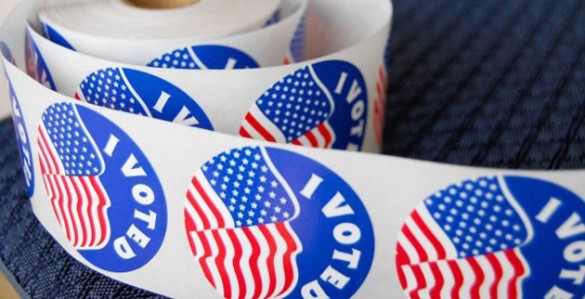
The same is true of the world.  No matter how many years you believe you understand the universe you can always get the rug pulled out from under you at any given moment.  Certainly that is also how large groups of people of all sexual persuasions must have felt simultaneously this week when they were told that it will likely be much, much harder for them to cast votes in the next election (and all others after that).  Votes that, as the years go by and our electoral differences further solidify between right and left with very little of the soft center remaining (think mismatched Oreo tops without the fillings), become more and more essential if we’re to truly call ourselves these UNITED States.

The Supreme Court also rendered another verdict this week – overturning one of the cornerstones of Civil Rights legislation of the 1960s – Section 4 of the Voting Rights Act.  This law required that states with a history of discriminatory voting laws against non-white people (mostly southern states) needed to be pre-approved before amending any of their current voting laws.  This essentially meant that states that previously made it harder for Blacks (and other non-whites) to vote and went kicking and screaming into what we now think of as the integration of all races in US society, need special policing because they had proven time and time again that they were likely to fall back into their old ways of doing things.
EVERYONE deserves a sticker!

EVERYONE deserves a sticker!

Simply put, if you were a black or brown person, or even a white person who was a member of a certain group in states like Texas, Alabama, North Carolina, Virginia and a few others, you were going to need more sophisticated ID’s and the lines were going to be A LOT longer before (and sometimes even with) Section 4.  Think this is my liberal bias?  Well, not this time.  Since the dissolution days ago of #4, Texas has already proposed a new voting law that says concealed hand gun licenses are acceptable voter IDs but that student IDs and disabled veteran IDs alone are not enough to allow a citizen to vote at their local polling place.  Other states like Alabama, North Carolina, Florida and Virginia are also planning to reactivate voting laws that limit the number of hours certain polling places are open (particularly in poor neighborhoods) and put restrictions on advance voting (a time-honored tradition in many African American communities).

Oh – and by the way – Happy 4th of July.

Boom

Boom

Well, at least you could feel the public fireworks spreading for gays and lesbians nationwide as the Supremes ruled that same-sex marriage is officially legal again in California and, even more importantly, that the Defense of Marriage Act, a 1996 federal law that defined marriage as solely between one man and one woman, thereby ostensibly outlawing ANY federal rights for same sex couples for all eternity, is unconstitutional.

What does this mean?  That pretty soon gays and lesbians who are married in any of the 13 states (and counting) that now allow gays and lesbians to marry – including New York and California, two of our most populated states – will be able to file joint federal tax returns, receive spousal Social Security benefits and participate in hundreds of other privileges their fellow citizens have always enjoyed.  That is, in a word I refuse to credit to Donald Trump – huge.

EXCEPT –

There is a problem.

Not to be a party pooper but here’s what I’ve learned as a lifetime member of at least three minorities (gay, Jewish, and men 5’7” & under).  The rights of all people deemed less than or the other by those in power are forever intertwined.  It is, all of it, the same issue.  Who is going to be the next other?  That’s anyone’s guess.  But I can no sooner be overjoyed at being granted permission to legally marry at long last without being devastated that the rights of my fellow non-white citizens are in danger of being infringed upon at the ballot box in the next election.  And this is not because I’m a liberal and certainly not because I am a particularly good person.  It’s because – they are all THE SAME RIGHTS.

Equal is equal.

Equal is equal.

As sure as I’m sitting here writing this, the absence of rights for some other minority group means that my just gotten ones could very soon be in jeopardy.  All it takes is a slight tipping of the scales in the other direction that newly discriminatory voting practices could insure. No minority is safe alone.  But all are safe if they are woven together. Because contrary to what is being spewed by the far right wing among us – we are a nation that is built on the uniting of minorities: religious ones, freedom-loving ones, multi-colored ones, and even sexually varied ones.  This thought does not EXCLUDE the most conservative or religious among us.  It simply INCLUDES everyone else.

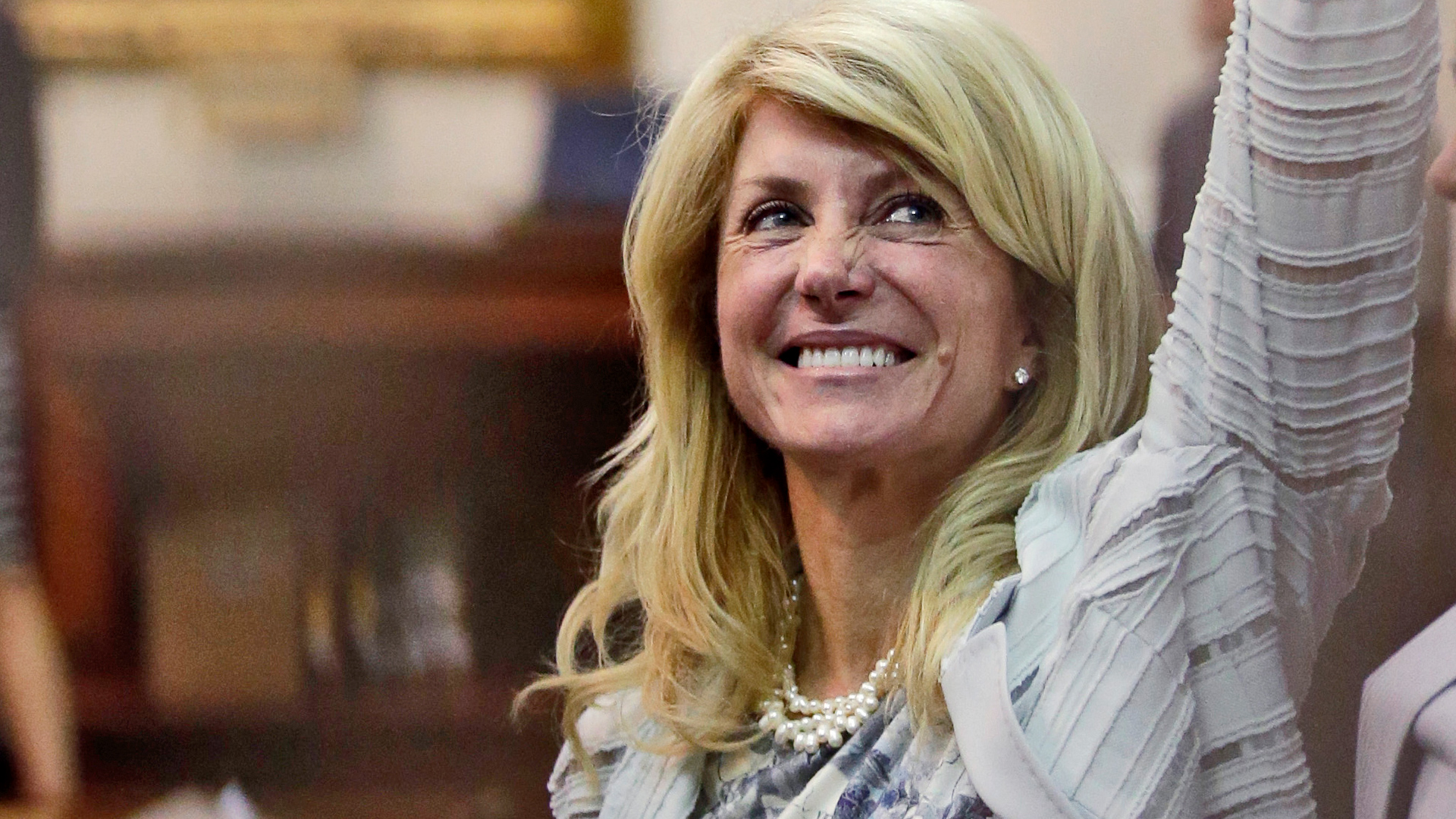
Wendy Davis, a Texas state Senator who has become a new personal hero of mine, proved that fact when she stood for 11 hours without food, water or a bathroom break and successfully filibustered a pretty hostile group of her fellow legislators in order to stop a proposed Draconian law in Texas that was going to force the closing of most of its health clinics for women and thus severely deny statewide access to birth control services (nee abortion rights) for many females (most of them poor ones).
Greatest American Hero

Greatest American Hero

Ms. Davis, a Harvard-educated lawyer, is blonde, tall, thin and white – all of which make her part of the privileged elite in Texas and most other states.  But it took only one day after her victory for the very conservative Texas Gov. Rick Perry, an avid supporter of the now defunct bill, to marginalize her into underprivileged, minority status by roaring publicly that that woman who filibustered had a child at 19 and was raised by a single mother.  This quickly lifted Ms. Davis into what Gov. Perry hopes will be one of them in the minds of the majority of the state.  Not content to stop there, the governor elaborated:  What if her (Rep. Davis’) Mom said, ‘I just can’t do this?  I just don’t want to do this?’  …It is unfortunate that she hasn’t learned from her own example that every life must be given a chance to realize its full potential and that every life matters. 

See how quickly even a successful white woman can be reduced to an unfeeling, immoral, underage mother who, if given the access to the health care she advocates, couldn’t be trusted to not abort her own daughter?  Never mind that if you count numbers Rep. Davis, a female, is actually in the MAJORITY of the population.   The largest groups among us are not always the most powerful, especially if one travels many thousands of miles away to, let’s say, our financial landlords, China.  Of course, sometimes one need to look no further than one’s back door to make that point, as Ms. Davis and the rest of her fellow teenage Moms, gays and lesbians, and the minority voters of the United States so amply demonstrate to those who want to use them as a wedge issue of the future.

However, if you put all of us together – and add the rest of the nation’s immigrant population (that’s pretty much ALL of us aside from native Americans if you go back far enough) – you’ve got something else.  It’s called, as we like to say around the Fourth of July, these United States.

Happy Birthday to us (native Americans included).  All of us.  And that means – everyone.

Gay is the Old Black

Emmy bait.

Emmy bait.

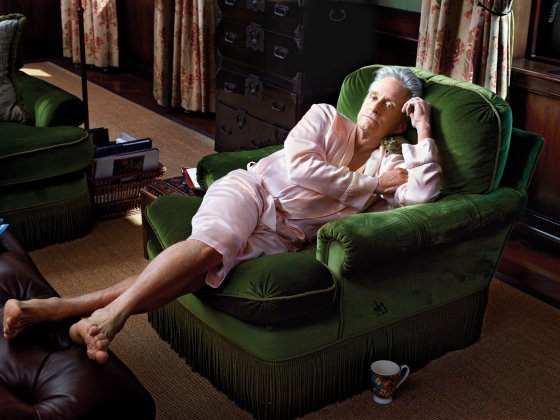
One wonders if Michael Douglas would play the part of the homophobic father of Jonathan Allen, the 20 year-old from Tennessee who, after being thrown out of the house by his parents two years ago for being gay, wowed the judges on America’s Got Talent this past week.  Or, better yet, if Steven Soderbergh would even choose to direct a movie about it.  Or if Jerry Weintraub would ever decide to produce it.  The way all three did with the continuously lauded and now award-winning HBO film about Liberace’s later years and prurient love life, Behind the Candelabra.

My guess:  probably not.  Most movie stars of Mr. Douglas’ generation dislike playing roles they deem too unsympathetic.  And don’t use the example of Gordon Gekko in Wall Street.  That film was made in and about the 1980s – a time when the general population actually agreed that “greed was good” and that ole Gordy was not so much a villain but a slightly tainted ideal many aspired to.

Of course, the majority of critics, audiences, and the cast and crew have not deemed the cable TV portrait of uber-gay Liberace unsympathetic either.  That would require that the real-life tale of the entertainer and his former lover Scott Thorson had been truly told.   The one about a 16-year old boy who was lured into the Las Vegas home of a fifty something mega-millionaire star with promises of wealth and family.  The one where the star repeatedly had sex with the boy for several years before he turned 18 (as well as any number of years after) with full knowledge said star was breaking the law. The same one where, when the older man got bored with the boy and the boy started taking too many drugs, as many young boys do, found a replacement and tossed him onto the street as he had so many others before him that were of age, with a little bit of money and a couple of fur coats – all the while publicly denying to his dying day that they ever had that kind of relationship or that said entertainer was even gay.

Eyeroll

Eyeroll

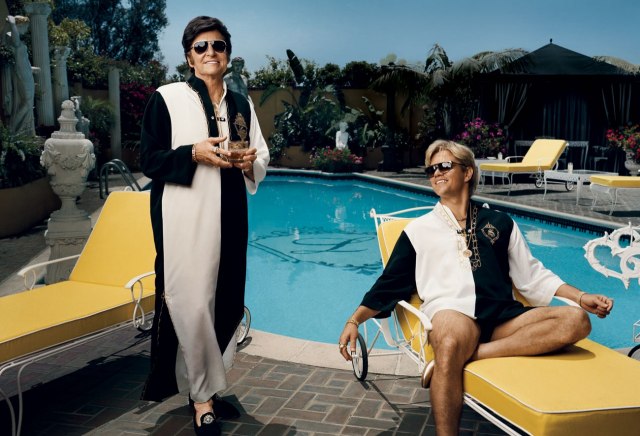
I’ve resisted writing anything but a few paragraphs about Behind the Candelabra up to this point because it seemed like the kind of film that would get some recognition for the circus stunt of Michael Douglas in sequins and a blonde-tressed Matt Damon screwing him from behind, and then disappear.

Such is not the case.  The cable film just won best drama and best actor from the Broadcast Critics Association.  It played to large and enthusiastic crowds at the Cannes Film Festival.  And mostly straight audiences (and some gay) seem to have embraced it as bold and groundbreaking.  Even those few writers who have dared to write critical pieces about the movie are often skewered, lacerated and told to get over themselves in the comments sections (even in respected places like Salon).   Also, Behind the Candelabra is likely to get nominated and win a slew of Emmy Awards, and go down in the books as “the courageous film all of the studios passed on with that director and that cast (can you believe it!) because they were too afraid of the gay subject matter.”  The latter is the meme that Mr. Soderbergh and Mr. Weintraub have been tirelessly and successfully peddling during the last six months.

Which is why, at this point, I’m weighing in.

Frankly – this film disgusts me.  Not as much as the lies about the war in Iraq, gay bullying or the right wing trying to take away a woman’s rights to choose.  That’s a different level of disgust – maybe more like infuriation.   But disgust – yeah, that about covers this.

I’ve thought a lot about other words to use to describe my feelings – queasy, nauseated, annoyed or even…jealous?  But finally, after much consternation, I decided that the perfect world is, indeed….

dis·gust  A feeling of revulsion or profound disapproval aroused by something unpleasant or offensive.

It is worth noting it’s not the people attached to this film that signal disgust to me – I respect them all (professionally that is, I don’t know them personally).  It’s the film itself and everything it tells us about where the industry is today vis-à-vis movies about gay people – or about most minorities – that makes me want to run to the toilet and be sick.

Someone tell that to the Emmys!

Someone tell that to the Emmys!

This is also not to say that the life of Liberace might not make an interesting movie.  That story – the one about how a young Midwestern piano prodigy invented (and for years carried off) the flamboyantly effeminate (some would say homosexual) persona of a character named Liberace and became the world’s greatest entertainer while still managing to convince his mostly gay intolerant world of fans he was anything but homosexual, would indeed be fascinating and almost certainly would not have caused me to write any of this.  And, even if it wasn’t particularly good, I doubt it would actually have made me feel disgusted.

Of course,  we will never know for sure since that tale was far from the one HBO and this prestigious group of A-list film professionals chose to tell in 2013 – a time when gay marriage is not only favored by the majority of people in the US (and an overwhelming majority under 25) but where its difficult to read any daily print or online news source where a major story about something homosexual is not featured on the front page.  I mean, even me – a middle aged guy who was “born that way”- sometimes gets gay fatigue.

geyyyyy

Still, true change in the movies, and the world, is not solely about the amount of ink you get or the measure of RAM you occupy on someone’s computer or website.  True change not only moves at a glacial pace but is often a one step forward, two steps back deal.  And this is where Behind the Candelabra comes in.  And me.  And my disgust.  The kind that I’m feeling right now as I compose this.

Writers are told all the time that their movies need a reason to be made. So are producers, directors, actors and studio executives.  But since writers are, by definition, the inventors of the first tangible version of a project, perhaps it is best to start with us.  As a writer one asks oneself:  What is the reason for this story?  Why make it?  What compels it to be told?  What would interest an audience?  Why will anyone care?  Why do I care?

I feel you Neil.

I feel you Neil.

I teach my writing students to ask these questions early on because I don’t want them to waste their time working on anything they are not fully invested in.  Even if it is the silliest, most exploitative story in the world, the author must find a way to imbue some kind of personal feelings of – well, something – into it.  Because if it doesn’t mean much to us, how can we expect it to mean anything to you?

I’ve watched Behind the Candelabra twice and have been looking for meaning, or even relevance, to today’s audiences.   Here’s what I’ve come up with:

  • The story of a May-December relationship told from a gay perspective could be fair diversion, one supposes.  But that would seem only fair (and not exploitative) if we had a bunch of films about other, less prurient (and more successful) same sex relationships to compare it to – which we don’t.
  • The emotional journey of a relationship can sometimes be enough to override a lack of story.  In essence, the ride you get having a front row seat to the ups and downs of human interaction between two people over a period of time can substitute for a paucity of plot points.  There are some emotions here – for instance, shock and sadness that an older person could actually convince a younger person to have extensive plastic surgery to remake their face to that of their “mentor.”  But certainly not ever sadness or shock that this relationship will end badly – or interest in how it does – which knocks out most of the tension throughout the film and causes the last hour (and more) to be deadly dull.

    A sharp contrast to this knee-knudge heard 'round the world.

    A sharp contrast to this knee-nudge heard ’round the world.

  • Maybe it’s the spectacle??  Ahh, now we’re getting somewhere.  The sequins, the clothes, the excess of a hidden lifestyle and time period in show business that no longer exists is lots of fun.  And those gays – who better than them to do this up in style!  (Though note: there is not a single gay person in the principal above-the-line talent or crew).
  • Another attraction could be the over-the-top characters themselves, who are at the very least entertaining in a very broad, stereotypical manner compared to what else was going on in the world at that time.  The homosexuals have always done this well since time began and it makes audiences quite comfortable to view them this way, thank you very much.   And certainly, why make any movie that is not at least fun!!??
  • Juicy parts for actors who can be cast against type.  The old Hollywood joke: Every time a straight man puts on a dress they give him an Oscar?  Well, not anymore.  (Note: Even James Franco’s Marilyn Monroe drag as Oscar host fell flat a few years ago).  So, you have to find new ways for them to do it.  How about a happy recipient of anal sex who dies tragically that can’t be X-rated?  It’s Oscar/Emmy bait for Michael Douglas.  (He even gets to have AIDS, but we can downplay that ‘cause the real life Liberace did!). Plus, what about an enjoyment of Speedos, suntans and Las Vegas?  It’s the flip side of Ocean’s 11 for Matt Damon and he’ll jump at that!   What actor wouldn’t want to play younger than they are, get fat and then skinny and then fat and skinny again as they age, become addicted to drugs and then recover?  No one, that’s who.
Yeah, I'm exhausted too.

Yeah, I’m exhausted too.

But please, please, please, please – do not tell me this movie is groundbreaking or even something different.  And if you’re a high-powered A-lister, don’t keep spreading your tales of woe about how the heads of movie studios are ruining the business by not taking chances on this kind of film.   They might be ruining the business by not taking chances but NOT taking a chance on this film was exactly the right choice.  It has no relevance to 2013.  It had relevance in 1983, and in 1993 – at the height of the AIDS epidemic – when it might have meant something other than an easy way to make some money, get some attention and garner a few awards for “courage.”

The people who made it should know better.  And might benefit from watching Jonathan Allen tell another all too familiar, yet far more commercially relevant and compelling story for today.  This story was  indeed shown last week not on the big screen or on cable television but on, of all things,  network reality TV  – America’s Got Talent, to be exact.

It is indeed the golden age of television.  In some circles, at least.