Chairmeter: Mad Men’s Top 5 Moments from Season 6

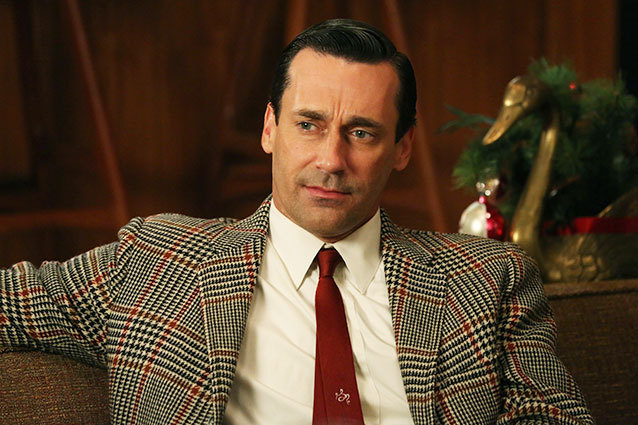
Another post with Jon Hamm? I don't believe it!

Another post with Jon Hamm? I don’t believe it!

The Chair has never been shy about his adoration for AMC’s Mad Men. In preparation for this Sunday’s season finale, here are his Top 5 moments… with a few honorable mentions (in the form of bonus gifs).

WARNING: SPOILERS AHEAD. If you’re planning to binge watch these episodes and you aren’t up to date… you’ve been warned.

#5 – The Poor Dear…
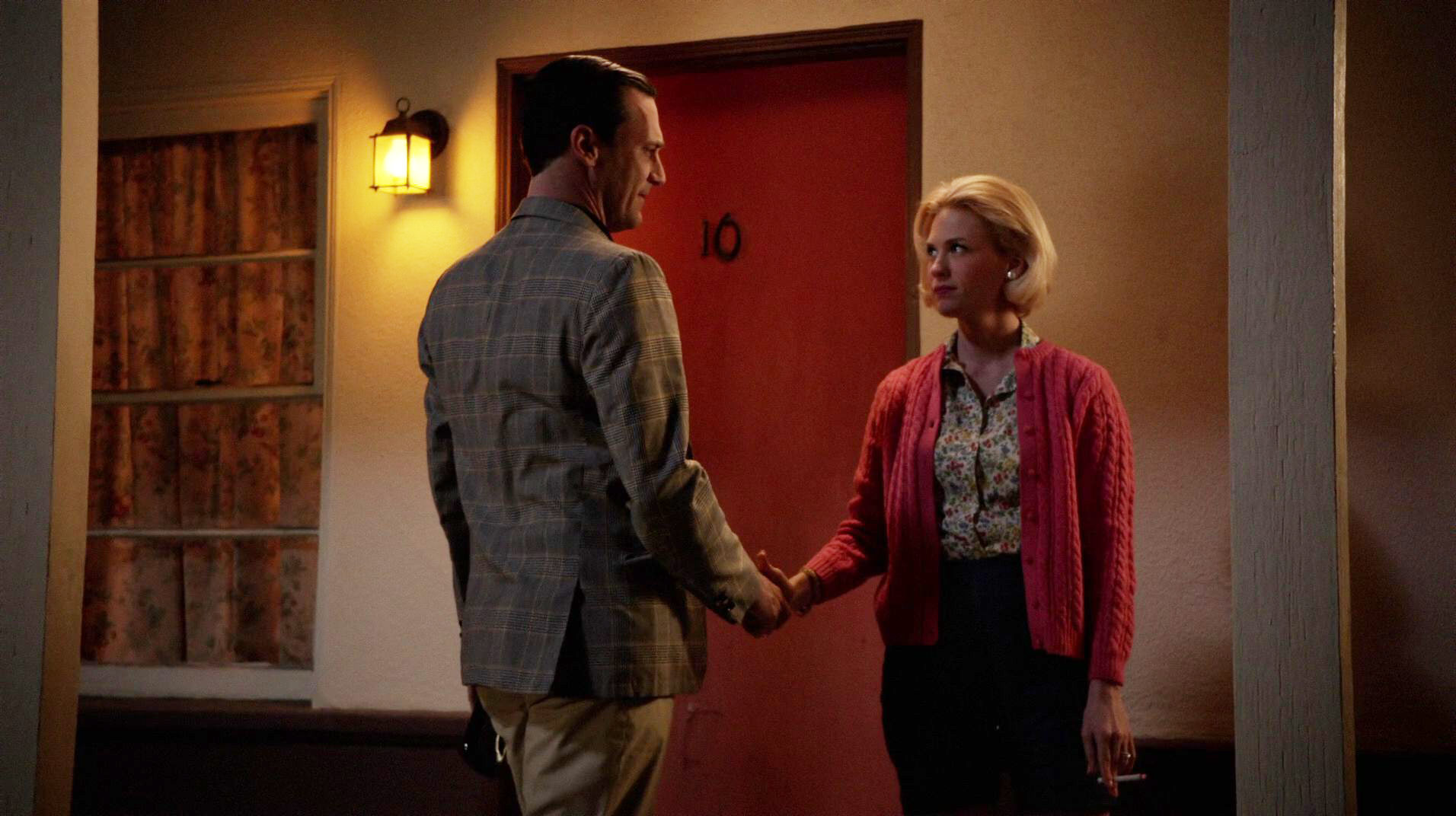
Let's get it on!

Let’s get it on!

Nothing is better than sex with an ex while it’s happening and nothing is worse than sex with an ex after it’s happened.  Though it depends on through whose lens one is experiencing the before, the after and the sex.

This comes rearing its ugly head right at us in The Better Half, Episode 9.  Betty, the remarried-to-someone-else ex Mrs. Don Draper, is headed to see her son Bobby at summer camp and is dressed in Daisy Mae short-shorts hugging her newly slimmed down figure. (Did Weight Watchers work?  We assume so).
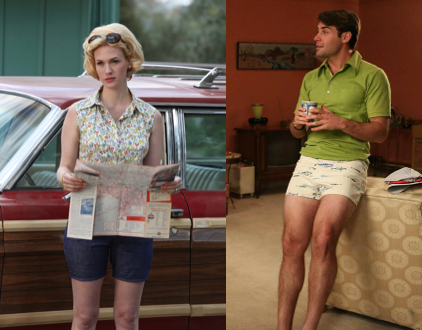
A lotta leg this season!

A lotta leg this season!

Don dutifully heads off to the country to reluctantly greet his son at camp when he happens to spy a very familiar woman’s leg and behind from behind.  Never one to totally forget anything he’s left, behind or otherwise (pun!), Don gives his ex the Draper stare and she reciprocates with some Betty eye-batting.

Before we know it – well, it’s never that easy – there’s some disappointment, drinking, jockeying for position, odd motel room etiquette and convenient spousal absence and talk of the children first.  And then, quite inevitably, these two people who seemed destined to barely ever stand within 30 feet of each other before smoke and fire emitted from either their ears, mouths of some other orifice, are back in bed – doing it.

The sex, as usual, wasn’t the point – though there was plenty of that.  It was Betty’s observation afterwards, smoking away and listening to Don speak about his current wife, Megan.  She looks at him, a huge weight obviously lifting off her shoulders, and touches his cheek gently.

That poor girl, she doesn’t know that loving you is the worst way to get to you.

Pot?  Kettle?  Or has tea already been served to Don by his ex wife?  Well, maybe all three.  For now.

#4 Knife in the Gut

Courtesy of the amazing vulture.com gif series

Courtesy of the amazing vulture.com gif series

Just when we begin to think that Peggy Olson, the young smart career woman with a lousy personal life, might actually have a chance at having the semblance of a personal life, she stabs her boyfriend in the gut and he dumps her.  Literally.  Well, okay, in MM world it’s never quite that easy.

Peggy is the go-to ad writer these days and as one of the town’s top creative people is making some money.  But instead of buying an apartment on Manhattan’s Upper East Side (bonus 2nd ave subway reference!), she’s talked into a larger but occasionally crime/rodent/roach ridden West Side abode by her liberal writer boyfriend, Abe (Note: Never listen to writer liberals of any era).  In The Better Half, Peggy, thinking Abe is an intruder or something worse, takes her knife and stabs the interloper in the dark in self-defense.  Only – it’s Abe – and he’s got a knife in the gut – and he’s bleeding.  Really.

Fearing he’s dying on the way to the hospital (and who wouldn’t be in MM world), Abe looks at Peggy and takes stock of their life together – a life that he knows she isn’t quite happy with that he realizes is a sham he convinced himself he was happy with.

Your activities are offensive to my every waking moment. I’m sorry, but you’ll always be the enemy, he tells her, blade still inside.

Ouch.. that's rough.

Ouch.. that’s rough.

Suffice it to say, they’re breaking up.  Though Peggy has to ask just to make sure.  Poor Peggy.  Or perhaps not.  Cause if this show is anything, it’s cheeky.

#3 Comforting” Mrs. Rosen

Ruh Roh

Ruh Roh

What’s a worse Oedipal nightmare than walking in on your parents having sex?  Walking in on one of your parents having sex with someone else.  In the tradition of Shakespeare and Death of A Salesman this is what happens to young teenager Sally Draper in Favors, Episode 11.

We think it’s about Sally sneaking into the downstairs neighbors’ apartment to retrieve a note that reveals she has a mad crush on the Rosens’ dreamy 17-year-old son, Mitchell (who can blame her!).  But what’s really happening is that while Sally retrieves the note she witnesses the discordant image of her father, Don Draper, in the midst of sex with Sylvia Rosen, Mitchell’s mom.  Yuk.  Double yuk.  Triple yuk.

Then, once you have time to think about it, all you can really think about are Sally’s upcoming therapy bills.  But all Sally is thinking is how to get out of there.  Which she does.  Pronto.

Don tries to reason with her but to no avail.  And then in a final scene, banished outside Sally’s locked bedroom door (again.. who can blame her!), Don tries in vain to offer some sort of reason for what happened that his daughter will be able to understand.   Says Don:  I was only trying to comfort Mrs. Rosen.

Lame!!  Sally is 14 and she’s Don’s daughter.  She knows this confirms everything she ever feared about her father and men in general – and then some.  Quadruple yuk.  But in a very good way.

#2 Grandma Ida
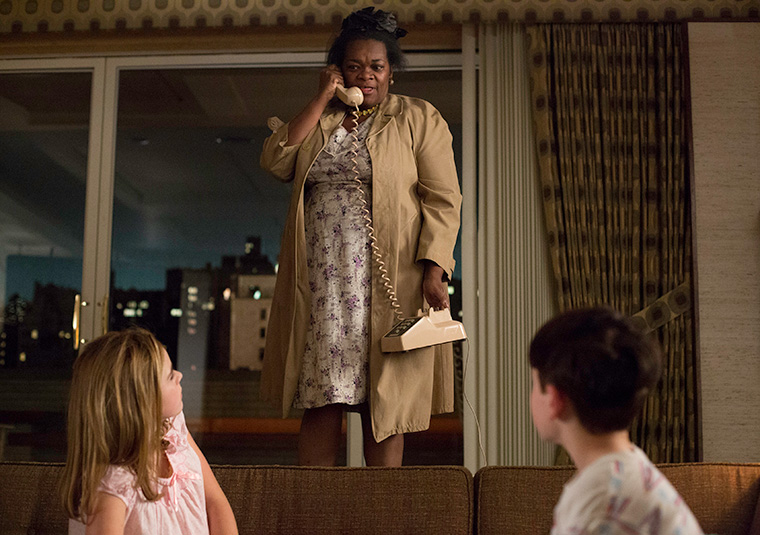
MM_608_JA_0213_0674

Unlike most televisions shows or films set in the 1960s, MM doesn’t tackle historical issues head on but instead chooses to illustrate the issues through its pivotal characters who – like is usually the case in life – have nothing at all to do with the current event at hand.  In The Crash, Episode 8, young Sally and Bobby Draper are left alone in Dad Don Draper’s swank Manhattan penthouse while he and his new wife Megan attend to their adult responsibilities.  Enter an older Black woman who seems like the maid or the cleaning lady but says she’s their Grandma.  Grandma Ida, to be exact.

Sally and Bobby find Grandma Ida clanking around in the living room but she claims to be the lady who raised your Daddy….I’m visiting.  Didn’t nobody tell you?

As crazy as this situation seems, MM watchers AND Sally and Bobby realize that since we all know so little about Don Draper’s past that this could, indeed, be…possible?  Well, we’ve witnessed stranger outcomes.  Which is why when Grandma Ida orders Sally to come over here and give me some sugar Sally is finally too confused to do anything but respond.

Never mind that grandma turns out to be a thief and a liar while at the same time somehow avoiding offensive stereotype.  The best moment comes when a confused Bobby seriously asks the question: Are we Negroes? (Delivered pitch perfectly – a stellar season for the most recent version of Bobby Draper).

With three words, MM captured the untenable tenor of the times.  White people terror.  Black people as the other, down to the outdated word commonly used to signal their identities.  The whole sequence is profoundly disturbing and off-the-wall on so many levels.  Which is exactly the point.

And finally, #1 – The Leg
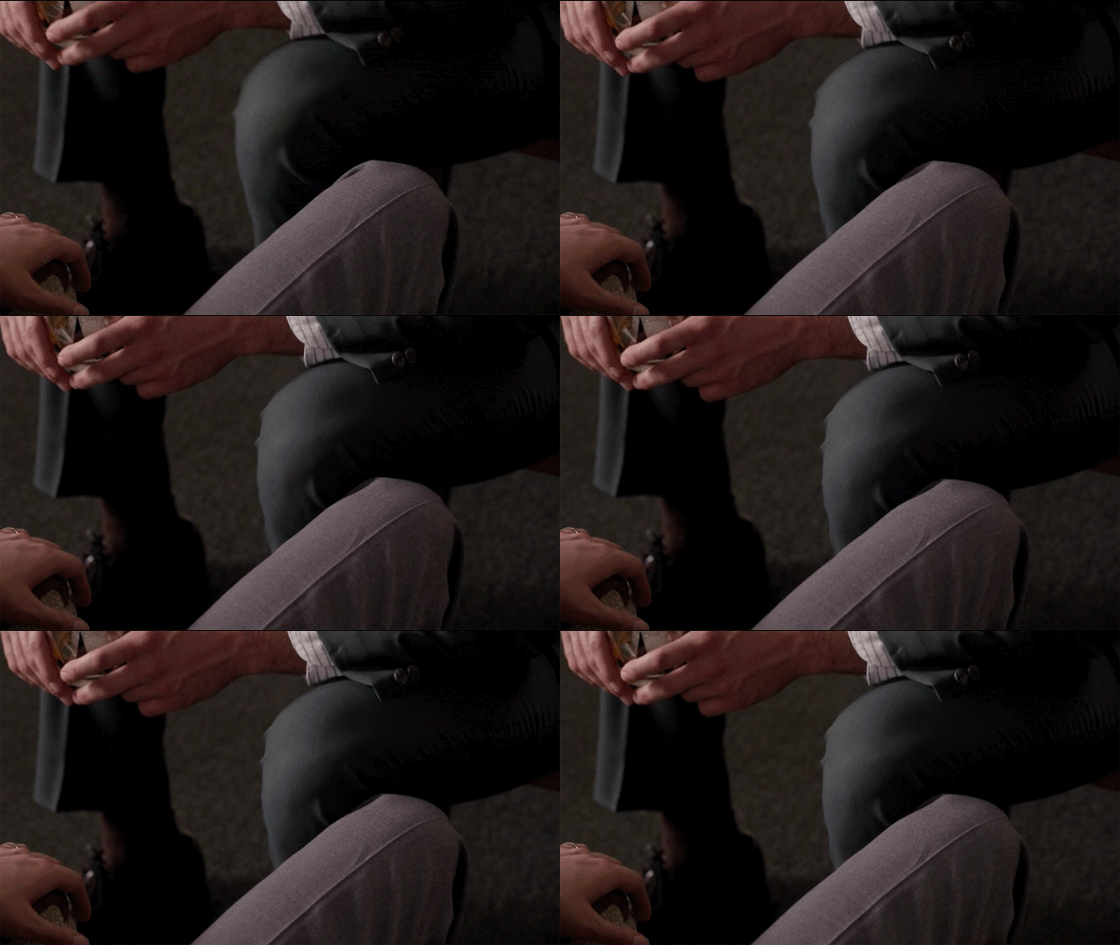
A sharp contrast to this knee-knudge heard 'round the world.

Nudge Nudge

It was the rub heard ‘round the world.  Well, at least in the US.  Among cable television watchers.  Mad Men is never afraid to go there even while its audience isn’t exactly sure where there is – which makes the creative leaps all the more daring.  And why almost weekly it finds itself the subject of a new Internet meme.

In Favors, Episode 11, new junior executive and always too helpful Bob Benson is in a closed door meeting with the ever-suffering Pete Campbell, who fears his senile mother could be having an affair with the nurse Bob recommended to take care of her.   Suddenly, Bob gingerly but with very specific intent nudges his leg into Pete’s leg, as he offers a short explanation of perhaps there being nothing wrong with falling in love with someone who dutifully attends to your every whim.

Writers take note:  The beauty of the scene, as usual with MM, has nothing to do with the actual conversation at hand but with the action and subtext – which become the main point of the scene.  Is the mysterious Bob really revealed to be gay or merely just loving and helpful?  Is Pete secretly gay despite his protestations and everything we’ve known about him?  Does the not-to-be-trusted Bob really love Pete?  Could anybody really love Pete?  I mean, Pete doesn’t even love Pete.
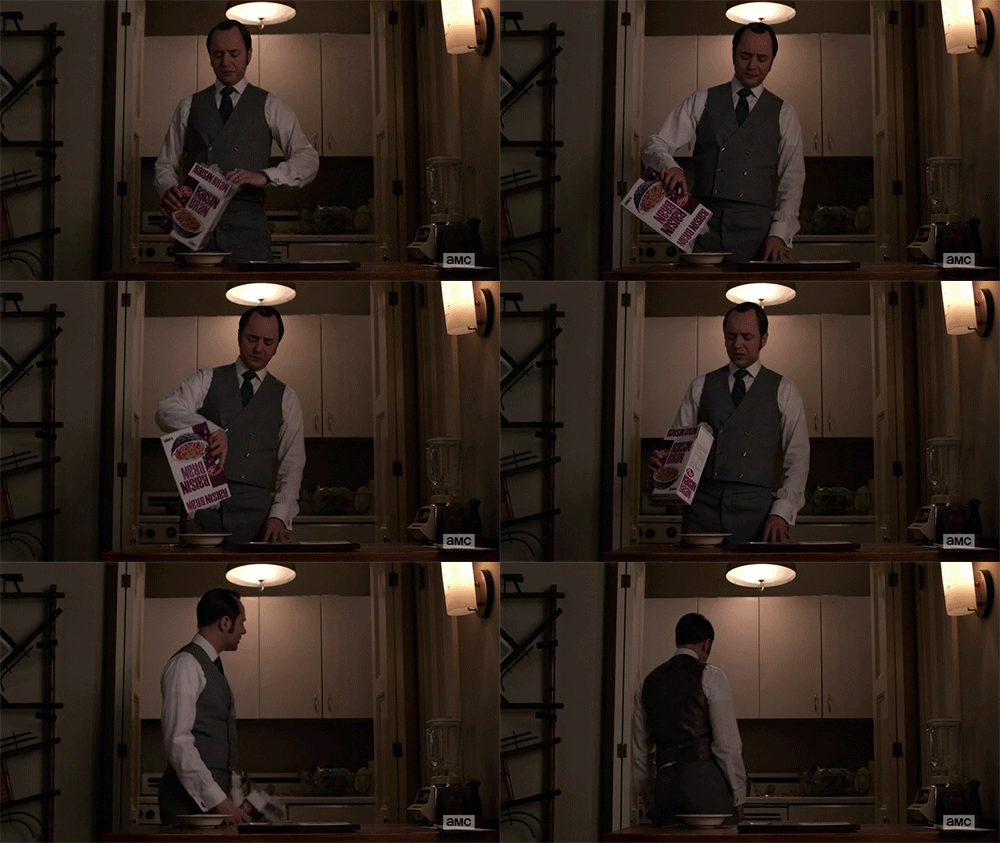
No love from Raisin Bran...

He doesn’t even get love from Raisin Bran…

As for Pete’s Mom – she’s not a pivotal character – no one cares.

As for Bob – We’re more intrigued than before and we have NO real idea where they’re going with it, even after watching the follow-up episode. Great work.  Great television.  That’s how it’s done.

As if we could finish it there!

Honorable mentions:

So many gifs what to do! Click on any that don’t dance before your eyes!

a_560x0-1

Ken Cosgrove shows off his best moves in Episode 8, The Crash

Ted proves not just turtlenecks make him cool (Episode 7, Man with a Plan)
Ted proves not just turtlenecks make him cool (Episode 7, Man with a Plan)

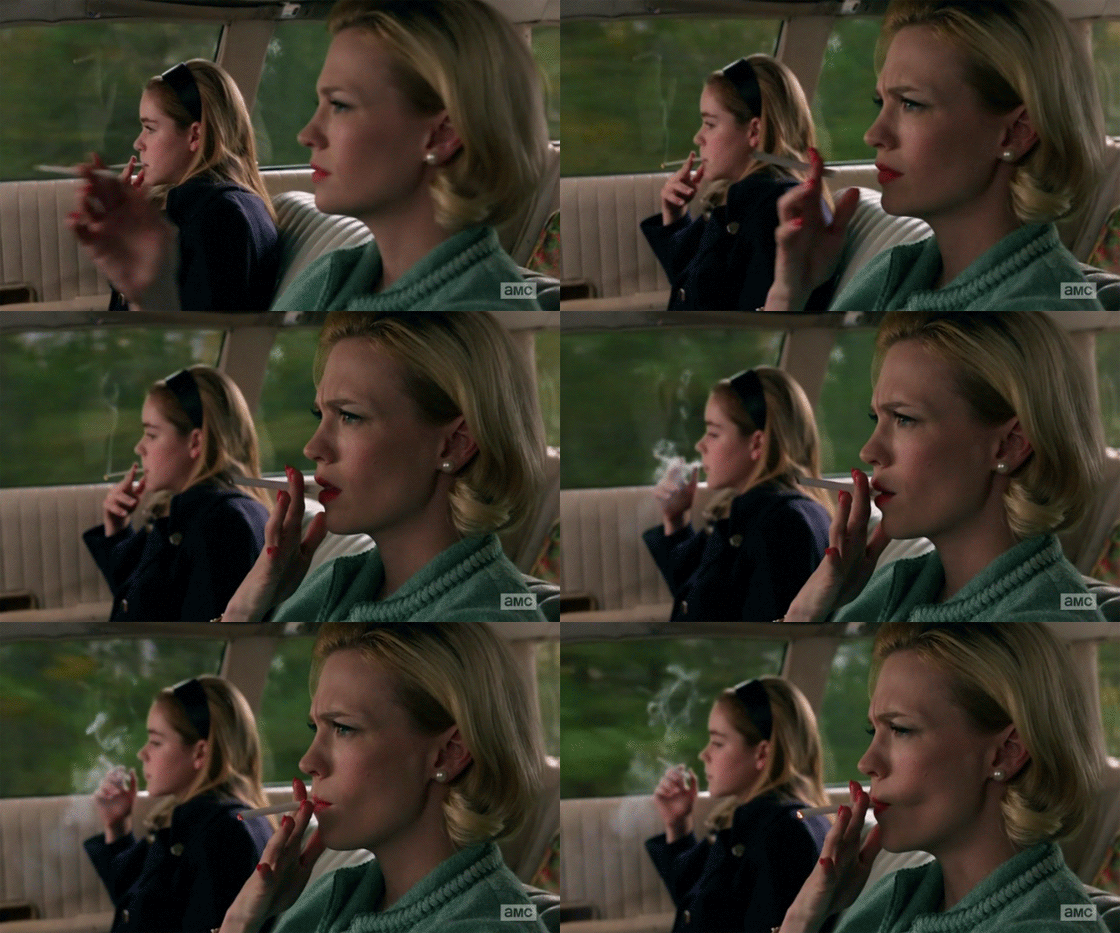
Betty to Sally: You've earned it. And Betty earns another world's worst mother award (Episode 12, Quality of Mercy)

Betty to her daughter Sally: You’ve earned it. And Betty earns another world’s worst mother award (Episode 12, Quality of Mercy)

The season's WTF moment.. featuring stand outs Stan and personal fave, Ginsberg (Episode 8, The Crash)

The season’s WTF moment.. featuring stand outs Stan and personal fave, Ginsberg (Episode 8, The Crash)

And the only proper way to send you off is with Pete's incredible fall (Episode 6, For Immediate Release)

And the only proper way to send you off is with Pete’s incredible fall (Episode 6, For Immediate Release)

Check back soon for a full recap of this week’s season finale! You’ll be glued to your chair, I’m sure.


Gay is the Old Black

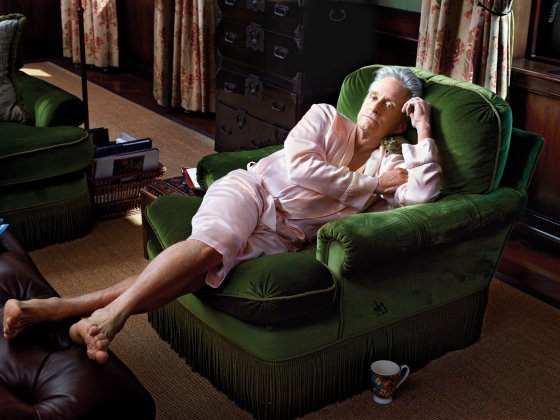
Emmy bait.

Emmy bait.

One wonders if Michael Douglas would play the part of the homophobic father of Jonathan Allen, the 20 year-old from Tennessee who, after being thrown out of the house by his parents two years ago for being gay, wowed the judges on America’s Got Talent this past week.  Or, better yet, if Steven Soderbergh would even choose to direct a movie about it.  Or if Jerry Weintraub would ever decide to produce it.  The way all three did with the continuously lauded and now award-winning HBO film about Liberace’s later years and prurient love life, Behind the Candelabra.

My guess:  probably not.  Most movie stars of Mr. Douglas’ generation dislike playing roles they deem too unsympathetic.  And don’t use the example of Gordon Gekko in Wall Street.  That film was made in and about the 1980s – a time when the general population actually agreed that “greed was good” and that ole Gordy was not so much a villain but a slightly tainted ideal many aspired to.

Of course, the majority of critics, audiences, and the cast and crew have not deemed the cable TV portrait of uber-gay Liberace unsympathetic either.  That would require that the real-life tale of the entertainer and his former lover Scott Thorson had been truly told.   The one about a 16-year old boy who was lured into the Las Vegas home of a fifty something mega-millionaire star with promises of wealth and family.  The one where the star repeatedly had sex with the boy for several years before he turned 18 (as well as any number of years after) with full knowledge said star was breaking the law. The same one where, when the older man got bored with the boy and the boy started taking too many drugs, as many young boys do, found a replacement and tossed him onto the street as he had so many others before him that were of age, with a little bit of money and a couple of fur coats – all the while publicly denying to his dying day that they ever had that kind of relationship or that said entertainer was even gay.

Eyeroll

Eyeroll

I’ve resisted writing anything but a few paragraphs about Behind the Candelabra up to this point because it seemed like the kind of film that would get some recognition for the circus stunt of Michael Douglas in sequins and a blonde-tressed Matt Damon screwing him from behind, and then disappear.

Such is not the case.  The cable film just won best drama and best actor from the Broadcast Critics Association.  It played to large and enthusiastic crowds at the Cannes Film Festival.  And mostly straight audiences (and some gay) seem to have embraced it as bold and groundbreaking.  Even those few writers who have dared to write critical pieces about the movie are often skewered, lacerated and told to get over themselves in the comments sections (even in respected places like Salon).   Also, Behind the Candelabra is likely to get nominated and win a slew of Emmy Awards, and go down in the books as “the courageous film all of the studios passed on with that director and that cast (can you believe it!) because they were too afraid of the gay subject matter.”  The latter is the meme that Mr. Soderbergh and Mr. Weintraub have been tirelessly and successfully peddling during the last six months.

Which is why, at this point, I’m weighing in.

Frankly – this film disgusts me.  Not as much as the lies about the war in Iraq, gay bullying or the right wing trying to take away a woman’s rights to choose.  That’s a different level of disgust – maybe more like infuriation.   But disgust – yeah, that about covers this.

I’ve thought a lot about other words to use to describe my feelings – queasy, nauseated, annoyed or even…jealous?  But finally, after much consternation, I decided that the perfect world is, indeed….

dis·gust  A feeling of revulsion or profound disapproval aroused by something unpleasant or offensive.

It is worth noting it’s not the people attached to this film that signal disgust to me – I respect them all (professionally that is, I don’t know them personally).  It’s the film itself and everything it tells us about where the industry is today vis-à-vis movies about gay people – or about most minorities – that makes me want to run to the toilet and be sick.

Someone tell that to the Emmys!

Someone tell that to the Emmys!

This is also not to say that the life of Liberace might not make an interesting movie.  That story – the one about how a young Midwestern piano prodigy invented (and for years carried off) the flamboyantly effeminate (some would say homosexual) persona of a character named Liberace and became the world’s greatest entertainer while still managing to convince his mostly gay intolerant world of fans he was anything but homosexual, would indeed be fascinating and almost certainly would not have caused me to write any of this.  And, even if it wasn’t particularly good, I doubt it would actually have made me feel disgusted.

Of course,  we will never know for sure since that tale was far from the one HBO and this prestigious group of A-list film professionals chose to tell in 2013 – a time when gay marriage is not only favored by the majority of people in the US (and an overwhelming majority under 25) but where its difficult to read any daily print or online news source where a major story about something homosexual is not featured on the front page.  I mean, even me – a middle aged guy who was “born that way”- sometimes gets gay fatigue.

geyyyyy

Still, true change in the movies, and the world, is not solely about the amount of ink you get or the measure of RAM you occupy on someone’s computer or website.  True change not only moves at a glacial pace but is often a one step forward, two steps back deal.  And this is where Behind the Candelabra comes in.  And me.  And my disgust.  The kind that I’m feeling right now as I compose this.

Writers are told all the time that their movies need a reason to be made. So are producers, directors, actors and studio executives.  But since writers are, by definition, the inventors of the first tangible version of a project, perhaps it is best to start with us.  As a writer one asks oneself:  What is the reason for this story?  Why make it?  What compels it to be told?  What would interest an audience?  Why will anyone care?  Why do I care?

I feel you Neil.

I feel you Neil.

I teach my writing students to ask these questions early on because I don’t want them to waste their time working on anything they are not fully invested in.  Even if it is the silliest, most exploitative story in the world, the author must find a way to imbue some kind of personal feelings of – well, something – into it.  Because if it doesn’t mean much to us, how can we expect it to mean anything to you?

I’ve watched Behind the Candelabra twice and have been looking for meaning, or even relevance, to today’s audiences.   Here’s what I’ve come up with:

  • The story of a May-December relationship told from a gay perspective could be fair diversion, one supposes.  But that would seem only fair (and not exploitative) if we had a bunch of films about other, less prurient (and more successful) same sex relationships to compare it to – which we don’t.
  • The emotional journey of a relationship can sometimes be enough to override a lack of story.  In essence, the ride you get having a front row seat to the ups and downs of human interaction between two people over a period of time can substitute for a paucity of plot points.  There are some emotions here – for instance, shock and sadness that an older person could actually convince a younger person to have extensive plastic surgery to remake their face to that of their “mentor.”  But certainly not ever sadness or shock that this relationship will end badly – or interest in how it does – which knocks out most of the tension throughout the film and causes the last hour (and more) to be deadly dull.

    A sharp contrast to this knee-knudge heard 'round the world.

    A sharp contrast to this knee-nudge heard ’round the world.

  • Maybe it’s the spectacle??  Ahh, now we’re getting somewhere.  The sequins, the clothes, the excess of a hidden lifestyle and time period in show business that no longer exists is lots of fun.  And those gays – who better than them to do this up in style!  (Though note: there is not a single gay person in the principal above-the-line talent or crew).
  • Another attraction could be the over-the-top characters themselves, who are at the very least entertaining in a very broad, stereotypical manner compared to what else was going on in the world at that time.  The homosexuals have always done this well since time began and it makes audiences quite comfortable to view them this way, thank you very much.   And certainly, why make any movie that is not at least fun!!??
  • Juicy parts for actors who can be cast against type.  The old Hollywood joke: Every time a straight man puts on a dress they give him an Oscar?  Well, not anymore.  (Note: Even James Franco’s Marilyn Monroe drag as Oscar host fell flat a few years ago).  So, you have to find new ways for them to do it.  How about a happy recipient of anal sex who dies tragically that can’t be X-rated?  It’s Oscar/Emmy bait for Michael Douglas.  (He even gets to have AIDS, but we can downplay that ‘cause the real life Liberace did!). Plus, what about an enjoyment of Speedos, suntans and Las Vegas?  It’s the flip side of Ocean’s 11 for Matt Damon and he’ll jump at that!   What actor wouldn’t want to play younger than they are, get fat and then skinny and then fat and skinny again as they age, become addicted to drugs and then recover?  No one, that’s who.
Yeah, I'm exhausted too.

Yeah, I’m exhausted too.

But please, please, please, please – do not tell me this movie is groundbreaking or even something different.  And if you’re a high-powered A-lister, don’t keep spreading your tales of woe about how the heads of movie studios are ruining the business by not taking chances on this kind of film.   They might be ruining the business by not taking chances but NOT taking a chance on this film was exactly the right choice.  It has no relevance to 2013.  It had relevance in 1983, and in 1993 – at the height of the AIDS epidemic – when it might have meant something other than an easy way to make some money, get some attention and garner a few awards for “courage.”

The people who made it should know better.  And might benefit from watching Jonathan Allen tell another all too familiar, yet far more commercially relevant and compelling story for today.  This story was  indeed shown last week not on the big screen or on cable television but on, of all things,  network reality TV  – America’s Got Talent, to be exact.

It is indeed the golden age of television.  In some circles, at least.