
Here is what you try not to think about over a long holiday weekend:
- It was a record 108 degrees in Los Angeles on Saturday but clearly “man-made climate change is not primarily responsible for it,” say any number of those now in power to do something about it in Washington, DC.

Me, right now
- Massive flooding in Houston occurred some days earlier leaving more than 50 dead and counting, many thousands of others homeless and a cost for full rebuilding over the next decade estimated into the billions (that’s with a “B”).
- ELECTORAL POTUS has NOW decided to do away with DACA (Deferred Action for Childhood Arrivals), thus requiring the MASS DEPORTATION of close to ONE MILLION people brought here as immigrant CHILDREN by parents who came to this country illegally. They key world is children, or even toddlers – meaning many of these kids don’t even speak the native language of the country they will be deported back to over the next year.
I can’t…
Well, I did. For a bit. But finally it grew too much.
So I did what I usually do – escaped into media.

Just kidding… this is me, right now
There was the Twin Peaks two-hour finale on Showtime; a binge of the entire two seasons of the half-hour Netflix comedy-drama Love; and a screening of the much lauded Sundance indie flick with a confused gay, model-looking hunk protagonist called Beach Rats.
There was also food. A lot of it. A bit of frolic. And yeah, some worrying.
But what about the MEDIA????
Netflix’s Love

Talk nerdy to me
Judd Apatow co-created and produces the show but truly it is the brainchild of its male lead Paul Rust and his wife Lesley Arfin, who write many of the episodes. The reason and resonance is clear – it is loosely based on their relationship.
Of course, what writer of comedy-drama doesn’t base their work on past relationships? The correct answer is NO ONE – no matter how much they deny it in protest. In this case, it is a twist on the archetypal nerdy, awkward but funny-smart guy in glasses and the hip, wild, partying hot girl with an even sicker sense of humor than he has. Will they get together and make it work? Or won’t they?
You may think you’ve seen it before, as I initially did, but you haven’t. One suspects that’s because the entire series is grounded in the realities that Rust and Arfin experienced themselves. No, not literally. It’s not as if what happened in Annie Hall four decades prior onscreen exactly mirrored the Diane Keaton-Woody Allen relationship or even recreated it. But there’s a reason why certain contemporary rom-com stories are great and addictive and usually it’s because they are real – at least thematically.
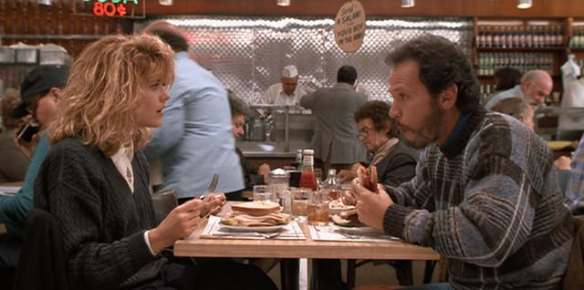
Realistically — I bet that sandwich was that good.
Love is all of this and more. Give it a chance and don’t roll your eyes at the initial tropes, which I did – only to then get quickly addicted for 22 episodes in less than a week. God, I love a good binge – of so many things.
Beach Rats

Where to begin…
Beach Rats centers on a working class teenager struggling with his attraction to men – particularly middle aged men he meets online – but it might as well be set in 1957 instead of 2017. Masquerading as real and unflinching it is instead a skewed portrait of working class life that so tilts the deck towards gay panic and hopelessness that one almost expects its characters to be sporting ducktails and cigarettes rolled up in t-shirt sleeves rather than lean muscled bodies, random tattoos and endless thirsts to get high.

Like a modern day Kenickie! #exceptnot
Of course, they do share “smokes” and often speak like something out of an old Nicholas Ray film or a low budget indie Sundance version of Rumble Fish if those movies contained too many lingering shots of fireworks, arcade games and indecipherable male torsos.
It is certainly fine to depict a group of homophobic or homo-indifferent teenagers in contemporary life. What is not fine (nor real) is to so isolate them and every gay man depicted in the film into clichés last seen in films like Frank Sinatra’s The Detective – that movie from 1968 where a self loathing homosexual hits a lover over the head with a candle or ashtray or something heavy and kills him because he can’t bear the idea of not being straight.

Kind of like what I wish I did instead of watching Beach Rats
If we are to believe director-writer Eliza Hittman’s entire narrative we also have to buy it all leads to a ludicrous third act where an out, smart Manhattan boy drives to Brooklyn after meeting the film’s sexy leading teen-man online and does something TWICE no gay man even vaguely close to the character depicted would do. EVER. Let’s leave it at that unless you’re tempted to find out what happens some snowy night by the Brooklyn version of the Village docks circa 1968. But don’t say I didn’t warn you before you get into your time tunnel and then try to throw it at your screen of choice.
Not content to leave it there, the film also paints lonely pathetic lives for all the homosexual males we meet over the age of 40 –desperate creatures prowling online for boys they can have in the bushes or in seedy motels without having shaved, showered, deodorized or, no doubt, even brushed their teeth. Though somehow our sexy leading teen/man always manages to do so for his sex dates with them. But of course he’s young and not totally gay. Yet. Hmm, what or whom to root for?
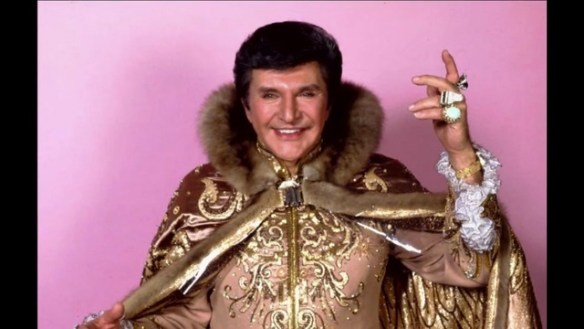
At this point I would have preferred this old gay stereotype
Sadly, there is a stinking, rotting quality to everything here – perhaps on purpose for “mood” – but ultimately landing with the great weight of phony pretension. Still, the director seems to have gotten away with this pose in the eyes of films festivals and critics galore. Check out the reviews from Sundance or this one from The New Yorker.
As a kid from the boroughs myself, who grew up loving the fireworks, arcade games and bumper cars depicted in Beach Rats, I began to dread each lingering faux magical shot of the milieu as its endless minutes marched into what seemed like many endless hours. Repetitive visual imagery is no substitute for depth of story and character, no matter how many random lights in the sky or ocean waves one’s camera relentlessly aims to capture.
The Beach Rats audience
There is a great movie to be made on exactly this subject but that’s about the only thing most gay people will feel once this film comes to its retro torturous end – other than anger.
And NO, I didn’t like it. No one bit.
Twin Peaks: The Return

Paging Agent Cooper…
It’s like the person you dated in college or in your twenties who was a glorious irresistible mess and yet you couldn’t get enough of them. Smart, confounding, funny without trying to be so, obtuse and more than a handful of times just downright f-ckg brilliant.
Often you don’t officially break up with this person. Something circumstantial happens or an unexpected situational event occurs that inevitably puts an end to the whole thing. But it’s never totally voluntary on your part no matter how many times your friends, family or even you feel like you were f-ckd over. This is because there truly was something so unique, so individual about the experience that can never be duplicated and you wouldn’t give that up for the world despite how much turmoil it might have put you through.
When’s the honeymoon?
Ironically enough, David Lynch and Mark Frost did put us through the Twin Peaks wringer again 25 years later thanks to Showtime and those of us who stayed are all the better for it. We got some hope for the saga of Laura Palmer, time traveled back to the 1950s, tried to learn some new, never heard before languages and began to realize that a good deal of the key wisdom of the world can be learned via a giant tea kettle, barren potato head tree or discovered in a Tilt-A-Whirl room with comfortable green velvet chairs.

You know I’m not gonna pass up posting a pop culture chair #takeaseat
OK, some of it made no sense at all, but have you checked the news lately? Nothing in this Twin Peaks was literal but, then again, Lynch and co. were bold enough to linger on so many scenes in real time elongated minutes that perhaps everything was. Twin Peaks is the opposite of anything pretentious – it is filmmaking/TV making (Note: Just what is the difference anymore?) with a purpose. And that purpose is to take us to a place we can believe in despite how extreme, absurd or hateful it is. It is and always has been what the books tell us great storytelling is – a seamless dream.
And with that – good night.
Muddy Magnolias – “American Woman (Slowed David Lynch version)





 notes from a chair