I was nowhere close to voting age through the entirety of the sixties but even then it never struck me as a simple time.
My earliest memory of politics was sitting on my Dad’s shoulders in a crowd so I could see about-to-be Pres. John F. Kennedy when he campaigned in the Bronx, and later hearing about the issue of the “Negro.” That was followed by the assassination of our youngest president, bloody images from the Vietnam War on TV, and the assassination of Dr. Martin Luther King Jr. and Robert F. Kennedy. By the time the seventies rolled around I was anxious daily and secretly terrified on the worst of those days.
Until I grew up and went into therapy.
That’s why it’s been strange to lately look back on the sixties with such longing nostalgia. This is likely because despite all the turmoil, the counter culture youth movement offered mantras of peace, love and hope if WE managed to bring the world together. It never occurred to me in my late teens that things wouldn’t work out, especially after we, and many others, got Nixon to resign and the world to “sort of” move on.
At that time I didn’t realize history was, indeed, cyclical, and likely all those terrifying occurrences would occur again, albeit in different forms.
Given this perspective, it was still surprising for me to have found comfort in the new, “sort of” Bob Dylan biopic, A Complete Unknown, and how masterfully Timothee Chalamet captured not only the “original vagabond” (as his onetime girlfriend, Joan Baez, once referred to him in song), but the unflinching spirit and infinite possibilities of change the music of those times, led by Dylan, offered.

Not only does he play Dylan but he offers an uncanny spiritual interpretation of the essence of Dylan and those times. The film is wisely set over only five years (1960-1965), beginning at the moment a 20-year-old Dylan arrives as a committed, near obsessive singer-songwriter in Greenwich Village who can barely contain his expression of those times through the poetry of his words, guitar chords and embrace of multi-cultural musical history. By the end of that period, it makes perfect sense that it was the unrelenting creative observations of an unknown kid in his early and now barely mid-twenties to not only move the music industry and the world towards evolution – but to take a cold look at reality and join everyone together for some sort of better tomorrow.
Religions have been started with more. Or, so they like to say.
But back to the sixties —
Perhaps in a world where you actually had to put a dime in some available phone booth to make a call, or better yet simply show up on someone’s stoop to hang out, it was a little easier for singer-songwriters to create an endless series of anthems that spirited a movement of social change. Yet what saves A Complete Unknown from being some sort of Hollywood fairy tale of social revolution is that Dylan’s self-expression was merely that, something he never meant to shove him to the forefront of a “cause,” especially as a young guy. In this telling, which seems close to the reality and not the elusive enigma of the Dylanesque legend, all he really seems interested in is music and girls.

Sure, he wanted to be recognized but not as the hot tip of the spear of societal transformation with so much of the controversy, politics and love/hate of power brokers and ardent, often crazy, admirers that came with it. He had no idea how to handle it and retreated within.
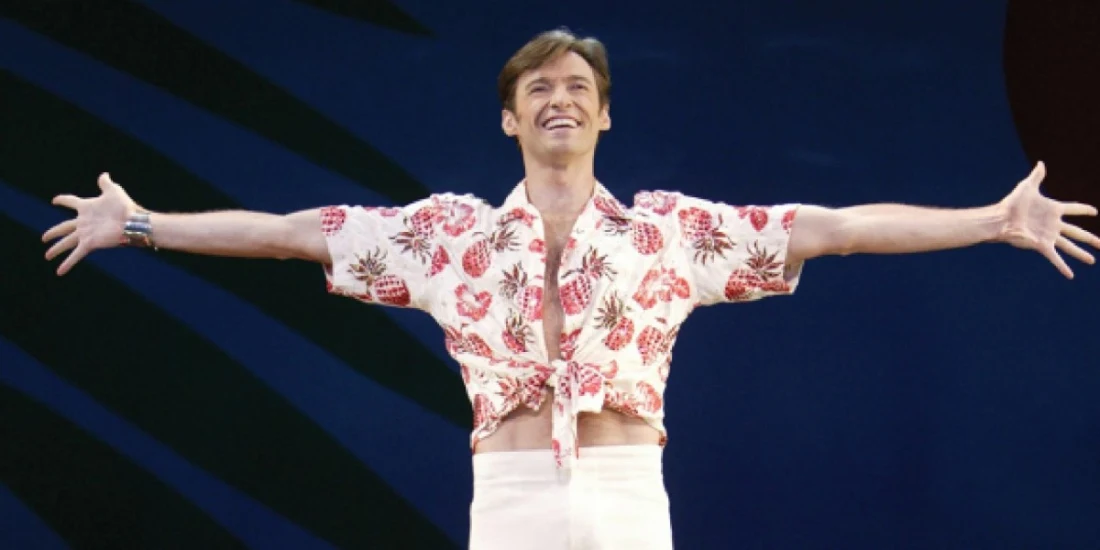
Chalamet’s performance is reminiscent of what Joaquin Phoenix did on film with Johnny Cash in Walk the Line and how Sissy Spacek so uncannily brought to life Loretta Lynn in Coal Miner’s Daughter. The closest to it I’ve ever seen onstage was how completely Hugh Jackman conjured up the spirit of gay cabaret, and later Broadway star-songwriter, Peter Allen in The Boy From Oz. Not only did they all do their own singing but they didn’t get hamstrung by trying to be an exact carbon copy of the phenom they were portraying. Instead, they found the essence of who they were and evoked their humanity.
What’s particularly great about Chalamet’s Dylan is it’s a guy with a lot of emotional flaws, someone who excels at expressing himself in words and music but is often inarticulate, withholding or simply, and even perhaps purposefully, falling short in person. He feels like a lot of young guys in their twenties who exist too much inside their heads and are not sure exactly how to live. Were it not for his talents and a desire to get laid that sometimes pushes him out of his comfort zone, you’d likely pass him by in the street. Which is exactly what you want from an actor taking on the task of playing a legend.
He’s helped a ton by director/co-writer James Mangold, who does not fall into the “cutesy sixties” trap of filmmaking but simply presents the time period as he would any decade – blunt, historical accuracy (Note: Mostly) and without over-reverence. There are a few stylized newspaper headlines and some edited television coverage but they’re minimal and don’t take over. The atmosphere on the Manhattan streets, the clothes people are wearing and the stoops they sit on reminded me of the ones I experienced as a little boy. I also appreciated that much of the New Yawk accents were kept in check. (Note: Seriously, so many of us did NOT TAWK like there was a “w” in every other word. Not that there is anything wrong with that…).
Three final points.
- At a talkback after the movie, Mangold related that despite recording all the music beforehand in a studio, he honored Chalamet’s request the first week of filming to try and do his own singing live on set in his first scene. It was so good he allowed him to do so on every song, which led to all of the other actors in the film choosing to do the same. It shows and far exceeds anything you’d get with pre-recorded tracks.

- The project was originally at HBO with a different script, got put into turnaround and was picked up by Fox Searchlight. At which point Mangold agreed to do it but only if he could rewrite the screenplay and include more of Dylan’s personal life. They didn’t have those rights but like most savvy people in the industry Mangold did it anyway and hoped for the best. The studio read it, liked it but was terrified of Dylan’s reaction. At which point, Covid happened, the world was put on hold, Dylan asked to read the script everyone was “afraid” of and wound up really liking it, when shooting was postponed once again due to almost a year of various Hollywood union strikes. Yet through the months and years, the many accomplished actors and department heads, working for far less than their usual salaries, agreed to stay on, supporting the notion that “if you build it well and build it properly they WILL come. ” And in some cases stay with you. Even in 2023 and 2024.
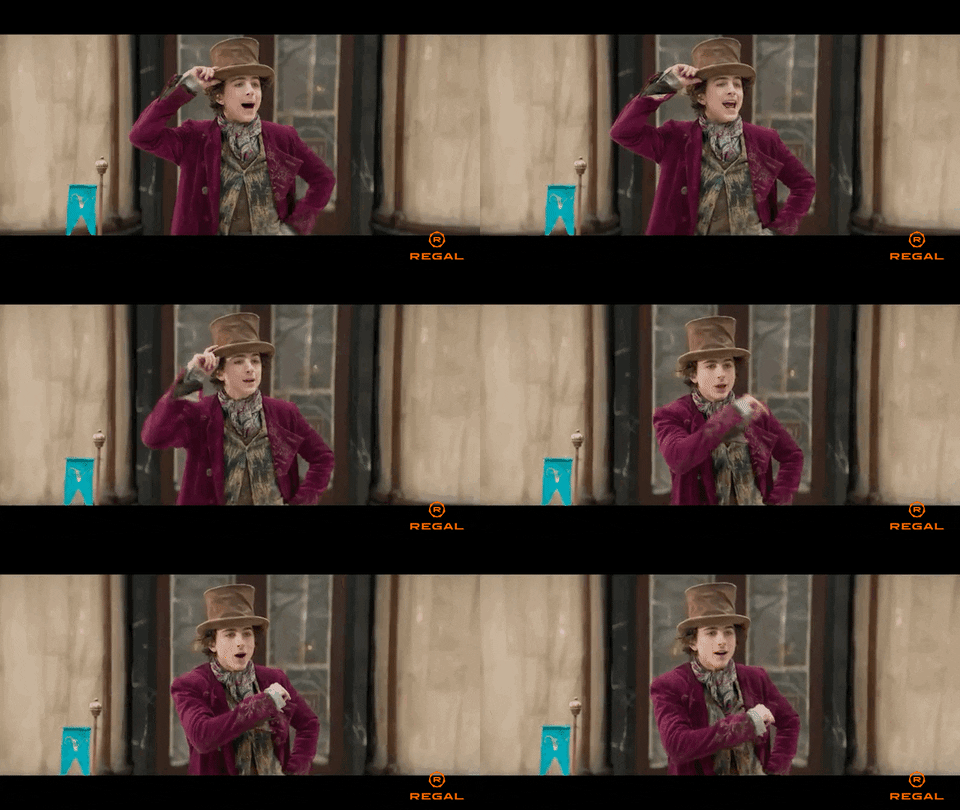
- Finally: I imagine through the holidays and in awards season, there will be any number of showy, gritty, intense, timely, torturous and generally over-the-top meaningful films that will get written about, lauded and garner the lion’s share of the attention. But none for me, and I bet any number of you, will be as evocative as A Complete Unknown. It’s a reminder of a still troubled but very different America. A time when lots of stuff was wrong, scary and hard but the music of people who cared was actually listened to en-masse and helped lead a thinking revolution that was not seen as corny, quaint or UN-American by most of us. In fact, it was exactly the opposite.
“A Complete Unknown” – Timothee Chamalet and Co.
 notes from a chair