
Photo courtesy of Dear Photograph
Nostalgia: a wistful or excessively sentimental yearning for return to or of some past period or irrecoverable condition.
The man credited for thinking up the word nostalgia was a 17th century Swiss physician named Johannes Hofer who, in his dissertation at med school, used it as a way to describe the type of anxieties he saw displayed in Swiss mercenaries longing to return home from foreign countries, as well as in students and domestics living and studying abroad and missing their native lands.
I am not sure what Dr. Hofer would think of the constant loop of nostalgia that has engulfed pop culture in the last century or if he would even recognize it as such. The new Robert Redford film The Company We Keep, the Emmy winning Mad Men as well as whole networks like TV Land and Nick@Nite, the ranting social speak of the religious right in favor of “the way it’s always been” traditional marriage, and the evocation of our Colonial constitutional right to “bear arms” (aka muskets) as a counterargument to enacting any legislation at all to prevent the sale of contemporary military style assault weapons – every one of them seem to suggest that the ideals and realities of decades past were… what?…Rosier? Moral? Or just plain fun?
I’m not sure. Perhaps it’s only that we long to return to a time that we believe existed a certain way but in all likelihood and any given human memory (or at least mine these days… and after all it, IS white guys over 50 who do tend to write history), never really ever existed that way at all.
However, what I am positive about is the medical condition of nostalgia could be considered at this point in time a worldwide pandemic from which there is little chance of recovery. The old begets the new, which grows old and then begets a “new” new, which is really not a recycle of anything new at all – just a reinvention, or post modern de-mythical re-representation of what’s come before it. Using this definition everything contemporary is nostalgic in some form and we are all very, very, very sick with Dr. Hofer’s disease – a disease to which there is, and has never been, any known cure.
Well, I guess there are worse medical diagnoses to receive and both the world and we have received them – global warming, AIDS, cancer, you name it. And that everything old is or isn’t new again is certainly not news or even very interesting or original.
However, what is fascinating about it to me is just what we are all remembering and how much of it, if anything, has any degree of accuracy to the real past or, more importantly, to what our present lives are now. I mean, if the very facts we recall are actually wrong, doesn’t that negate what meaning they have for the current day?
Before your brain starts to break, let’s move on to some pop culture – as we all often do – to illuminate our thoughts.
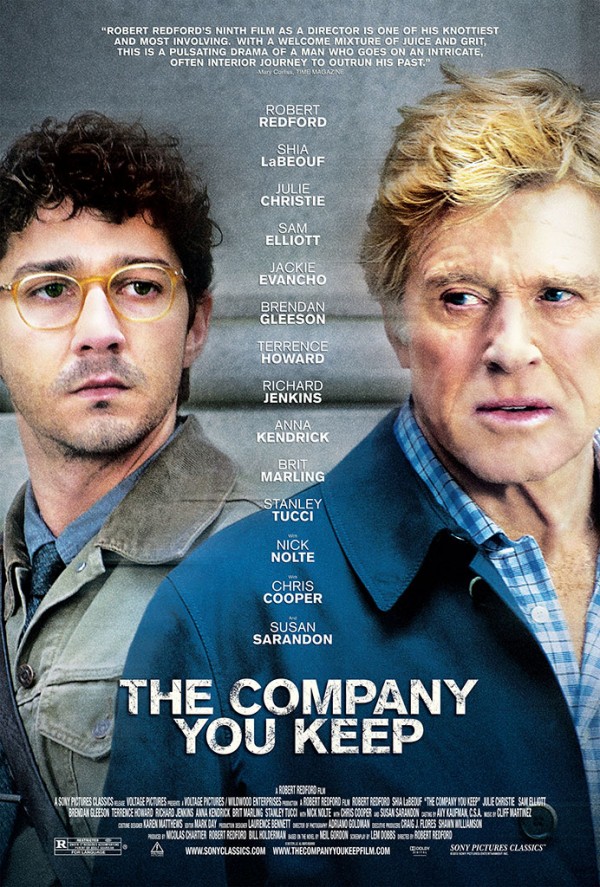
This week I took a gang of 15 college students to the glamorous Arclight Theatres in Hollywood to see The Company We Keep, a film directed by and starring Robert Redford that is about his character’s possible involvement in the radical sixties political group The Weathermen. We took the trip because nearly half of these students are writing movies set in the 1960s, which in itself is certainly proof that the nostalgia bug is alive and well and living in 2013.
Well, I certainly enjoyed reliving the political speechifying and long lost world of American left wing radicals played by right correctly aged actors like Susan Sarandon, Julie Christie, Nick Nolte and Sam Elliot, among others. Heck, they were portraying the kind of larger than life older siblings, uncles and cousins I wish I had as a child in the sixties. As for my students, who before the screening told me their fascination with the period probably had a lot to do with “missing out on all the excitement” – let’s just say they were not quite as taken by this trip down memory lane. All they felt was “lectured to” about “the good old days” and all they saw was “a depressing group of older people” who “missed what they used to be” and had for the most part lived “pretty sad lives.”

My students upon seeing the “real Sixites”
My knee jerk answer to this group of early 20ish critics is that all they got to represent them in the film was Shia LeBouf playing an obstinate reporter (is there any other kind?) in a pair of hipster glasses (to repeat: are there any other kind?) and a few unknown actors to whom they couldn’t relate. But my more thoughtful response is what they actually got was a bit more dramatic reality of the period and the people who made it. In other words, a somewhat melancholy recognition that huge social change comes in long, drawn out decades and that what seems exciting about any one particular 10-year period are really only small high points amid months and years of ordinary life. This reality, however, is not what we want to or choose to make of the sixties – especially in mass entertainment.
The above is what makes television’s Mad Men and its success on all levels even more impressive. But I won’t go on and on once again about the show I consider the best on television. I will only state that its use of the sixties as a backdrop to social change heaped on a group of fairly non-extraordinary people in New York is accurate and enticing because it doesn’t get hung up in the gauzy glow of an era but instead traffics in everyday looks and behavior amid those moments. This became even clearer to me last season with the debut of my namesake – a neurotic Jewish writer from the boroughs of New York named Ginsberg (guilty!). Ben Feldman, the actor (and, FYI, Ithaca College grad) who plays him, not only looked a bit like this young Ginsberg, but even talked and behaved like the older brother I never had in the sixties. In fact, they so got it right that it didn’t make me feel nostalgic at all, only mortified that I could have ever thought it was fitting to act and dress the way he did. And if you don’t believe me (and I KNOW I will regret it), picture THIS:
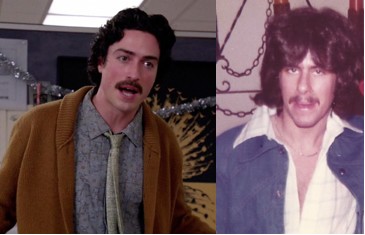
Brothers?
(Note: My photo was from 1972 but I lived in Queens and we were a few years behind the times then).
The television reruns on Nick@Nite certainly give us an exacting view of pop culture at the time and are accurate nostalgia items only if one remembers that I Love Lucy, Dragnet, The Mary Tyler Moore Show, Cheers, Friends, Happy Days and Leave It To Beaver were never true representations of anything but entertainment. The TV Land network seems to recognize this by merely putting aging (does that mean anyone over 50?) stars like Betty White, Valerie Bertinelli, Wendie Malick and Fran Drescher in old-fashioned type situation comedies that don’t pretend to evoke anything but kitschy pop culture. Perhaps that is reason alone for both its limited success and general lack of critique – it knows what it is and understands it would be misguided to be anything more than that.
This kind of reminiscence is fine for television and movies but when it begins to literally bleed over into politics and social change it becomes more like the disease Dr. Hofer described, still in search of a cure. Take gun control. Interpreting our Constitutional right to bear arms as a guarantee every American can own military style weapons our forefathers never could have imagined seems as realistic as applying the separate twin bed sleeping arrangements of Lucy and Ricky Ricardo in I Love Lucy to any young, typical show business couple of today. That’s how marital bliss was first portrayed on television, right? So doesn’t it follow that the same rules be carried over?
Or — maybe that’s an argument better suited to the traditional marriage conundrum. Things worked so much better in the 50s and 60s when Ward and June Cleaver presided in the suburbs over their two precocious young boys and when the Happy Days’ Cunningham family gave away Joanie in marriage to Chachi. Well, they worked as long as one dared not be (or marry) any other shade but white, or of any other socio-economic status than middle class, or of any other particular sexual orientation than 100% heterosexual. I mean, can you imagine if Chachi would have actually wanted to marry Fonzie and adopt children a la Cam and Mitchell in Modern Family? Or what if Joanie were really in love with Laverne? Or Shirley? Would we as a society even be exiting today? Especially since everyone knows marriage is primarily there as means for a loving couple to procreate.

Though I would have loved to see their offspring..
As unjust as you might think this comparison might be, remember that it was only last month that Rick Santorum, the runner up for the 2012 Republican nomination for US president, in 2012, blamed the shift in favor of marriage equality to include gays and lesbians squarely on the shoulders of television – and in particular one show only — Will and Grace.
Of course, Will, or is it Grace, does live a life closest to mine, so I could be a bit biased. Certainly, my twisted life does not belong on the tube, influencing the younger generation away from the tried and true traditions of nostalgia. No – those rantings of mine should stay only in the classroom (Oops!).
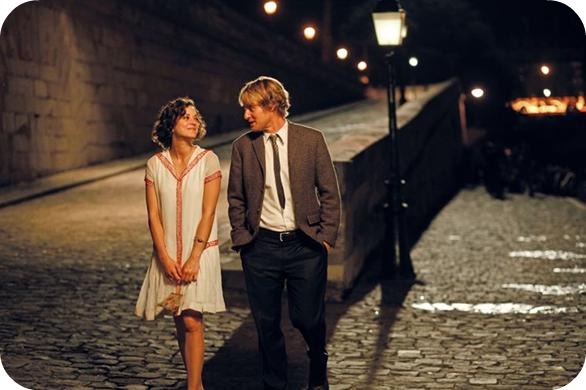
A walk down memory lane
Maybe Woody Allen said it best (as he often does) in Midnight in Paris. In choosing to direct and write an entire film that is a tribute to looking back, he simultaneously sees the past in the beautiful purple hues of glamorous 1920s Paris streets and in the timeless romantic disappointments even that past cannot mask. This speech, delivered not by his hero but by a clear-thinking intellectual in the present (who better than to deliver bad news) pretty much sums up the negative.
Nostalgia is denial – denial of the painful present… the name for this denial is golden age thinking – the erroneous notion that a different time period is better than the one one’s living in – it’s a flaw in the romantic imagination of those people who find it difficult to cope with the present.
But even Woody himself decides at the end of two hours to leave his nostalgia loving main character with a chance of a happy ending. Of course, that’s only after he traveled back in time, learned a few lessons, and then came to a new, slightly improved understanding in light of what he had so painfully experienced. Perhaps that’s the most — and the best — we can hope for when we’re so determined to idealize the past.



 notes from a chair