The Oscars are upon us and, If you’re like the rest of us Sinners, you probably agree this year has been One Battle After Another.
See what I did there??
Well, how could you miss it.
I think you mean Chairy
Normally I don’t like puns but this year has been anything but normal. Which is why we here at notesfromachair.com decided to take a Sentimental Journeyinto the capstone event of awards season with our annual Oscar podcast.
Yes, The Chair, and Notes executive editor Holly Van Buren, decided to Frankenstein the blog into the pod this week in order to divert our minds away from the doom scrolling debacle of…so many things.
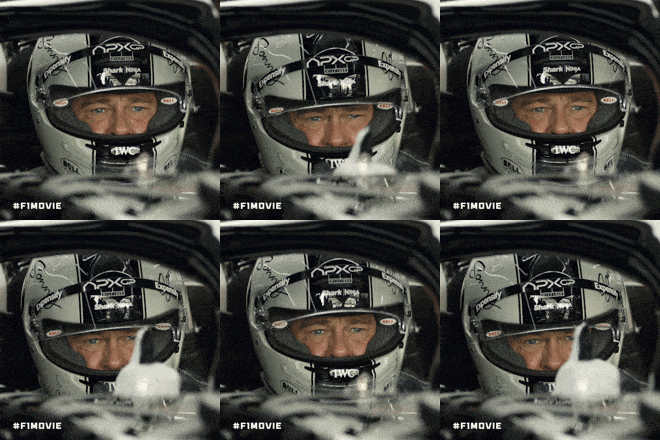
Also known as our national F1 race to the bottom of….
Okay, enough. I promise.
Roger that
Click on the link below (or here) and join us and our own personal Oscar voter, screenwriter extraordinaire Barry Sandler, who will share his picks as well as who he thinks WILL win.
Just know Barry been trying to bend the Academy to his will for… Well, let’s say he wasn’t old enough to vote for All About Eve but was able to NOT cast a ballot for Rocky.
As opposed to Holly and myself, who only have non-voting opinions and decent odds of winning our designated Oscar pools.
Along with the rest of you, now.
Also, for the record, ballet and opera reign SUPREME with us.
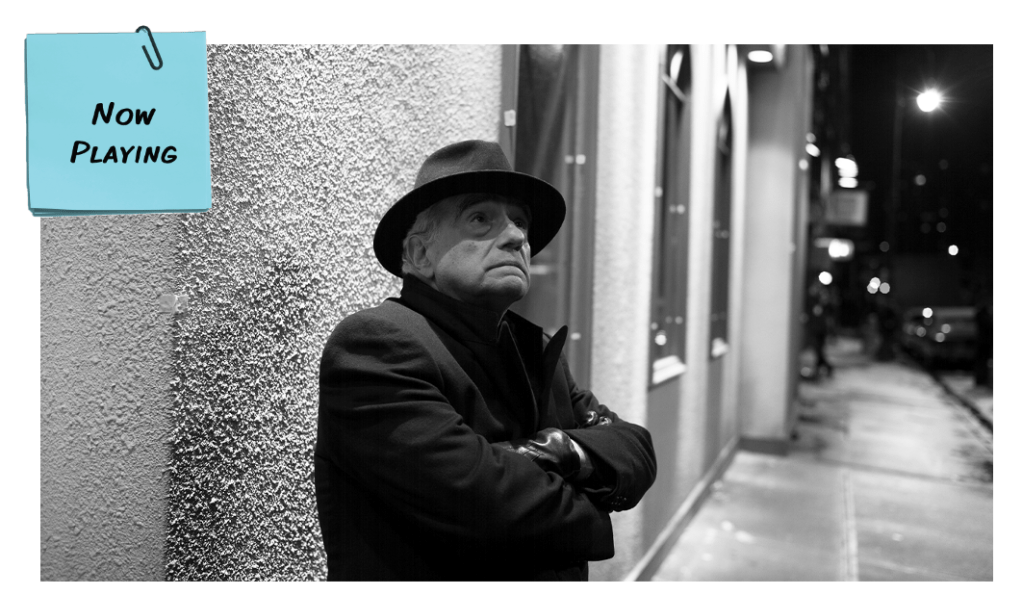
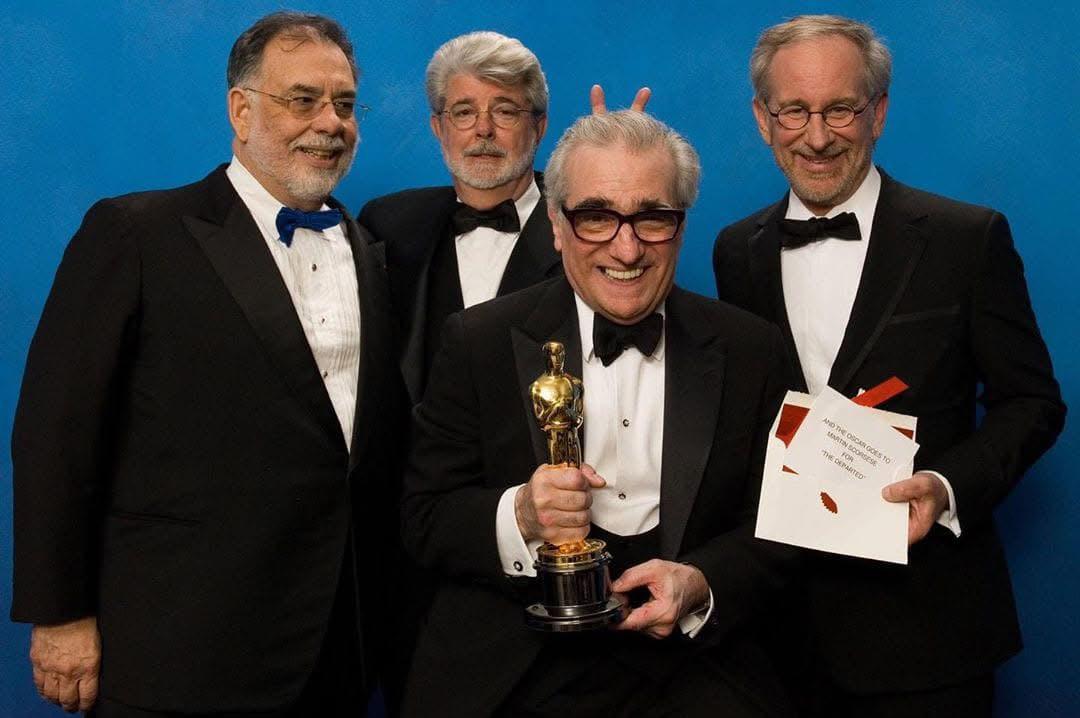
There are barely a handful of American directors who have been making movies for more than half a century and still working at the top of their craft and Martin Scorsese is one of them.
The rest are these guys
But that’s not the only reason to watch Mr. Scorsese, the excellent five-part documentary of his life and films, now streaming on Apple TV.
Rather it’s the candor in which the director, his family, and his long-time friends and collaborators so openly lift a veil of privacy to share his flaws, his genius, his often volatile nature and lifelong devotion to film, as well as his obsessive fervor and determination to make each of his movies to the absolute best of everyone’s abilities, especially his own.
The man behind the eyebrows
Never a part of Hollywood (Note: Whatever that is) and yet an undeniable part of Hollywood film history for present and future generations, Marty, as almost everyone calls him (Note: Except Daniel Day-Lewis, who for some reason only uses the more formal Martin) is that rare documentary subject that emerges not so much noble or admirable but merely very human and very, very, very hard-working.
So much so that when you’re done with the five-hours it’s hard not to feel you should immediately get to work on your next six projects and begin considering the seven others that could be percolating on the back-burner. (Note: Whether you’re in show business or not).
Get to work Chairy!
Yet as directed by feature filmmaker, documentarian, novelist and former actress Rebecca Miller, Mr. Scorsese, more than anything else, is a true portrait of an artist.
You meet the short, asthmatic kid who grew up in Queens and Little Italy among professional gangsters and street bullies that became the inspiration for so much of the subject matter he covered in movies like Mean Streets, Taxi Driver, Raging Bull, Good Fellas and Casino. But you also meet the devoted Italian Catholic kid who studied for the priesthood and made The Last Temptation of Christ, Kundun and Silence. Not to mention, the lifelong movie fan who brought his encyclopedic knowledge of cinema to New York, New York, The Color of Money and The Aviator. Even the director-for-hire who was so able to bring himself to other people’s projects – Alice Doesn’t Live Here Anymore, The King of Comedy and The Departed, to name a few – and transform them into award-winning cinema that captured the zeitgeist of their times.
Cheers to you, Marty
Still, this is not so much a lesson in film history than a fairly unvarnished exploration in what makes a person in the public eye we feel we somewhat “know,” tick. There are many dozens of interviews, mostly new but others archival, including a significant amount with the director himself, detailing his drug use, periods of clinical depression, faltering marriages and unbridled fits of rage and frustration with not only his career, but his failure at life.
Among them are also a lot of incredibly funny stories about his “lacks,” often told in a self-deprecating manner by Mr. Scorsese himself. Despite his gargantuan successes, the amount of times the director went from being at the top of the directing heap to virtually “dead” in the business (Note: His words, not mine) become head-spinning and almost comical. While it doesn’t seem like someone at his “level” (Note: Again, whatever that means) would have to go butt heads with studio moguls or beg for money, Scorsese jokes that he’s been there a lot. He even recounts one hilarious story where he threw the desk of someone he perceived to be a studio spy out a third floor window, admitting that right after he did it he was told it wasn’t even the right desk.
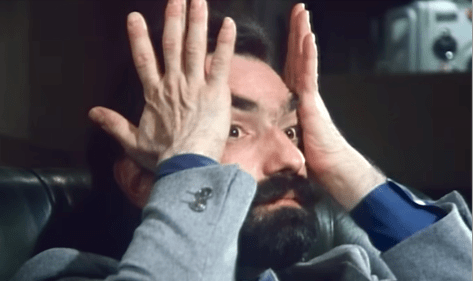
Oops?
I’ve seen every Scorsese film with the exception od Silence (2016) (Note: Some snowy night in front of the fire, as Joseph Mankiewicz wrote for Margo Channing to say in All About Eve) so by the end of Mr. Scorsese I wondered if there was anything significant I or the documentary hadn’t covered..
That is besides his 2024 Chanel commercial with Timothee Chalamet. Note: Ok, here it is:
Turns out there was one thing.
Ten years ago Marty directed an amusing 16 minute short film called The Audition, starring Robert De Niro and Leonardo DiCaprio playing fictional versions of themselves. It was essentially made as a promotional tool for a new casino in Macau at a reported cost of $70 million, and has never been released theatrically, but, well, okay, you can watch it here:
The premise is that De Niro and DiCaprio arrive separately in Manila, run into each other, and find they’re both up for the same lead role in Scorsese’s next feature film. Written by his Boardwalk Empire collaborator Terrence Winter (Scorsese directed the pilot of the hit HBO series that Winter created, winning an Emmy in the process), it plays on a generational rivalry between the two stars and frequent Scorsese leading men as they try to one-up each other in front of the boss in order to land the role.
Scorsese being… well… Scorsese, even the short doesn’t take the easy way out. Not only are both stars full of themselves, but so is the fictional version of the director. He’s clandestinely pitted them against one other, siding with each in different moments, until finally Brad Pitt shows up to make his cameo appearance by the end (Note: You know he’s coming at some point because he gets third billing).
After that, well, you can probably figure it out what happens to the two Scorsese veterans.
They beat each other up with their awards?
The quick, stylish directorial touches, clever asides (Note: I particularly loved the moment an annoyed De Niro begins imitating DiCaprio in disdain) and morally questionable behavior of the characters of the “director” “and his “actors,” are everything we come to expect from the Scorsese “brand.” (Note: Coined before that term was a de rigueur thing for anyone doing any job in the business).
But what’s most memorable about The Audition is just how keenly aware Mr. Scorsese is of the fact that to be in entertainment industry means that even when you reach the brand level of a Scorsese, you will spend the rest of your life, now and likely well into the hereafter, forever auditioning, often in uncomfortable, demeaning or even faux-demeaning situations.
The question is – will you let it get the best of you, or will you make the best of it?






 notes from a chair