The One Where I Finally Understand

I have an on and off relationship with the TV show Friends and that is as it should be. 

Or, to put it in the lexicon of the series, I’m never quite sure if we truly love each other or are just taking a break.

I see what you did there!

As its creators Marta Kauffman, David Crane and Kevin S. Bright recalled in the new HBO Max special, Friends: The Reunion, the one-line pitch to network executives about the series was always this simple:

That time in your life when your friends are your family.

So naturally there comes a point when you move on, other priorities take over and you begin creating your own family

At least that’s the way Kauffman put it in a series of interviews sprinkled throughout the special.

Hearing it said out loud in such stark terms I finally understood all these many decades later, in the 20-twenties, why a television series that became an international phenomenon from 1994-2004, and continues to this day, and will likely continue for generations to come, was never MY story.

Let’s unpack that Chairy…

I’m one of those people who never thought of moving on from my really good friends.  I knew early on I didn’t want to have kids and wasn’t going to have kids. I knew my real family would be my friends, and whatever relatives I chose to stay in touch with.  I didn’t make a distinction because there NEVER WAS a distinction.

I knew that I could create my own family any way that I chose to.  It would not even for a millisecond occur to me that the people in my life closest to me, who I’d love most in the world, could NOT include those who were my dear, dear friends.

Some of this has to do with being gay and of a certain age.   Many of us LGBTQ baby boomers simply didn’t fit into the hetero-normative margins of the straight world so we fashioned an even more fun, kind and loving one comprised of OUR friends. 

You didn’t necessarily have to be queer to be part of that world.  You just hand to get it, be there and love us.

Sound familiar?
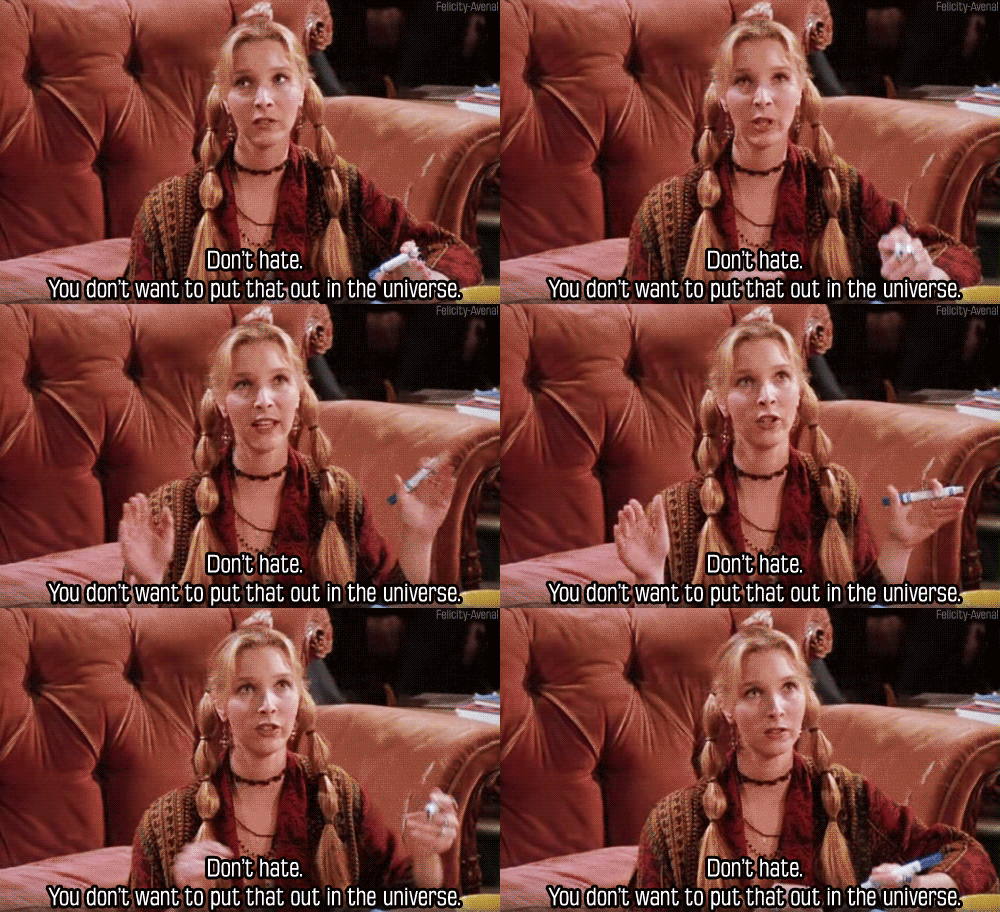
Phoebe gets it

It is important to note this was done not out of resentment but of choice.  If you grew up the way I did, at the time I did, moving on wasn’t on the table.

To have a real, true friend meant you had a forever family.  Especially if you had lived through the eighties and early nineties period prior to when Friends debuted.
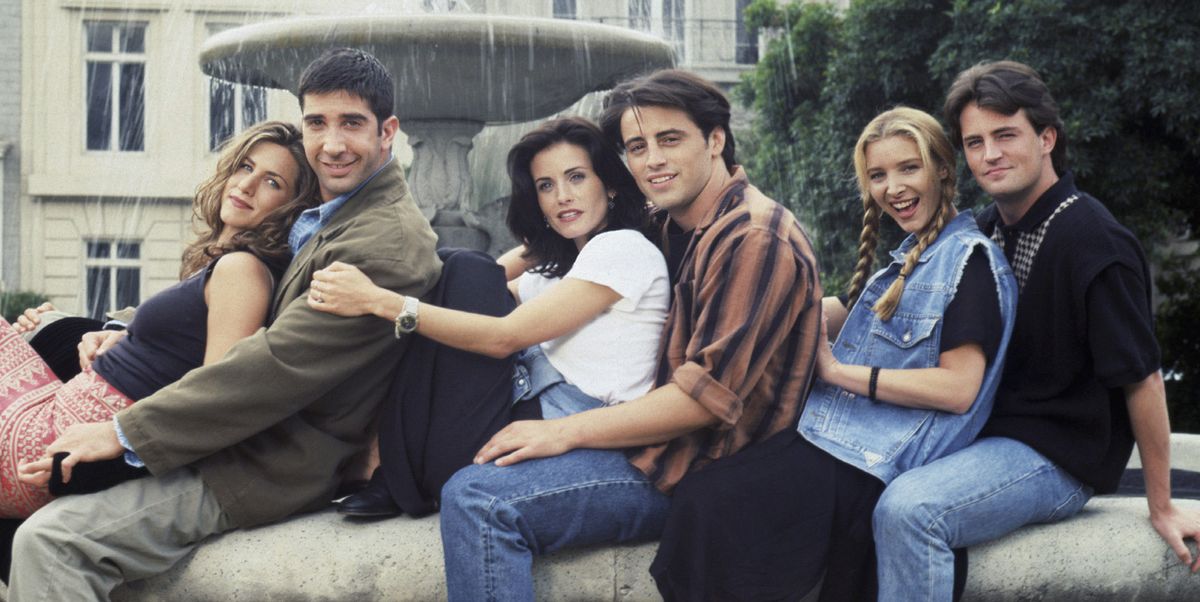
A reminder of how painfully 90s Friends is

It was the height of the AIDS epidemic and by 1994 each day was like climbing through the rubble of a nuclear holocaust if you were one of my friends.  Who was alive, who was dead, who was depressed, who was doing well and who was just generally in denial or drifting or drinking/drugging themselves to death?

That was a daily occurrence and just about the only thing you knew is that your friends that remained would be there for you.

Oh Chairy.. ya did it again!

But miraculously here’s what each day also brought you —

Dumb jokes and dumb jobs; hilarious and heartbreaking dates that might or might not turn into love affairs; mortifying moments of embarrassment and secret vices that your good friends would be more than happy to publicly rag on you for…

Terrible fashion choices, silly haircuts, weight gains and weight losses, and relatives who could swoop into town and undo every neurosis you had spent years getting under control in one quick visit.

You wouldn’t think this would be the case at the time but it’s true.  It was also what made Friends work, even for those of us who didn’t quite always get it.

Well we all get bad haircuts…

Unlike other network sitcoms of its era:

  • It was funny, it was clever, it was silly and, every so often, it tugged at our heartstrings.
  • It had six of the most charismatic and adept casts in all of sitcom history – Jennifer Aniston, David Schwimmer, Courteney Cox, Matthew Perry, Lisa Kudrow and Matt LeBlanc – who even now, reassembled together again onstage at the Warner Bros. lot, some 17 years later, seem incapable of phoning in a false or phony note when it comes to their interrelationships.
Dare we say.. authentic?
  • It has even managed to rise above all types of the usual show biz b.s. antics since its been off the air, those that have eclipsed and nearly swallowed up the afterlife of almost every other late 20th century show.  To whit:

a. Yes, we knew the actors all got paid a record-setting one million plus per episode and more towards the end of its run.  We were HAPPY for them.

b. Yeah, we know to this day it’s reported the EACH make $20 million per YEAR in residuals and the show STILL generates about a billion dollars a year for WB TV.  We can live with that if it means we get to sometimes see it.

I’m with Janice here #wow

c. Uh huh, we get the friends each received about  $2.5 mill for this special alone; that there’s a lot of cosmetic “enhancements,” and hair dye, to keep them so dewy-looking; that the “girls” are closer than the guys; that some of their careers have fared better than others; and that Matthew Perry, in particular, continued to struggle with severe substance abuse and other health issues that plagued him throughout the run of the show.  Whateva and we’re rooting for him.

But nothing truly tarnishes the juggernaut that is Friends.  And if you don’t think so consider…

a. What other cast would get paid that much money to reunite?

b. Which other show has a worldwide audience ranging from Nobel Prize winner Malala to one of sport’s GOATs David Beckham?

c. And how many nineties sitcoms could get Justin Bieber to dress up live as a potato or Lady Gaga to do a duet on a song called Smelly Cat for no billing on a reunion special?

100% would watch this show

Friends, like our friends, our families, is far from perfect.  Yeah, I wish it was more multi-cultural, economically inclusive and LGBTQ positive, too.  And, um, please, no WAAAAAYY could they have afforded that apartment at that time – grandmother or not.

But I think of everyone interviewed  Matthew Perry got it exactly right when trying to express what Friends continues to mean and how it endures.

He said no matter what party you went to years later, if you ran into another cast member, you were probably going to spend the evening with them.  You apologized to whomever you were with because all bets were off.  You knew, in that moment, you could talk for hours and very likely would do so, as if no time had passed.

The indefinable pull of that type of relationship is what makes real friends.  And what made Friends.  Whatever either of their drawbacks.
Friends Opening – Season 1

Eating Oreos in a Mallomar World

Your pick

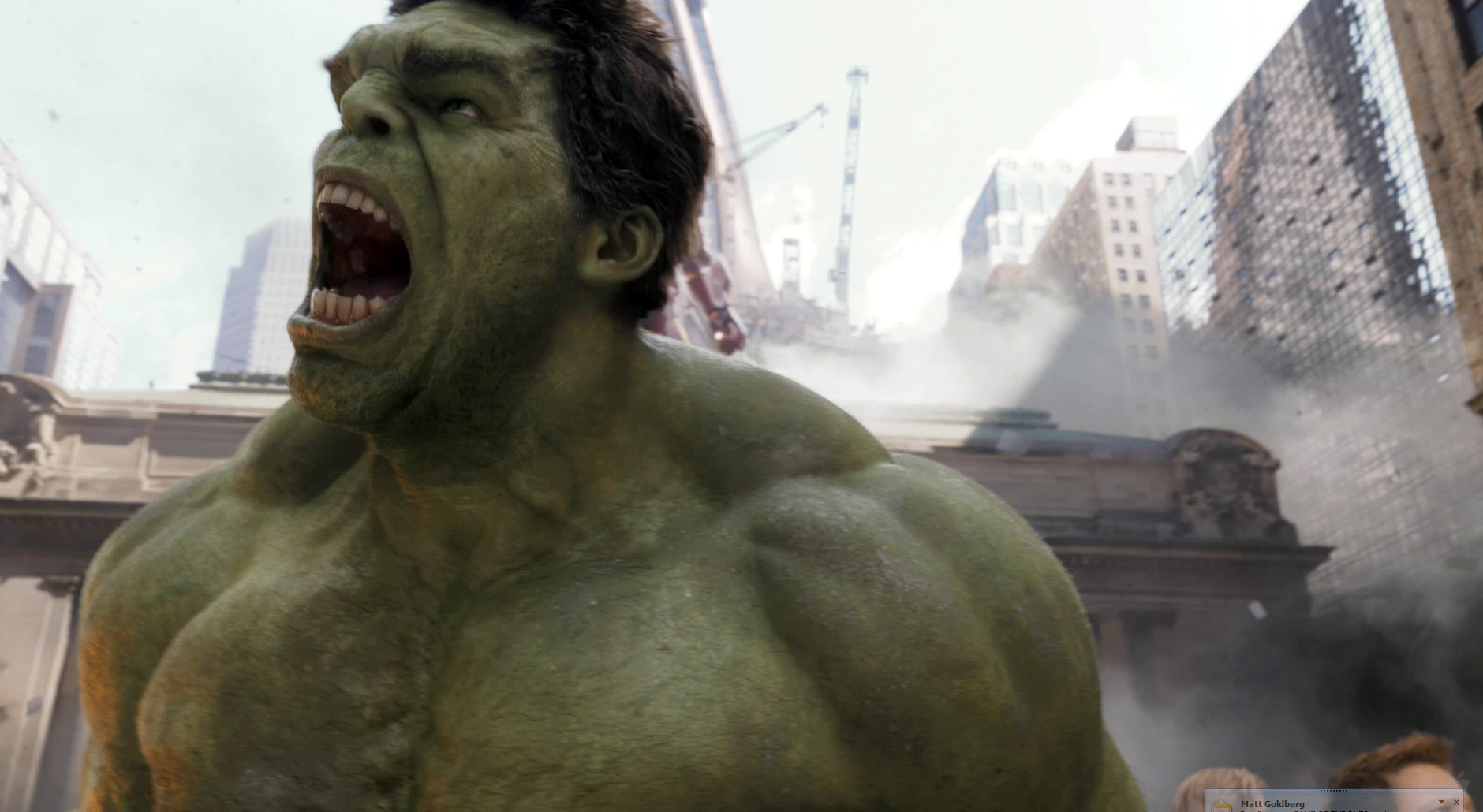
This all started when I went to see “The Avengers” a few days ago (yes, I was late to the party).  Staring back at me in the climactic Third Act moment when the Hulk is wrecking N.Y. (and no, at this point it’s not a spoiler) were these words on what was supposed to be a big city storefront but looked about as phony as Donald Trump’s hair:

“We Are Insurance. We Are Farmers” 

Now at first I chalked it up to “well, that’s the way it is in our commercial world” and that there could perhaps be that insurance store, or even ad slogan on another building right there as the Hulk was wreaking havoc in Manhattan.  But when the phrase got it’s big lingering close-up a second time I realized I was now in the world of specific payment positioning and suddenly it wasn’t about the Hulk at all but the mammoth strength and power of a corporate interest whose product its producers hoped I might at one point have actually bought.  I use the past tense here because though it’s been 25 years plus with Farmers for me, the company’s blatant obnoxiousness in interrupting a movie I wasn’t particularly loving, created the opposite effect.  It caused me to begin to consider if I even wanted to continue with them.  Perhaps I could instead switch to that adorable Gecko called Geico.  Or maybe phone or text Flo, the cool Progressive Insurance Lady.  Not only are they both snide and funny like me, but I’ll bet they’d also have enough taste to not insert themselves in the middle of the third act of a mindless action film I didn’t want to see in the first place but somehow found myself pressured into vaguely enjoying.  That’s a strategy I’d like to at least reward with, well – something.

I feel ya, Hulk.

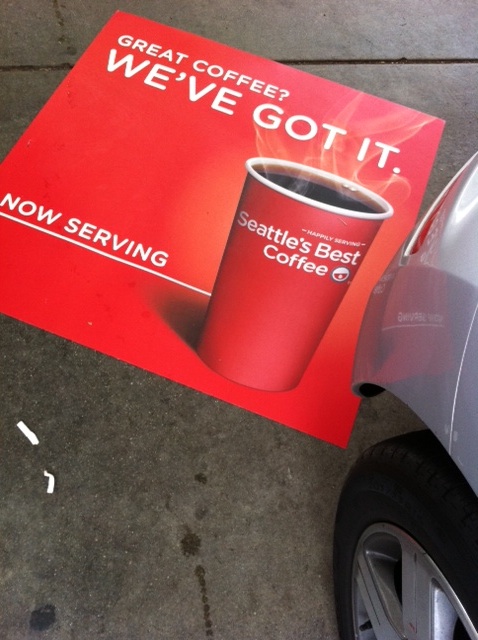
Of course, it didn’t stop there.   The next morning I’m pumping gas, still considering cancelling with Farmers, and happen to see Ted is coming. (That’s a movie billboard, not a vagrant named Ted).  Then I look down on the ground next to the gas pump and see a very large, very red “Seattle’s Best Coffee Inside” poster right under my feet — like it’s reading my mind, knowing I’m thinking about advertising.  And yes, since I knew you wouldn’t believe me – I took this picture.

You sure do.

That afternoon I subsequently talk with a student and see a Disney character is on her T-Shirt.  I turn on the radio in my car on the way home and it’s selling me an all-natural bug repellant.  And once home, on my beloved cable TV channel, they’re assuming I have erectile dysfunction or bladder leakage and need either powerful herbal supplements or a sleek, comfortable adult diaper that is called something else but let’s face it, they are diapers.  Plus, to make matters worse, I can’t even figure out if I’d rather be impotent or incontinent.  Pick your poison (or mine).  My gambling Dad actually would put these odds at “pick ‘em’ – which means the outcome could go either way, though in this case both choices are equally heinous.

Certainly ads have been around a long time.  Advertising Age lists the first newspaper ad in 1704, though it is eminently possible the Coliseum in Rome had one or two emperors seeking lion sponsors.  But if Mitt Romney is right and “corporations are people, my friend” then in today’s world we all have many, many more friends than even the ones on our Facebook page, and many of them even more faux than in our virtual existence.

a peculiar delight

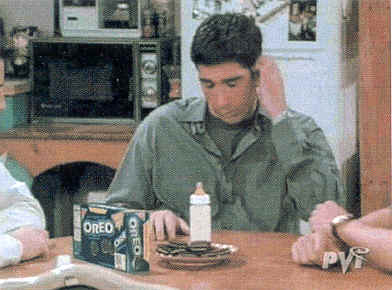
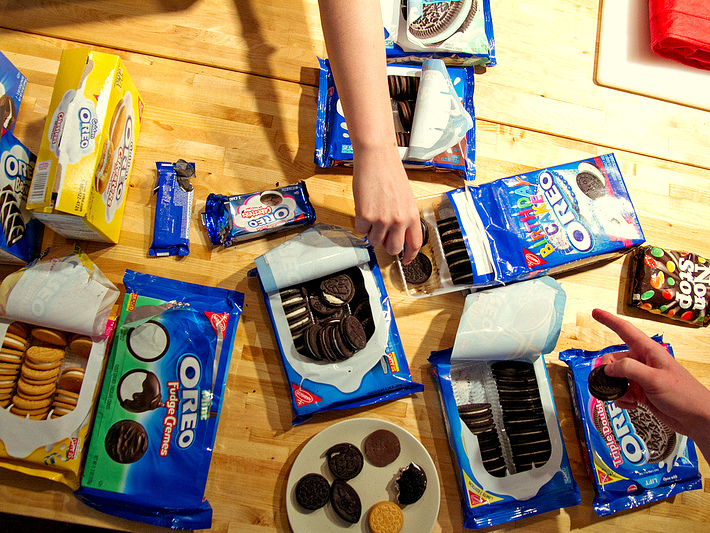
Speaking of friends and advertising, did you know you can see, in syndication reruns, many of the NBC “Friends” eating Oreos they never ate at the time their episode originally aired simply because Nabisco or some other parent company inserted the box and/or cookies into their filmic hands in 2012?  And that this is not limited to “Friends” and NBC but includes pretty much all of your fave characters in any episode of any other show you choose to watch?  I mean, what if they’re more a part of the Mallomars/Ding Dong kind of crowd?  Or at the very least, people who crave Lorna Doones?  The possibilities are endless for any advertiser who has the time and money to buy them the snack of their choice.

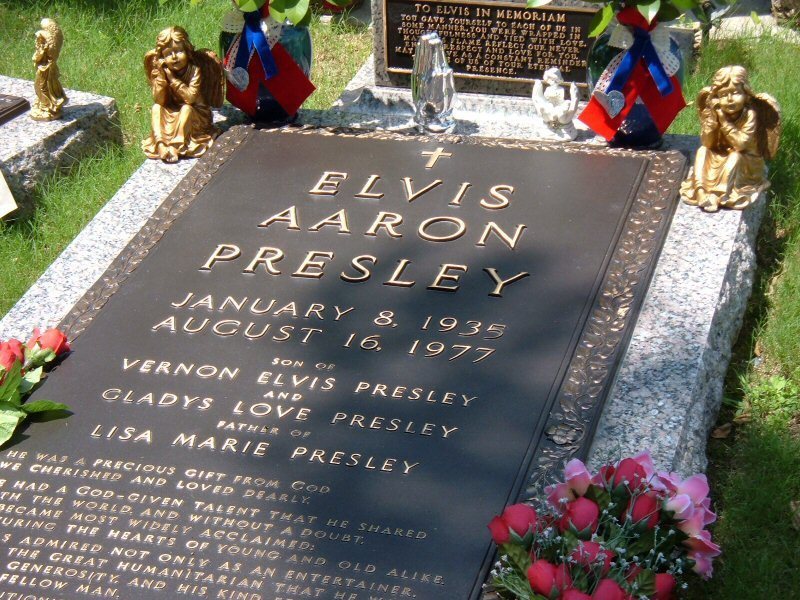
Elvis v. L-VIS

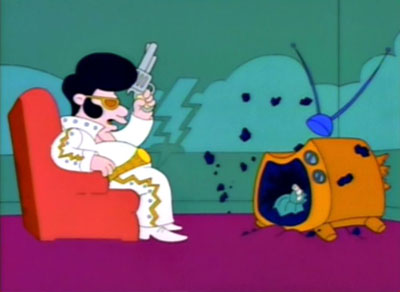
This was news to me but has been going on since 1999 when a new technology called L–V.I.S. (pronounced Elvis – as in, well, you know who) was launched.   Yes, a computer program named for the King of Rock and Roll that does all this and more, begging the question: did they have to get approval from the REAL Elvis, or the Elvis Presley estate, to name themselves this?  Whatever the answer is, you at least have to give this company credit for being so out there with who it is that it’s very name comes from a show business legend many years after he even existed, especially without his full endorsement of them in the first place.

Unless… can you endorse from the grave?

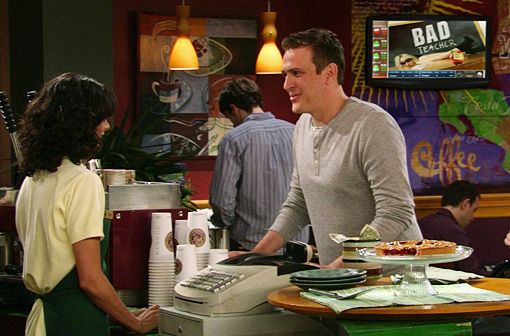
But this technology does allow David Schwimmer (Ross Geller) to eat Oreos at a table on a random syndicated episode of “Friends” when he never specifically did so in the original scene, nor, for all we know, did his creators ever intend him do so (certainly not at that moment). It can also magically display a new ad for a 2011 movie, like say “Bad Teacher,” in a “How I Met Your Mother” episode originally shot 5 years earlier in 2006 for the show’s second season.  (And no, the HIMYM plot in that episode didn’t have a time travel theme).

Bad move?

To be clear, a widely used computer program literally drops the ad of a corporation’s choice into any rerun TV episode or feature film past and present whether its creators want it to or not.  And speaking for writers and producers and directors and actors who take their storytelling personally, let’s put it another way – you’re the parent of a six-year old (as many artists consider their offspring) and the school or day care center you’ve entrusted their care to is allowed to force feed them Oreos or Snickers or perhaps even have them use a series of really bad diapers or insect repellents not only without your consent but even without your knowledge.

As sports fans know, this is not only limited to film.  There is a practice where a computer program can continually and magically create stadium billboards of its choice at any number of live baseball games you watch on TV that friends (the real ones) who might actually be at the game don’t see because those billboard ads don’t actually exist in their real live world.  No — those ads are only reserved for those of us who choose not to or can’t afford to or attend the game live but instead find ourselves watching it on the TV or tablet of our choice.  So rather than paying for a real stadium billboard ad that goes to just thousands, a company can computer generate a virtual ad that will, in turn, reach many millions – even when all the time the millions watching are assuming they’re viewing exactly what they’d be seeing if they were live at the game.

Amazing

For some of us, none of this is real news. Studios now have whole departments for this purpose with names like “product integration” as opposed to what it used to be called when I worked in movie marketing – product placement.  Consider the clever corporate wordsmith—ness of the new term, which, if nothing else, proves we all have no chance to survive unscathed.  Placement, you see, implies a sort of fake insertion meant to look real yet is still inauthentic and usually implies undesirable.  Whereas the word integration harkens back to “equality” – a time in the sixties when we as a society decided to come down on the side of “fairness” and make civil rights for all the priority.  Well – what’s more preferable to you – choiceless fake insertion or being in/on the right side of history in fairness and equality?  As a corporate American company trying to tempt you into buying my product, I’ll always fly the patriotic flag of freedom and choose product integration so at least I can appear to be fair.  Especially where involuntary insertion (nee placement) is the other option, right?  Because as far as insertion goes, it is commonly accepted that a human being should always at least be asked.

These ad/marketing tricks.  No wonder “Mad Men” is so popular.  Matt Weiner must spend months every season creating a subliminal popularity formula within every 12 (or is it 13?) episodes.

Even Peggy can’t get excited for Heinz beans

Now don’t get me wrong — overall there’s nothing wrong with using real life products creatively.  Ask any screenwriter in particular and he or she will tell you that most of us do that.  Humphrey Bogart had to watch as not just any gin but a specific bottle of Gordon’s Dry Gin was thrown off the boat in 1951’s “The African Queen,” while Joan Crawford got to take some belts from a real bottle of Jack Daniels (at least that’s the label on the outside, though one can surmise otherwise) when she appeared in “Mildred Pierce” six years prior.  Not to mention the Reese’s Pieces famously consumed in “E.T.: The Extraterrestrial” because M & M’s, the original candy of choice, famously turned down Steven Spielberg’s original offer of insertion. (Uh, Epic fail, as the kids say, Mars, Inc,).  And even the then-hipper-than-hip AOL (uh, yes they were in the pre-Internet age) theme became the chief corporate tie-in of the Tom Hanks-Meg Ryan comedy “You’ve Got Mail.”

The former bane of my existence

Yes – we indeed do live in a label-ridden world and to not include characters eating, drinking, watching or listening to something recognizable is to deny them real world existence.  Even I knew this in the late eighties when, as a young writer, I was foolish enough to use the Rolling Stones song “Street Fighting Man” in a script to thematically evoke both character and time period, never realizing that one of the cardinal rules for spec script writing is to NEVER use a Beatles or Stones song (which are preemptively expensive to license) and expect it to be used if your movie actually gets made.

Actually, I did sort of know the rule but used it anyway because, well, it sounded perfect and was absolutely right and what were the chances we’d ever face the licensing hurdle in real life?  I mean, who would ever dream I’d actually win the writing lottery that one time and the damned thing would really and truly get bought and filmed in my lifetime?

It was back then that I quickly learned, as Hollywood corporations now know, that there are indeed thousands of choices for actual products, songs and contemporary references that can be inserted (ahem, integrated), changed or used to make the same exact point.  Sometimes even better than the ones you intended.

Well, at least that’s what my producers told me.  Though when I think about it – I still believe only that one particular Stones song would have perfect.  In fact, to this day I wonder if that was the reason why my movie was not the award-winning coming of age drama I intended, I’m sure of it.

Okay, not really.  But maybe a little.  Partly.

When I’m not dwelling in the past, though, here’s what I really and truly think.  On a recent trip to The Hulk’s Manhattan, walking down Times Square and its billboards and licensed rights, I can see myself as I look around.  And soon, very soon, I find myself longing for the 1970’s porn palaces of my youth that I now find far, far less offensive than anything in New York bearing the word Trump (or some other reasonable facsimile).  Feeling this way, then I wonder – have we made progress or should progress be called by some other name?  Then I wonder even further – what would Elvis, not L–V.I.S., have to say?

And then I finally ask myself one last question — Am I the only one who even cares?