Just because you’re late to the party doesn’t mean your time there is irrelevant. That’s what I thought when I finally caught up with “The Dark Knight Rises” this weekend and liked it much more than I’d decided I would. The reason? It’s a movie that embodies – or more closely swallows whole and spits right back at you – the year 2012.
The cliché one-liner, if I were still a movie critic as I was 30 years ago, would be “a cautionary tale for our times where the HAVE NOTS rise up against the HAVES.” No wonder Rush Limbaugh was scared. But as usual he got it wrong. “Dark Knight Rises” isn’t at all about the villain being named Bane – the same sounding moniker as Bain Capital, the private equity company that is largely responsible for Mitt Romney’s quarter of a billion dollars worth of wealth.

ehh… not a good look.
In “DKR,” Bane is really a HAVE NOT on steroids – a sort of odd, anti-hero who is mad as hell after a lifetime of living in the margins and watching other people getting a chance to be happy and wealthy and so he decides to destroy everything to punish those who are living large and, well, larger. It’s about the very small 1% of people who had every advantage that a stacked deck could buy (and then some) and made sure the rest of us didn’t. If the filmmakers really wanted to make a Romney-Bane connection they would have made the villain a billionaire banker – not the crazy person wreaking havoc on them.
But really — that’s beside the point. Since in this case the HAVE NOTS are much more evil because they feel nothing. They are nihilistic because they have finally begun to recognize the almost insurmountable odds against anyone growing up in a prison (literally AND figuratively) of poverty; of hopelessness; and in an unsafe world they’re afraid will forever be against them. Hopefully, this doesn’t sound familiar to you personally or professionally – but perhaps it does.
In any event, Bane announces to the citizens of Gotham (let’s be real: New York)– “We are liberators” who want to return control of the city “to the people.” But really this is only to distract them until he can launch a nuclear bomb and destroy everything so the world can start anew. That’s actually the master plan. A total wipeout of stasis. A do-over. A chance to shake the Etch-A-Sketch screen clean. Hmm. Does that sound familiar?

Thanks internet!
Well, I’m at an age where I haven’t had any major ailments – yet. But I do find myself fantasizing about the idea of trading this body in for a younger model. This is thinking not unlike the supposed “villains” of “Dark Knight Rises,” instead they want to do it with all of society. These are people who have waited and waited forever from the sidelines – biding their time until they can trade what’s becoming their unsavlageably messy world in for a younger, cleaner, newer one. The thinking is – sometimes it gets to the point where things, bodies and/or societies are unfixable and there is no other choice – painful and unfair as it seems.
My analysis is my own, but it certainly explains a lot about the 2012 world to me. You can feel the fevered pitch in the social and political landscapes. The bubbling intolerance of the times. Aside from income inequality, it’s also about the desire of some to go back to the social mores of the fifties – though it’s hard to tell if it’s the 1950s or 1850s – when men and women knew their place and there wasn’t so much, well, talked about publicly.
Yes, I’m talking about Mitt Romney and Missouri Congressman Todd Akin, the latter of whom in a television interview coined publicly anew the oxymoron “forcible rape” and more than implied a wacky fringe medical opinion that women who are indeed “forcibly” raped secrete some sort of secret lady potion that prevents them from getting pregnant. The former has his own awkward reasoning for a 1950s view of women’s choice and a reason to turn the clock back on the Supreme Court ruling of Roe v Wade and assure no female has a choice to a abort a baby in any way, shape or form.
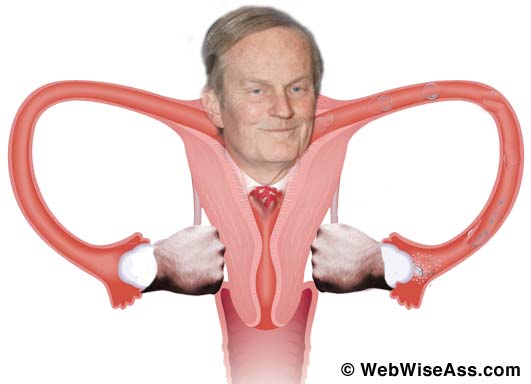
Akin’s report card: F in Biology
But lest anybody get confused, this POV is not solely about religious beliefs. It’s bigger than that. It is also about the politicization of that personal morality at a particularly dark time in American culture. A time when it’s not enough to be able to believe what you believe – you also have to make sure everyone else believes it – or at least is forced to adhere to your doctrine. As a child in the 60s and 70s, I was brought up to understand that living in the United States meant the opposite. The whole point was that we were always at least working towards a “live and let live” doctrine that didn’t exist in almost any other country on the globe. Sure, things weren’t perfect here – but the one virtue we operated on is that our ideal was that you could choose your own morality (well, within reason), find your tribe in some town or city in at least one of the 50 states and no one could really say or threaten to do anything about it.
Now we’re in a global crisis and globally-speaking, it doesn’t feel that way anymore. And “The Dark Knight Rises” is simultaneously shedding a huge spotlight on it while cashing in on it, both in real life and on the screen. In the movie perhaps there is an obviousness to the fat cat privileged characters doing charity benefits for the poor saps living well below them in Gotham City but superhero films are nothing if not, in many ways, archetypal. And anyway, why not since those facts couldn’t be any more obvious in real life? Turn on the TV, your computer or walk the streets of Manhattan – more than ever before you can feel the money and the lack therof depending where you are geographically.
Perhaps part of the lure of the more popular than ever fantasy movie land genre is the violence and the excess of archetypal behavior. There certainly always was darkness to the comic book genre where humans have special “powers” that make them different as they focus outside and inside themselves and the fight between “good and evil.” But Christopher Nolan has taken the “Batman” series to new depths of darkness and desperateness in 2012 Gotham. Lucky him, he is doing it in a particularly dark and desperate time in the world. Hmm, lucky him? Well, maybe. My students think so. But with good fortune comes responsibility. And given the fallout from the film, one could argue he isn’t solely lucky at all.
As I say to my students, you can’t plan where your film (or even television show) will fit in the zeitgeist. All you can really do is write about what you feel and what you see, especially when it takes a couple of years at minimum from conception of a script to its release date. Of course, some people have an innate ability to have their hand on the pulse of what is happening and what will be happening because, well, it’s part of their talent and them being who they are. Madonna used to be like this. Christopher Nolan still is.

Seeing the writing on the wall.
He has tapped so into the darkness – so much so that not only have his Batman films made a fortune, they have the distinction of having caught the attention of at least one very disturbed individual who appropriated its onscreen nihilism and took it one step further into real life. This in NO WAY MEANS Nolan and Co. bear any responsibility for the Colorado shootings or that “Dark Knight Rises” should be censored one bit to soften the blow of what’s going on today. The price of freedom/lack of censorship means that horrible stuff as well as good stuff can happen at any given moment and arise out of any random piece of action we do or art we create. What it’s ultimately about (and certainly what “Dark Knight Rises” is about) is balance – or light and dark – of good and evil, or corruption and honor. And there’s a cost to each when we live in a world that willingly traffics in enough freedom to allow free market indulgences of both.
Which brings us to our financial system. In the world of “Dark Knight Rises” the HAVE NOTS (meaning most of us) rally together to torture the rich because they know only one thing for certain – the game has been rigged against them. It’s the ending of the great 1969 Jane Fonda film “They Shoot Horses Don’t They?” where you find out the dance was fixed all along (sorry, spoilers here), or like watching Babe Ruth lose the World Series for the Yankees instead of becoming the hero he became. Or even worse, watching a hero like Lance Armstrong, who emerges victorious over not only the powers-that-be but over a killer like cancer, give up when the authorities finally manage to prove their case against him. Or perhaps the most succinct analogy, to borrow from another archetypal pop culture fantasy — it’s like watching as the curtain is pulled back and exposes the fact that the Wizard of Oz is not only not as powerful as was advertised but that, in the end, he really has no power at all.

Pay no attention…
Of course, that is only one side of a story that could be taken two different ways. For despite its pseudo happy ending coda for the sake of the franchise and studio, Nolan’s final “Batman” film captures the rage and verve or our times perfectly. Not only for the Have Nots, but — for THE HAVES.
I mean, to hear the haves tell it, there was a long period in our history when people made a lot of money and no one got to know how or how much. And that was preferable, civil, even moral. This was also a period when people didn’t do or say so many sexual things en masse for all the world to see and, if they did, all of their sex talk/actions certainly weren’t being publicly accepted by the large mass of the country. An era where men were men, women were women and it was clear which was which and what the rules were. And a time when certainly rules that ensured that when people deviated from such behavior that they were punished. Or at least if not punished, certainly not accepted as engaging in an alternative (read publicly acceptable) lifestyle. (Because let’s face it – anything goes for any of us, but especially the 1%, if we are at least willing to have the courtesy to hide it behind closed doors where it belongs).
One has to feel a bit sorry for those who felt like they played by the rules and came out on the top 1% – rigged game though it might be. In essence, they achieved quite a lot but in 2012 are forced to live in a world whose majority now pretty much hates them for being so clever. This is harsh, I know, and truthfully it still doesn’t go against the idea that we 99% don’t hate the rich. It’s not the rich we really hate. It’s the system that got them there that we despise and the failure of many of them to recognize and/or admit publicly the corruption and do something about it rather than circling the wagon and protecting their young – as most human beings are want to do when times are hard – that we very much and particularly loathe.

But it is ok to hate Mr. Monopoly.. greedy bastard.
I’m not sure what the answer is to any of this – or if indeed there is one. Like the movie business, the one thing we know is certain about society, aside from death and taxes, is change. “Dark Knight Rises” is pretty bold about the change – literally in its computer graphics; creatively in its merger of larger than life comic book superheroes and believably tortured moral human drama; and publicly as a symbol for one of what is turning into a small handful of mass gunmen in America right now who have gone off the deep end.
As a writer I always ask myself and my students – why right now? Or, more to the point, as a former teacher once commented to me when explaining any good Shakespearean play – “why this day?” That’s the rule of thumb for fiction. A story can start a million different ways, so why did it start here? One can’t help but feel this should be the question we ask ourselves right now about real life in 2012. In addition to what the ending should be. As all good writers know, endings dictate beginnings and vice-versa. So it is only in the understanding of both that we have any insights into what our true Act II struggles are really about. And if we can begin to identify the real reasons behind out true struggles, perhaps we can begin to write the real ending – the happy ending – that we deserve.
A famous writer (okay, Socrates) once wrote – “The unexamined life is not worth living.” Liberal or conservative, religious or heathen, moviegoer or pop culture hater – it feels like a good time to take that advice and intelligently move forward. While we are all still around to do it.
All this from “Dark Knight Rises?” Perhaps there is some small hope for the movies after all.