We’ve all been lamenting the death of moviegoing and the dearth of good movies for some time now.
US
(with a whine)
There’s nothing great to seeeeee, the people sitting next to me make too much noooooise, I’d rather stay home and watch tv on MY giant screen, It cost too much moneeeeee, There’s nothing great to seeeee, I hate people and I don’t like to go ouuut, There are — no — good — movie stars anymore, How come movie studios are only about making money and not fiiiilms? I hate all the screaming babies and all the annoying parents who haaaave them, plus, There’s nothing great to seeeeeee…
Full disclosure: I’ve been one of the chief whiners and complainers among us. Perhaps this is because I remember the sheer excitement I’d have at least once a year around holiday time in anticipation of that great New York Jewish tradition of seeing the newest, biggest, boldest and brassiest new film Hollywood had to offer on Christmas Day. But more likely it’s because I’m now old, tired and jaded and don’t want to leave my upstairs TV room because (cue whining) …There’s nothing great to….
Well, you get the idea.
This is why I’m happy to report that in Los Angeles this past week something new and yet strangely familiar happened. What is it? Well, I had one of those perfect moviegoing experiences from my youth not on Christmas day but on the day after Thanksgiving. The kind of day I only previously remembered in the warm glow of a nostalgia that probably never really existed but that nevertheless seems to be a time that we all spend a good part of our later lives trying to recreate or get back to even for just a moment (see playwrights like Thornton Wilder (Our Town), filmmakers like Francis Coppola (Peggy Sue Got Married) and novelists like Truman Capote (A Christmas Memory).
More clearly? What I’m talking about is what I felt at the 1:45pm Friday showing of Lincoln – directed by Steven Spielberg, written by Tony Kushner and starring Daniel Day Lewis – at the Arclight movie theatres in Hollywood.

I am not a paid spokesman for Arclight – I swear.
My 2012 day-after-Thanksgiving was the perfect day of moviegoing that I remember from my youth, warm glowing nostalgia and all, and it happened in an entirely different city, in an entirely different century and with a film made by a new group of people (who in my youth couldn’t yet vote) about another group of other people (born 150 years or more before they were born) who were fighting for the rights of still yet another group of people (slaves) to be free enough to even think about things like the right to vote.
Why was this experience so perfect? Well, it wasn’t any one element but the sum of all of the very many moveigoing elements combined. A total that seldom happens anymore but could happen a lot more often than it does if a little more attention and responsibility were assumed by all of us in taking our time at the movie theatre back to one of excitement rather than sheer obligation and/or dread.
Some thoughts:
1. The Company. Okay, I’ll take responsibility for this one – this time I went to the movies with good friends/family who I actually wanted to be with and whom I knew wanted to be with me. These were also people who wanted to see the movie we were going to attend. We were all looking forward to viewing something together well made and thought provoking and that had good acting. They key here is not necessarily our taste but the idea that we were all united in what we wanted to see and open to enjoying or not enjoying it depending on what we got.
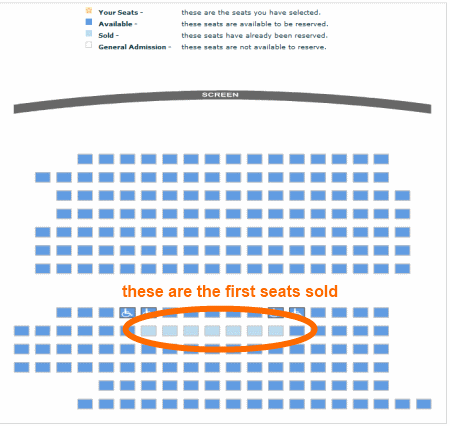
2. Reserved seating and admission price discount plan at a local theatre. Now granted – there was something very cool I remember about the communal experience of waiting on line with fellow movie fans in order to get tickets and slither into the best seats in the house to the newest and hottest film. But given where we are today with people congestion, inflated expectations and the convenience of online purchase of pretty much everything except kidneys (stop googling I already checked), it feels reasonable to expect that you can not only buy your ticket online, but choose where to sit, print out your ticket at home and then simply show up at your individual theatre’s door. This not only guarantees the bypassing and inconvenience of several lines but allows you more time to wait on lines at the concession stand, for parking validation and, in some cases, even the bathroom.
Do you agree?
3. A lazy day. Movies and TV are a bit of a passive medium. That means they are best enjoyed on days where you don’t feel like doing very much other than taking something in, rather than exerting the energy of talking back. The day-after-Thanksgiving is one of those days. On that note, I do wish others would remember this on non-holiday weekends and either stay home or get it up a little better for people who spent at least a year or two of their lives making something they hope you’ll enjoy.
Goodbye Mr. Fathead
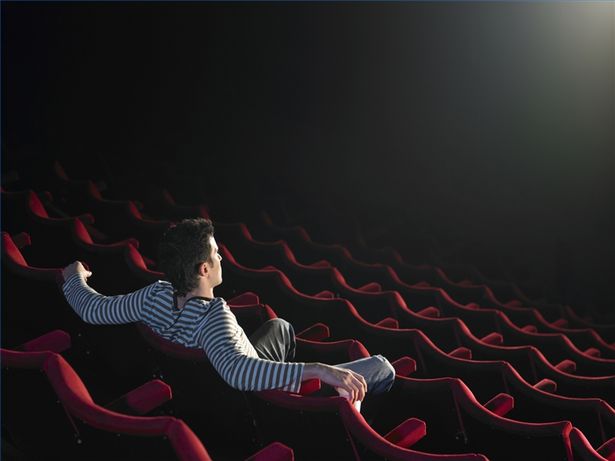
4. The seating and the actual theatre. This is to be filed under “problems of the privileged in over-developed countries” but high on my personal checklist of why people don’t want to venture out more to movie theatres is the actual environment you find once you’re inside. The Arclight in Hollywood (my local theatre) is about a dollar or two more expensive than most (a dollar of which is discounted if you take advantage of its free membership plan) but as long as you’re leaving your house to go somewhere you might as well do it in a place that respects you and your business. In the movie theatre world this means something called “raked seating” for people like myself (5’7” and under) where increasingly sloped rows guarantee you will never, ever again watch Brad Pitt or Angelina Jolie co-starring with the fatheaded guy or big-haired gal seated in front of you that you’ve spent your entire adult life trying to avoid in every other human circumstance known to man (and then some). Side note: I’m also waiting for a personal perfume filter filled with fresh air I can infuse from the side arm of my seat and blow in my (and their) face(s) as well as a possible ejector button for loud, annoying and insistent talkers.

Shameless plug for the best movie popcorn in NYC.
5. Great refreshments. Yes, you can smuggle in your own can of soda or bar of candy or pot brownie at any local movie theatre. But let’s face it, there is something about good movie theatre popcorn. It is expensive at my local movie theatre but, well, no more so than most others. But it’s also good. Very good. And most other movie theatre popcorn isn’t any longer. I think this has something to do with quality control and consumer care. Also at my movie theatre –- a pleasant employee announcing before EVERY show at EVERY performance at EVERY screen that the movie chain is responsible for sound and picture quality and that it urges you to seek them out if you are even the slightest bit dissatisfied. Competing movie palaces take note: this is your future and you have now seen how you will survive. Be nice(r).
6. Cool trailers. Theatre chains don’t have much control in this area so hopefully someone will pass this thought on to a movie studio. There are other ways to get audiences into movies other than to finance loud, ugly and mindless films. I’m not talking high brow – how about just odd or sexy or different and even slightly intense. You can even throw in a bit of humor if you want to. Watching two and a half minutes of Bill Murray playing Franklin D. Roosevelt in the upcoming Hyde Park on Hudson certainly qualifies as odd but also raises the bar to clever and, dare I say it, amusingly smart. Watching Ryan Gosling, Josh Brolin and Sean Penn shoot at each other in Gangster Squad while Emma Stone plays the requisite “gal pal” certainly doesn’t venture into new territory but looked stylish, titillating and fun. We’re not talking Fellini or even Almodovar, here. Just something bigger or unusual no one else has seen that we won’t find flipping through on our five different and indiscernible cable TV remote controls.
7. Superior sight, sound and not seen enough friends. Another surprise on my recent perfect moviegoing day: The screen is huge, you feel like you’re in the movie rather than watching it and there are no distracting lights from either end of the theatre walls or on any hand held digital devices within striking distance. In fact, the technology and space is being used so optimally that I can even spot two friends some rows down that I haven’t seen in a while who also decided this might be a good day to get out of the house and take advantage of what the movie business has wisely decided to offer here. Oh, and did I mention the actual seats are wide enough to fit my dog and me if animals were allowed in movie theatres? I didn’t think so (and as much as I’d like to, I promise not to smuggle my own dog in. Still, it’s nice to know she’d fit).
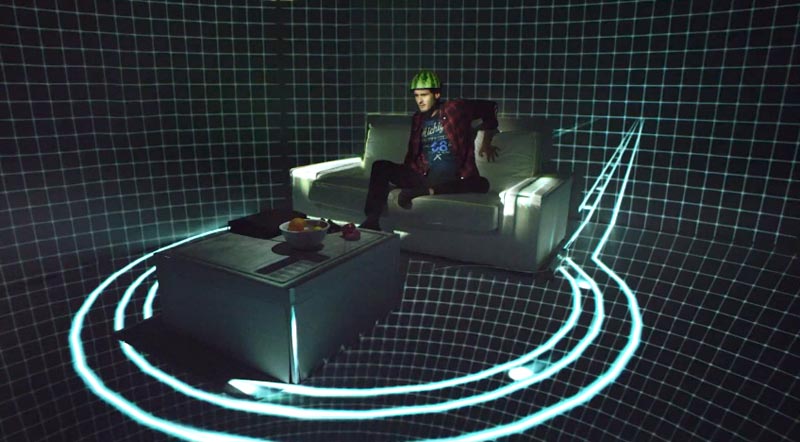
OK maybe not quite this in the movie
8. The crowd. We live in the age of isolation. Conversely, one could also philosophize we exist in a time of great choice – where more than ever we can decide when and when not to engage with the outside world. I’m not a sociologist but I’ll bet that if we were to measure the growth of social anxiety and agoraphobia-related neuroses from the beginning of the new millennium to 20 years from now, we would discover a spike in the charts equal to the one for 20th Century-Fox’s annual box-office from the years right before and right after the first Star Wars movie was released (that’s 1977, or 35 years ago, if you were wondering). The fact is, most humans do not want to venture out into unfriendly or even inconveniently annoying territory without a chance for some higher returns. That sort of adrenalin rush of excitement, anticipation and participation was once regularly found in abundance at our local movie houses but is pretty scarce right now. Yet, waiting for the new Steven Spielberg film at the Arclight this past holiday weekend, you could momentarily feel it again. It wasn’t a movie industry crowd with its “daggers drawn,” or a day care halfway house full of people looking for something to drag their offspring to because they were bored. It wasn’t even a dark place to make out with romantic background noise (though I wouldn’t be adverse to using movies for this kind of thing occasionally). What did exist was a palpable kind of “gee whiz” anticipation of something amorphous, something smart, something potentially entertaining and even perhaps something a little, though I hesitate to say it, special, because – guess what – you can’t get it in exactly that form at home in your own apartment, house or even personalized cave.
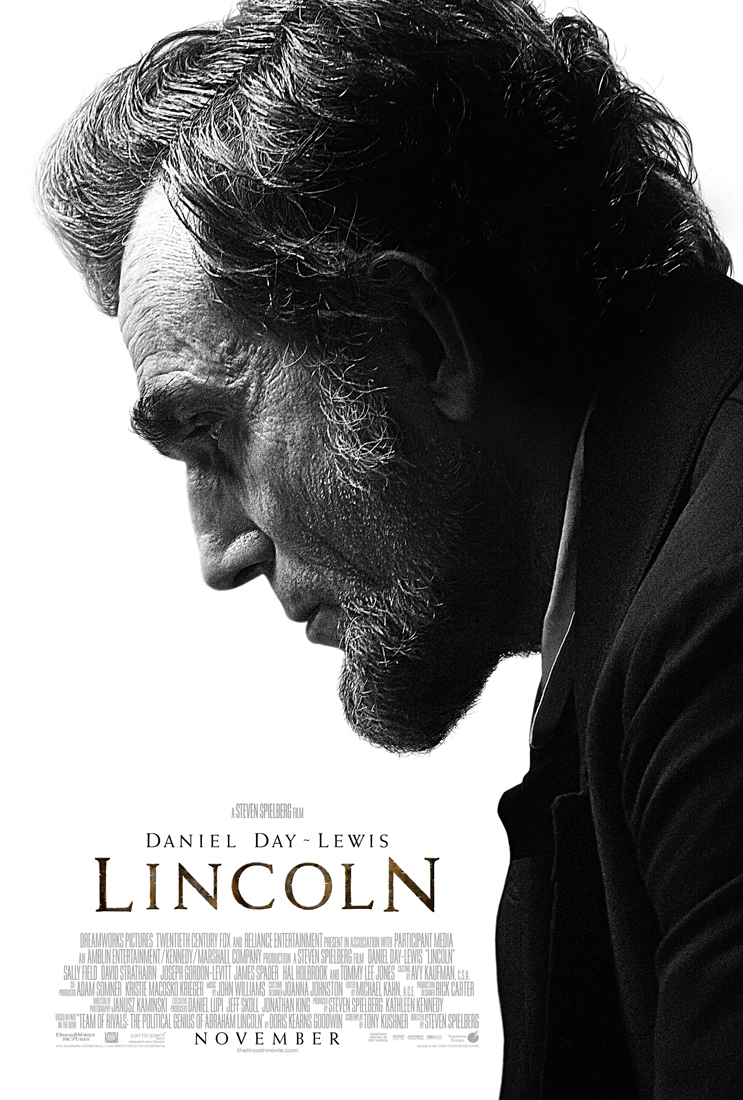
9. The movie. This is not meant to be a review of Lincoln but rather an observation of why as a movie lover and/or potential filmmaker and/or crew member it is important to get your butt out of the house and venture “among those beautiful people out there in the dark” (Norma Desmond’s words via Billy Wilder and IAL Diamond in Sunset Boulevard, not mine). Like it, love it or lukewarm it (I can’t imagine there will be very many haters), Lincoln is what we nowadays call a “movie movie.” This means that it exemplifies everything about big film (or is it digitized?) entertainment. The story of our 16th president’s quest to abolish slavery (set only 150 plus years ago) is one of grandeur and depth and big emotions and big beliefs that needs to be seen on the big screen. It is successfully directed by one of the most famous filmmakers in the world (Steven Spielberg) in a way only this kind of filmmaker can do. It is written by one of the most honored writers of our time (Tony Kushner) with a particular depth of accessible political thought and emotional drama (and even a bit of comedy) that is particularly difficult to do as a screenwriter nowadays. It is performed by a stellar cast led by an actor in the title role (Daniel Day Lewis) who is able to transform himself so totally into its title character that it feels more like an odd kind of human resurrection or cloning from the past rather than merely an impressive performance in the present that we still don’t get enough of these days. Lincoln also harnesses notions and ideas and expresses them visually through all the top notch technological capabilities mainstream studio filmmaking has to offer and presents them in a sly package just enticing enough to satisfy pretty much anyone of any age who even once ever enjoyed getting out of the house and going to a film in the first place. And it does this without too much dumbing down of its subject matter or reliance on the star power of an over-the-top box-office draw to “ensure” its result. What it instead uses are many obvious, and not so obvious, parallels to the social, political and economic realities of life in the 21st century despite the fact that the film itself is set almost two entire American centuries ago.
Let me be clear — Lincoln does not have the multi-layered dramatic grittiness of the best of our independent films or the thrill ride giddiness of some of our highest priced studio blockbusters. It is not that kind of movie. What kind of movie is it? It is the best of the old-fashioned kind – the kind that moves us out of our cynicism or complacency or just plain every day lives and compels us to go back into the movie theatres for something communal that we can’t get in front of our own personal tablet of choice.
It’s a big part of the future of real movie movies. That is, if movie movies, or even just plain old movies (meaning those you go out to the theatre to see) are to have any future at all.
Go see it. And a few others this holiday season.