Thirtysomething for Twentysomethings

2681badb0d4438484f06ce00fdcd74f8

Fame is fleeting.

Someone first coined that phrase but I’m not sure whom.

What I do know is that it has been repeated enough to become a cliché.  And that it’s what people in the biz tell you, or their therapists tell them, or perhaps you tell yourself when you receive no resounding public recognition for what you perceive to be your outstanding achievements.

Oh, don’t feel bad, even if you became famous it wouldn’t last.  I mean, even the mega millions you would have been bound to make probably wouldn’t last.  Not to mention all the good will – and jealousy. Uh, yeah, that’s true.  Think of it this way – since it looks like you’ll never be famous, chances are no will ever be that jealous of you and you’ll be free to live your life away from intense public scrutiny.  That’s something, isn’t it?

Well, one supposes it is a sort of bad form to not be thankful for even the smallest of life’s blessings these days.  Still, the above logic is more than a bit challenging.  For example, should we all be grateful not to be Carrie Underwood this week after the fairly scathing reviews she received from the media as Maria Von Trapp in NBC’s live three hour broadcast of The Sound of Music? Certainly, no one wants to be called: A snow globe with scarcely any flakes or Swiss Miss Maria. Or to have their work critiqued with phrases like: To say that Underwood was no Julie Andrews is one of life’s greatest certainties or…It was the speaking that did her in. 

Snark 101

Snark 101

On the other hand, SofM was a ratings bonanza for NBC that provided the network its best Thursday night numbers in almost 10 years.  Not to mention, Ms. Underwood is an internationally known, multi-platinum recording star with many buckets of millions and a seemingly quite happy marriage to a very, very good-looking hockey player (Note: Yes, nobody knows these things for sure – and the latter can be either a blessing or a curse — but still…look for yourself).

Ugh.. seriously?

Ugh.. seriously?

The cynical among us, and I might detect a few in the room – certainly in the room I am now alone writing in – might easily prefer the one authentic quote I was able to dig up about fame.  That one comes from that well-known lover of humanity, the diminutive and dead French dictator of more than three centuries ago– Napoleon Bonaparte.  Quote:

Glory is fleeting…but obscurity…is forever.

Wow, that’s a bitter pill to swallow, isn’t it?  Or it would be — if it were true.

Last week, I attended a sort of public writer’s salon. It wasn’t exactly like what you read happened at Gertrude Stein’s house on the Left Bank of Paris almost a century ago.  But it did take place in L.A. at the Writers Guild of America’s multi-purpose room. So there is at least, on a sliding scale, some small smidgen of street cred.

Mr. Thirtysomething

Mr. Thirtysomething

Richard Kramer, one of the original and lead writers on the seminal 1980s TV drama thirtysomething – a one time renowned TV series that was about nothing other than the behavior of a group of friends long before Seinfeld, Dawson’s Creek and Gossip Girl took that type of low concept idea and ran it through the post-modern, too hip for the room, Snidely McSnide, comic/soap opera blender – was on hand to read from and talk about his recent novel, These Things Happen.  He also brought along three very well-known actors from thirtysomething – Melanie Mayron, David Marshall Grant and Peter Frechette – to sit beside him, reminisce and read other various parts of the book, now in development to be a cable series at HBO.

Melanie (second from right).

Melanie (second from right).

David and Peter (and the famous morning after scene)

David and Peter (and the famous morning after scene)

It is interesting to note that when I spoke about some of the evening to my students – all juniors and seniors in college – none were familiar with this once quite famous television show (Note: didn’t their parents watch the tube?  Did not one of them ever Google the phrase 30something or even 20something  to see where they came from instead of just being annoyed by them?).  Well, perhaps none of this is surprising.  But what also momentarily took me aback was that not one (that’s zero) of them had even heard of Ms. Mayron, Mr. Grant or Mr. Frechette.

That is, until I mentioned …

Mr. Grant was a writer on both Brothers and Sisters and Smash and is the showrunner for the new upcoming HBO comedy series about three young gay men living in San Francisco.

… and that Ms. Mayron is the prolific television director of such ABC Family shows as Pretty Little Liars, The Fosters and Switched At Birth.

(Note: Mr. Frechette, over the years a favorite actor of mine who earned two Tony nominations since thirtysomething for such plays as Eastern Standard and Our Country’s Good, is still quite well known in the theatre but, times being what they are, doesn’t quite register on the faces of young, aspiring TV and screenwriters.  Still, two out of three ain’t bad).

David, Melanie & Peter... or who?

David, Melanie & Peter… or better know as: who?

What does all this tell us?  That fame is fleeting but at least none of the four artists onstage has faded into total obscurity?  Well, not exactly.

After the actors read aloud from Mr. Kramer’s novel it couldn’t help but strike the audience just how good they all still were at the craft of acting – even when they were sitting in chairs reading from a book – and how infrequently audiences are ever given the chance to see them perform their craft on film or in television.  When they were asked if they missed acting both Mr. Grant and Ms. Mayron nodded yes even before the question fully landed.  Mr. Grant willingly shared that it was only when he realized he couldn’t get arrested as an actor anymore that he began writing full time and though he thoroughly enjoys being a working writer and running a show, his ideal job in old age would be to be a journeyman actor – “to just come, do the job that I love, and leave.”

Ms. Mayron mentioned being lucky enough as a young actor to study with Lee Strasberg and offered how often her acting skills come in handy when she’s on the set as a director “moving actors around — I guess that’s what I do now.” To illustrate her point, she and Mr. Kramer spoke of her days before the camera and how in her Emmy-winning role on thirtysomething she always had to be doing something in a scene in addition to saying her lines even if it meant unbagging groceries or pouring numerous packs of sugar into a cup of coffee in a particularly emotional moment. I love good writing, she noted, but the truth is – it’s equally about behavior.

This made me smile as both a writer and writing teacher because it is one of the basics I try to teach my students and stay true to myself in my own work as a screenwriter – and even in my own life.  The idea that it’s not so much what is being said but what is not being said – and that what someone does is much more meaningful than what they intended to do or even say that they will do.  And it was also not lost of me where I first learned all of this — acting class. (Note: These principles were later reinforced during years of psychotherapy, but that’s the subject of another discussion entirely).

Aha moment!

Aha moment!

Additionally, it should not be lost on anyone that fame and recognition can have something to do with great art but they needn’t necessarily.  Ms. Mayron, Mr. Grant and Mr. Frechette, who is still a working actor – are as good or better than they ever were as performers, even if they are not receiving the kind of recognition or opportunities to show their craft that they once did.  One could argue that they should but one could also argue for world peace, an end to Congressional gridlock or for NBC to stop doing live musicals with leads from other mediums who don’t have the chops to pull it off.  But none of those are likely to happen either.

Towards the end of this evening a friend a few years older than me who knew quite well of all the people onstage turned to me and whispered, It’s hard for everyone. isn’t it?  It was really a rhetorical question because, at this point in time and after decades in and around the business, we both knew the answer.  And sure, it’s a resounding YES.

Keep on pushing!

Keep on pushing!

But hard doesn’t mean impossible.  It only means difficult or challenging.  Well, is anything worth having not some of those at various points in time?

To put it another way, all of the people onstage that night figured out ways to be new, creative versions of themselves without falling into a pit of despair over the fact that they couldn’t keep doing exactly what they always did in exactly the same way and expect the same result decades later. That’s not about striving for fame or lamenting obscurity but merely taking stock and doing the work in any form that you can.   Aside from watching an ill-advised network redo of a beloved movie and stage musical and dishing about it with friends, there are so few guaranteed pleasures in life.  But this, it seems, is one of them.  Despite the number of people you have watching you do it, or anything else, on any given night.

Surviving the Plague… with Matthew McConaughey

Dallas-Buyers-Club-Poster-Header

I went with my longtime partner to see Dallas Buyers Club this weekend at the local movie theatre. This was not an easy feat.   The mere image of a very gaunt Matthew McConaughey on the movie poster stabbed me in the gut with a generalized feeling of terror and nausea that brought me back to what I imagine will be the most horrible times of life I will ever barely live through.  That would be AIDS in the 1980s

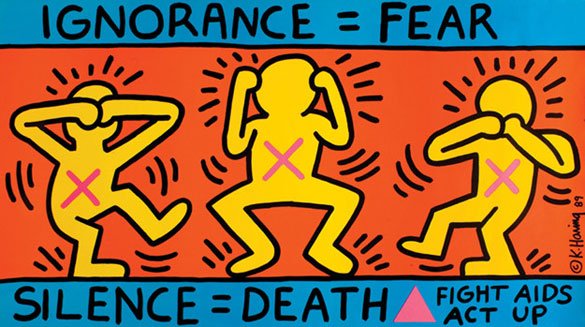
Posting a blog thirty years later on a date that also happens to be World AIDS Day is an odd proposition.   Seared in my mind forever are the faces of living and dying people I knew well, knew slightly, or only knew of as I passed by them at a party or a business meeting – people who wasted away dead or killed themselves before the inevitable ravaged outcome of AIDS happened to them.   That I survived at all is a matter of luck, timing and, well…luck.  Not to degenerate into pop culture references, but to the gay community in particular this was a kind of real-life Hunger Games where many, many more than one person per district had to fight something quite insidious, evil and amorphous in order to survive.  The primary culprit was a lethal and mysterious virus.  The secondary enemies were ignorance, prejudice, our own government and, in some cases, our own friends, neighbors and loved ones.

more than just a ribbon

more than just a ribbon

But simply remembering one’s own story discounts the power and effect of something so massive.  The story of AIDS, like the story of any worldwide plague, cannot be summed up through the experience of a single individual or even group.  I might get cards and letters for this but it would be akin to saying that The Diary of Anne Frank told the story of the Holocaust better than Elie Wiesel’s Night or William Styron’s Sophie’s Choice.  Or that somehow Gone With The Wind covered the Civil War era in a more realistic way than 12 Years a Slave or Glory  or even vice-versa.  The larger and more tragic the event, the more stories there are to tell.  It all depends on where you were and who you were at the time– your perspective and your point of view.

There is a short remembrance in this week’s New Yorker by a reporter named Michael Specter.  He writes about a  photo that was given to him by a friend of two dying men in the Castro district in 1980s San Francisco – one confined to a wheelchair and another, tall and gaunt, bending down to help him – so he can be reminded of the actual story of those days as he wrote about the plague and gay history in the future.  He references this photo as he tells us of the current skyrocketing rates of new HIV infection in the gay community due to resumed risky sexual practices on the part of young people who were not around to see the ravages that came from the disease at a time when there were no or few effective drugs to ensure long term survival.  He also touches on the fact that by the end of this year AIDS will have killed FORTY MILLION people in total, many of them heterosexual and living in Africa.

powerful reminder

powerful reminder

Once again, who died and why and who lived and how is only part of a much larger story.  This is a medical story, a sociological story, a political story and a human story of the world community and, in no less of a meaningful way, individual lives.  That I know a few wonderful guys who continue to survive the plague 2-3 DECADES later is another story in the mix of all the others previously alluded to.   Where we get into trouble is trying to compare, quantify and draw definitive conclusions as to what is most meaningful or even noteworthy.  How do you qualify survival?  Or quantify death?  There is no way to do it and to truthfully bear witness to the actuality of the worst of what occurred.  There is, only — what occurred.

Which brings us back to Dallas Buyers Club.  This is the story of an admittedly racist, homophobic, white trash talkin’ Texas bull rider and electrician named Ron Woodruff who was diagnosed with AIDS in 1984 and given one month to live.  Mr. Woodruff was a real person and, by all accounts, not a particularly pleasant one.  But like many unpleasant individuals, he is not without his charms.  The latter qualities are brought out with the sort of bold verve and definitive eye twinkle that plays perfectly into the talents of an actor like Mr. McConaughey.  He does a lot more than lose 50 pounds from his normally tan, muscular frame and paste on a bushy moustache to bring us back to the skin and bones Russian roulette days of the 1980s.  He actually manages to bring to life the kind of guy that would repulse you if it weren’t for the fact that he was sick and dying.  In all honesty, he might repulse you still.

Despicable Ron?

Despicable Ron?

At one point early on in Mr. Woodruff’s company I, a gay man, turned to my partner of 26 years and sarcastically whispered:  Why can’t they just make a film about all of this for us?  Not surprising on my part.  For all the tragic dramatic stories about AIDS that could be tackled by major or mini-major studios in the last 30 years, the only one that comes to mind that had a gay protagonist was 1989’s Longtime Companion.  Tom Hanks won an Oscar for Philadelphia but the protagonist in that movie was Denzel Washington, the straight African American lawyer who defended the dying gay man in a lawsuit.  And The Band Played On was an HBO movie that chose, among all of its many characters, to star Matthew Modine as a straight white doctor fighting the good fight against the disease in San Francisco while numerous gay men stressed and played all around him.  Several years ago I Love You, Phillip Morris treated AIDS as the punch line to a sociopathic joke of a con artist we presume to be a bisexual man in the body of Jim Carrey but are never quite sure of on any level.

Among many others...

Among many others…

Owning a story, even one that you have lived through, is a very slippery slope that I began to slowly tumble down into as Dallas Buyers Club continued.  The character of Mr. Woodruff, who I do recall hearing about in real life, was bold enough to go against the accepted medical science at the time and travel down to Mexico where he found alternative drug treatments dispensed by a disbarred American doctor that, unbeknownst to him, would prolong his life for many years.  He then chose to circumvent the laws at the time, illegally transport the drugs back to Texas, and open up his own “club” to dispense these medications to members who would pay a $400 per head, per month membership fee.  Never mind that he was making out like a bandit – he was also temporarily enabling many other people to save their own lives for significant amounts of time using a model that he mentions in the film was really created by homos in New York, San Francisco and other big cities across the country.

Hmmm – in a normal movie this kind of talk would not redeem Mr. Woodruff’s character in my eyes.  But those were not normal times.  Somehow, as the movie progressed this asshole became a bit of a hero if only because he managed to take away the profound suffering of what stood in for the many young men that I knew personally at the time who would, in the end, have no such relief at all.   Well, extreme circumstances do call for extreme reactions – both in life, movie fantasy and upon reflection.  Never mind that Mr. Woodruff briefly made a personal fortune and the massive nationwide fight gay men were waging on every front, including the ones Mr. Woodruff trod in, were mostly ignored here. Despite my great reticence, as I watched the film, I found myself rooting for this egocentric ignoramus – a guy who wound up being far smarter and eventually, but not totally, a lot more enlightened than I had previously seen as being possible.

(Side note:  The movie also co-stars Jared Leto as one of the few straight actors I’ve ever seen pull off a believable drag queen on film.  Forget William Hurt’s best actor Oscar in 1985 for Kiss of the Spider Woman.  As most gay guys will tell you, that was mostly about a straight guy showing us drag and flamboyance in a film made in the early days of AIDS rather than a straight male actor being a real character in a movie that takes place during the early days of AIDS).

Make room on your awards shelf, Jared.

Make room on your awards shelf, Jared.

I’m assuming that like all real-life movie heroes and anti-heroes in recent years – from Johnny Cash to Richard Nixon – Mr. Woodruff’s true edges have been softened and hardened to meet the filmmakers’ dramatic needs.  This is how it is and will always be in the creative arts.  Even documentaries are not totally real depictions of what actually happens.  They can’t help but be influenced, if only slightly, by the filmmaker’s own interpretation of the events.  Ask D.A. Pennebaker. Or even that master of restraint – Michael Moore. (Note: I love MM and the latter is, um, a joke). (Note #2 – And yes, since memory is at the very least selective, even How to Survive a Plague probably missed a few things).

As for Dallas Buyers Club it might be at turns clunky, thinly developed, or lacking in an overall broad historical perspective. Most movies are, or do, in parts.  But what it does extremely well is evoke an important era and tell yet another story about a human plague that seems to have no end for those of us lucky enough to have survived it.  It will also do this for others new to the fight who will now, and in the foreseeable future, find themselves navigating the waters if the gasps I overheard from several young people around me in the movie theatre are any indication.  And, additionally and in particular, it might slightly sway one or two or more of those others who don’t really care about this fight at all.

If Mr. McConaughey’s portrait of the sometimes off-putting Ron Woodruff enlightens even one small-minded jerk about all of this it will have been more than worth the effort.  And even if it doesn’t, it has every right to stand along all of the stories of that time.  No one owns The Plague Years – even those of us who were fortunate enough to live through them and bear witness to our own individual stories of hell from that time.