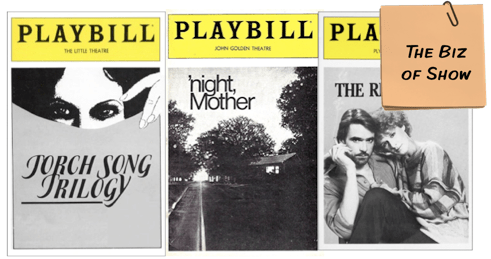
Art, historically, is always at its best and most provocative when it can be in opposition to something – when the artist disagrees with the government she lives in. – Hanya Yanagihara, Editor in Chief, T Magazine
This week the New York Times published a special issue of its Style Magazine entitled — 1981-1983 New York: 36 Months that Changed the Culture.
Among the many articles, stories and sidebars is an accompanying 12-minute video of interviews at a photo shoot of 21 actors who had their breakthrough moments in the city as young artists at the time.

Click to watch the video!
There are lots of familiar names, many of them now stars, all of them respected at their craft not only onstage in New York but often in film and television. Not to mention, one of them is now even running to be the next governor of New York.
Kathy Bates, Glenn Close, Sarah Jessica Parker, Matthew Broderick , Cynthia Nixon, Mary Elizabeth Mastrantonio, Willem Dafoe, Nathan Lane, Harvey Fierstein, Ed Harris, Loretta Devine, Joan Allen, Elizabeth McGovern, Mercedes Ruehl, Victor Garber, Amanda Plummer, LaTanya Richardson Jackson, Michael Cerveris, Mia Katigbak, Stephen Bogardus and John Kelly.
It was impossible to know at the time who in the above group would:
1- Create roles so indelible that they’d live on forever in the pop culture landscape.
2- Become rich and famous beyond their (and our) wildest dreams.

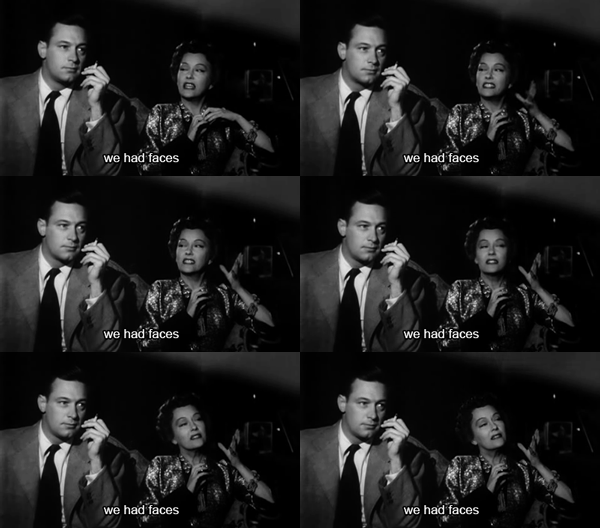
My face when I think about SJP’s wallet. Yes, we’re looking at you shoe lady!
3- Continue to be doing avant-garde, cutting edge work so many decades later.
4- Change your life with a single performance or film appearance or, perish the thought back then if you were a true artiste, weekly TV show.
And perhaps, most importantly (at least for them):
5- Survive long enough to attend or even be wanted at a photo shoot/class reunion in the year 2018 organized by the NY Times about the city’s once-in-a-era cultural scene.
It is easy to look back and write about an iconically fertile or low period in artistic and political history. But it is one mean feat of supernatural ESP to know that this is what’s going on in your particular time at the time and be absolutely right about it.

Amen, Andy Bernard. Amen.
The truth is, everyone thinks that both the time they’re living in and the work they’re doing is important, artistic, relevant and potentially world and/or life-changing. Either that or they assume there is nothing at all important about it – certainly nothing people would ever look back on decades later in wonderment or nostalgia.
Of course, both viewpoints are incorrect. No one really knows which times are or will be relevant to other generations and how or in what way. Sure, you’ve got gut feelings about stuff, especially in 1980s NY where people on the artistic scene slowly began dying around you from an unnamed plague. But in that moment, it isn’t easy to fully realize how time will remember it or if you and/or your generation’s work will live on or be forgotten. What is even more likely is that you won’t be right about it.

OK maybe we had a good idea about this guy #legend
Cases in point:
— I remember working with a 17 year old Cynthia Nixon on a little known Robert Altman film, OC & Stiggs, in the early eighties and thinking: She’s so sweet and smart, not to mention natural in front of the camera – I hope the biz of show doesn’t eat her alive. I never dreamed I’d see her on Broadway a year later seducing a major movie star onstage right before my eyes, go on to win two Tonys, then follow it all by becoming a female role model/TV star on Sex in the City. And now a run for governor? Are you kidding???

Oh she’s the real thing alright!
— As the arts editor of my college radio station I got tickets to see this off-Broadway play called Vanities in the seventies where a very young and very unknown Kathy Bates played one of three friends whose lives we trace though high school, college and post graduation. She was fun AND sort of sad simultaneously, the kind of fantastic NY actress you knew would work forever but would probably never be a star because, well, the business…SUCKED!!
Which it didn’t because in the eighties she became a local Broadway legend playing a suicidal daughter in night, Mother and in the early nineties became an Oscar winning, axe-wielding movie star in Misery.

And then win an Emmy for playing a HEAD in American Horror Story
The latter was, by the way, five years after I had worked on the movie version of ‘night, Mother and was tasked to arrange a private pre-release screening for Ms. Bates so she could take in the work done by Sissy Spacek in the role SHE had originated. Again, I thought, this business…SUCKS! Which, of course, it didn’t once again and, in fact, only showed how wrong one (okay, I) can be – TWICE. And in two different decades.
— Then there was the time in early eighties NY where I saw Harvey Fierstein playing a gay, Jewish drag queen in his play Torch Song Trilogy and considered just how wrong I was a third time (ok, maybe that was #2) about what could and could not be accomplished in a business that, at the end of the day, actually might not at all always totally…SUCK.

Oh.. hello, Mother
This might be hard for younger people today to imagine but the idea of a gay guy from the boroughs playing a gay guy from the boroughs in a play he had himself, a gay guy from the boroughs, written about the relationship a gay guy from the boroughs has with an impossibly closeted gay guy he’s in love with and his own impossibly know-it-all Jewish mother seemed…well… impossible at the time. Until it wasn’t. And never would be again (Note: Especially for this gay guy from the boroughs) thanks to people like “Harvey,” who worked in cheap, roach infested, barely standing stages far away from the harsh glare of world-changing and international recognition.
You can never be great – in life or in art – if you’re forever thinking about being great or are sure you will never be great because the odds are against you and the times you live in just don’t allow it.

Also avoid self aggrandizing
All you can really do is put everything you have into your work and your life (both of those being art) in the best way you can, revel in each action and task with as much enthusiasm as you can and – hope for the best.
I still have to remind myself about living in the moment and enjoying each task at hand, unconcerned with result and I saw most of the above unlikely actor/stars in their iconic performances all those years ago in the early eighties.

I was killin’ it and didn’t even know it!
Of course these days it sometimes takes journalistic behemoths like the NY Times to remind us that the eighties – a decade many of my peers consider hideous beyond words because of its ethos of Greed is Good, big hair and the AIDS plague – did indeed have its moments in hindsight.
That is among many other things we depend on them to remind us of daily these days. Which is the subject of another story. Though the lesson is the same – stay focused and do the work as best you can – even if you think no one is listening and despite what you perceive your odds are for success. Because the future – yours and all of ours – just might surprise you — and us – if you (nee We) just keep going.
Nina Hagen – New York New York (1983)



 notes from a chair