For Your Entertainment

My entertainment choices lean towards the haunting, dramatic, unusual and silly.  Not necessarily in that order and certainly more than one of those at a time. 

But mostly, it’s the heartfelt, or at least the felt.

Prepare the cozy blankets!

Contrary to popular belief, this doesn’t necessarily mean melodrama, bathos or twee.  It’s simply to say I hate facile, bullsh-t storytelling.  A movie or TV series or book that glides gently on the surface but never quite gets into it.

As many producers, studio executives and dinner party conversations have noted in my presence over the years:

Chair, it’s called ENTERTAINMENT.  Why does everything have to MEAN something?  Can’t you just drop a shoulder strap and enjoy yourself?
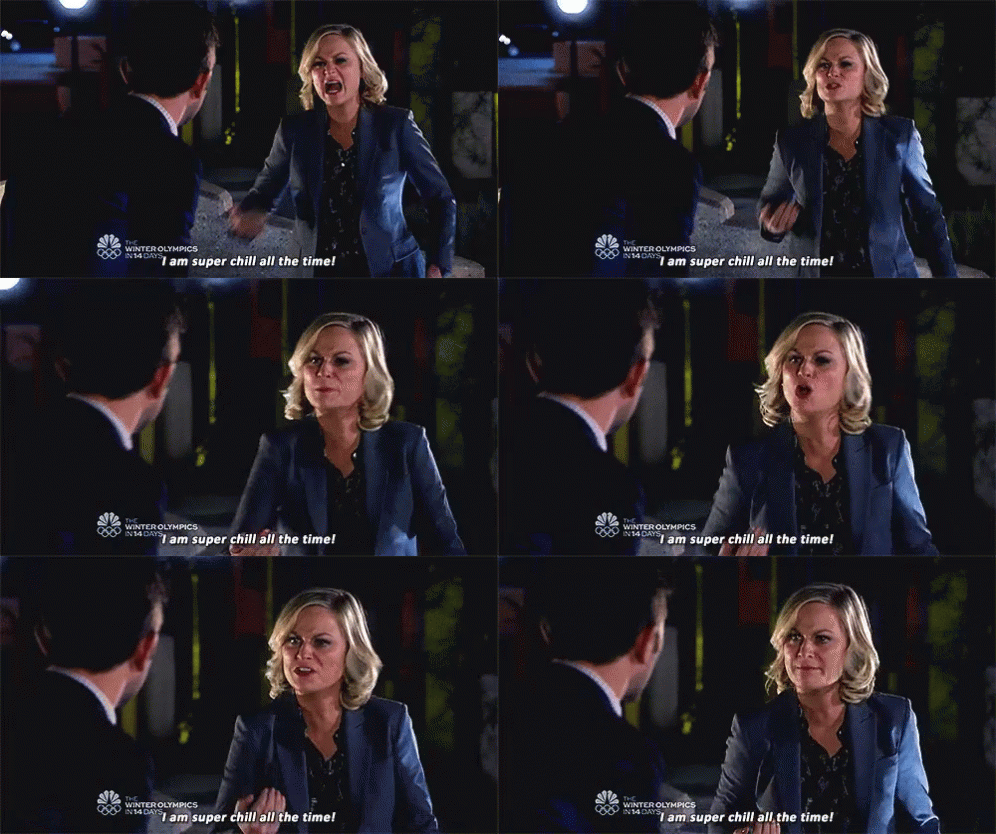
Don’t tell me to relax!!

Well yeah, sure.  I like to enjoy myself…most of the time.  But the way I do this is to indulge in something creative that speaks in some crazy or earthbound way to something of human existence.

The great Mike Nichols once said when speaking about directing actors in scenes from plays and movies that his approach was to ask the question (and I’m paraphrasing here): what are these two people doing, really?  What would really happen here?

That’s a great lesson not only for directors and actors but writers.  What’s the truth?  Even if this world we’re playing in is crazy, what is true here?  And how best can I show it?

Resistance is futile

By every measure we are living through strange times.  But this week a streaming series and a novel, both off-center, odd, original and yeah, just plain out there and weird, fully caught my attention.  And it wasn’t because they tried to be different.  It was that they dared to be true.

The first is the Apple series, Mr. Corman, created, co-written, directed and starring Joseph Gordon-Levitt.  The second is a debut novel, Several People Are Typing, written by Calvin Kasulke.

 (Note: Full disclosure – Cal is a former student of mine from more than a decade ago.  But this has nothing to do with me praising his book.  Nor, I suspect, did his participation in my writing class all those years ago have much to do with him writing this book.  As for JG-L, I’m merely a fan boy… um… man).

This week’s entertainment

Mr. Corman and Two People both seem to exist in our world and yet, as they play out, dare to become a pushed reality existence of their individual creators’ daring and bizarre invention.  Things happen that aren’t supposed to, or at least seem to defy what we consider to be real, yet there is not a false or phony moment in either of them. 

Their lead characters have struggles in recognizably human ways, even when they and their events and actions literally become surreal.  Nothing is melodramatic or touchy-feely, even though what we’re watching is dramatic and touching, not to mention – yeah, I’ll say it – entertaining.

Mr. Corman centers on a 35-year-old teacher of third-graders in the Los Angeles San Fernando Valley who may or may not be seeing things; may or may not be having a nervous breakdown, losing his mind or becoming mentally ill; and is yet all the time behaving rationally and humanly given the parameters of what life has been like for all of us the last 18 months.

So a general sense of dread… got it

We watch Josh Corman, a former musician turned educator, with his friends, his family (Note: A wonderfully subdued Debra Winger plays his Jewish mother), his students and his ex and/or potential girlfriends in a ten-episode first season where each episode dares to go down a road we never see coming in a way we never quite imagined.

There’s the episode that is partly animated, another that becomes a musical and several where the covid-19 pandemic changes everything and everyone (Note: The series actually had to shut down shooting in L.A. during episode three due to covid-19 and then relocate months later to complete filming in New Zealand).  There is also one that takes place primarily in the past and a stand-alone where we watch as this young yet middle-aged guy spends an evening with his estranged father, a man who likes to do things like open credit cards under his son’s name or call up and pretend he’s having a heart attack just to get his son’s attention.  Then there’s the one where Josh goes to a party attended by a bunch of social media wannabes and witnesses…well, just watch it.

That is… a lot

Of course, none of this does justice to the twists and turns and sadness and humor the series touches on.  It can’t because the entire enterprise builds, one carefully crafted episode at a time, off the unfolding existential question of whether our main character has truly lost it or is simply the only sane one in our clearly insane world 2021 reality. 

In searching for the truth it actually tells the truth, and often quite brilliantly.

Several People Are Typing takes an equally compelling but yet quite different approach.  Its hero, Gerald, a writer at a NYC p.r. agency, has been working with a group of people who communicate virtually on the popular business communication platform called slack.

If you know, you know

For those unfamiliar, as I once was, think of it as inter-office gchat that is supposedly a lot more secure, with all kinds of sub breakout rooms for “sort of” private chatter (Note:  Because NOTHING IS PRIVATE anymore, right?).

In any event, when the novel starts Gerald is calling out for help because, guess what, his consciousness has somehow been uploaded on to slack.  Yes, Gerald is now simply gerald, a virtual/written version of himself disembodied from his human self. 

Oh, did I mention the entire book is written in slack prose?  Well, it is.  Think of the most basic text thread you’ve shared from anywhere between 2-10 different people at various times, all published in consecutive or intersecting order, with the same type of phraseology, and peppered with a series of pertinent yet vaguely annoying gifs, photos and abbreviations and you get the picture.

Keep your head on a swivel!

This is oh, so trendy and too much of a trick, right?  No, not even slightly.  That would be the superficial, untruthful way to execute this story and, well, there’s none of that here.  It’s about people, virtual and otherwise, finding their meaningful identities and not merely slacking through life. 

It’s about how we spend our time and what our time means to us.  And whether a picture really is worth a thousand words, especially when someone decides to listen to you.  And to actually, well, hear you.

But mostly, it’s really, really clever and really, really weird.  And pretty gosh darned funny.

See, you can be a lot of things, including entertaining, when you have a point to make that’s more than just trying to be entertaining.  Because what’s truly entertaining is a personal take on what is human.  And what’s truly human is always a lot more than mere entertainment.

David Bowie and Morrissey – “That’s Entertainment”
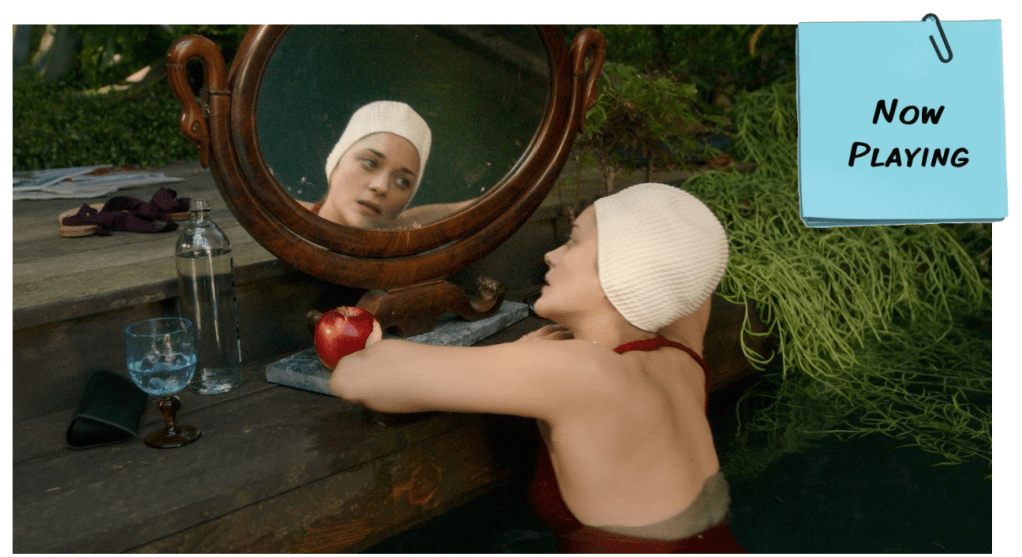
The ARTsy Annette

As America bloodily disengages from a 20-year war in Afghanistan and the COVID pandemic still rages across the U.S. thanks to the very willingly misinformed unvaccinated (Note: despite this country ironically having THE MOST ACCESS of any country in the world to these very much in demand life-saving vaccines), it seems a bit quaint to speak about things like art.

Or is it?

Art you say?

Of course, art these days isn’t limited to Picassos, Monets or anything else hanging prominently in a museum.  It’s more a blanket term that covers movies, TV, theatre, music and even sports.

It might even include chefs, scientists and TikTok influencers.

C’mon, this is art
(“Five Ages of Parmigiano Reggiano in Different Textures and Temperatures” – Massimo Bottura)

In short, art is anything that can take us out of ourselves and our troubled world and open our minds up to a different mood or alternate way of thinking or seeing.

In that way then, and most especially in trying times like these, all this art talk begins to seem not so much quaint but essential.

Certainly not as essential as an 80-90% vaccination rate but right up there nonetheless.  If art can open up minds to some new momentary way of perceiving or participating in the world then heck yeah, we need it now more than ever.

In fact –

PLEASE! BEFORE IT’S TOO LATE!!!

Because I’m all out of ideas for reaching the unreachable.

Yet how many times have we heard and/or read phrases like, oh, she’s a true artist or his artistic vision is limitless before we roll our eyes, disengage or want to and/or actually do scream?

Well, if you’ve spent your life listening in on conversations or reading and writing reviews the way I have, (Note: Or even trying to be creative the way most of us have, whether we know it or not), chances are the answer is too many times or, more likely, daily.  

As both a writer and a writing teacher I’m well aware of the pretention of the mere mention of the word ART and of all of the would-be artists who engage in it.

Whatever are you talking about?

Yet I’m equally aware of its power for both the art-makers and their audiences.  When it’s firing on all cylinders, at its best, it’s an unstoppable force for universal good. (Note:  Google the global impact of a once in a generation theatre piece of art like Hamilton).

Still, at its most screamingly, omni-presently ARTISTIC it does make you never want to go to another museum, watch another film or TV show, or even try to indulge in something as au-currant as TikTok ever, ever, ever again.

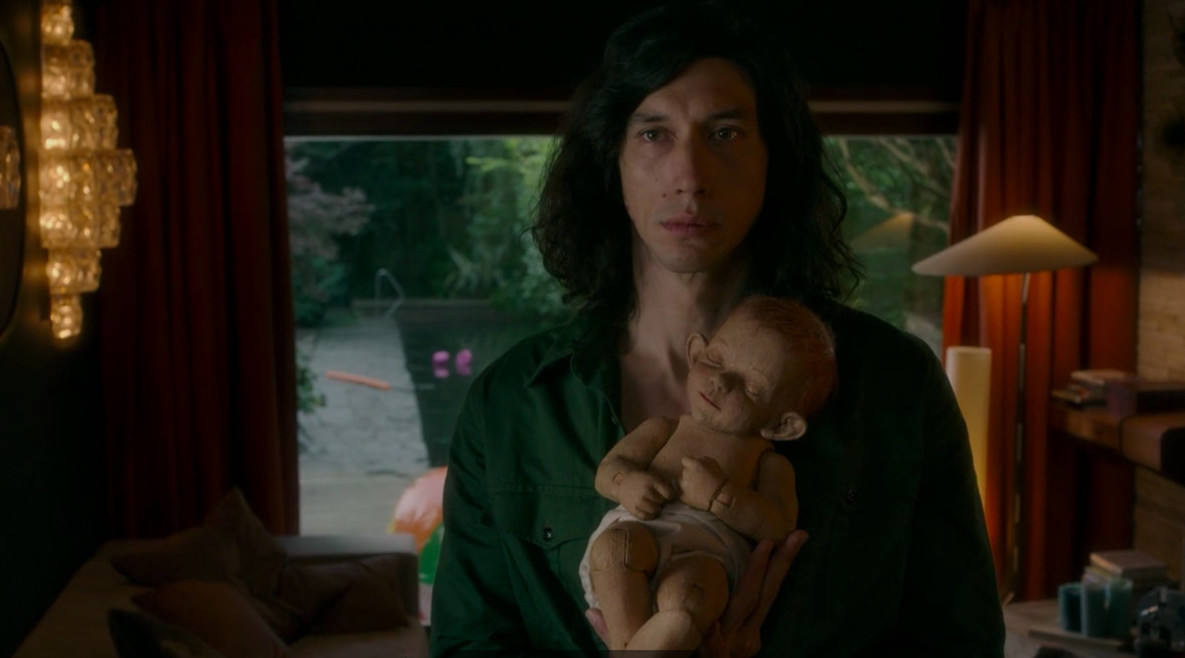
This weekend I spent 2 hours and 20 minutes watching a film called Annette starring Adam Driver and Marion Cotillard.  Let me state upfront that it’s a somewhat interesting though not thoroughly realized movie that has its moments even as it so often woefully and painfully disappoints.

We’re gonna talk about the puppet right… wait.. no?

Annette caused a ruckus at this year’s Cannes Film Festival, with any number of walkouts and boos the night it opened the film festival (Note: Exacerbated by the fest’s best director win for Leos Carax).

Yet to its credit, Amazon, one of the biggest corporations on the planet, saw fit to acquire the rights to it back in 2017, ensuring it a huge audience of subscribers with FREE ACCESS to this big risky artistic project.

That was a bold move four years ago but even more so now, in summer 2021, a time where we’ve all been aching for some diversion, or reeducation or just simple relief from the plain, glum depressiveness of our very, very mundanely unpredictable world.

Remember that there is an entire twitter community that goes after Ted Lasso, so, no one wins

Sadly, as a film, Annette is a master class in something I’d like to call artsiness gone bad.  That is to say it so revels in its difference that ultimately that is all that emerges.  It’s weirdness, it’s strangeness and its sheer differentness becomes its calling card – and its downfall.

Its ambition to out art the artsy works as a kind of creative COVID that virally swallows the whole effort whole, devouring every bit of the essential, energizing life force it might have provided us in trying times like these.

If only the filmmakers had simply told their story and not gotten so artily up our asses in every which way Annette could have really said something about whatever it was trying to say. 

Chair goes in!

Which is one of the issues of art that too stringently aspires to the groundbreaking and mind-blowing.  It forgets about the details and intricacies and nuances of the story it’s telling because it is forever trying to top itself in upending our expectations and challenging the status quo with, well…not very much.  Or, at the very least, not enough.  Or, more likely, too much.

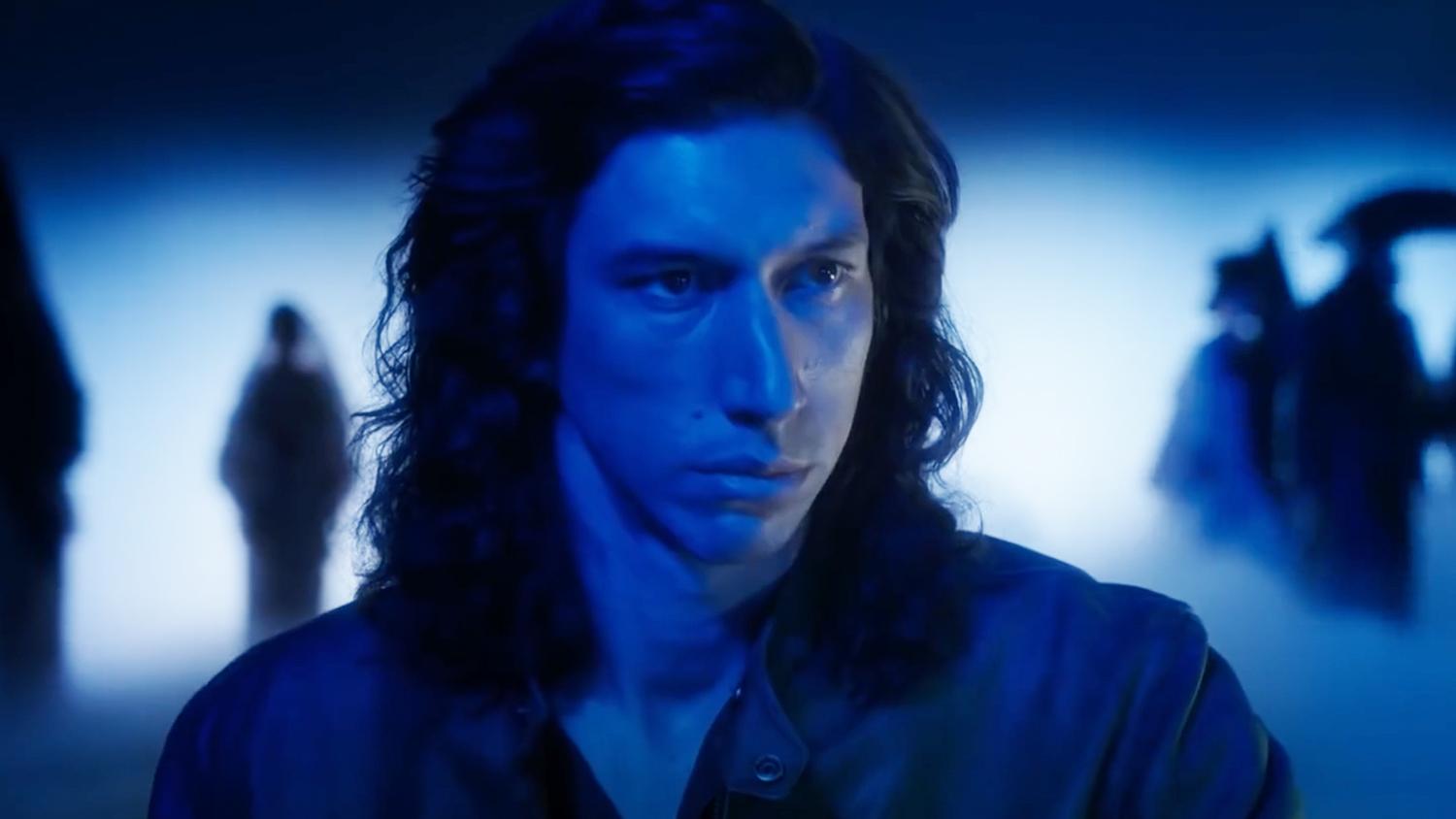
Its star, Adam Driver, plays not so much a character but an idea.  A comic who isn’t funny, an archetypal bad boy because he dresses in black, rides a motorcycle and broods.  He lumbers and blusters his way through the world but also, quelle surprise, has a soft side.

And let’s not even start on the hair

It’s the same way with the woman he loves except she’s his complete opposite. That leaves its other star, Marion Cotillard, the task of projecting the isolated, sensitive, sweet-as-syrup voiced uber soprano.  A beloved public figure that plays a tragic heroine in seriously off the-wall operatic performance pieces that have somehow gained mass worldwide acceptance. 

Are they headed for tragedy?  Well, what do you think?  (Note:  Of course, you know what you think without having even seen it).

But even if your response was, well of course I know it’s a tragedy – it’s an opera for god sakes – but it will be interesting to understand the reasons behind all this BEHAVIOR, well, we never do.

Instead, we get events unfolding randomly with no real recognizable humanity or particular point of view.  More of a potluck smorgasbord with varied references to the demons of celebrity, the #MeToo toxic masculinity of it all, tropes of romantic codependence and addictive sex, and all the ultimate dissatisfactions to be found in marriage and parenting that one can literally shake a camera at.

… wait I think I can fit one more thing

And it’s all done in the guise of an opera, or rather opera-light, meaning most of the communication is sung by actors who don’t have particularly great voices even though they manage to get by. 

Real opera can get away with archetypal storytelling because we get swept up in the drama of the voices.  Movie rock operas like Ken Russell’s Tommy are visual delights that do the same.  And hybrid or real-life musicals like Jacques Demy’s Umbrellas of Cherbourg and Damien Chazelle’s La La Land spend a lot of time on design, story, character and annoying little things like motivation, back story and logic within their magical realism.

They might seem a little pretentious to many viewers but at the end of the day they have the weight and subtext to back it up.

They might at times alienate us and disengage from us, and annoy us, but we get what the stakes are and who the people are.  Lars von Trier’s Dancer in the Dark (2000) starring Bjork, another Cannes premiere of a different type of unbridled artsiness that went on to win the top Palme d’Or prize, went out on countless limbs but still managed to give us women, men and show-within-a-show imaginings that always felt living and breathing and fully alive even as it reveled in the artificial.

So… not this puppet? Right, gotcha

The best of these art films immerse, challenge and even alternately annoy some in the audience as they push boundaries.  But they also try to engage us in stories that go deep into the psyche of their characters even as they exhaustively bend the rules of the worlds in which they choose to exist.

Meaning: they embrace the conceit of artiness without being engulfed by it and thus becoming its victim.

After watching Annette I read almost two dozen reviews of it on Rotten Tomatoes (Note: Because what else do I have to do?) and almost half came to the exact same conclusion.  Annette is a film that can’t entirely be recommended but, as all of these top critics wrote in different ways, they were ultimately glad it was made because, well, at least it was something different.

Ehhh… I don’t know about that

The latter is a misleading, partial truth at best and ultimately just plain lazy, which is pretty much the worst you can be as a writer.  One can be glad something is different but if one is going to be different and be praised for it (Note: Or do the praising), it comes with the obligation to go deeper and to attempt to be better.  Not to simply frolic in a trough of tropes, technical acumen and irresistible actorly flourishes, set to one’s own original music. 

and again, Adam Driver’s hair

And to not bank on the lucky chance that something, or really anything coherent happens to come out.  Or depend on the de rigueur praise of desperate critics looking for an escape from what must as this point seem to them to be an inescapable cookie cutter world of commercialized art.

By taking either the uninspired or unexamined way out, artists of every kind relinquish the personal responsibility one takes on when trying to do something big and different, especially when you have huge movie stars, because it makes it that much harder for everyone else following you and rooting for your success.

Plus, you know… puppets.

It’s a special willful ignorance of responsibility, the kind you have to everyone else trying to survive in a creative arena that is difficult enough these days because it exists in an outside world that is nearly impossible to navigate.

In short, it’s the artistic equivalent of choosing to go unvaccinated just because you can.

“We Love Each Other So Much” – Adam Driver and Marion Cotillard