The Chair’s Review: Bros

Who knew that Bros, the first gay romantic comedy released by a major studio, would be as good and sweet and touching as it is?

I certainly didn’t.

Oh, also, it’s pretty damn funny.

And Billy Eichner and Luke Macfarlane make a really convincing couple falling in love. 

It might not seem that way in the poster, which features only the backsides of two unidentified men, each with a hand on the other one’s ass.

Isn’t this better???

But, hey, you can’t have everything.

Sadly, one thing Bros didn’t have this opening weekend was box-office success.

It received almost universally glowing reviews and scored 97% on Rotten Tomatoes’ audience meter.  But grossing approximately $4.8 million domestically on 3350 screens makes it a huge financial disappointment in light of the $10 million plus it was expected to earn.

Not to mention the $22 million it cost to make and the $30-$40 million above that Universal Pictures spent to market it. 

Box-office numbers are a strange indicator of what is good, bad or indifferent about a movie.  Trust me, I know whereof I speak.  In the eighties, I started the first weekly national box-office column for Daily Variety, which in turn popularized the international trend of reporting the grosses each weekend as if movies were racehorses in the Kentucky Derby.

Groan

But what seemed a good idea at the time for a business publication inundated with inflated numbers of seeming profit provided by their corporate-entity makers (Note:  There is often little correlation between box-office grosses and actual profit, since it depends how much the damn thing cost to make and promote) promptly became nothing more than another way to measure a film’s VALUE. 

In turn, it too often was the barometer for it being dubbed a SUCCESS or a FAILURE.

Yes, we live in a capitalist society and who doesn’t like making money?  This is especially the case for corporate entities.

But as far as the measure of worth is concerned, the numbers a moviemaker’s film pulls in on opening weekend at the box-office in 2022 couldn’t be less-related to its artistic, and, yeah, even its ultimate financial worth.

Preach!

This is not 1980, when Richard Pryor and Gene Wilder’s bro comedy Stir Crazy was lighting up the box-office coffers in one of the first Daily Variety stories I ever wrote.  And Bros is certainly not Annie Hall (1977), a film about another neurotic Jewish New Yorker who falls in love with a gorgeous person from the planet SHIKSA/SHAYGETZ (Note: Look it up!) much the way Mr. Eichner does here.

As a young gay man who loved Annie Hall when it was released and had not yet come out, I could NEVER have imagined in my WILDEST, WEIRDEST dream that any movie studio, much less a major one, could make a gay male love story starring a much too talkative, know-it-all Semitic boy from Queens, like Billy AND myself, with any other boy boy from any other PLANET.

I mean, I barely realized those kind of love affairs were possible in real life on EARTH.  And you might even substitute the world barely with I didn’t even know. 

If only I had Bros way back when, I might have kissed (Note: And much more) A LOT less toads until I found my prince.

This!

But I suspect that was partly Mr. Eichner’s story too, and at least a sliver of the reason he wanted to make this movie in the first place.  It’s a laudable ambition and effort but practically a fool’s errand given the finicky nature of the way audiences watch new films in these pandemic and post-pandemic (Note: Ahem) days.

Personally, this is only the second time in more than two and a half years I’ve been to an actual public movie theatre as opposed to the at least 1-2 times PER WEEK that I used to attend pre-2020.

Me, 20 minutes before showtime

This might not be the case for most young people but, then again, we need to consider what everyone is now going to see publicly en masse. 

Once you cut out Marvel movies, horror films and tent pole-type action flicks, how many big opening weekends for romantic comedies are left??

Bros director/co-writer Nick Stoller scored big with the pre-pandemic 2008 film Forgetting Sarah Marshall.  And producer Judd Apatow directed the writer-star Amy Schumer to opening weekend success in 2015 in her big screen debut, Trainwreck.

But those might have been made and released a century ago as far as our current movie-watching habits are concerned.

Imagine a world where at least half of the new movies can be had opening weekend at home on your big ass screen with a click of a button from a service you pay a minimal amount of money to subscribe to.

You don’t have to.  It exists.

… and you don’t even need to wear shoes (or get dressed!)

Or better yet, think about a life when any moviegoer can pay the price of a single ticket of admission plus a few more dollars and entertain as large a group of friends as they want to their house (Note: Or even a first date with someone they like) and together watch that new movie they’ve been dying to see, on their computer, in their living room, bedroom or, well, any room in or outside their house, apartment, or trailer home?

You don’t have to.  You can merely open your eyes and fulfill that wish for 80% of the movies out there.

Universal and the other big four or five major studios  (Note:  Six? Seven? Three? How many are technically left?) might not want to recognize this fact.  But it’s still a fact.

This is especially the case for a genre that’s always been close to this gay man’s heart – the romantic comedy.    

On the other hand, maybe I’ll be proved wrong in a few weeks when the new George Clooney-Julia Roberts rom-com, Ticket to Paradise, debuts solely at movie theatres.

Admittedly a better poster!

Yet is it fair to compare movie star royalty like the Clooney-Roberts combined billion-dollar box-office oeuvre with Billy Eichner and Luke Macfarlane?

Well, too bad.  Who ever said life was fair?

See, that’s the gist of the argument.  But the market doesn’t quite exist anymore to launch a new rom-com star, or stars, solely on the big screen.  Even Julia Roberts did a TV series a few years ago and the last theatrical box-office success starring George Clooney was…… okay, Gravity (2013), where he didn’t even have the lead and which was certainly no rom-com.

Bros got the most difficult thing right in a movie of any genre, but most especially one that is a romance AND a comedy.  It persuades us to care about its two leads by presenting them as real people rather than cardboard cutout movie types generated by a computer program, a list of old films and the shuffling of scenes written on a bunch of recycled index cards.

and it’s charming!

Sure, there are moments where what we are watching has so many LGBTQ plus references and people that you need a flow chart to be fluid, up to date, on trend and hip enough not to be left in the dust or mildly uncomfortable by some throwaway remark or too larger than life comic overstep or contemporary reference.

But that’s the exception rather than the rule here. 

Bros is certainly not perfect but what is the last perfect movie you’ve seen in the pandemic, or post-pandemic present? (Note: Or ever?)

As rom-coms go, it far exceeds 2022’s Marry Me (starring J-Lo and Owen Wilson) and The Lost City (Sandra Bullock and Channing Tatum in the leads) any day of the week.

But that will not be the ruler against which the first gay romantic comedy released by a major studio will be measured against.

They’ll compare it to the Oscars won by Annie Hall (1977), the popularity of When Harry Met Sally (1989), the box-office mojo of Sandra Bullock and Ryan Reynolds’ in 2009’s The Proposal (Note: $163 million domestically) and the zeitgeist reaction to Crazy Rich Asians in pre-pandemic 2018.

… which in this case means, box office success

This is meaningless.  And it takes away nothing from Bros being a very good, very smart and very entertaining film at a time when we need the very entertaining, the very smart and the very good. 

By any true measure of anything worth measuring, that makes it a success. 

Not to mention, historic.

Billy Eichner – “Love is Not Love” (from Bros)

Master Class

The reality of these last few pandemic years and their political, economic and overall societal impact has been soul crushing.  Up is down, and down seems to have no real bottom.

So what do you do when things turn sour?

I don’t know about you but I turn to art. 

More specifically – music, movies, television, books, painting, architecture and pretty much anything else that can existentially lighten the load.

I know I can’t be the only person who would watch this to relax

It’s not that any of the above will solve the problems of the day, or my day. 

It’s that it makes me feel human and allows the rest to be more tolerable. 

It reminds me of what is pure, reflective, accurate, assured or even appropriately messy.

It tells me I am not alone in my misery, crisis or ennui and that someone, somewhere has not only asked the same questions and felt the same things but has, in some way, made some sense of it.

Bottom line: It gives me hope.

Enter Beyonce #Renaissance

So it pleased me to no end this week to find hope in the work and attitudes of three masters who somehow made me appreciate and feel better about, well, everything–

Joni Mitchell, Paul Newman and Joanne Woodward.

And what’s particularly interesting to me is that I only once again came upon their artistry because of the miracle of technology that enables all of us to experience them, their work and their words, new and old, in ways we never have before.

I love you, Internet

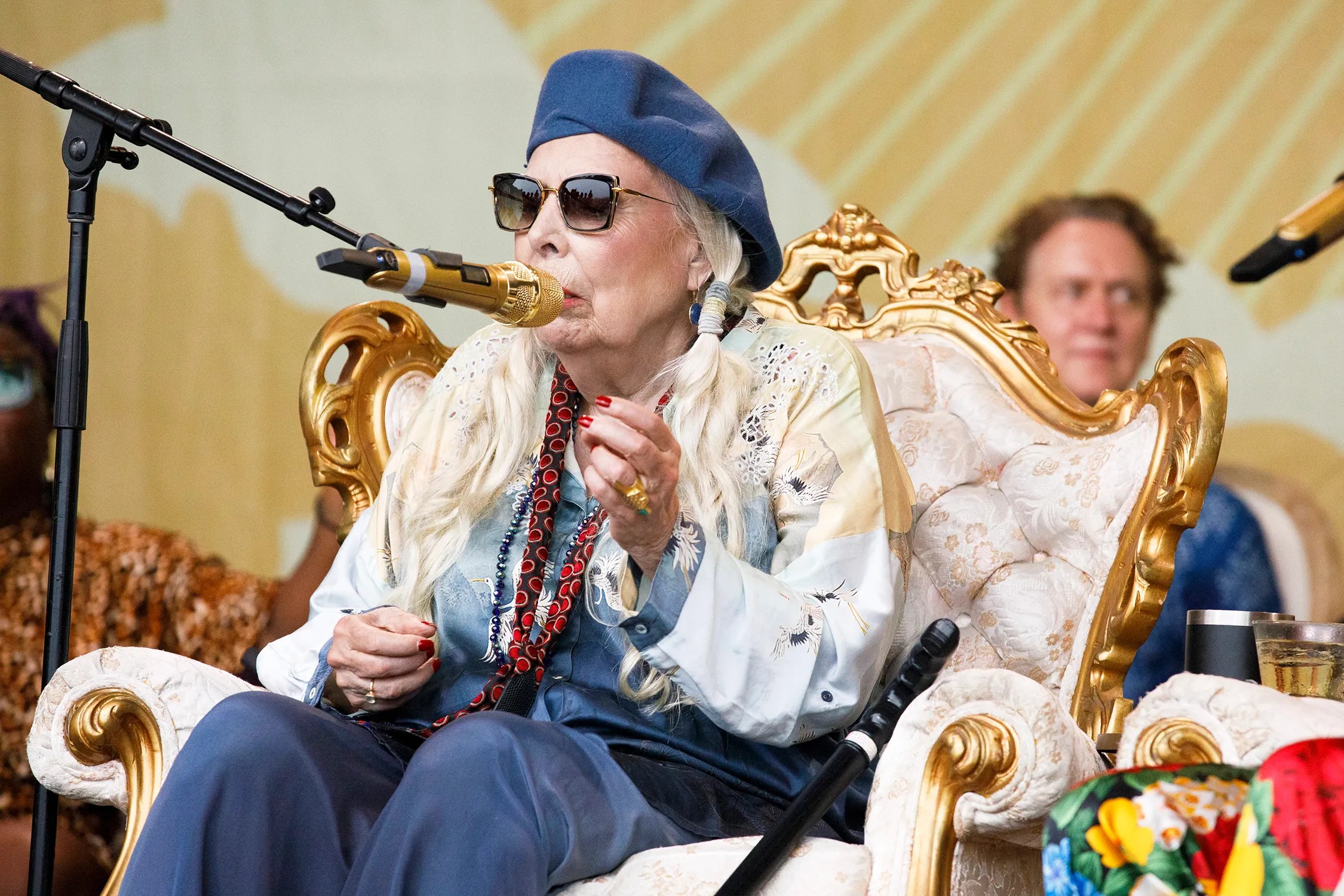
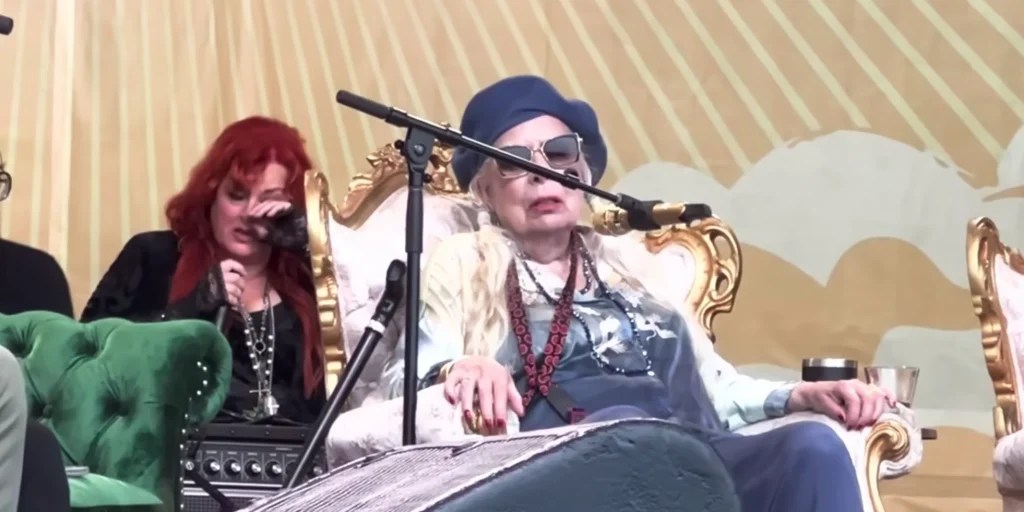
Joni Mitchell re-emerged last week at the Newport Folk Festival where she gave her first concert since a near fatal brain aneurysm seven years ago, which went viral.

Many million of views later she emerged at 78 years old as not only an enduring musical sage and heroic role model, but as living proof that there is no limit to what creative efforts can mean to both an audience and a creator.

Queen

We can hear the exact same words in the same song sung by the very same person and, depending on where we, they and the world all are, be provided with entirely new, exciting and reinvigorating energy to conquer our particular worlds all over again.

What her fans have always known is that Joni Mitchell is a brilliant, poetic truth teller that doesn’t hold back, doesn’t try to please and definitely doesn’t suffer fools.

But what we, and likely she, didn’t quite expect after all this time is that her determination to keep going and redefine herself in a new space and body would touch so many so quickly and provide at least a momentary lifeline out of our own darkness.

Try not to after watching Joni! #impossible

It’s not merely because of her persistent dedication to teach herself to sing and play guitar again by incessantly watching old YouTube clips of her performing that the media and we once again sat up and took notice of Ms. Mitchell so en masse.

It is rather that in doing so, Joni Mitchell managed to create something entirely new.

We’re all Wynonna in this moment

I mean, it’s one thing for a 23-year-old singer-songwriter to write and perform classic songs like Both Sides Now and The Circle Game and, through her lilting soprano and folk/hippie garb casually reflect on the cyclical nature of life and the elusive vagaries of love. 

But it’s quite another to hear someone who briefly touched death (Note: As she recently explained), frailly sit down on an overstuffed chair center stage (Note: Because it’s too difficult to stand for very long) and in now basso tones, adorned in flowing gray robes while wearing dark sunglasses shielding her often closed eyes, more than a half century later persist in admitting to us that:

You can’t return you can only look

Behind from where you came

And go round and round in the Circle Game.

Or once again confess to us:

I’ve looked at life from both sides now

From win and lose and still somehow

It’s life’s illusions I recall

I really don’t know life at all.

When you’re searching for answers somehow it’s infinitely reassuring to know that there are none.  It’s only the forward motion of the search for them, and each other, that we can embrace and, if we’re lucky, celebrate.

Thank you

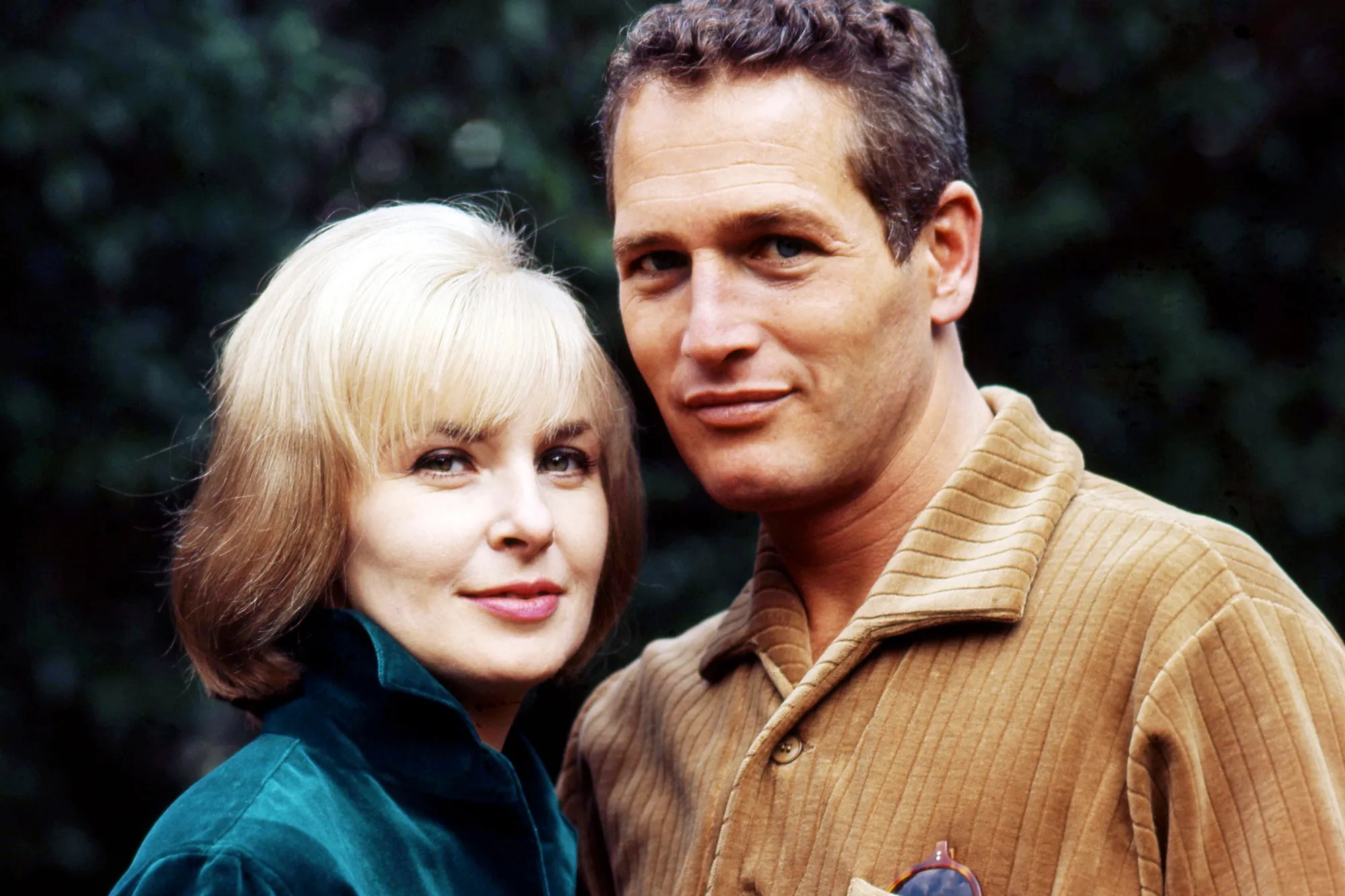
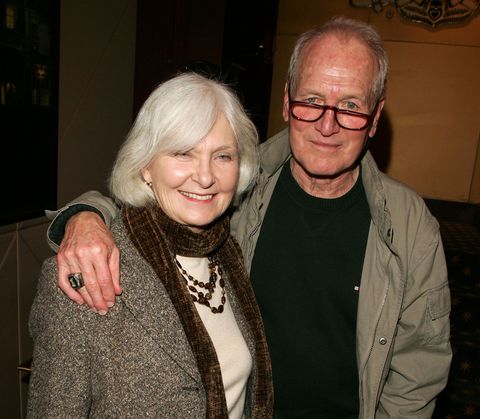
The Last Movie Stars is a six-part documentary on the lives and careers of Paul Newman and Joanne Woodward, directed by the actor Ethan Hawke,  now streaming on HBO Max.

It’s a largely pandemic-made, almost logic-defying work that does a deep dive into two long married, multi-faceted American acting legends who were born to non-show business families in the south (Ms. Woodward) and Midwest (Mr. Newman). 

But unlike their peers, they went to NYC and were accepted to study at the Actors Studio under the tutelage of Lee Strasberg, along with the likes of other then unknowns such as Marlon Brando, James Dean and Marilyn Monroe.  And, within a decade, became two of the biggest movie stars and/or persistently best actors (Note: depending on the decade and one’s POV) on the planet.

Royalty

Cleverly employing hundreds of thousands of pages of transcripts of many years of secret taped interviews the couple did privately with their longtime friend, screenwriter Stewart Stern (Note: Rachel, Rachel, Sybil, Rebel Without A Cause), we are given insights into their work and times by both the couple themselves and dozens of contemporaries, family members and collaborators in talking head interviews.

The recorded comments, which Newman one day burned after deciding to abandon the project in the 1990s, are sometimes voiced by the likes of George Clooney, Laura Linney, Sam Rockwell, Vincent D’Onofrio and Zoe Kazan, interspersed with actual public interviews with the couple by the media through the years.

These two

There are a few too many Zoom clips of Mr. Hawke interjecting his thoughts and comments on his subjects, along with those from the actor friends he enlisted, that get in the way. 

But mostly this is six hours of a pretty unvarnished and compelling portrait of Paul and Joanne, their many dozens of films and the historical times through which they managed to live though and alternately triumph, fail and once again triumph in.

Watching the world and the movies through their lives gives us a crystal clear picture of the phony repressive 1950s, the social revolution of the 1960s, the permissiveness and optimism in the 1970s, the corporate avarice and indulgence that the 1980s wrought, and how the 1990s and beyond allowed the world and so many in it, including them, to reinvent for the better and, sometimes, for the worse.

I’m not sure a bad picture of these two exists

The Newmans were not perfect; in fact, far from it.  But their unabashed devotion to themselves, their craft and then, others, is a consistently real and unexpectedly inspiring thread.

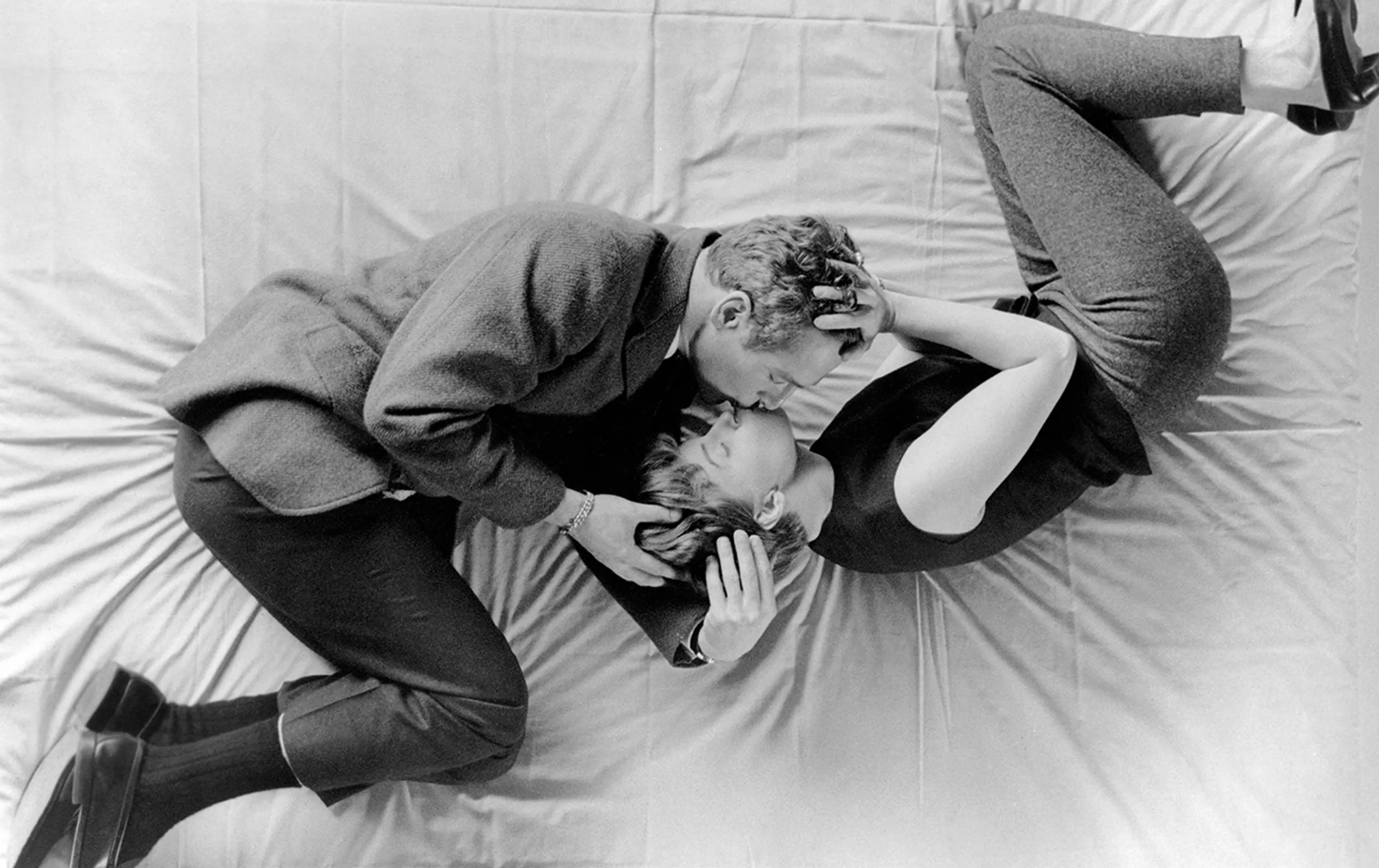
When they meet as Broadway understudies in the 1950s, the twenty something Newman was already married with three young children.  Nevertheless, their romance continues hot and heavy for five years before he divorces his wife and starts a new life with three more children.

Woodward was universally felt to be the far better actor, particularly by Newman, winning an Oscar for Three Faces of Eve (1957) by the time she was twenty-seven. But Newman goes on to be the movie STAR and in the sixties and seventies, as Woodward has the kids and raises their blended family, he remains emotionally aloof, drinks heavily and remains what his surviving children and then peers refer to as a “functional” alcoholic for many decades.

The Family Man?

Newman gets mostly all the attention as Woodward receives glowing reviews as a great mom who held the family together from all five or their six remaining children, as well as high accolades from the outside world for her then sporadic work in movies and in television. Nevertheless, she freely admits publicly more than once that if she had it to do over she probably wouldn’t have had children to begin with because of all of the costs to her career.

First world problems, to be sure, but that and all the sticky family dynamics of cheating, drug abuse, early death, anger, rage and yet still unyielding, illogical devotion to either a cause or each other will sound vaguely familiar to any one of us who has tried, and failed, to consistently be at peace or have it all.

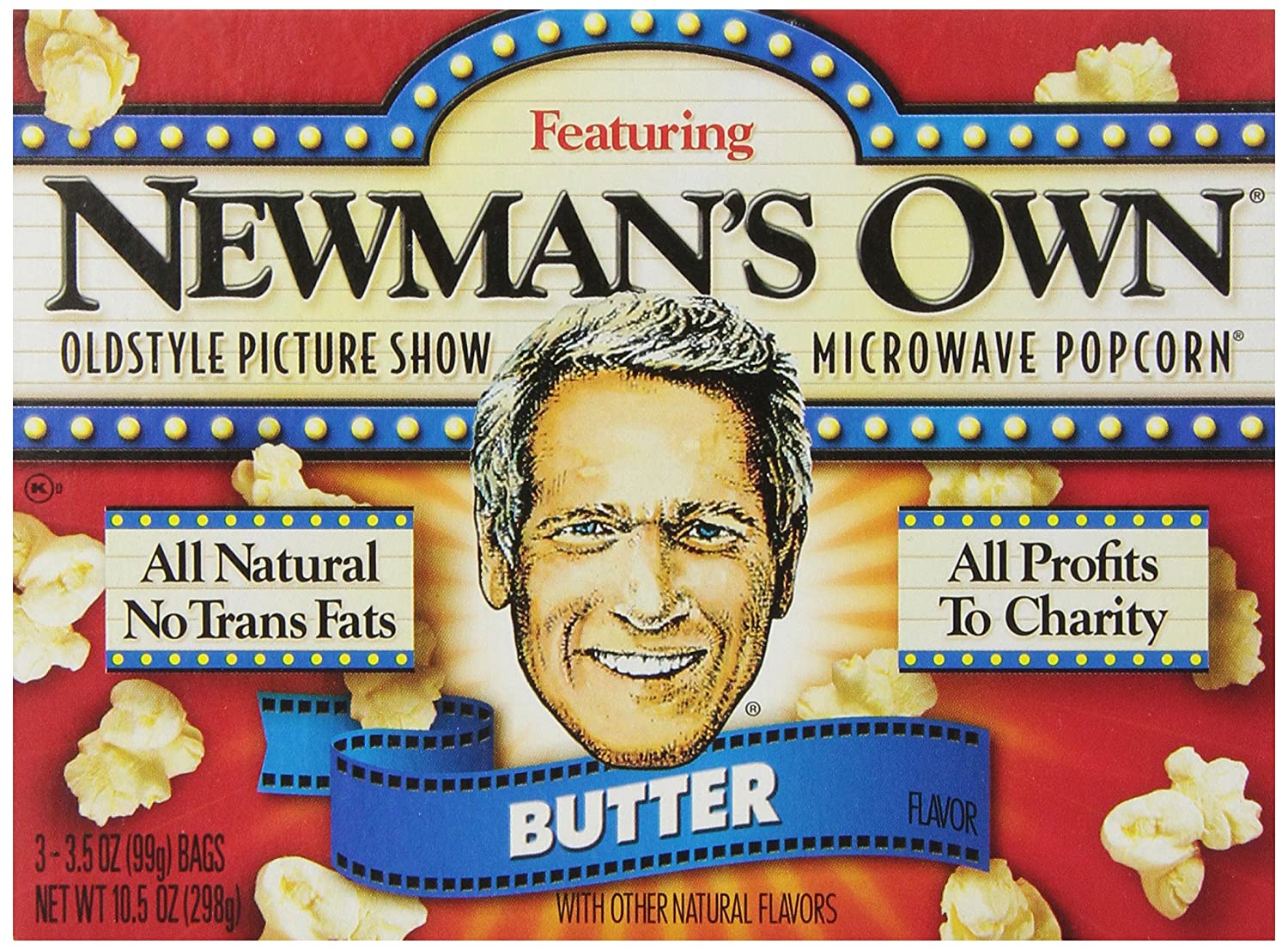
While Newman is best known for classic films like The Hustler, The Sting, Butch Cassidy and the Sundance Kid, The Verdict and his Oscar turn in Martin Scorsese’s The Color of Money, one of his greatest achievements turned out to be the hundreds of millions of dollars he raised for charity through the manufacture of salad dressing, cookies and pretzels without ever taking a dime.  Among those charities funded through his Newman Foundation is a still operating camp for seriously and/or terminally ill children, The Hole In The Wall Gang.

Still the best microwavable popcorn!

Woodward worked for those and other charities like Alzheimer’s disease.  This led to her starring role and Emmy win for Do You Remember Love, a TV movie about a college professor stricken with it in middle age.  The illness had struck her late mother and in the last decade has also taken over the life of Ms. Woodward, now 92.

While it’s admittedly transporting and at best escapist to revisit and re-experience the movies, TV shows and music of some of our icons, it’s even better to be reminded that imperfection is and has always been the definition of every human life. 

Spending the week with Joni, Paul and Joanne was not so much a look back at the past but a reminder to embrace the future and not get stuck in the circles of lows and highs, and highs and lows and highs that come seemingly from out of nowhere.

Better to enjoy them, try to do better and not give a crap about judgments made about any of them, most especially our own.

Joni Mitchell – “Both Sides Now”