
I enjoy cooking and I’m good at it. I’m not a great cook because that would entail inventing recipes from scratch out of thin air or improvising five star meals out of what’s in the kitchen cabinet. What I love most about cooking (other than eating) is that if you exactly follow a great or even good recipe it’s impossible to make a mistake. It will ALWAYS come out right. When my sister, whom I adore, compliments my cooking and tells me she wishes she could be as good as I am at it, I roll my eyes (lovingly) and always have the same response: “If you can read, you can cook.”
Not so in the entertainment business. There is no recipe. No formula. This runs contrary to what you hear deep inside film and TV studios and from many, if not most, producers and agents. They believe in the “recipe,” “the formula,” if only for self-preservation. I mean, what if there were no sure fire way to do your job – you’d have to get creative. Maybe even edgy or dangerous.
Note: I’m making an overall point here. I do know some creative studio executives, producers and agents. Maybe even one or two who are edgy and dangerous. And even if I didn’t (but I do) I would not admit it because I would like to get a film made again. To reiterate, that’s “if” I didn’t.
The recipe you most hear about in film and television is
- Take a strong concept or story (robots attacking the earth.. ahem, “Transformers”) and…
- Marry it with a proven moneymaking director (Michael Bay: “Tranformers II.” And “III.” And…?). Sometimes you can even…
- Put a big star in it (Shia LaBeouf?). But, uh, okay, not necessarily. Two of the three elements are often enough.
Another way to go is to:
- Take a money-making story from another medium that is so HUGELY popular (“Harry Potter”) that it can’t help but succeed financially, even without big box-office stars. In that case, it helps to have…
- A proven, big moneymaking director (Chris Columbus)
- An experienced, literate screenwriter (Steve Kloves) and…
- A lot of very experienced producers – too many to mention but you can look it up here.
So okay – there IS a formula, you say? Hasn’t this guy just disproven his point? Not exactly. Or at all. Because aside from the various examples of other films that had those same type of elements but DID NOT succeed (my friends and I call them LUCY award winners, for reasons which I’ll explain in a minute), it seems that the aforementioned sure-fire formulas for film/TV success I just mentioned in 2011 no longer hold water for the studio powers-that-be.
To prove my point, I cite and credit the following bit of information to Nikke Finke’s Deadline Hollywood, which broke the following story earlier this week:
“Universal recently passed on green lighting At The Mountains of Madness, which Guillermo del Toro was to direct with Tom Cruise starring, based on HP Lovecraft horror tale.”
And what about this one?
“…The Dark Tower, the ultra-ambitious adaptation of the Stephen King 7-novel series that was going to encompass a trilogy of feature films and two limited run TV series. The studio has said, No Thanks. Universal has passed on going forward with the project, dealing a huge blow in the plan for Ron Howard to direct Akiva Goldsman’s script, with Brian Grazer, Goldsman and the author producing and Javier Bardem starring as gunslinger Roland Deschain.

How does this NOT work?
Don’t these fit in the formula? Uh, not any longer because, as you see, the recipe has changed. And will change again. And then again. Or maybe there was never any sure-fire recipes for film and TV success to begin with (Just as I told you!).
Because if, according to those proven “recipes,” Tom Cruise (still one of our biggest international moneymaking actors) starring in a genre (they never lose money) film directed by a now HOT, money-making and even artistic director like Guillermo Del Toro who understands, has made money and even gotten good reviews in genre filmmaking (“Pan’s Labyrinth,” “Blade 2,” “Hellboy”) can’t get a film project going, something’s up. Yeah, Deadline Hollywood tells us “the studio balked at funding a $150 million film that gave del Toro the latitude to deliver his cut with an R-rating.” But is that it? Or have economic times called for a seismic shift in new ingredients?
Ron Howard’s films have grossed upwards of $1.8 billion (that’s BILLION, with a “B”) domestically. So if anyone could do a “Lord of the Rings” type trilogy for his home studio of Universal you’d think it would be a veteran yet still young (ish – for directors) Oscar winner, producing with his longtime mega moneymaking partner from a script by his Oscar-winning long-time writer. Also, incidentally, starring arguably one of the hottest international stars both critically and financially in movies today. But again, no go.
Stop the boiling water, Virginia — your film package may not have seemed half-baked but is now officially only half-cooked.
The recent economic meltdown of the past two years and the financial disappointments or stale reviews for some much-touted films has changed things. Nothing is a sure thing, if it ever was. The recipes for success that are no guarantees of anything have been changed by the people who claim publicly to not have any. Or maybe, where creative work is concerned, there is no, nor has there ever been, any sure fire recipe to begin with.
Consider:
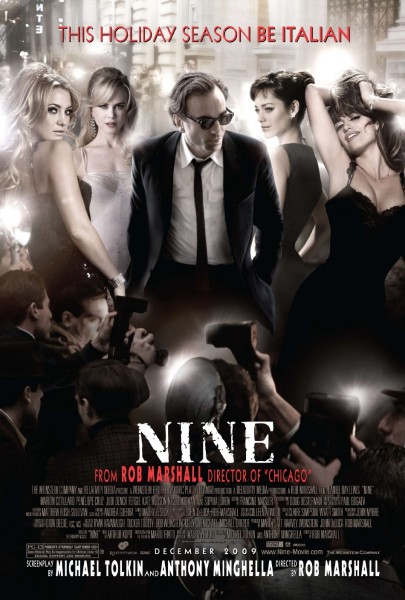
- “Nine” – From the director of the Oscar-winning movie musical megahit “Chicago,” (Rob Marshall) starring the Academy Award-winning actor of pretty much every other acclaimed movie (a slight exaggeration?) in the last 15 years (Daniel Day-Lewis)
- “Lovely Bones” – An adaptation of one the world’s most recent best selling single volume books from one of the most sought after directors Peter Jackson of multi-part films (“Lord of the Rings”) the world has ever known.
- “Burlesque” – Cher and Christina Aguilera in a movie musical. It bridges music young and old. Plus there’s A LOT of skin. How can it lose? Or at least not be interesting. And infinitely watchable?
Help!
My friend Barry (who suggested I cite him the films) and I would modestly categorize these last three films as “Lucy” award winners. Meaning they are films that on paper look like they’re sure successes or of high interest either creatively, financially or for huge entertainment value. Yet, all three, with fairly sure-fire ingredients in their recipes failed to deliver.
(Note: This award was named years ago in honor of my favorite all-time TV actor – Lucille Ball, who still makes me guffaw in reruns of “I Love Lucy” just about every time I tune in. However, she unwittingly created the “Lucy” award when she starred in the ill-fated movie version of “Mame,” an adaptation of the hit Broadway musical that, on paper at least, looked like a viable recipe for success).
It wasn’t.
What is the takeaway here? That recipes are for cooking, not for movie or TV making. And just to prove it, I will close with one of my favorites of the former – Ina Garten’s (“The Barefoot Contessa”) formula for GREAT GUACOMOLE. Over the years I’ve made it at least 100 times and it ALWAYS, ALWAYS comes out perfect.
Ingredients
4 ripe Haas avocados
3 tablespoons freshly squeezed lemon juice (1 lemon)
8 dashes hot pepper sauce
1/2 cup small-diced red onion (1 small onion)
1 large garlic clove, minced
1 teaspoon kosher salt
1 teaspoon freshly ground black pepper
1 medium tomato, seeded, and small-diced
Directions
Cut the avocados in 1/2, remove the pits, and scoop the flesh out of their shells into a large bowl. (I use my hands.) Immediately add the lemon juice, hot pepper sauce, onion, garlic, salt, and pepper and toss well. Using a sharp knife, slice through the avocados in the bowl until they are finely diced. Add the tomatoes. Mix well and taste for salt and pepper.
You can thank me later.



 notes from a chair