* Part of our mission statement here at Notes from a Chair is to give readers a heads up on potential good and bad things to look forward to in contemporary life. On the list of the bad is dental work. Of any kind.
The Chair endured some dreaded gum surgery on Friday and was forced to spend the weekend recuperating and reflecting. The following is a cautionary list that might help avoid doing (too much of) either in the future.

20 REASONS TO FLOSS:
Floss (verb): to clean (the teeth) with dental floss.
Dental floss:
- a soft, strong, waxed or unwaxed thread, usually made of nylon, for drawing between the teeth to remove food particles and prevent the buildup of plaque.
- the answer to many of life’s problems.
1. You love disposable income. When you get to middle age you do not want to give your tooth doctor the cash equivalent of what could be the cost of your beloved new Kia. And even though we wouldn’t recommend a Kia (a car mechanic told us some years ago it was the one car never to buy – new or used), the same amount could be used to purchase a glamorous Italian vacation; several Tom Ford or Stella McCartney designer somethings (depending on your gender and/or gender choice); or a lifetime worth of movies tickets several times over till the end of time anywhere in the world.
2. Dental surgery does not make you “hip.” We went to one of the finest and most expensive periodontal specialists health insurance could buy. Still, we were treated to a Beverly Hills waiting area that featured:
- Large purple and lilac tubular cylinders on a dark gray wall that were masquerading as either objects de’op art or potential surgical instruments.
- A middle aged woman incessantly muttering and humming to herself in an indecipherable native tongue.
- A Beverly Hills matron either giving us the evil eye or flirting to the tune of said native music.
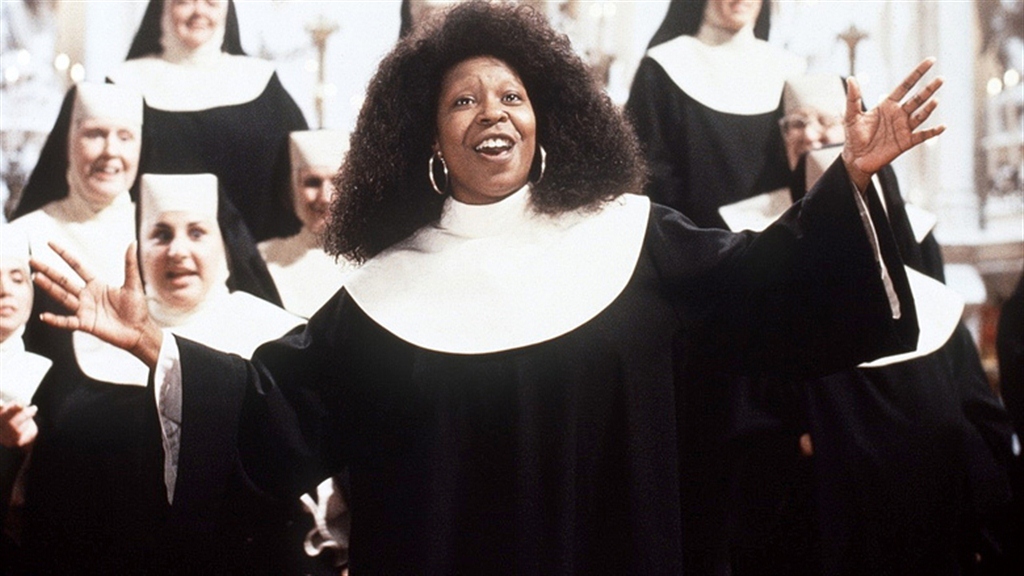
- The Entertainment Weekly cover image of Jessica Lange as an ax-wielding nun presiding over her own medical establishment in the new season of “American Horror Story.”
3. “White privilege” is alive and well . Although we live (allegedly) in a post-racial society, whiteness is still given the upper hand in all things dentistry. This was confirmed all the more in a post operative weekend of trash TV that included a human something called Carter Oosterhouse hosting a 1:00 ayem HGTV program called “Million Dollar Rooms.” (yes, that’s a single room, meaning one). Hell, it was either that or watching the “Insanity” workout infomercial. Which one would YOU choose????

Oh, and he’s married to actress Amy Smart. #teethwhitening2.0
4. Cindy Crawford has perfect teeth. There is a late night infomercial that will sell you the rare juice/oil of a European cantaloupe to ensure you will age as well as the 45 year old Cindy Crawford. Her perfect teeth seem to confirm the ad’s claim that Cindy uses the juice ALONG with a strict health regimen to all parts of her body, including her teeth. Not that anyone is looking at her mouth. Or – are they? (Note: One wouldn’t know any of this unless he/she had unwanted surgery on a part of the body they neglected that wound up keeping them awake in the middle of the night).
5. Waiting sucks. Having an oral medical “procedure” is not unlike queuing up for gasoline in the 1980s – there’s always a wait. In our case, it was done to 45 minutes of MUZAK that included a mix tape of Jackson Browne’s greatest hits. Not to get too “nasty” about a “Jackson” but — do you ever need to hear “Running On Empty” again?? Not if you’re really nasty. #MissJacksonifyouare
6. You will never be on the political stage… but will forever be forced to listen to them. This came particularly into focus when out of sheer desperation I happened to hear vice-presidential nominee Paul Ryan speaking before what must be a made-up entity called the Family Values Association. Honestly, if Ryan was a private in the military and I had to save him, I wouldn’t. Spielberg or not.
7. The drugs aren’t worth it. You don’t get the drugs of your choice when you get surgery, just the drugs they give you. I don’t like things like Percoset. They make me feel groggy and weird. But when I try to explain that medical marijuana dispensaries are legal in California I get a blank look from my doctor. #Truckin’
8. Your dreams come to haunt you. While under the influence, you will invent and watch more imagined tacky television shows than you can imagine just for your own perverse amusement and then be embarrassed for thinking them up. This includes programs like “The American Bible Challenge” on the Game Show Network where comedian host Jeff Foxworthy tests your knowledge of scripture and then awards cash prizes you are then forced to donate to charity, and Showtime’s “Gigolos,” which centers on a group of overly muscled, tanned and tattooed “males of the evening” in Las Vegas who compete against each other for lady clients. This is not so bad in itself until you wake up the next day and realize that both of these programs exist and that real life has become your nightmare. #SetyourDVRifudontbelieveme

Actually, THIS is your brain on drugs.
9. Faulty tech equipment. The music guaranteed to drown out the loud sound of drills and strong gloved hands digging other pointy instruments into roof of your mouth, can easily get derailed when you realize the right ear of your headset is devoid of music but not what else is happening in the room. This is especially disconcerting because your right ear is your one good ear in addition to the side of your face that contains the gum in question and is being treated to the sounds of all the excavating action. #SeeMeFeelMe
10. Mouthus Interruptus. –You might think your dentist is brilliant, rich, painless and powerful but you didn’t take into account his desirability will likely cause you to feel like one of those large pieces of real estate that was halted mid-construction by the global economic crisis. This happens when he walks away to take a phone call from a more important client with either a bigger emergency or a bigger name (since he is the best and very much in demand) and leaves you with a lot of dangling metal instruments and cottony stuffing in your mouth (the kind of cottony you see on the insulating walls of unfinished buildings). To carry the metaphor even further, you have no earthly idea when work will resume, despite the written contract you both entered into prior to when said work began.
10. Bradley Cooper is still single. #Nuffsaid
11. Angelina Jolie is technically still single . And she could help you with your career. #Itaintovertillitsover4eitherofu

The new Brad and Angie
12. Trash TV has its limits. You don’t want to get to the point where you’re so bitter that the only reason you know you’re feeling better is that a) you’re angry you weren’t able to guess the #1 scandal in the Logo special “Scandalicious: 20 JUCIEST CELEBRITY SCANDALS OF PASSION” and b) you are even more angry that your choice was #2.
(FYI – Arnold Schwarzenegger having a child with the maid who helped Maria Shriver raise their children was my #1 choice at #2. Logo’s #1 choice was the far less scandalicious Demi Moore and Ashton Kutcher). #Theyresolame or #AndyCohenrotinhell
13. Really good doctors are really good actors. Each one can make you feel like you’re the most important person in the room if they want to and at some point they will want to and you will want to believe them. (Note: This is why it’s perilous to have too many actor friends – you never quite know how much is true friendship or just a dramatic evocation of one).
So inevitably, this year’s winner of best doctor in a starring role will give you all the care and attention of the best Meryl Streep character when they’re with you but once you blink back to reality and the performance is over they’re suddenly gone and the only reminder you’ll have is the pain in your missing or mended body part when you receive their bill.
On a more immediate basis, this leaves solely their assistant to explain to you the do’s and don’ts of what you’re told is imperative post surgical care while one side of your face feels like a side of beef and the other side, the one with the good ear, is now on the fritz because Amy Winehouse finally kicked in too loudly on the doctor-supplied fritzy headset at the tail end of your surgery.
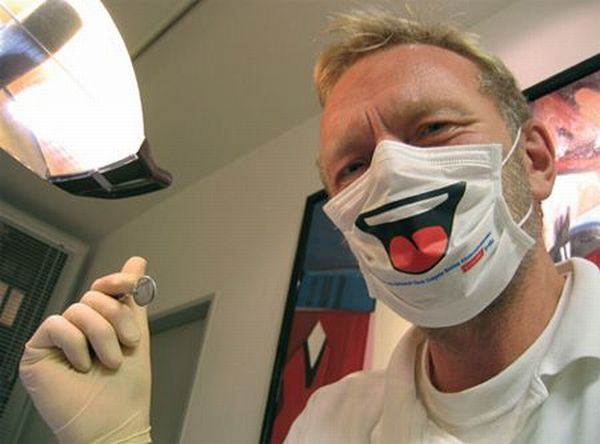
He wears a mask afterall!
14. You’re a dork. Your eagerness to leave a medical office in disgust and neglect is interrupted by your actor/doctor actually returning in true sensitive Streep-ian fashion to give you a well-prepared, type-written check list of post surgical instructions and to spend time with you kindly answering any questions. He even puts a reassuring hand on your shoulder. Now you feel like the little jerk played that year by Katherine Heigl because you leapt to such a snap judgment. Still, since he was billed to you as “the best” and in our case this is Beverly Hills, one still has to wonder– DOES he really care or IS he just acting??
15. It’s never over. Once you see a specialty dentist they are in your life forever– sort of like when that one night stand produces a child. (Speaking of Ms. Heigl). So it should not surprise you when you are told to book two follow up appointments in the next six weeks and, now that your surgery has been completed, you are not given your doctor’s optimum morning appointments but relegated to mid-afternoon AND told you’re being squeezed in. This is like both marriage AND divorce. #Ihavecustodyoftheteeth
16. No one will talk to you about it (except on this blog). The percentage of people who want to know anything about gum or dental surgery is equal to the percentage of those who would watch a rebroadcast loop of both the 2012 Republican and Democratic presidential conventions rather than a new season of either “Arrested Development” or “I Love Lucy” with its original cast. #nochanceinhell
17. Imposed censorship. After you have any kind of dental surgery you are told it is imperative to keep your mouth clean. How do you do this when you take pride in a lifetime of having done anything but this up until now? #phuku

Speak no evil.
18. You don’t love baby formula. Dental or full body, your post-surgery food will be as exciting as baby formula – soft, bland and gooey. To compensate you will decide to eat excessive amounts of chocolate or other delectably mushy desserts of your choice. Thus, you will either gain weight or shorten your life (or perhaps both) while you think you are really convalescing.
19. Goodbye Tooth Fairy, Hello Hitler. You will never again have to fear a new dental specialist who will remind you of the Nazi doctor who tortured Dustin Hoffman in the dentist’s chair sans anesthesia in “Marathon Man.” Or, for that matter, be afraid the love child of Jack Nicholson and Steve Martin’s demented dentists will come back to haunt you in that ill-advised 3-D studio remake of “Little Shop of Horrors.”
20. One less thing to worry about. You have to cut down somewhere in that category. What’s worse – carrying some waxy thread or experiencing any of the above ever again? #tellemJohnny