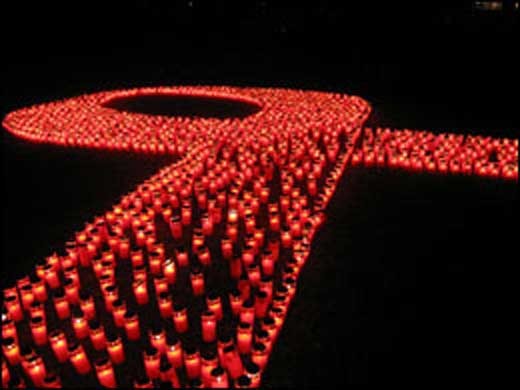
I had planned to write about Woody Allen this week in light of the terrific PBS documentary that covers his amazing 40-year career. But I put that off when I began to think of all the brilliantly talented careers of people I knew that were cut short.
Thursday was World AIDS day and I couldn’t help but have this reflection, nor, as I’m aware, was I the only one. If you think this is headed towards a downer — it’s not. It’s simply recognition of the fact that not everyone gets to have the creative career they deserve.
Unfortunately I can list several hundred people who were my friends or friends of friends that are gone. Not to mention many hundreds more who were business acquaintances. It was devastating and impossible to express fully, even when you’re in the arts and supposedly have the facility for that sort of thing. Or worse yet, are expected to be able to do it.
But the one truism I know is that none of my friends would want to be remembered for the fact that they died of AIDS, but more for who they were creatively.
As for me — I remember many of them not only for their work but for what they did for me creatively.
Mentoring is a very tricky thing. If the mentor is looked up to excessively that person wields too much absolute power and influence, and the mentees often suffer by being under the thumb of a person who can easily abuse their position by convincing the innocent that their world view is THE ABSOLUTE TRUTH. Though it’s tempting and certainly safer to think someone more experienced or in a position of power has the magic answer, I’m here to tell you as both mentor and mentee (and a recovering magical thinker) that ANYONE who is convinced they are right 100% of the time certainly is not right even 50% of the time. How do I know this? Well, I’m slowly creeping above middle-aged and have experienced and observed some really, really, really crappy and some super fantastic, unbelievable, I’ve been lucky to have them, mentors. And a lot in between.
I’ll leave the extreme ones out. The college teacher who told me I was a very confusing and not very good writer and the graduate school teacher who told me I wrote like Hemingway. I also won’t bore you with the film director I once worked for who by day was known as one of THE WORLD’S MOST FAMOUS directors for actors – and by night simultaneously allowed (and sometimes participated with) his inner circle of production people to mock, insult and create little miserable traps for those very actors they loved but decided they didn’t like anymore because they had turned in what they judged to be sub-par performances the day before in dailies. Or even the producer who nurtured and mentored a now very famous writer and director from one indie movie to the other, only to wind up unceremoniously betrayed by his longtime mentee and kicked off the writer-director’s “big” film once new agents judged this person’s new career didn’t need that particular mentor/producer any longer.
That’s the school of hard knocks, that’s life upon the wicked stage, and that’s show biz, kids. Everyone has their war stories and somehow the bloodiest ones always seem the most exciting to tell and, yes, the most enticing to hear. Or are they?
This week I don’t think so. I’ve had more than a few cool mentors who’ve been gone for as long as 20 years while the lessons they taught me, and continue to teach me in absentia, resonate as if they are still here. In other words, even though they’re not here, they very much are. I often hear their voices or feel their presence in my work on various given days or, actually in many other ways, in many most of the things I do.
For instance, I can tell you without reservation that I would not have written any screenplay of any kind; taught any lesson worth listening to; or conceived any blog ever worth reading were it not for my dear friend Brian Lasser. In fact, it’s not unusual for me to hear (or at least feel) the encouraging sounds of his voice and feedback he’d give to me even now. A lot of people have talked and written about Brian. He was a songwriter, pianist, actor, writer and tutor, in the arts and in life. AND a brilliant mentor. And to many more people than me. I am not exaggerating when I tell you that there are Tony Award winning, Emmy Award winning and Grammy Award winning artists who were mentored by him, worked with him and adored him. I met him as a reporter when I reviewed an act he was doing with someone who also became a dear friend.

Maybe I should be glad I don't have that hair anymore. With Brian, 1991
Yeah, you never know we’re you’ll find mentors or even friends -– and those people who will encourage you to tap into your creative talent even when you’re too shy, embarrassed or insecure to really pursue it the way you secretly want to. Someone who will urge you to tell the truth in your work by example, and let you know directly but gently when you’ve gone off course and you’re full of it – and/or full of yourself. Someone who, as Jodie Foster once mentioned about her mother in an Oscar speech, “makes you feel like every painting you paint” is or could be a Picasso even though it likely isn’t or will not be. On the other hand, as Brian might counter, how do you know it’s not better?
Indeed.
There was also my friend David Fox. He was a copy editor at Variety when I was a fledgling reporter and he did have a career as an editor at the L.A. Times. But he also wrote song lyrics, and had unending classiness and kindness when dealing with people both personally and professionally. He’d be dumbfounded by this weirdly saintly description but would be positively thrilled and flabbergasted with the Internet of today and all of its power – both good and bad — if he were still here to see it. David showed me that everyone has a light and a dark side and that it wasn’t necessary to bring it all to the table with everyone you met. He taught me to be just a little bit bolder in my life and in my work and how to keep the ball rolling and actually venture out to people in a more streamlined way. He was also one of my first friends in Los Angeles and introduced me to many others I still count as friends (and some mentors and mentees) today. I also keep expecting David to call, write or at least show up after one of his solo trips somewhere around the world. Sadly, I’ve never quite mastered the creative art of traveling outside the country alone the way he did (I hate to fly and I’m a chicken – meaning whimp), but now that I’ve mentioned what he taught me publicly perhaps I will. Or will have to.
WWDG: Where would David go?
Finally, but certainly not only (Note: I don’t think we have room for more than three) there was this guy I knew really, really well for a couple of years named Bob Hattoy. He was a mentor in, well, a lot of things. He actually did have a longer career than the others and was quite creative — as a lobbyist, political gadfly and public voice of AIDS in the Clinton administration. He even gave the first address about AIDS at a political convention in 1992.
Our relationship was some years before that but what I learned from him was – well – to be funnier. And not take myself so seriously. Truth is, I was always sort of amusing. But he was outrageous. Often, too outrageous. Though I must admit he often came out with public statements that were witty, cutting and pretty darn smart that said what I and many others were really thinking, albeit somewhat pithier and for public consumption. Like when Pres. Clinton was mulling the idea of letting gays in the military in the nineties but was considering segregating troops on the basis of sexual orientation. Bob heard about this and told the NY Times: “If we applied that to civilian life we’d all have to be hairdressers and florists!” It kinda still makes me laugh now, especially since he had the nerve to say it when — Oh, did I mention he said all that and more WHILE WORKING for the White House? Uh, yeah.
I guess he taught me in the long run to stick up for myself and let the chips fall where they may. Of course, that would eventually mean challenging him – an unwilling and sometimes irresponsible mentor that he always was. But ultimately the best mentors are the ones who you can challenge. And sometimes the ones you can leave behind.
What I’ve come to know grudgingly is it doesn’t matter whether you or they leave willingly or unwillingly. It’s all about what you learn. And what you do with that knowledge. That’s the cool part of being or having a mentor. And one of the cool parts of life.


 notes from a chair