Stereotype Sundae

BIGGAY4

When I read that something called The Big Gay Ice Cream Shop will open in downtown L.A. this spring I was surprised on four counts.

  1. That we’ve come so far that someone has decided to be ridiculous enough to think they could open up a business called The Big Gay Ice Cream Shop and make any money.
  1.  That someone had determined this name wouldn’t offend a significant group of people, perhaps some of them even homosexuals.
  1. That there were already TWO existing and hugely popular Big Gay Ice Cream Shops in New York (the first one opened two and a half years ago), which were spawned by its mobile forerunner, the Big Gay Ice Cream Truck, and that they were all created by not one but TWO…Big Gay Men.

AND

  1.  That I – a smaller but probably just as big of heart gay man – didn’t know about any of this and initially thought it was all just one big dumb, and questionably borderline, gag.

So much for my hipness factor.
Well, by comparison, I'm still pretty hip.

OK  – I guess I could be worse…

This all raises a much broader question – what is a stereotype these days and do you marginalize yourself or the particular group of people you belong to by embracing, portraying and perhaps even BEING (or condemning?) the stereotype?

Stereotype:

1. A conventional, formulaic, and oversimplified conception, opinion, or image.

2. One that is regarded as embodying or conforming to a set image or type.

Are the two owners of The Big Gay Ice Cream Shop stereotypically gay?  Well, in some ways not at all.  They are very successful, independent entrepreneurs who started a business from ground zero simply by selling ice cream out of a food truck and in just a few years they have three stores in the two biggest cities in the U.S. and are making lots and lots of money.   Clearly, that is a rarity these days.

Yet in some ways they are totally stereotypical – two middle aged homosexuals with a self-professed campy dream who are snide and funny and have a penchant for the eighties TV show The Golden Girls.  Not only that, but GG star Bea Arthur is their store mascot (along with a unicorn) and one of their offerings is indeed named The Bea Arthur – an ice cream cone with vanilla ice cream, dulce de leche and crushed ‘nilla wafers. 

l

Inside The Big Gay

Not to mention this side note: Each frozen delight they serve is spotlighted on their website by an array of customers holding up or eating a particular item.  From a sociological standpoint I was particularly intrigued by the two prepubescent boys holding up two cups of ice cream called The Gobbler (pumpkin butter and maple syrup or apple butter and bourbon butterscotch, pie pieces and whipped cream).

Uh…two young boys holding up creamy products advertising menu items from The Big Gay Ice Cream Shop?  If this were the Bible Belt (or even Orange County) there would at best be lawsuits and neighborhood outcries and at worst…well, I don’t want to go there.

Perhaps it’s evidence of how far we’ve come that people’s minds do not “go to that place” of stereotype anymore – meaning somehow connecting anything gay –centric or owned by gay men with the abuse or indoctrination of young boys.  (Perhaps?!) When I was growing up – not all that long ago – this would NEVER EVER EVER have been possible.  And I am still ambulatory, have my eyesight (sort of), and am able to roller skate.

Still got it!

Still got it!

How much diversity do you see within your life, the lives of those within your minority group or how you’re represented in the media and how much is enough?  (Note: Everybody at some point feels as if they are in some kind of minority, even if they’re in the majority). If you’re gay do you proudly proclaim you love Judy Garland, Barbra Streisand and Bette Midler in your off hours as a hairdresser, but only at times when you’re not redecorating your apartment or cruising for men clad in leather chaps? Or what about the flip side of the problem, posed by a young African American comedian I saw some decades ago (but whose name I can’t recall, darn it!).  He claimed to have absolutely no rhythm whatsoever (and he didn’t) yet had to embarrassingly prove it to disbelieving people who insisted he demonstrate because a rhythmless Black man didn’t seem humanly possible to them.

One supposes stereotypes do cut both ways – some traits you’d prefer to have (or do have), others you are a bit embarrassed to have (but why?) and still others are a perceived exaggeration of traits attributed to ALL people of your tribe you don’t want anything to do with.

This issue becomes a little more difficult for writers and other artists when representing those minority groups and problematic for audiences who are the spectators.  Just what is your obligation to your crew (or to other peoples’ crews?) Do you have to go out of your way to find a gay guy that doesn’t like Judy (NOTE: I do love her and for some reason most of us do call her Judy) or not show gay men continuously searching for sex?  After all, aren’t most guys – gay AND straight – continually searching for sex, at least in the back of their minds?

The premiere of HBO’s new half hour show about gay men in San Francisco, Looking, presents exactly this challenge.  Starring the very amiable and charming Jonathan Groff, the show seems to consist mostly of a subset of a subset of gay men – urban guys who are mostly dark haired, with varying degrees of facial beards (except for Mr. Groff’s nubile young guy) who mostly look for sex.  It is only in-between that they do a variety or artistic jobs or work as waiters.  Stereotypical?  Well, most certainly.  But all of it or just in certain parts?  And are the characters really stereotypes or just merely post-modern representations of people who, as a given, are a lot more than just that (Sex in the City, anyone?). Well, I for one am not quite sure yet.

4 Non Blondes

4 Non Blondes

By the end of the episode, I – a gay man who has lived some sort of existence in various shades of stereotype – felt as if I had absolutely nothing in common with these guys – nor did I ever.  For one thing, they were much freer than I ever was sexually when I was younger and for another, their friendships and relationships felt so flighty and superficial that I probably would have ran away from them rather than to want to touch them or even gravitate anywhere near them.  (Note:  Or perhaps bitch about their superficiality behind their backs, which makes me another form of gay stereotype, sorry to say).

Of course, as a television show this is both entertainment and a fantasy.  Do we bridle that the rich and powerful Grayson family on Revenge distort patriarchal relationships or that Nurse Jackie is an all-too ridiculous take on people who work in hospitals?  Probably not.  But mostly because there have been hundreds of hospital centered shows with other images (St. Elsewhere, Chicago Hope, Grey’s Anatomy, even General Hospital) and thousands of rich, screwed up, primarily heterosexually oriented families on nighttime time soaps (Dynasty, Knots Landing and Desperate Housewives – gay sensibility though they all were – and do not make me get into the latter).

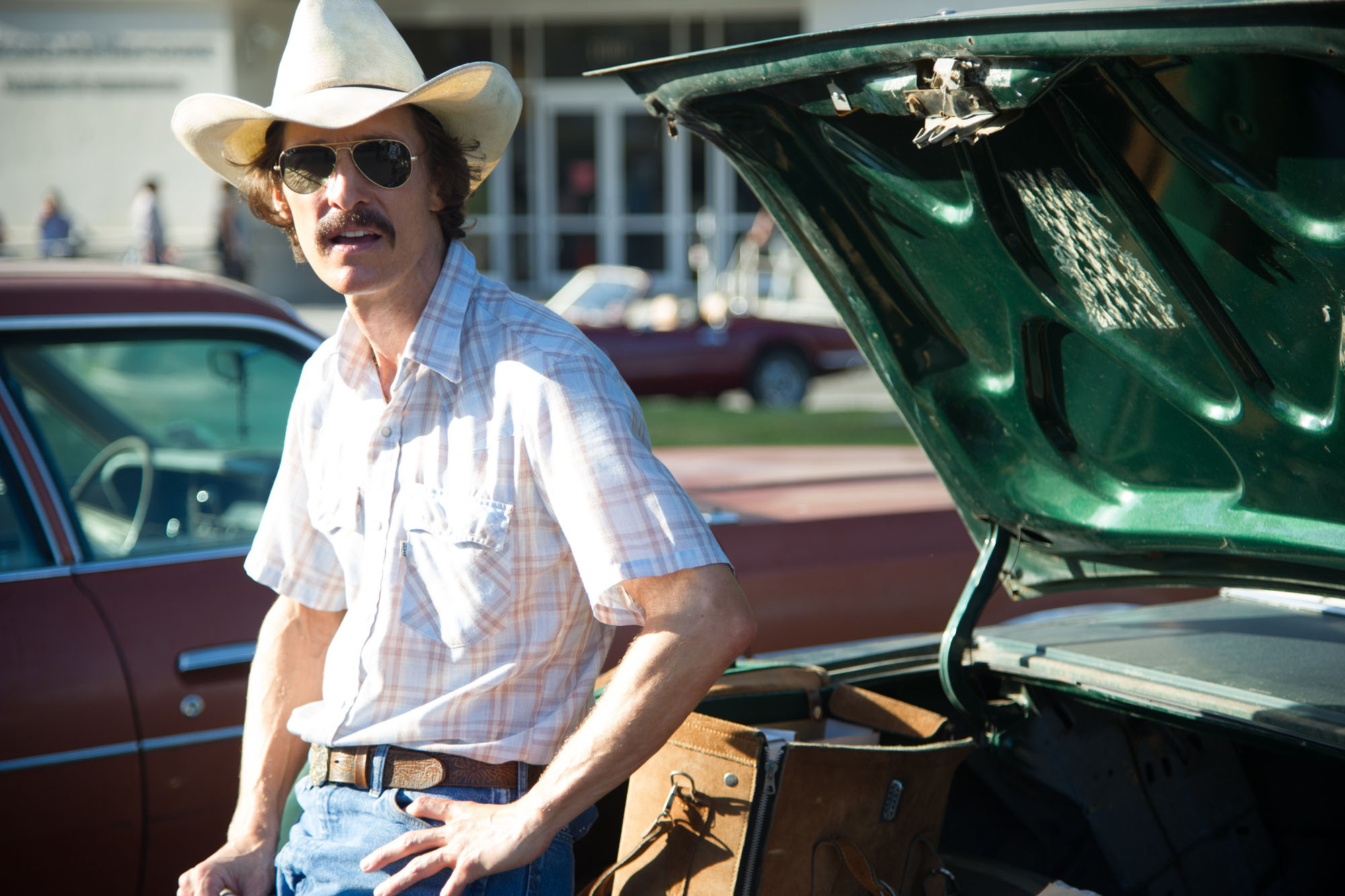
But how many television series almost solely about gay men have there really been?   (Hint:  You can count them on less than one hand).    That puts an unjust burden on the creators of Looking and it’s an unfair one for a dramatist whose only real job is to tell a story the way it happened or happens in his or her mind.  Dallas Buyers Club, the current historical drama about a straight man with AIDS in the 1980s, was criticized for its narrow focus on its homophobic lead character – a straight guy with AIDS who subverts the status quo and sells unapproved drugs that prolong his life and the lives of others (mostly gay men) – because it leaves out all the simultaneous other proactive steps hundreds of gay groups across the country took at the time in getting their own illegal drugs and protesting the government in other ways that prolonged their own lives.

how-to-survive-a-plage-poster-article

the other Ron Woodroofs

Yet the sad truth is that a narrow focus is sometimes needed in order to maximize dramatic impact in narrative work.  And if you reject that notion entirely consider this question:  What IS that writer to do – not write roles in stories that will likely win its two leads, Matthew McConaughey and Jared Leto the male acting Oscars this year?  (Uh, not a chance of that).  Just what is the obligation to history, realism and representation when you want to create a satisfying and dramatic story, or live a satisfying, if not at times dramatic, life.

Members of most minority groups would probably answer it this way — don’t give YOURSELF majority status in our overall story when you were really a minority. Don’t leave our real stories out, don’t represent us as one or two stereotypes and DO NOT act as if you’re doing us a favor by merely showing us onscreen at all or say that we’re classically “oversensitive” for complaining at all.  Does that mean we don’t make films like Philadelphia, Gentleman’s Agreement or Schindler’s List anymore?  Okay, now my head is really spinning – all dizzying gay man clichés be damned.

In the case of Looking its creators and lead actor are openly gay and are working for HBO –a network that pretty much allows talent to do almost anything they please.  So one can assume they are telling this story from a personal  POV (which is all any writer can really do) and letting the chips fall where they may.  Yet is that enough or do they (or you, or I?) need to think about being more inclusive, less stereotypical, and overall more universal when writing about ourselves and the rest of our group/crew/tribe or….? It’s the tricky challenge of all this.

I teach my students the more specific you are about a character the more universal you will be.  But if all your characters are of a rarefied subset group of still another group subset and not varied enough – well, their behavior might be real or true to life for you but could easily bore the hell out of everyone else.  I mean, no one’s real life is consistently THAT interesting over the long periods of time that a television series represents.  Not even Oprah’s – trust me, it isn’t.  You only think it is because of the wide variety of people we’ve gotten to see her talking to.

Well, I didn't say not luxurious

Well, I didn’t say her life wasn’t more luxurious

I learned this the hard way many years ago as a young reporter and then-movie publicist attending one too many red carpet events.   I don’t even know when I finally knew I’d had it but perhaps it was when I was a guest at the premiere of A Few Good Men – one of the most lavish affairs I ever remember attending.  It was at the ballroom of the Century Plaza Hotel, there was a full orchestra, great food and Tom and Nicole were right next to me and everyone else, holding hands and walking from table to table along with all of the other stars and most of Hollywood.  At one time this would be dazzling, exciting, unplugged and unleashed fun and decadence.  Yet after so many of these it felt like being the plus one at the wedding of your much richer and more desirable cousin in whose shadow you had always stood in at a time when you were finally ready to be the movie star of your own life.  It looked good and on the surface it would tell a great story but when you really thought about the people and everything that was going on, there was not much there there.

In short, it bore no relation to your truth.  Though this might be different for those who were a part of the film, or fans who very much enjoyed what these people had made and were just happy to be invited to whatever party was being thrown.    Maybe part of the mission in life is to create your own party  – a thought that might sound stereotypical but in reality an action that you can make original and appealing to a lot more people than yourself if you work it the right way.

** Special Chair Note: This week we will begin listing each blog by subject matter with a corresponding and stylish post-it note on the left hand side of the page.  They will then be archived by that category for easier future access.  For your convenience, our beloved Holly Van Buren – editor, photo chooser, and caption writer extraordinaire, has gone back and archived every blog (yes, that’s all 165!) under one of six categories.  Just click on the subject links at the top of the page you are interested in and you will be able to read your favorite posts from the past (Thanks Holly!).  Also, remember to click on the title of each week’s post at the top of the page (e.g. Stereotype Sundae) – in order to access that week’s song!

Minority Reports

feeling_left_out_by_millenniumalchemist-d3279nn

Everyone feels marginalized at one time or another even when they’re not.  You know it when it happens to you – even when you’re generally safe, comfortable and in the majority.  It’s the moment when you perceive you’re not being treated fairly or the time where you helplessly watch as an undeserving person or group achieves a goal that should’ve been bestowed on you or yours.  Or, at the very least shouldn’t have been theirs.

The downside of this is that furor reaches a tipping point – sometimes nationally or even internationally – and sends the planet into chaos.

The upside is it’s responsible for great art.  And sometimes even change.  And, in rare times, both.

The above accounts for the national temper tantrum currently being thrown by White America via the Tea Party (uh yeah, they’re mostly WHITE) and the determination of their national representatives to shut down as much government as possible under the rule of that Kenyan Muslim Communist Marxist or just plain Black President Barack Obama.

But it is also reflected in such boundary pushing current movies as 12 Years a Slave, Blue is The Warmest Color and Dallas Buyers Club.  If it were not for the miscarriages of justice each illustrates on the part of the African-American, gay, female and poor and sick communities, none of these films would exist in their current form.

No one wants to support human suffering in the name of potentially great art – except perhaps a writer or two.  As a member of the general population of the latter group, I must admit I have wondered where I’d be creatively were it not for the traumatic moments in my childhood that I managed to spin into stories of snide yet noble survival that reflected what I perceived to be some of my own unfair misfortune (Note: Is there fair misfortune? Something to think about).

Jury's still out on this one.

Jury’s still out on this one.

Still, that’s an entirely other, too personal subject and strays away from the main point.  In clear-minded moments I choose to believe if given the option I would gladly trade in the art in for a more blissful beginning.  But deep down I’m not so sure if, knowing the eventual good outcome, that kind of trade would even be possible.

No one is safe from perceived oppression even if the facts are that you’re not particularly oppressed.  That’s because human nature being what it is, we will all experience real slights, often based on nothing more than the way we look or what particular group we’ve been marginalized into via race, religion, body size, sex or sexual preference, athletic skill, age, money (too much or too little) or some other incendiary category. (Note: Yes, some slights, though they may be real hurts to you, do pale against the more big-ticket items).

The question is: what do you do to counter, cope or overthrow what’s going on – or what you think is going on?  How do you marshal the forces to get your point across? What creates change, or at least catharsis?  How long does it take?  How do you live with it?  Or better yet – can we ever eliminate it all together and, well….all just get along?

Not likely.   But as we currently say – eventually – it gets better.  No one movie or song or TV show will do it and it will likely not happen in a sinlge year.  And certainly our political systems move at a snail’s pace – even as they’re prodded by art and cultural upheaval.  Often it takes generations and creates change so glacial and imperceptible for the current generation that it becomes difficult for them to really understand the severity of what existed decades before they were even bought into or became part of the world.

Last weekend I watched both 12 Years a Slave and Blue is the Warmest Color back to back – and bully for me because that’s 5 and a half straight hours of dramatic filmmaking, a rarity these days – I became acutely aware of how similar all of our struggles against oppression are.  And yet, how individual and dissimilar certain elements of them are when we’re put into the position of watching them dramatically unfold in no consecutive order other than the timing at the scheduled movie theater and screening.

Serious stuff.

Serious stuff.

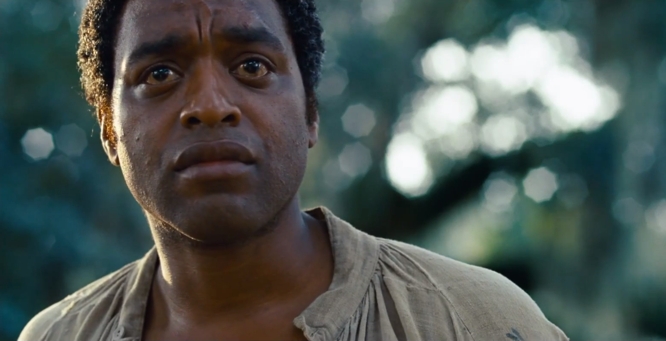
12 Years a Slave was my first lesson – and yes, it often felt that way.  There will be no spoilers here other than to state what you already know from the title and the trailer.  An upscale free Black man with a loving wife and family from the North gets snatched off the street in the mid-1800s and sold as a slave to the South in the halcyon days of the Confederacy.  Much of the movie is rightfully grotesque and hideous as we watch this classic case of the worst kind of mistaken (or perhaps engineered) identity play out.  This is not a Gone with the Wind, Amistad or even Django Unchained kind of story.  Director Steve McQueen and writer John Ridley, both of whom are Black, are determined to tell the unvarnished truth of what it meant centuries ago to be a human being who is owned by other humans in much the same way that a farmer owns any animal that he intends to use for work and/or eventual (perhaps even likely) slaughter.

There is rightness to this film, if for no other reason than to make up for the century old legacy of movies that have presented slavery as anything more nuanced than the above.  But there is also a heavy dramatic price to pay for what we’re watching.  Countless repetitious moments of bloody torture.  A mostly one-sided depiction of cruelty by broadly drawn villains from another time.  Rarefied dialogue that often feels written – alternating between speechy or spoken in a period syntax that occasionally comes off as grandly Shakespearean or just a little too plain grand.

ACTING!

ACTING!

And yet – you can’t leave the theater unhappy that this movie was made or that it is getting some attention.  No, this is not liberal guilt.  This simply is.  Why hasn’t a big, solely dramatic movie ever been made that gives us such an unrelenting picture of what it was like to be a slave from the point of view of being a slave?  Has it really taken this long?  And why has it taken this long?  This story, and the book it is based on, has been around for decades.

On the other hand, as someone who likes multi-layered plots and characters I couldn’t help but feel that I was being left behind for some broader political statement that was being made – one that has been earned but one that is, in the final analysis, not very complex.  I don’t want the Southern White guys to get off too easily as simply monsters from another era.  I wanted to see more depth, more layers of perceived oppressions from both sides – strange as that sounds.  What is it an old writing teacher once told me – a hero is only as well written as the villain who is oppressing him.  In this case, there’s not much there there.

In light of the rave reviews and overwhelmingly positive cultural reaction so far to 12 Years A Slave (Note: Cue the news shows, the talk circuit, the awards and the Oprah), as I write this I’m feeling as White Male Privileged as I’ve ever felt.  That is even if, in my mind, I’ve never really felt a part of that fortunate majority as a short, gay, Jew.  Is it because this is not my history that this movie didn’t resonate for me in the way that…uh….Schindler’s List or, well, Parting Glances did? Perhaps.  But as an American this IS my history.  Or is it?  Well, let’s just say it’s part of my history – actually our history.  Whether we’re Americans or not, we are all human.

Feeling Blue?

Feeling Blue?

Blue is the Warmest Color has another issue.  It is a three-hour French film with no plot other than what will happen in a love relationship.  Will the lovers stay together or will they break up?  Usually a movie logline continues and sets the relationship against –-

  1. The backdrop of war
  2. Feuding families
  3. A skating or piano competition
  4. A boxing match.

It is to this film’s credit – and partly due to the fact that it is French because no one makes better and more leisurely films about romance than they do – that Blue offers no such counterpoint.  Oh, well other than the fact that in this case these two lovers are both FEMALE – nee GAY.

The achievement here is that the gay is fairly incidental in this love story.  Perhaps that is why it was so widely lauded as the Grand Prize winner at the Cannes Film Festival and is on every critical prognosticator’s list of top films of the year thus far.  Can the fact that there is a film starring two gay characters that doesn’t really seem like it should be a considered a film that primarily examines gay issues be considered, in itself, progressive?  Oddly enough, yes.

A gay mentor of mine from the early eighties who is no longer around once said to me that it is when we treat being gay as an integrated and almost incidental part of our characters in books, movies and on television that we’ll know we’ve made real progress.  In this case I think he was right, as he was on many subjects, though it pains me that partly because of our lack of progress on gay issues at the time of his death he is no longer around to see his pronouncement become a reality.

OK peel me off the floor

OK peel me off the floor

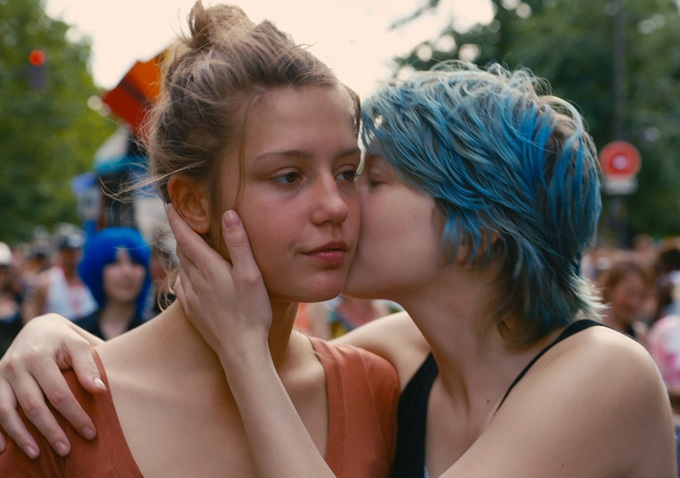
I am again not engaging in spoilers when I tell you that Blue traces the sexual awakening of a high school girl who instantly becomes fascinated with a blue-haired young woman four years older and many more years experienced than she is. But beyond its very initial stages, the story pretty much ignores the LESBIAN issue in favor of what happens when two matched yet mismatched young people fall in love.  It’s leisurely, evocative, erotic and very real.  And it is especially, for this type of film, very long.

In Blue, character doesn’t enrich the plot – character IS the plot.  There is nothing else.  Gay, shmay.  It’s not about that.  Which is part of what I loved about the movie.  And part of why I suspect I could so relate to it and didn’t particularly mind the length.  My romanticized versions of some of my early relationships were reflecting back at me from the screen – all I had to do was change a few body parts.  Okay, I wasn’t a high school girl but I certainly felt like a high school girl, at least archetypically, in the midst of those experiences.  And now, in one of those rare times, I was watching them being played out onscreen– in French, no less!!

On the surface, I didn’t at all wonder why I ultimately preferred Blue over 12.  I’m much more of a love story guy than a historical action guy.  But the more I thought about it, the more I knew that it was more than that.  Who we are and what we’ve experienced is the window through which we feel and it will significantly determine how we’re moved and why we’re moved.  It is the reason why I keep not going to screenings of Dallas Buyers Club, a movie set in the mid-80s AIDS crisis where there were no effective drugs available and at a time where primarily gay men in the US were getting sick and quickly dying at record speed.

The skinny on Matt

The skinny on Matt

I watched the bodies of too many people I knew involuntarily emaciate the way the film’s lead actor, Matthew McConaughey voluntarily did when he went on a 1300 calorie a day diet to lose 49 lbs and become a skeletal version of his onscreen persona.  Never mind that he plays a heterosexual, bigoted White Texan – the image more than works for me.  Actually, too well.  Though I will see the movie and, at least from the trailer, it feels accurate, I’m not rushing out to the theater.  Yes, just as we need to relate our experiences to what we view and who we empathize with, the contrary is also true – some things can, at their very core, hit even much too close to home.  And you just need to gird yourself in order to get in the mood.

That is not to say that a story of Black America can’t move me as much or more as a love story between two contemporary gays, or even a plethora of dying gays and the friends thereof.  Only that, all things being fairly equal (which they never are) I can probably forgive a lot more in a film about the latter two because they more closely resonate to where I’ve been and who, at heart, I perceive I am.

As a wee child in the 1960’s through today, I have always believed, spoken and written that the struggles of each oppressed or marginalized minority were on some basic level the same.  That is the fight for equality and acceptance – the acknowledgement by others that we be considered no different than the person next door despite how we looked or where we came from.

I now see it is somewhat deeper than that.  Until we can recognize that there are some struggles that we can never fully understand, but yet can honor in the same way as our own, we will never quite be free of our divisive pasts.  This is not to proclaim I think about 12 Years a Slave any differently.  Only that I acknowledge that, given who I am, my perceptions about art and a lot of other things, are merely opinions rendered through my own personal lens.  This is equally true for everyone else on the planet – a fact that might be worth remembering next time we bridle at the radical personal, business or political statements of protest that comes from someone on the other side of an issue we might think we clearly see.