
Focus Pocus
Among the many “straight to the trash” emails I received yesterday morning was one trying to sell me “an innovative way to channel and fine-tune the writing process” that would provide the “essential tools to write a best seller.” No, it wasn’t personal ownership of JK Rowling or Suzanne Collins. They are not mere items but cottage industries and those don’t usually go on sale, especially via internet communications (though their work is downloadable for an inflated fee.). Anyway, as further evidence, my email implied that the purchase of this not inexpensive item would provide me with enough structure, knowledge and answered questions to really “get in the zone” of my project. To use their words, and I quote:
“Ask any writer – once you get in the zone you can write forever.”
Is that supposed to be a selling point — writing forever? That’s the very last thing I want to spend the rest of eternity doing. Forever is quite a long time and if I’m going to spend it doing any one thing it’ll be eating pizza, participating in some sort of carnal pleasure, or at least receiving attention for all that I have already “written” in this lifetime and perhaps a few other incarnations before true eternity hits.
In case you’re wondering, the internet “item” in question being sold via this particular email was a computer program – and not even the original version. In actuality, it’s the program’s 4.0 permutation, which begs the question of what happened to the poor schnooks who purchased versions 1.0,2.0, 3.0. (No, the correct answer is NOT that they’re disgruntled iPhone users). Were they rooked and can only hope to write for one-third of eternity? Or half? Certainly, for me, that deal would be even better. And by this point undoubtedly cheaper given consumer demand for outdated software.
What would be even cheaper – way cheaper – would be to not buy the 4.0 or any other version at all. Or any other snake oil that promises you the keys to the kingdom – the way to save you so much time that the road to success will become as smooth and easy as it was gliding down the sliding pond at your local playground when you were three years old. Trust me, if there were a shortcut to these more adult “things creative,” all of us who came before you would have figured it out long ago, not to mention the generations before us and back through all of eternity. My money is on the gang who built the Pyramids or the perhaps the author (or authors) who claim to be William Shakespeare.

Nope... not that pyramid.
The sad, honest and even dirty truth is that in order to be good at what you do you need to put in the time doing it. In his new book on creativity, “Imagine,” the young author and former neuroscientist Jonah Lehrer (and he’s only 30!) spends time theorizing and positing on where creativity comes from and quotes people from all walks of life on their process. Bob Dylan, for example, was ready to hang up his guitar and sometime rhyming ability until one day, when he sort of didn’t care, the song “Like A Rolling Stone” quickly came to him in a flash of anger. Certainly Dylan is a songwriting genius and there is no program or book in the world that can teach you to write or sing exactly like him (some would say, Praise the Lord on the latter). But Dylan also didn’t wake up one day with the ability to write “Like a Rolling Stone.” It came after decades of writing and preparing for that moment where what he was feeling could be put to music so easily. And even then, there is no promise that he’d be able to do it as well, or as quickly, again. Yes, indeed, creativity is a harsh mistress, or gigolo, to be an equal opportunity offender. But then again, just about anything worth having has some kind of downside.
Lately, it’s come to my attention that there are more than a few people unwilling to put in the time to “prepare” for what they aspire to do or achieve and more than a few others who have prepared inadequately, but act shocked, surprised or offended when the crown or throne or lottery check is not immediately handed over to them. It might not seem like Kim Kardashian or her sisters ever paid their dues on the road to fame and fortune but if you google their images and Wikipedia page you will see the evolution of “the look,” reportage on sex tapes, and an obsession with fashion, fame and commerce that was inbred almost from birth. Now, if this is your idea of a good time – start young or have your children start young. Or even better yet use that prep time towards something else that appeals to you, because the position of young iconic reality show punching bag has already been done and will, no doubt, be done again by others much more obsessed with it than a reader of any notesfromachair blog could ever be.
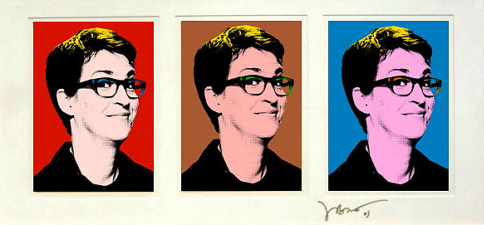
Geeky in every shade
This past week I went to see MSNBC host (and one of my intellectual goddesses) Rachel Maddow being interviewed by Bill Maher in Los Angeles and was taken aback at just how staggering all of this preparation stuff can really be (note: I have a crush on Rachel because, as she admits – she looks like a tall geeky man). Rachel is meticulous in her research for her 5 day per week hour long MSNBC program and it certainly shows in her new book “Drift.” Her look at how U.S. military intervention went from the Founding Fathers’ concept of checks and balances to modern day presidents from Ronald Reagan through and including Barak Obama taking it upon themselves to launch and/or continue wars without Congress approval and maintain them through private military contractors – takes a complicated, dry subject and, through penetrating research and thought, makes it read like a novel (It’s been #1 on the NY Times bestseller list for two weeks). At the same time, unlike most novels, it will alternately also make you really angry at inarguable current event facts we’re living through in present day.
Coincidence? Nah. Rachel is also an Oxford PhD, former radio show host, comic book reader, out lesbian liberal activist, and likes to drink cocktails — proving you can be smart, prepared, rigorous and misbehave, or at least have fun. This is why her work is both smart and yet approachably human. Mr. Maher – curmudgeonly, insensitive atheist that he is, is quicker than he’s ever been interviewing her despite being an avowed pothead, misogynist and slightly dirty old/young man who is convinced marriage is the sure death of sex. Still, he somehow manages to convincingly sell his brand of nihilism pretty convincingly and, he has noted, this is in part because he still spends a significant part of the year doing live standup routines all over the country – something he’s done consistently over the last 30 years. Whether you like him or not, the sharp-tongued remarks he’s consistently so good at as an interviewer don’t happen without this or some other kind of ongoing practice. That and being an obsessive reader of daily newspapers, magazines and books also helps, as he readily admits.
Every semester I always have a few students skating by while others work a lot and then don’t work and still others are work horses who break through. Sometimes there are also those frozen with anxiety. And sometimes, but not often enough, a small group don’t seem to have any trouble at all and came fully formed through dedication and love of what they do (or perhaps natural talent and desire so it doesn’t feel like work). None are recipes for success or failure on their own but each can set you on the road to good, bad or indifferent. But students have an excuse – they are mostly young and they’re learning. You wonder about the last few years of people seeking high office who haven’t put in the prep time, or tried to cram the prep time in over a very short period of time (I’m not mentioning Sarah Palin by name because she’s doing just fine as a media gadfly). Yet on the flip side, I’m also not mentioning those with perhaps limited experience for the highest office in the land who still took decades of prep time prior to that election to excel at one of the finest universities in the world, become a scholar of the law, work in trenches with the underprivileged, run for elected office and lose but then win, and win a seat in Congress again. All the while, with his other spare hand, he wrote (all by himself) two best sellers, got married and had two kids. The latter gave him the ability to empathize with the plight of families everywhere. That and the fact he was raised by a single working mother who used to wake him at 5 or 6 in the morning to go over his studies or do homework he had put off and got him in the routine of responsibility for doing his work – and doing it overtime if he had to (or was ordered to do so). I don’t want to mention names again but, okay fine, but this person’s rhymes with “Shamrock Yo Mama”
Ultimately, of course, this is about more than petty political endorsements or bitchy remarks in a self-published weekly snarkfest like my own. It’s really about – the pride we take in what we do – the time we put in – and the quality of the final product. What does it mean to you? Or us? Or anyone? What are our expectations from ourself and the world with it and without it? Master improvisers practice to be so impromptu – ask any stylish person known for his or her “disheveled look” (I used to date someone like this – trust me – there’s a real art to the properly fashionable wrinkled shirt). Conversely, most hard-working practitioners have an improvisational skill they can count on after years of hard work, or perhaps always had it but chose to work hard to put their innate skills over the top. In any event, each were smart enough to not take a shortcut that, in the long run, they knew would only sentence them to spend the rest of eternity figuring out why they not only didn’t fit into a particular kind of 1, 2, 3 or 4.0 requirements of a particular program. Instead, they led the way, writing an entirely new, more exciting one based on practice and, on what they had learned.




 notes from a chair